Artwork
An Indian chowkidar
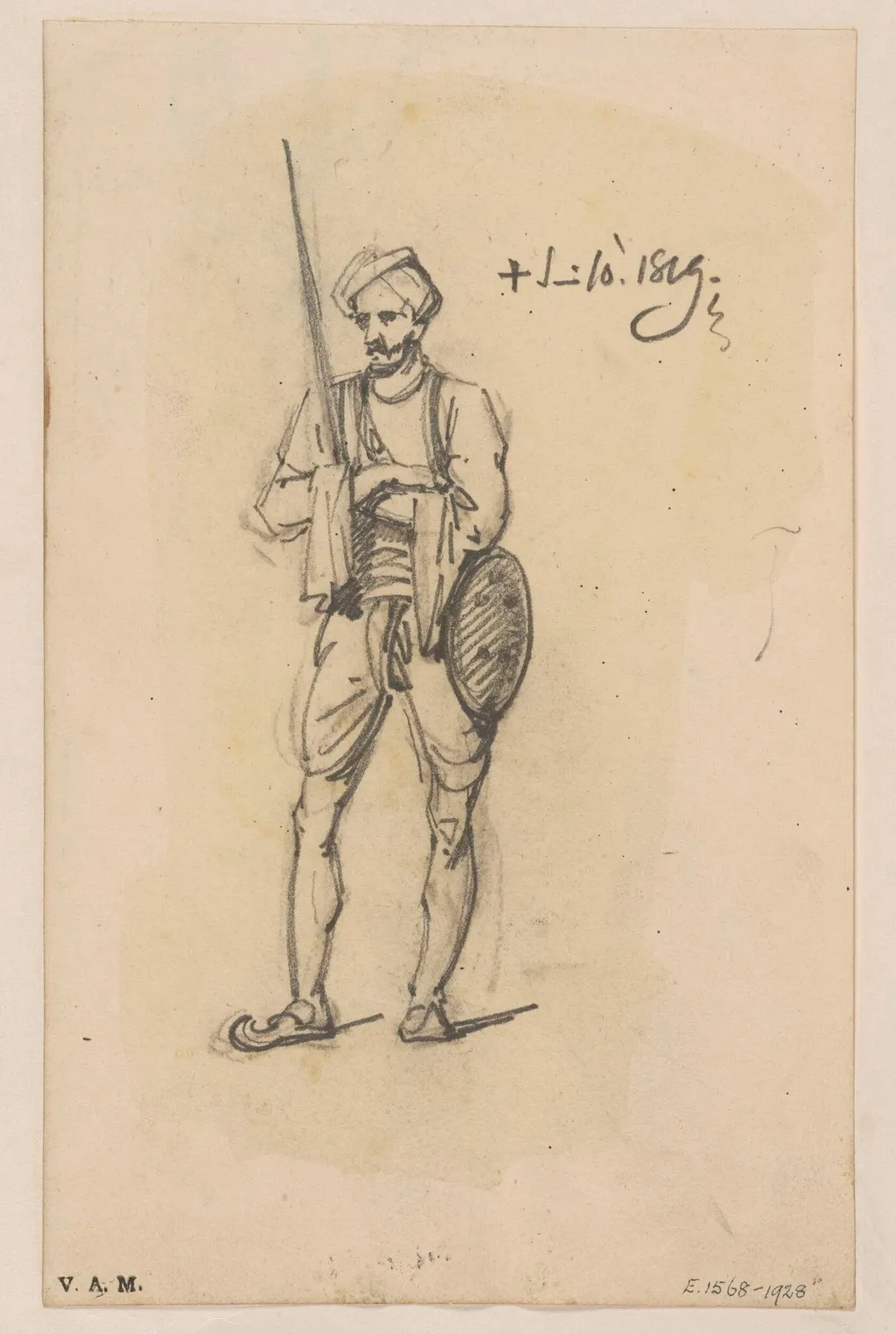
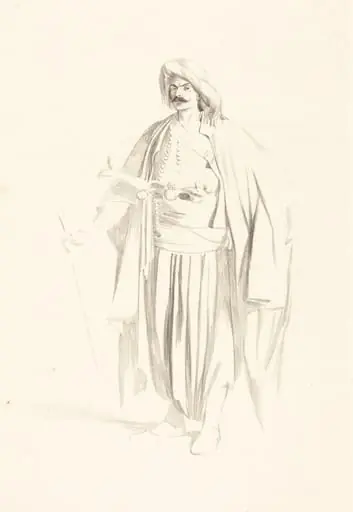
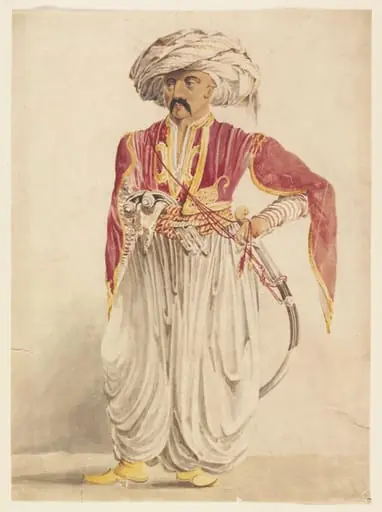
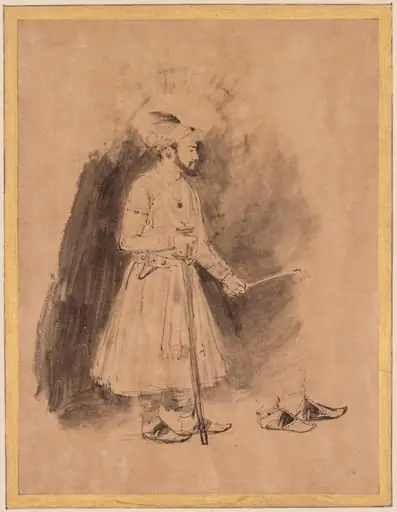
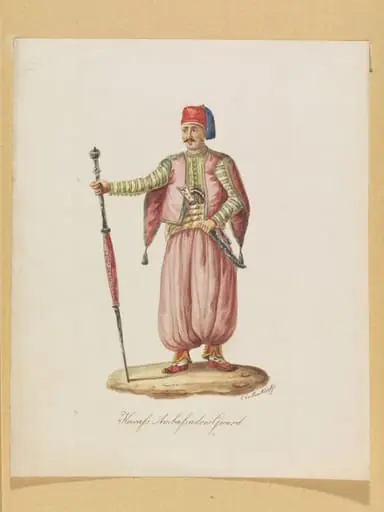
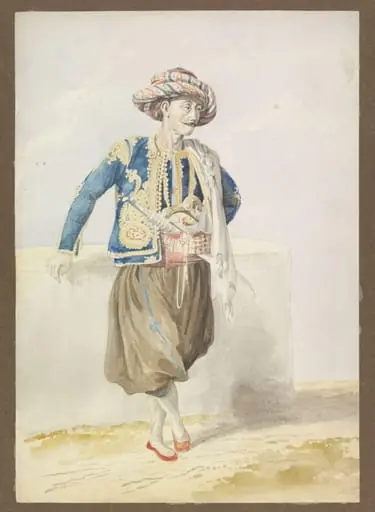
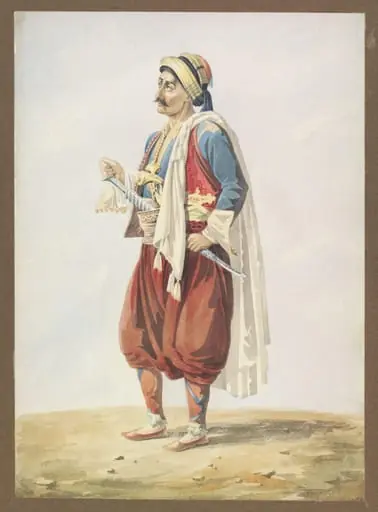
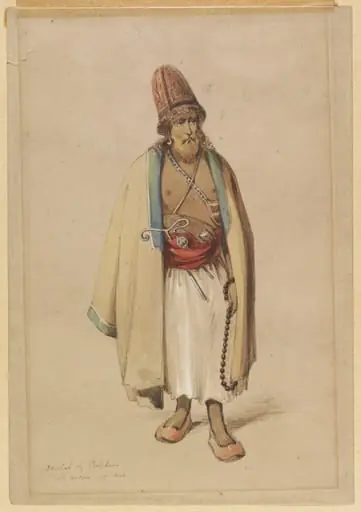
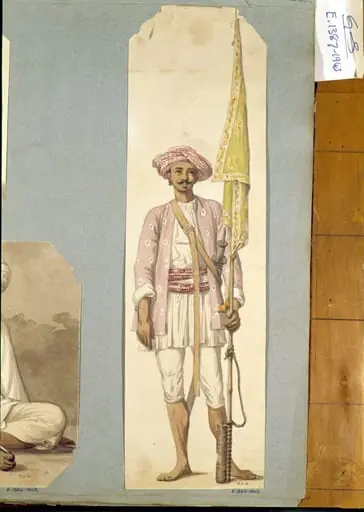
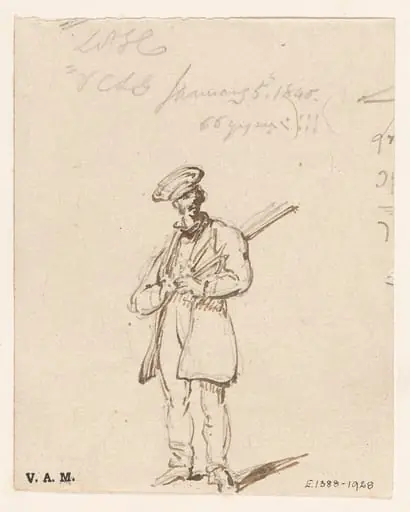
An Indian chowkidar is a drawing by the Romanticist artist George Chinnery. It dates from 8 and is held in the collection of the Victoria and Albert Museum. The work is a drawing portraying a bearded Indian figure dressed in the customary attire of a chowkidar, a traditional watchman or guard.
About this work
Overview
The work is a drawing portraying a bearded Indian figure dressed in the customary attire of a chowkidar, a traditional watchman or guard. He is equipped with a sword and a shield, elements that identify his role and status within the depicted setting.
Subject & Meaning
The central figure represents a chowkidar, a role historically associated with local security and protection. The inclusion of weaponry underscores the responsibilities of vigilance and defense inherent to the position, offering insight into everyday occupational identities in Indian society.
Technique & Style
Executed in drawing, the piece relies on line work to delineate the subject’s facial hair, clothing folds, and the details of his sword and shield. The rendering emphasizes contour and texture, allowing the uniform’s distinctive features to be clearly recognized without the use of color.
Context
Chowkidars have long been integral to community safety across various regions of India, often identifiable by their specific uniform and armament. This drawing captures the visual conventions associated with the role, reflecting broader cultural symbols of guardianship.
Artist & collection
Artist
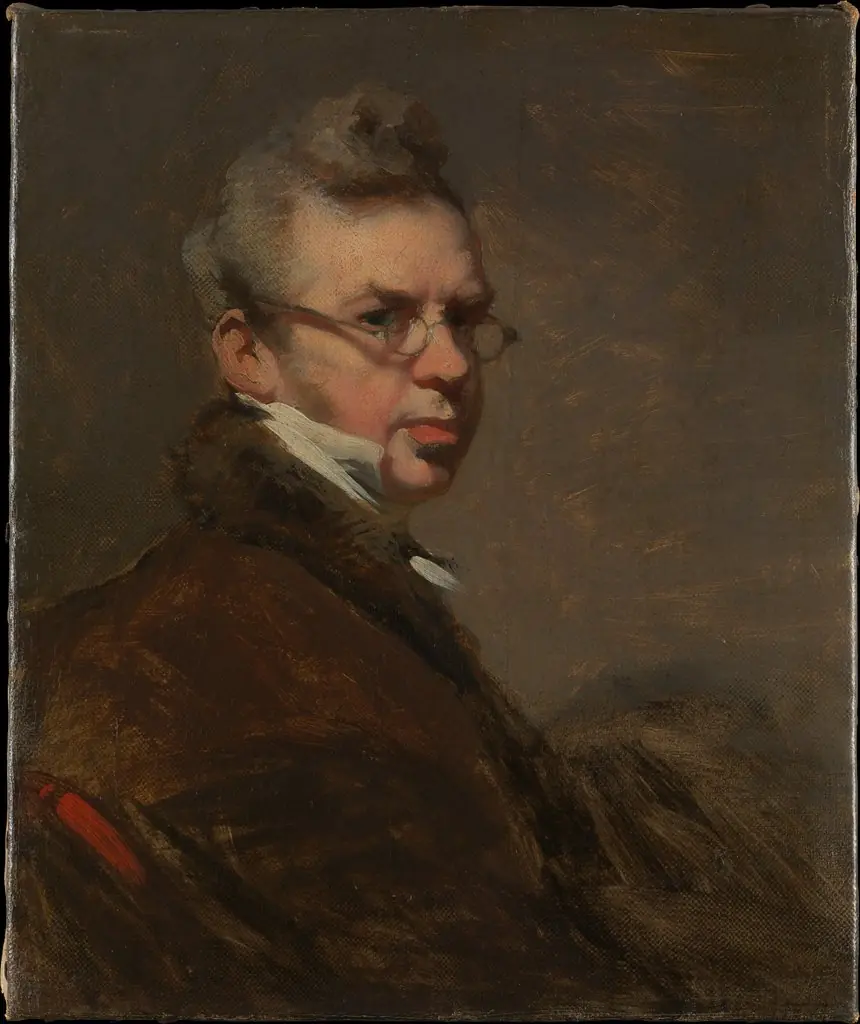
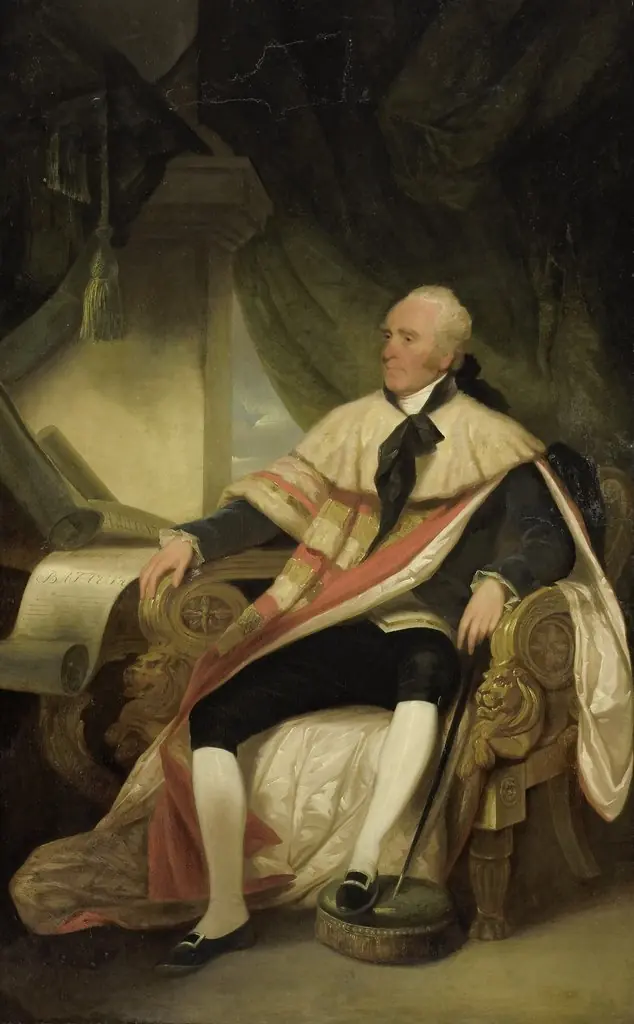
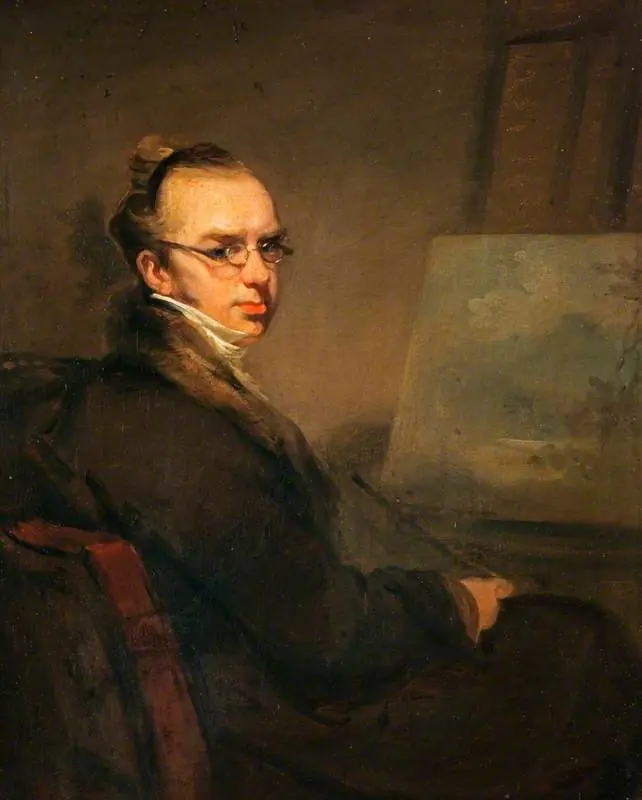
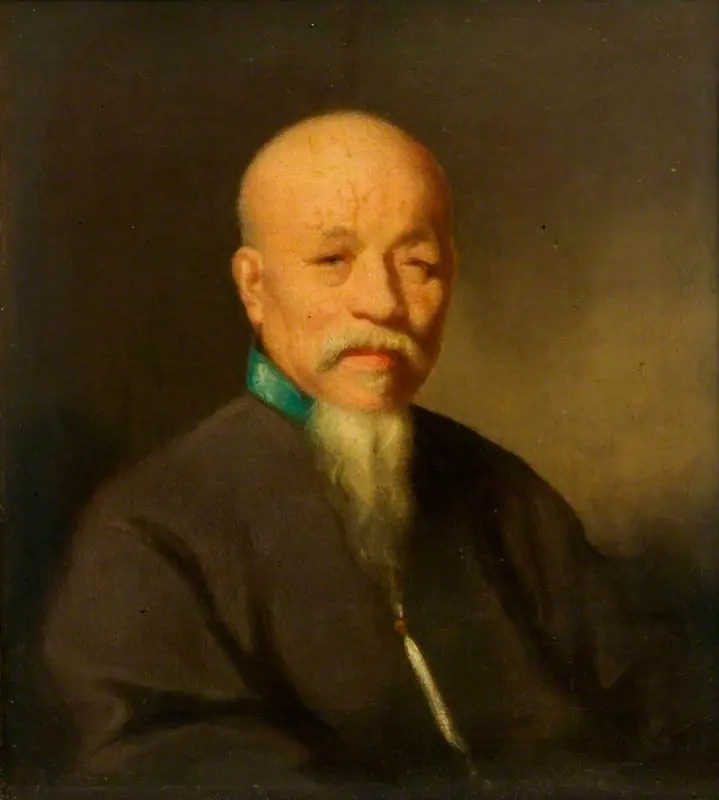
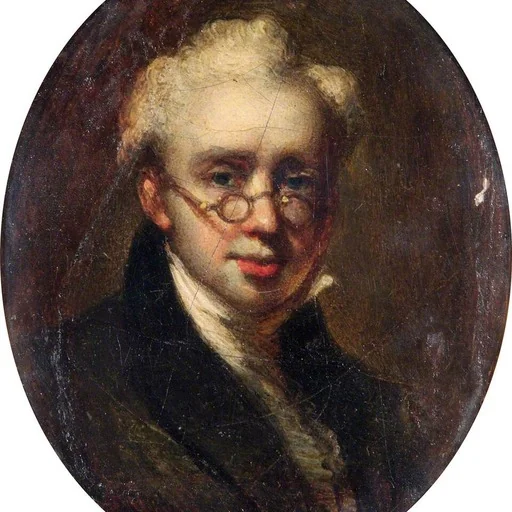
George Chinnery (Chinese: 錢納利; 5 January 1774 – 30 May 1852) was an English painter who spent most of his life in Asia, especially India and southern China.