Artwork
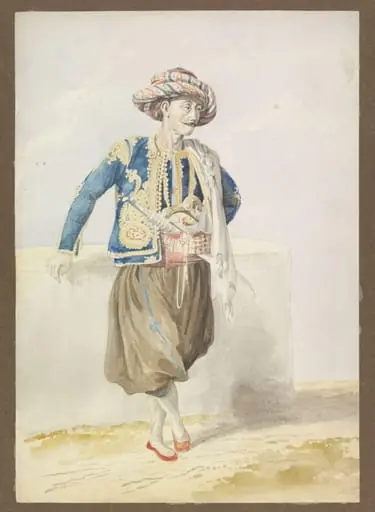
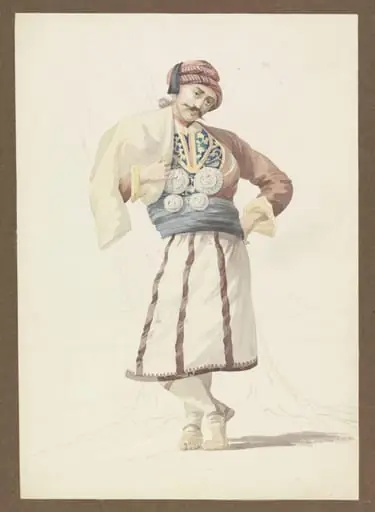
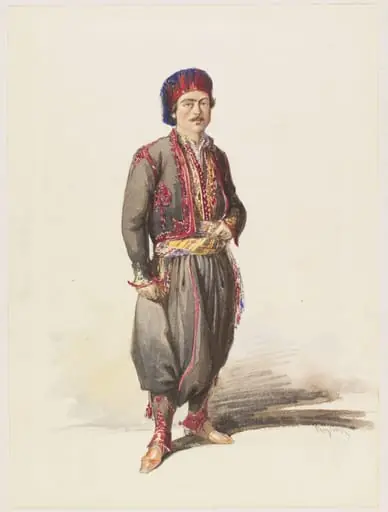
A Greek Officer
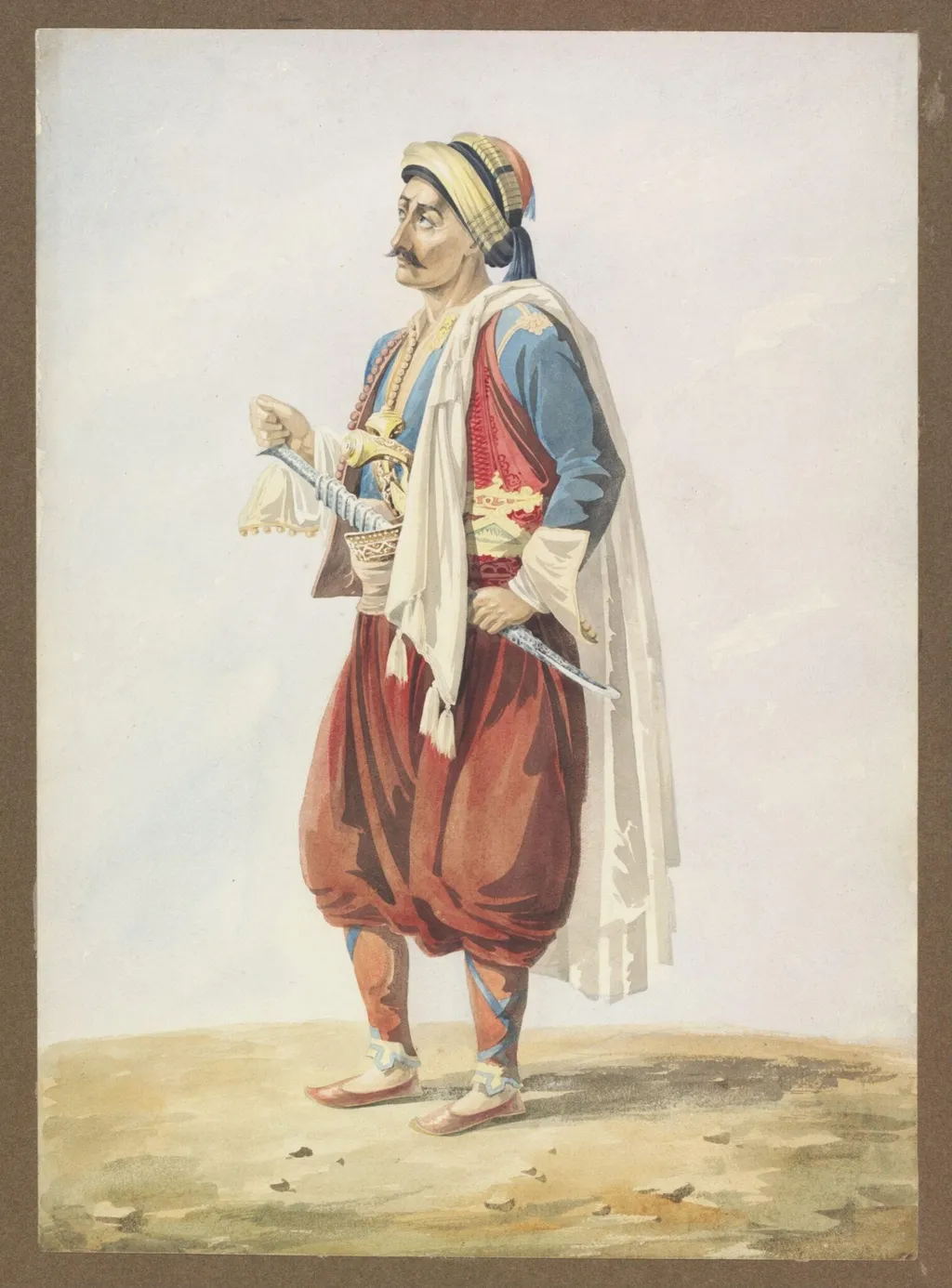
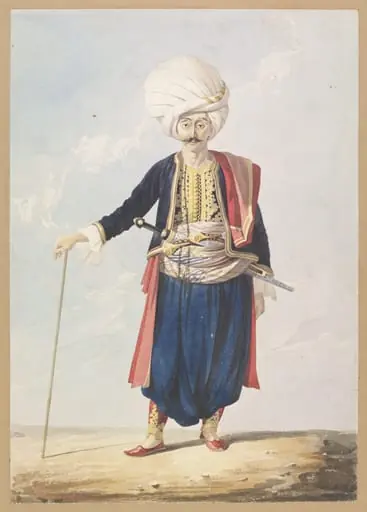
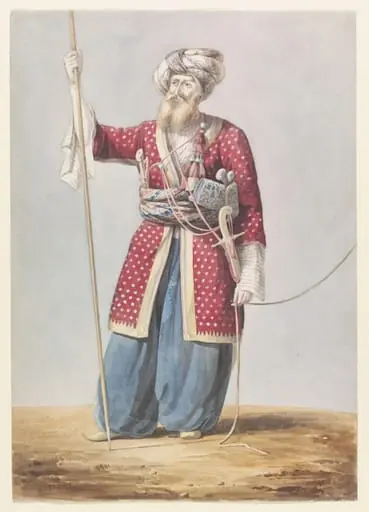
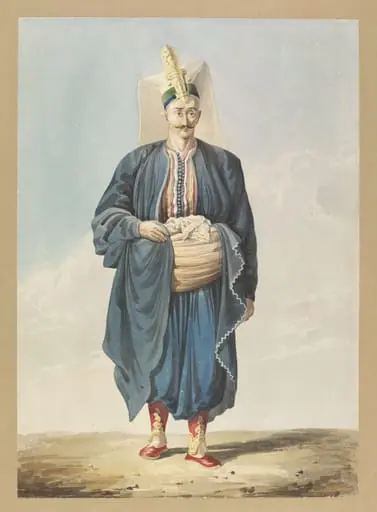
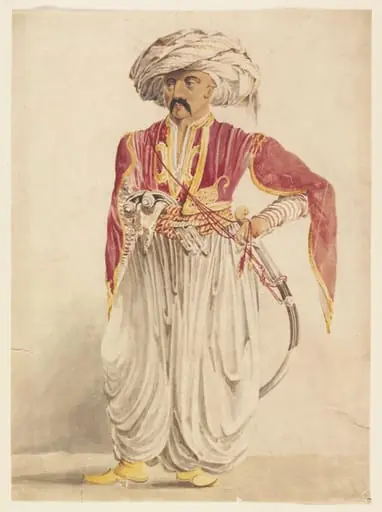
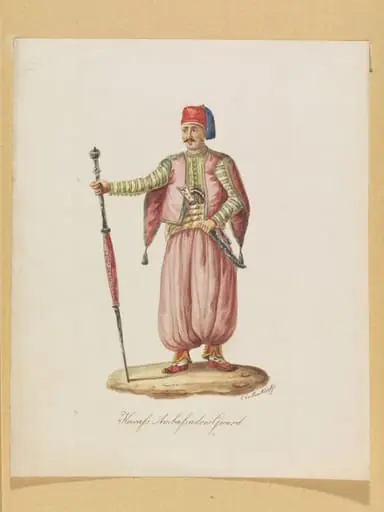
A Greek Officer is a watercolor work on paper by the American Folk Art artist William Page. It dates from 1820 and is held in the collection of the Victoria and Albert Museum.
About this work
Overview
Created in 1820 by William Page, this watercolour depicts a Greek officer in elaborate traditional attire. Part of a broader series of costume studies, the work captures a figure likely inspired by Page’s observations during travels in the Near East. Executed in delicate washes, it reflects his early focus on detailed portraiture before his later transition to landscape painting.
Subject & Meaning
The figure is rendered in vivid, layered garments: a red skirt-like tunic, a blue vest with gold embroidery, and a tall striped hat.
The figure is rendered in vivid, layered garments: a red skirt-like tunic, a blue vest with gold embroidery, and a tall striped hat. A sword hangs at his side, and one hand rests on his hip while the other holds a small object, suggesting status or ritual. The plain background isolates the figure, emphasizing cultural identity and attire rather than narrative context, aligning with 19th-century ethnographic interests.
Technique & Style
Page employed transparent watercolour washes to model form and texture, with careful attention to fabric folds, metallic embroidery, and the sheen of accessories. Light falls naturally across the figure’s face and clothing, creating subtle tonal contrasts. The precision in textile detail and the restrained palette reflect academic training, while the vivid hues hint at Romantic-era fascination with exoticism.
History & Provenance
The work remained in private hands until June 1967, when it was acquired from the London dealers Maggs Brothers. Prior to this, its documented history is limited, though its stylistic consistency with Page’s early oeuvre supports its attribution. No public exhibition record exists prior to the 20th century, suggesting it was intended as a study rather than a public display piece.
Context
In the early 1820s, European interest in Greek culture surged following the War of Independence. Artists like Page documented regional dress as both ethnographic record and aesthetic subject. Though not a political statement, the drawing participates in a wider trend of visual anthropology, where costume became a vehicle for cultural curiosity amid imperial and romanticized views of the East.
Legacy
This watercolour exemplifies Page’s formative years as a figure draftsman, predating his more widely recognized landscapes. While not widely exhibited, it contributes to understanding how British artists engaged with non-Western attire during a period of heightened cultural exchange. Its survival in private collections underscores its role as a personal study rather than a public commission.
Artist & collection

![A Servant of the Sultan[?], by William Page](https://artifactworldgallery.com/img/william-page--a-servant-of-the-sultan--e1a8abdac6100882-w320.webp)