Artwork
Chinese shipping
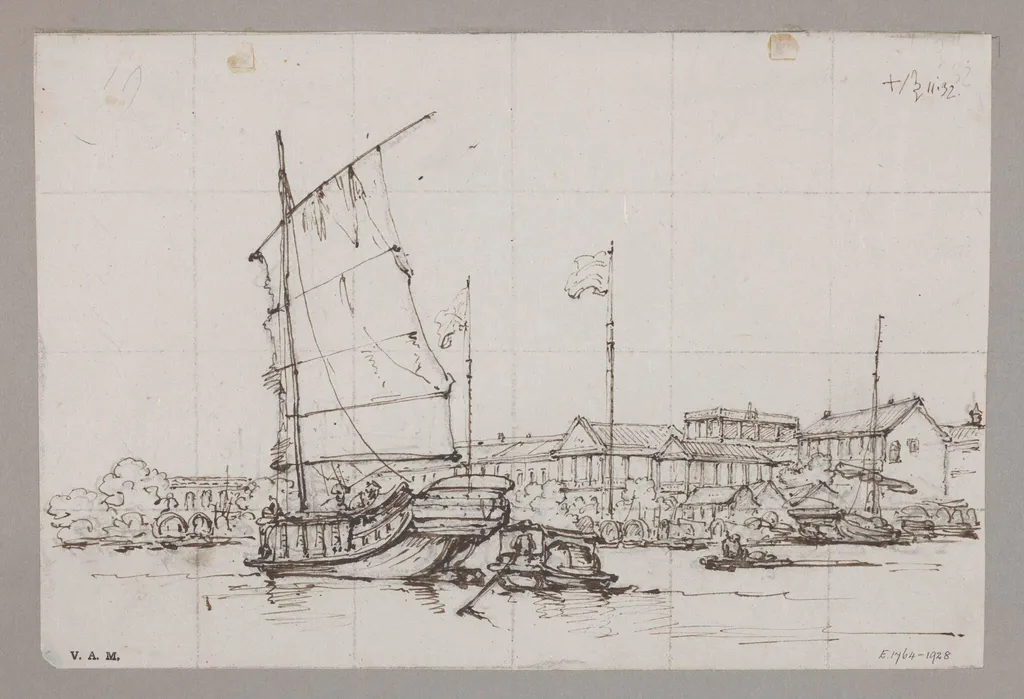
Chinese shipping is a drawing by the Romanticist artist George Chinnery. It dates from 10 and is held in the collection of the Victoria and Albert Museum.
About this work
It shows the English and Dutch trading posts in Canton, seen from the Pearl River.
This is a drawing from 1832 by George Chinnery. It shows the English and Dutch trading posts in Canton, seen from the Pearl River. A Chinese junk and a small boat sit in the foreground.
The artist squared the drawing in pencil. That means he planned to copy it bigger in watercolor or oil paint later. The flags mark each nation’s post clearly.
Check out the Victoria and Albert Museum for this work.
Overview
The 1832 drawing by George Chinnery depicts the western outskirts of Canton (now Guangzhou) as seen from the Pearl River. It presents an angled perspective toward the English and Dutch trading factories, each identified by its national flag, with a Chinese junk and a smaller Tanka boat positioned in the foreground.
Subject & Meaning
The composition records the coexistence of European commercial establishments—referred to as "factories"—within a Chinese port environment. By juxtaposing the foreign structures with indigenous vessels, the work highlights the interaction of Western trade interests and local maritime activity during the early nineteenth‑century Canton System.
Technique & Style
Chinnery employed a precise pencil grid to square the image, a preparatory step for enlarging the scene in watercolor or oil. The drawing balances architectural detail of the porticoed factories with the fluid lines of the ships, reflecting the artist’s blend of topographical accuracy and observational sketching.
History & Provenance
Created in 1832, the drawing entered the collection of the Victoria and Albert Museum, where it is catalogued as a work on paper. Its provenance traces back to the artist’s period of residence in China, during which he documented the commercial landscape of Canton for both artistic and documentary purposes.
Context
The image captures a moment in the late Qing dynasty when the Canton System regulated foreign trade, limiting European merchants to designated factories along the river. The presence of English and Dutch flags underscores the competitive nature of European trade in the region, while the nearby Haizhu Fort—sometimes called the "Dutch Folly"—illustrates defensive measures taken by the Chinese authorities.
Artist & collection
Artist
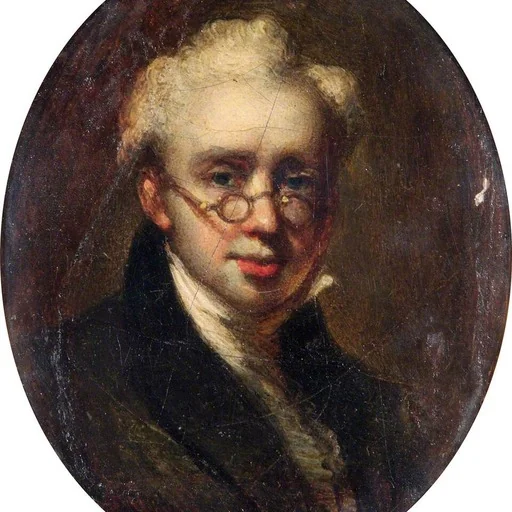
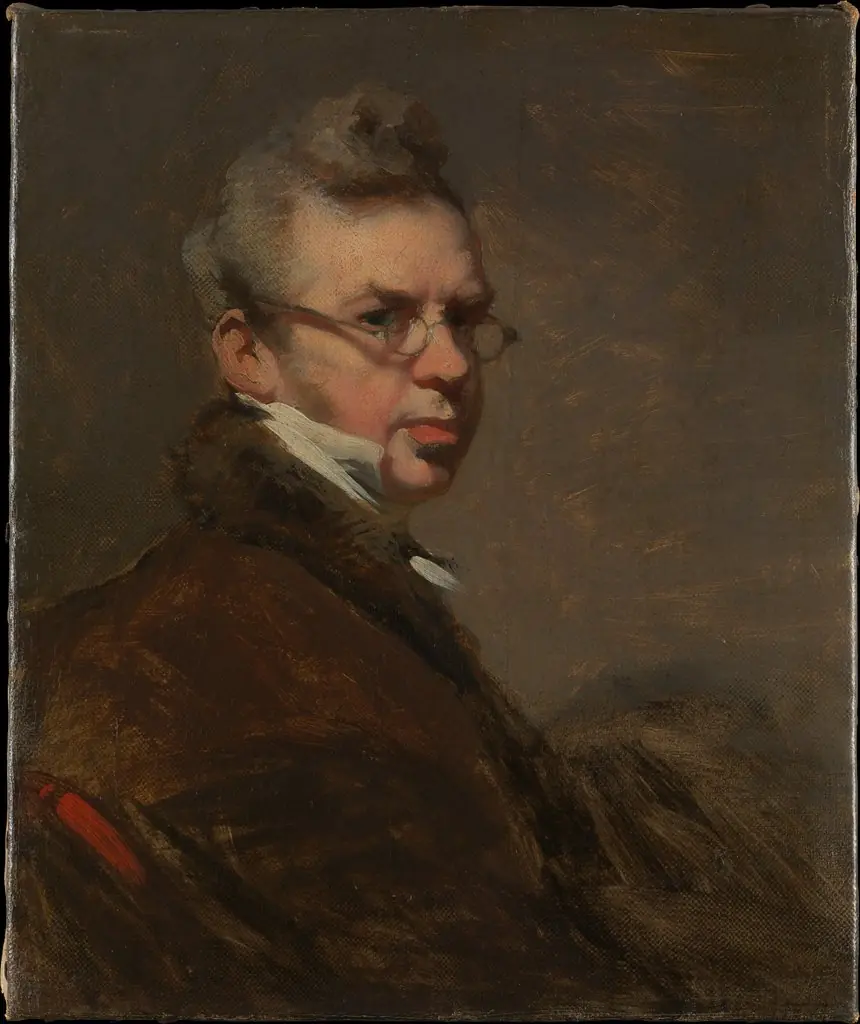
George Chinnery (Chinese: 錢納利; 5 January 1774 – 30 May 1852) was an English painter who spent most of his life in Asia, especially India and southern China.



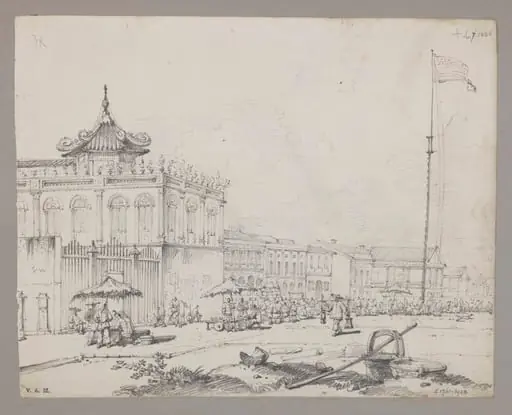 The Great Square before the Factories, Canton
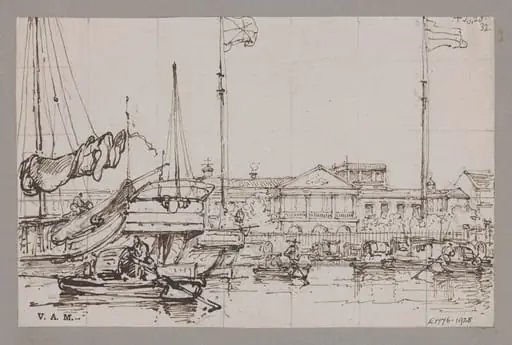 View of East India Company's Factory, Canton
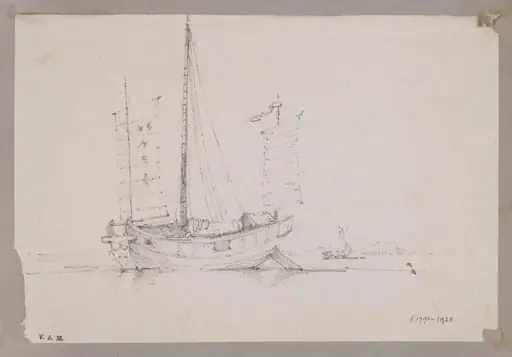 A Chinese junk
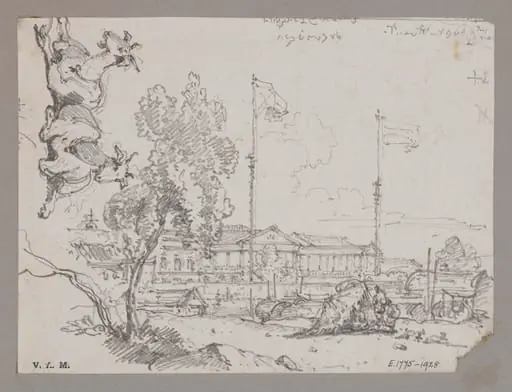 The East India Company's Factory, Canton
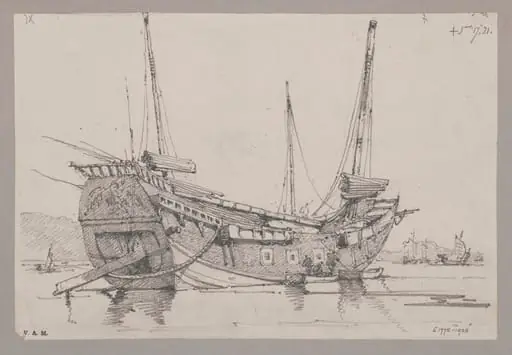 Old Chinese Junk
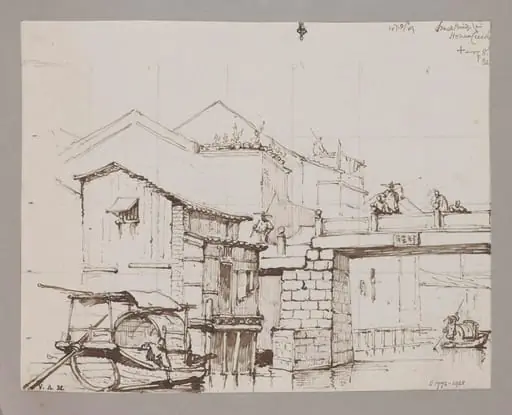 Small bridge near Honan
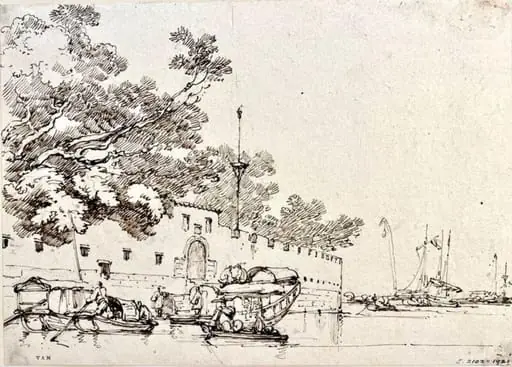 Junks and Tanka boats by a river fort, Canton (Guangzhou)
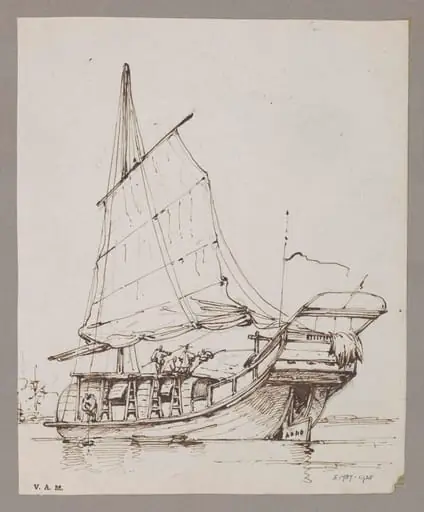 A Chinese junk with sail set
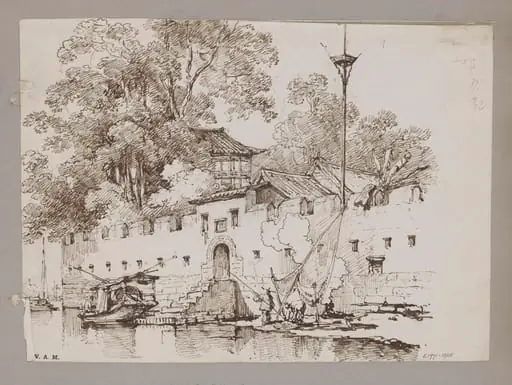 Part of the Dutch Folly, near Canton
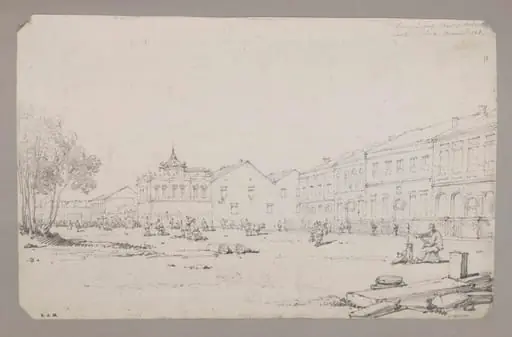 Chinqua's House & part of the Factories, Canton, China. March 1st 1828