Artwork
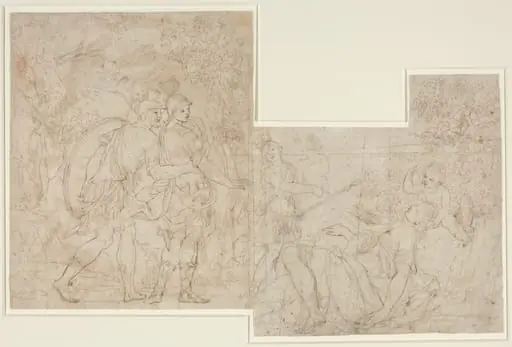
Copy After a Historical Painting from the Circle of Paolo Veronese [recto]
![Copy After a Historical Painting from the Circle of Paolo Veronese [recto], by Italian 16th Century, chalk, 1501](https://artifactworldgallery.com/img/italian-16th-century--copy-after-a-historical-painting-from-the-circle-of-paolo-ve--e4944dad2b07ded6-w1024.webp)
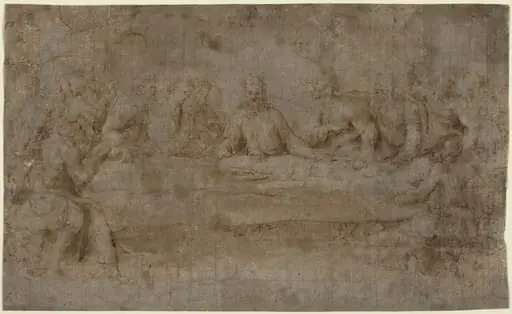
Copy After a Historical Painting from the Circle of Paolo Veronese [recto] is a chalk drawing by the Renaissance artist Italian 16th Century. It dates from 1501 and is held in the collection of the National Gallery of Art. This drawing is a study executed in pen and brown ink with brown wash over black chalk on laid paper.
About this work
Overview
The medium choices suggest a focus on tonal depth and structural clarity, typical of preparatory or pedagogical drawing in late Renaissance workshops.
This drawing is a study executed in pen and brown ink with brown wash over black chalk on laid paper. It reproduces a composition originally from the circle of Paolo Veronese, reflecting the practice of artists engaging with earlier works through direct transcription. The medium choices suggest a focus on tonal depth and structural clarity, typical of preparatory or pedagogical drawing in late Renaissance workshops.
Subject & Meaning
The subject appears to be a narrative scene drawn from historical or mythological sources, consistent with Veronese’s known themes. The drawing does not introduce new iconography but serves as a visual record or exercise in interpreting complex groupings of figures, architectural settings, and spatial dynamics. Its purpose was likely observational, aiding in the internalization of compositional principles rather than original invention.
Technique & Style
Fine pen lines define contours and details, while loose brown washes model volume and shadow, creating contrast between precision and fluidity. Black chalk underdrawing provides foundational structure, guiding the ink and wash application. The interplay of controlled hatching and atmospheric washes demonstrates a deliberate handling of texture and light, characteristic of Venetian draftsmanship in the late 16th century.
History & Provenance
The work lacks a documented provenance prior to its current attribution, but its materials and style align with 16th- to early 17th-century Venetian studio practices. It was likely produced by a student or assistant working within Veronese’s orbit, copying established compositions to develop skill. No record of its ownership or exhibition history before modern times is available.
Context
During Veronese’s era, copying was a standard method of artistic training, especially in Venice, where large-scale historical paintings required mastery of figure arrangement and spatial depth. Drawings like this served as both learning tools and archives of successful compositions. The use of laid paper and ink-wash techniques reflects widespread workshop practices across Italy at the time.
Legacy
This drawing contributes to the understanding of how Veronese’s compositions were disseminated and studied by later artists. While not an original work, it preserves the visual language of a major Venetian painter through the lens of an apprentice’s hand. Such studies remain valuable for tracing the transmission of stylistic elements within Renaissance artistic networks.
Artist & collection

Artist
A 16th-century Italian sculptor left us small bronze works in dark brown and gold.

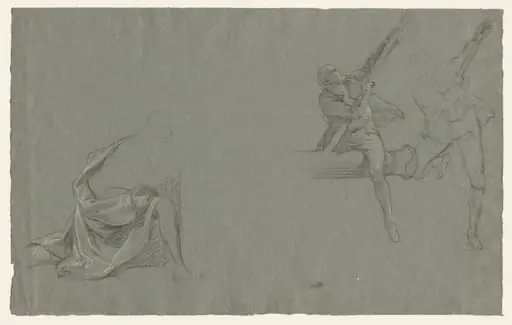 Drapery Study; Two Figures Pulling a Pole
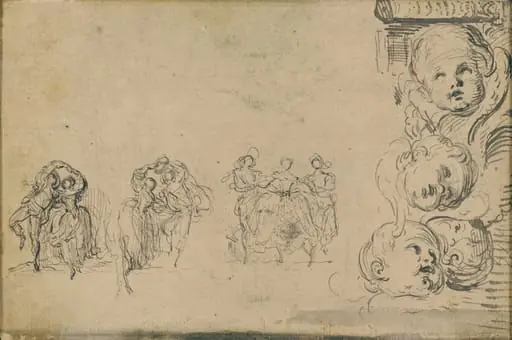 Sketches of Dancers and Heads of Putti
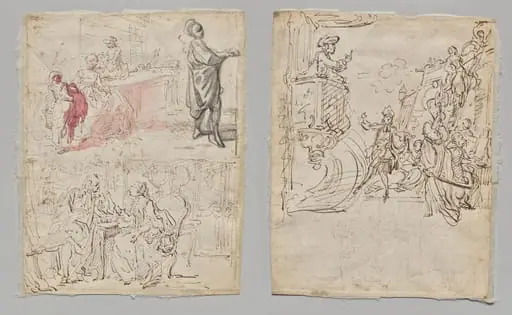 Theatre Scene (recto); Lingerie Boutique and Conversation (verso)
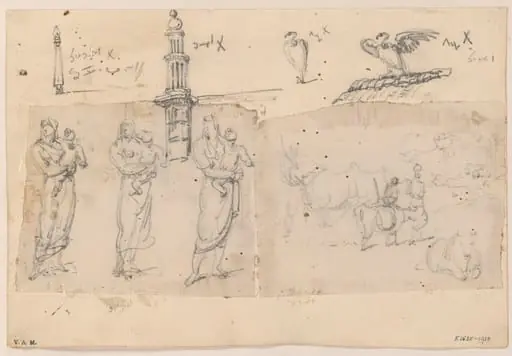 Indian figures, cattle, vultures and minarets
![Study of Two Putti and a Draped Arm [verso], by Giovanni Battista Cipriani](https://artifactworldgallery.com/img/giovanni-battista-cipriani--study-of-two-putti-and-a-draped-arm-verso--47f39e682d8c982d-w320.webp) Study of Two Putti and a Draped Arm [verso]
Study of Two Putti and a Draped Arm [verso]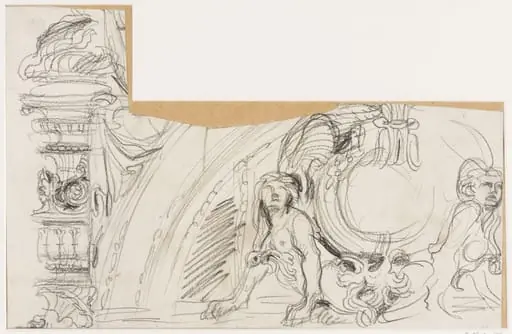 Studies for Dorchester House
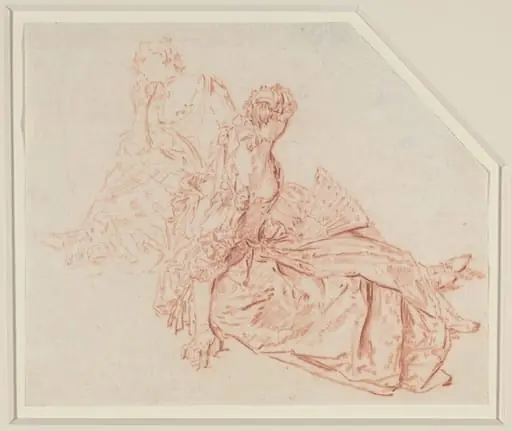 Two Seated Ladies
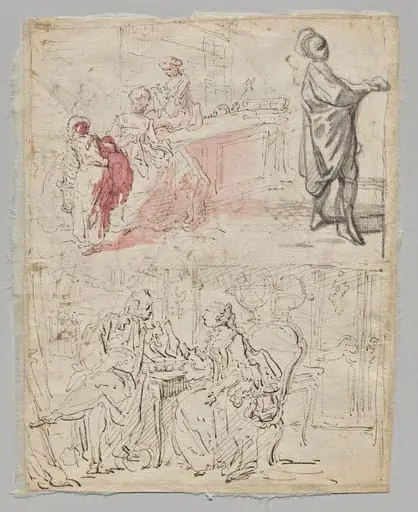 Theatre Scene (recto)
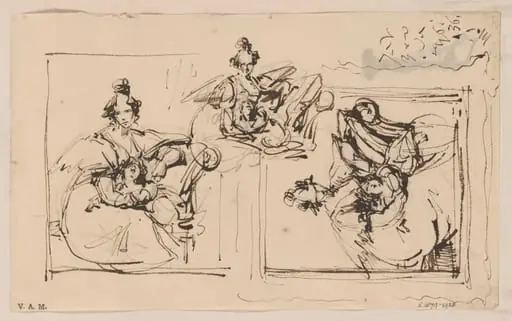 Three studies for a portrait of a Western woman and child
 Three Soldiers Discovering a Sleeping Woman
![Figure Sketches and a Copy After a Sculpted Head [verso], by Jean Antoine Watteau](https://artifactworldgallery.com/img/jean-antoine-watteau--figure-sketches-and-a-copy-after-a-sculpted-head-verso--bf3e3653635a87ed-w320.webp) Figure Sketches and a Copy After a Sculpted Head [verso]
Figure Sketches and a Copy After a Sculpted Head [verso] Studies of Ornament and Architecture