Artwork
Colney Hatch, Hertfordshire
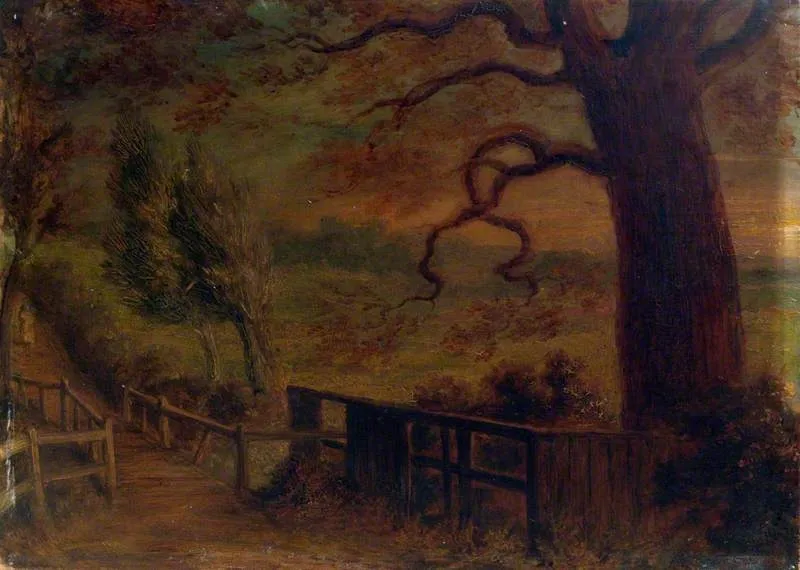
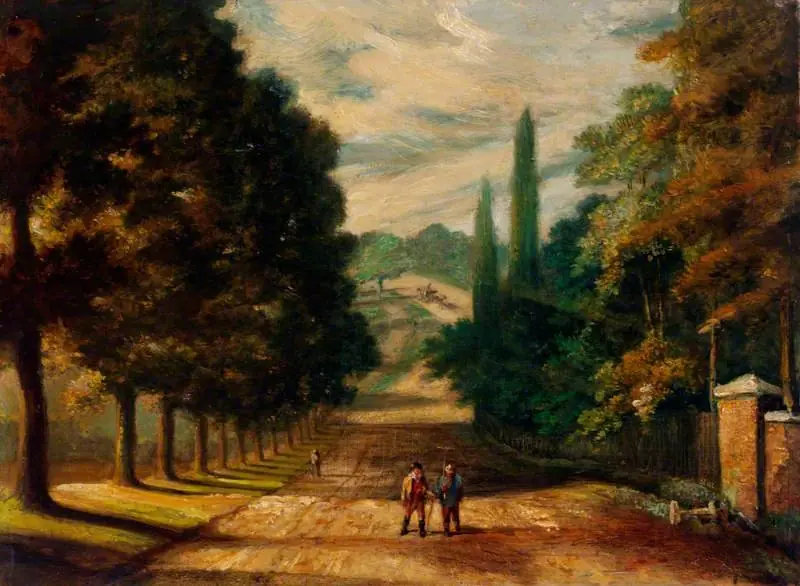
Colney Hatch, Hertfordshire is an oil painting by the British Romanticist artist George Cruikshank. It dates from 1828 and is held in the collection of the Victoria and Albert Museum.
About this work
Overview
Though best known for his satirical illustrations, this work reveals his engagement with landscape painting during the Romantic era.
George Cruikshank’s 1828 oil painting *Colney Hatch, Hertfordshire* presents a quiet rural scene in the English countryside. Though best known for his satirical illustrations, this work reveals his engagement with landscape painting during the Romantic era. Executed in oil, the piece reflects a shift from his more narrative-driven prints toward a contemplative depiction of nature, aligning with broader artistic interests of the time in everyday rural life.
Subject & Meaning
The painting captures a tranquil stretch of Hertfordshire countryside, centered on a solitary tree on the right and a winding path receding into the distance. No figures are present, emphasizing stillness and the quiet rhythm of the land. The absence of human activity suggests an appreciation for nature’s autonomy, a theme common in Romantic art that valued solitude and the unspoiled environment over industrial or urban subjects.
Technique & Style
Cruikshank employed visible, textured brushwork to render the landscape, with muted tones of brown and green dominating the palette. The oil medium allowed for subtle gradations in light and foliage, enhancing the sense of depth without dramatic contrast. The fence along the foreground and the tree’s upward-reaching branches guide the viewer’s eye gently through the composition, reflecting a deliberate, restrained approach to spatial organization.
History & Provenance
Created in 1828, the painting entered the collection of the Victoria and Albert Museum, where it remains today. Unlike Cruikshank’s widely circulated prints, this oil work was likely a personal or private commission, not intended for mass reproduction. Its survival and preservation suggest it was valued within artistic circles, though it never achieved the public recognition of his caricatures.
Context
In the late 1820s, British artists increasingly turned to native landscapes as subjects, moving away from classical ideals toward local, unidealized scenery. Cruikshank’s work fits within this trend, even as his reputation remained tied to illustration. *Colney Hatch* reflects a moment when illustrators explored fine art media, bridging popular visual culture with the emerging Romantic sensibility in painting.
Legacy
While Cruikshank’s legacy rests largely on his graphic satire, *Colney Hatch* stands as a quiet testament to his versatility. It offers insight into how artists known for narrative illustration engaged with landscape traditions, contributing to a broader, less celebrated strand of Romantic art. The painting remains a modest but significant example of an illustrator’s foray into fine art.
Artist & collection
Artist
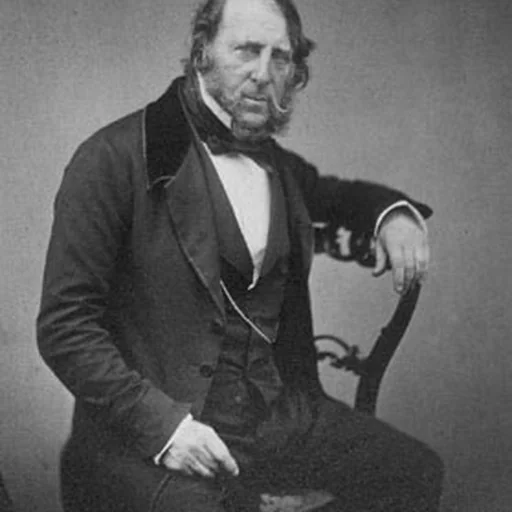
George Cruikshank or Cruickshank ( KRUUK-shank; 27 September 1792 – 1 February 1878) was a British caricaturist and book illustrator, praised as the "modern Hogarth" during his life.

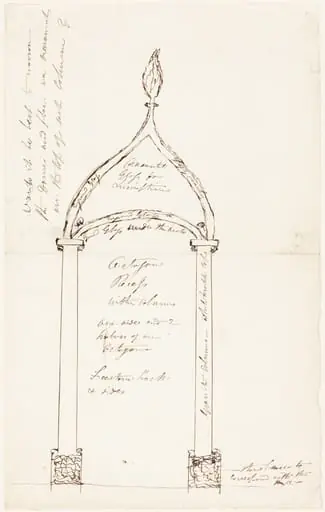 Sketch of Octagon Recess with Columns
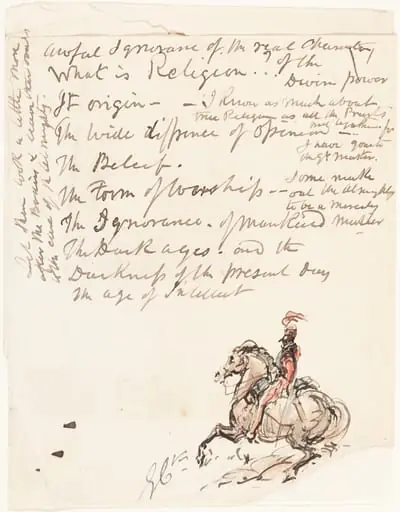 Sketch of Mounted Hussar
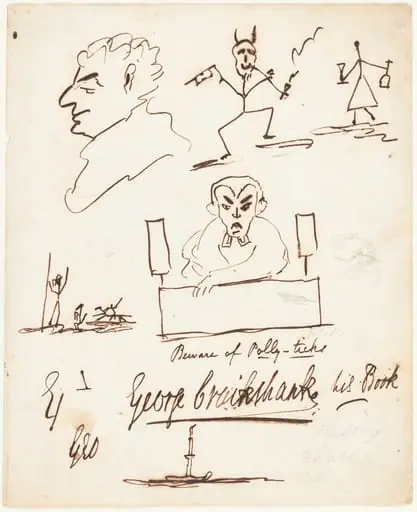 Satirical Sketches
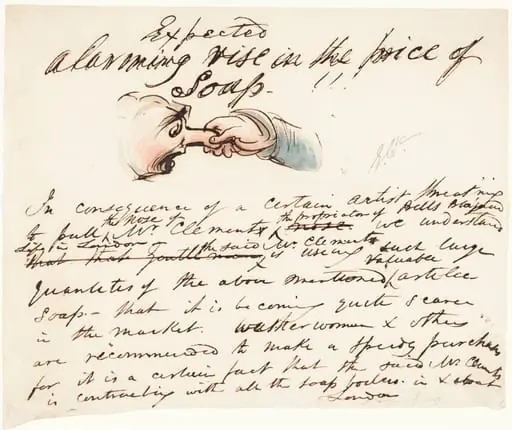 "Expected--alarming rise in the price of soap!"
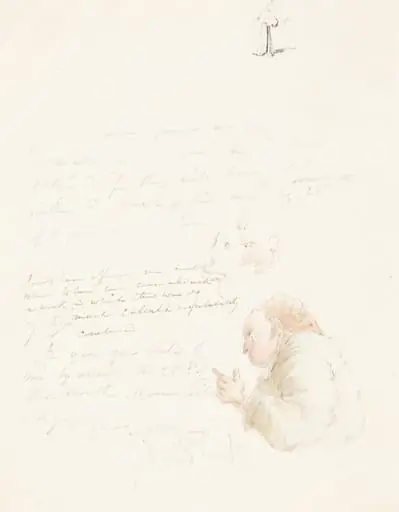 Half-Length of a Lawyer and Other Sketches
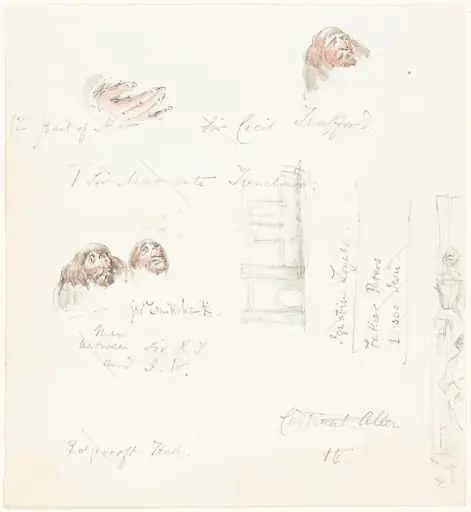 Sketches of Grotesque Faces
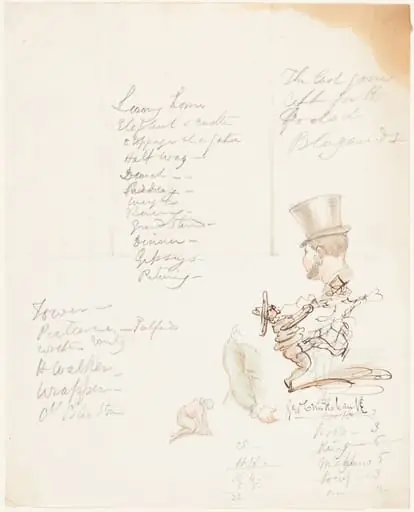 Sketches of Head, Arm, and Kneeling Figure
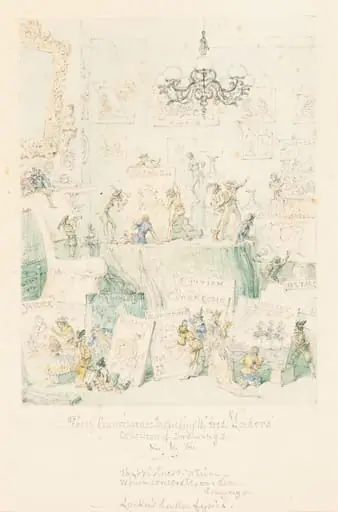 Fairy Connoisseurs Inspecting Mr. Frederick Locker's Collection of Drawings
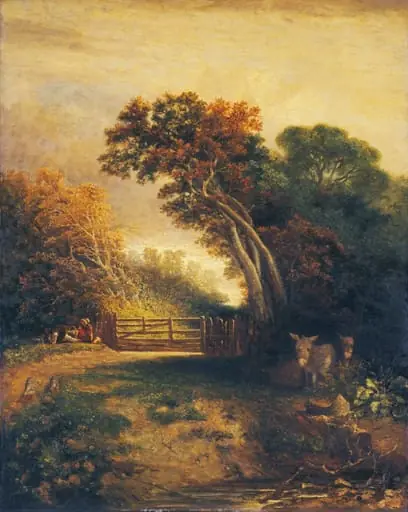 Landscape with Picnickers and Donkeys by a Gate
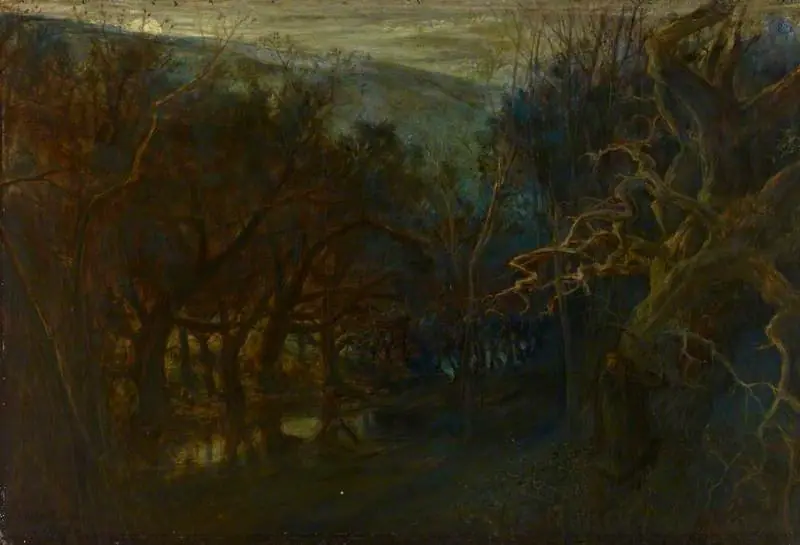 Christobel under the Oak
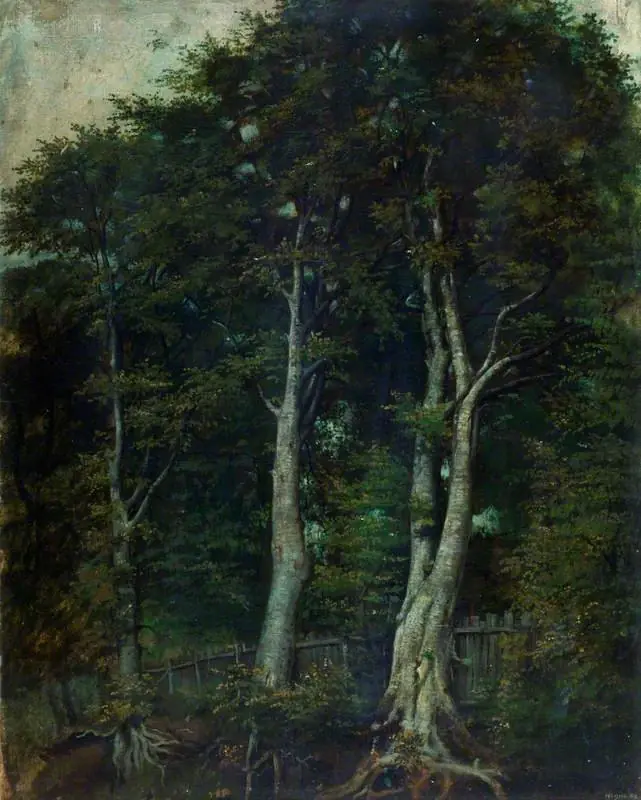 Beech Trees
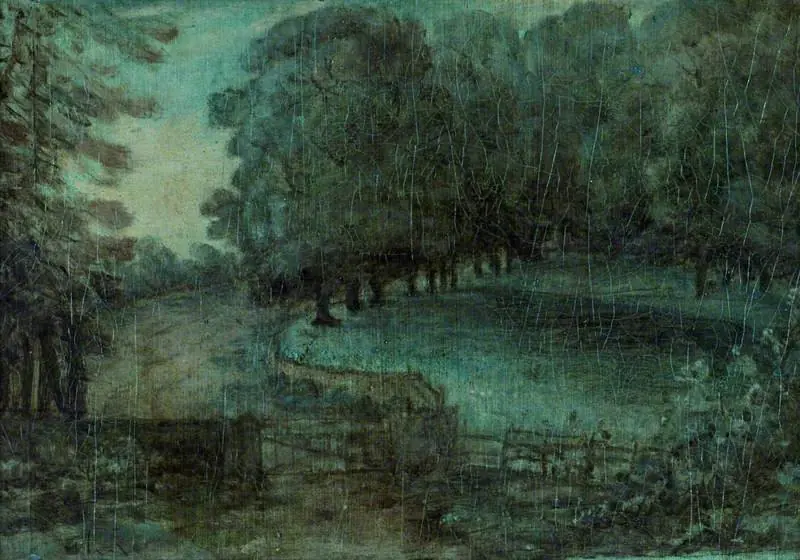 The Entrance to Mr Thrale's Park, Streatham
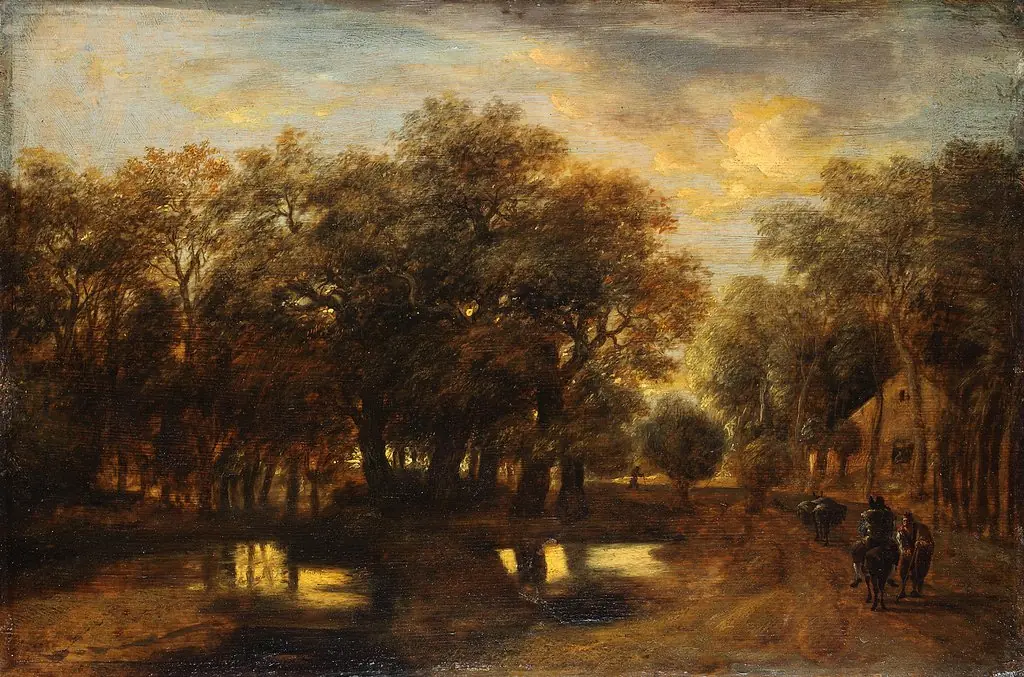 Evening Landscape
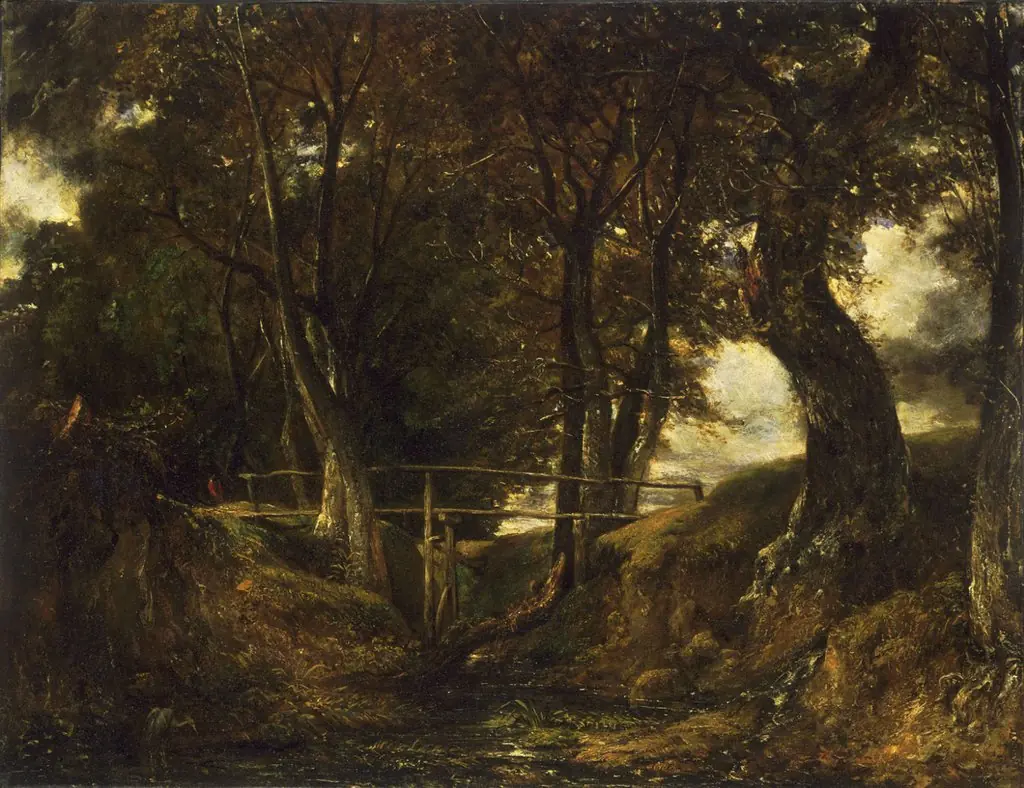 Dell at Helmingham Park (Philadelphia)
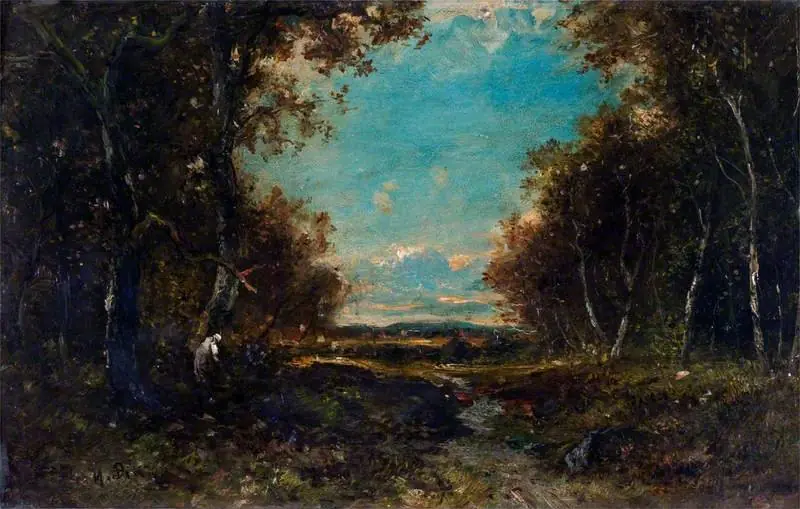 Landscape
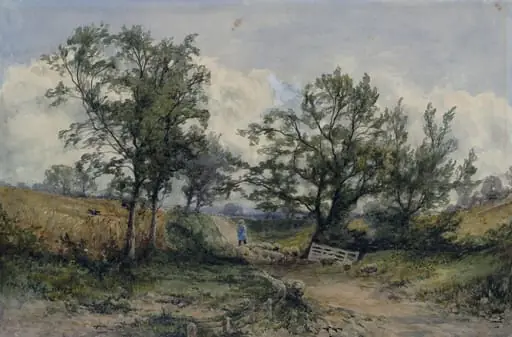 Landscape with sheep and cornfield
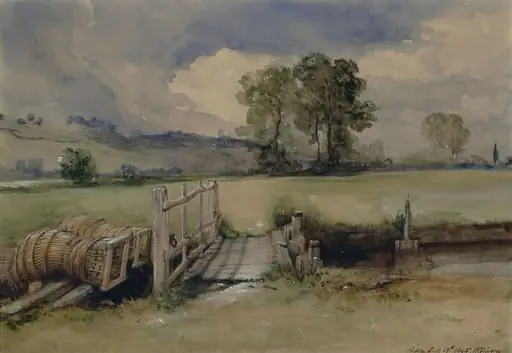 Eel Pots: Sketch from nature at Chilton
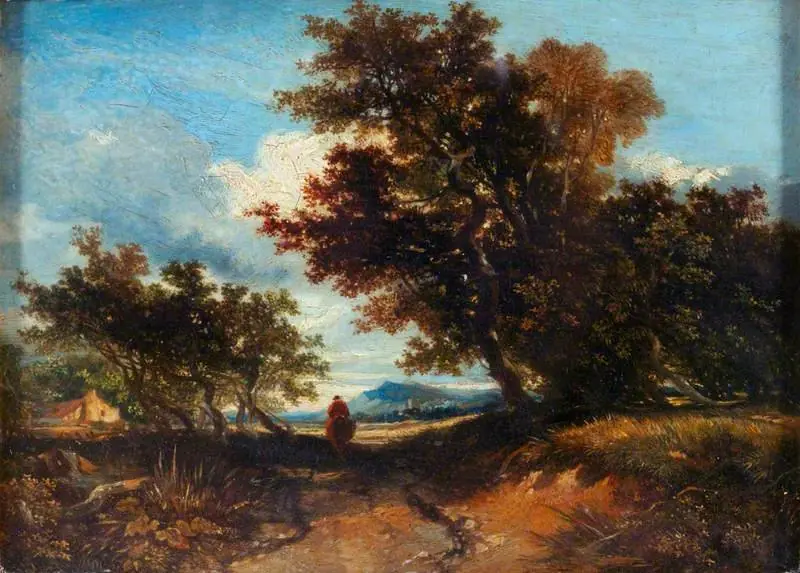 Landscape with a Horseman
 A wood scene
 Colney Hatch, Hertfordshire