Artwork
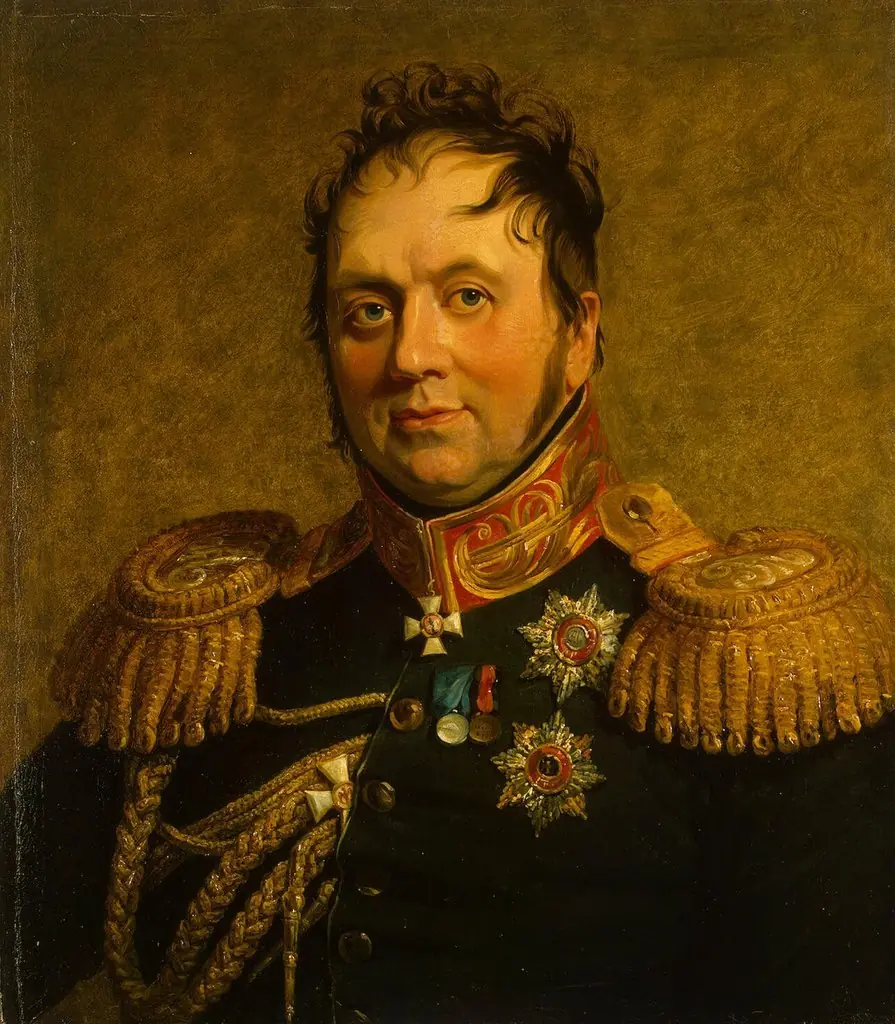
Portrait of Alexander Kh. von Benckendorf (1781-1844) (1st)
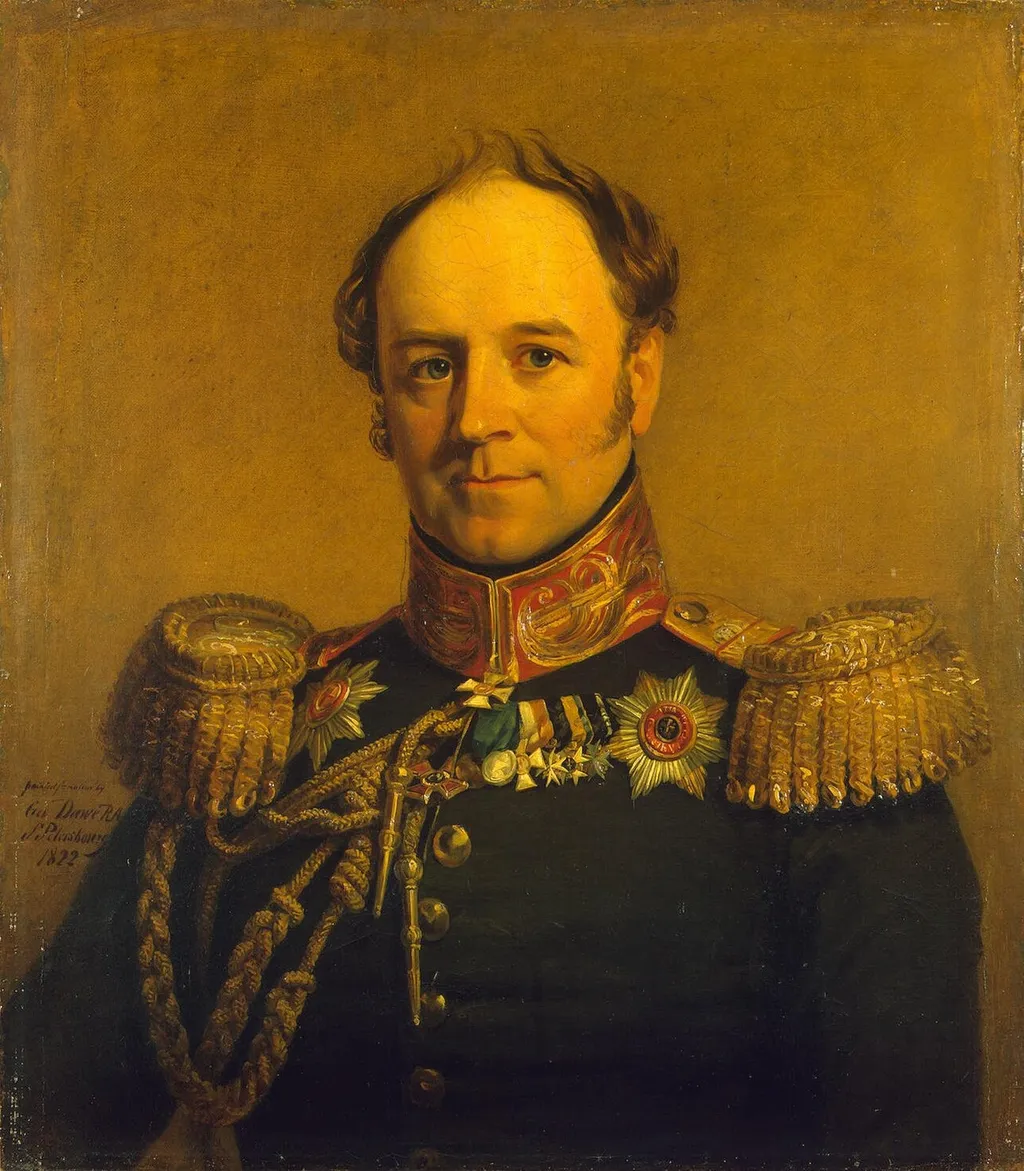
Portrait of Alexander Kh. von Benckendorf (1781-1844) (1st) is an oil painting by George Dawe. It dates from 1822 and is held in the collection of the Hermitage Museum.
About this work
Overview
The work belongs to a larger series of 329 military portraits commissioned for the Military Gallery in the Winter Palace.
Painted in 1822 by the English artist George Dawe, this oil portrait depicts Alexander Kh. von Benckendorf, a Russian general who served during the Napoleonic Wars. The work belongs to a larger series of 329 military portraits commissioned for the Military Gallery in the Winter Palace. Dawe, who relocated to Saint Petersburg in 1819, became a central figure in Russian portraiture during this period, producing works that balanced formal dignity with personal presence.
Subject & Meaning
Alexander von Benckendorf is portrayed in full ceremonial uniform, adorned with multiple orders and medals signifying his service and rank. His composed expression and upright posture convey authority without overt aggression. The absence of contextual elements focuses attention on his identity as a military leader, aligning with the gallery’s purpose of honoring Russia’s wartime commanders. The portrait functions as both personal likeness and institutional tribute.
Technique & Style
Dawe employed smooth, blended brushwork to render the textures of the uniform and the subtle tones of the sitter’s skin. The gold and crimson fabrics are rendered with precision, their metallic sheen suggested through careful highlights rather than literal imitation. The dark, neutral background isolates the figure, enhancing the visual impact of the uniform’s rich colors and intricate detailing, a hallmark of Dawe’s approach to military portraiture.
History & Provenance
Commissioned as part of Tsar Alexander I’s initiative to commemorate Russia’s military leadership after the defeat of Napoleon, the portrait entered the collection of the Military Gallery in the Winter Palace. It remained there through subsequent imperial and Soviet periods, eventually becoming part of the State Hermitage Museum’s holdings. Its provenance is well-documented, tied directly to the imperial project of historical commemoration.
Context
Dawe’s series was conceived during a period of national reflection following the Napoleonic Wars. The Russian court sought to consolidate a visual legacy of its officers, blending Western European portraiture traditions with Russian patriotic sentiment. Dawe’s presence in Saint Petersburg, and his relationships with cultural figures like Pushkin, positioned him uniquely to execute this state-sponsored project with both technical skill and cultural sensitivity.
Legacy
The portrait remains a representative example of early 19th-century imperial portraiture in Russia. Dawe’s series, though less known outside Russia, established a visual template for military honor that influenced later state commissions. The work continues to serve as a historical record of rank, decoration, and the evolving role of portraiture in state identity during the post-Napoleonic era.
Artist & collection
Artist
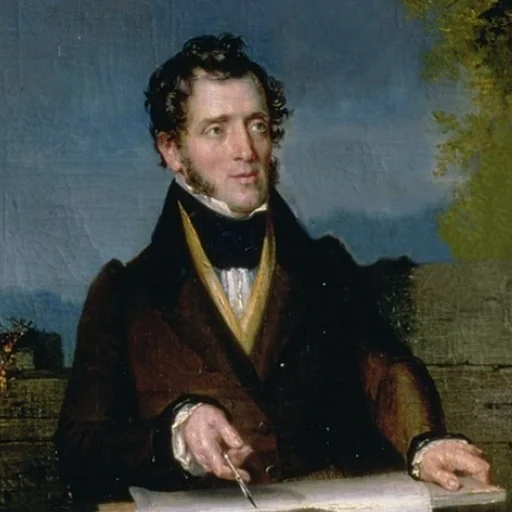
George Dawe (6 February 1781 – 15 October 1829) was an English portraitist who painted 329 portraits of Russian generals active during Napoleon's invasion of Russia for the Military Gallery of the Winter Palace.

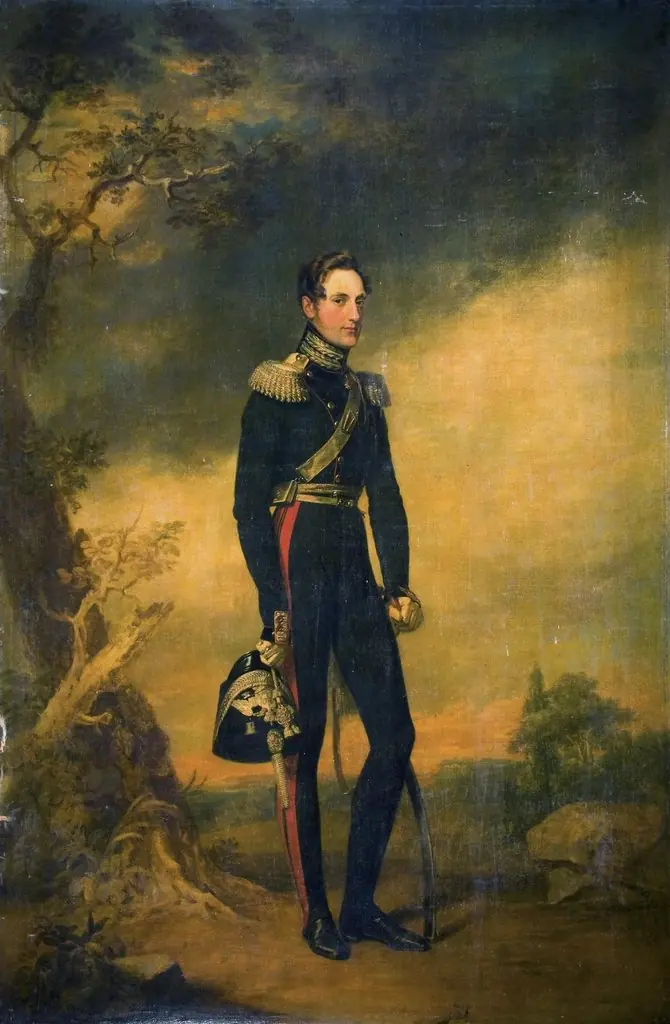 Portrait of Grand Duke Nikolai Pavlovich
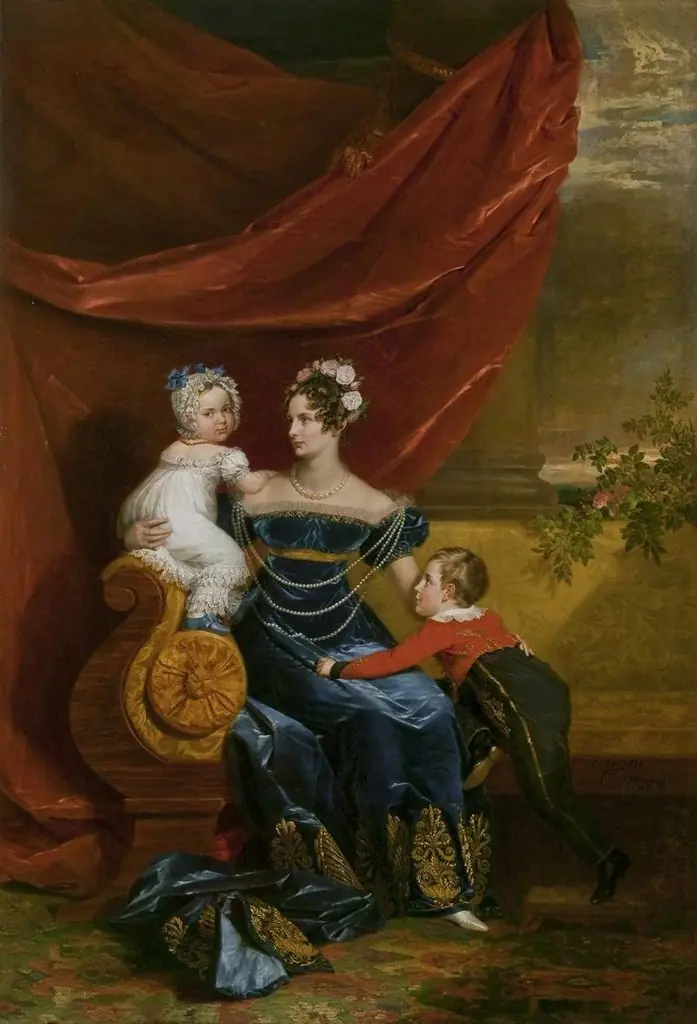 Portrait of Grand Duchess Alexandra Fiodorovna with Children
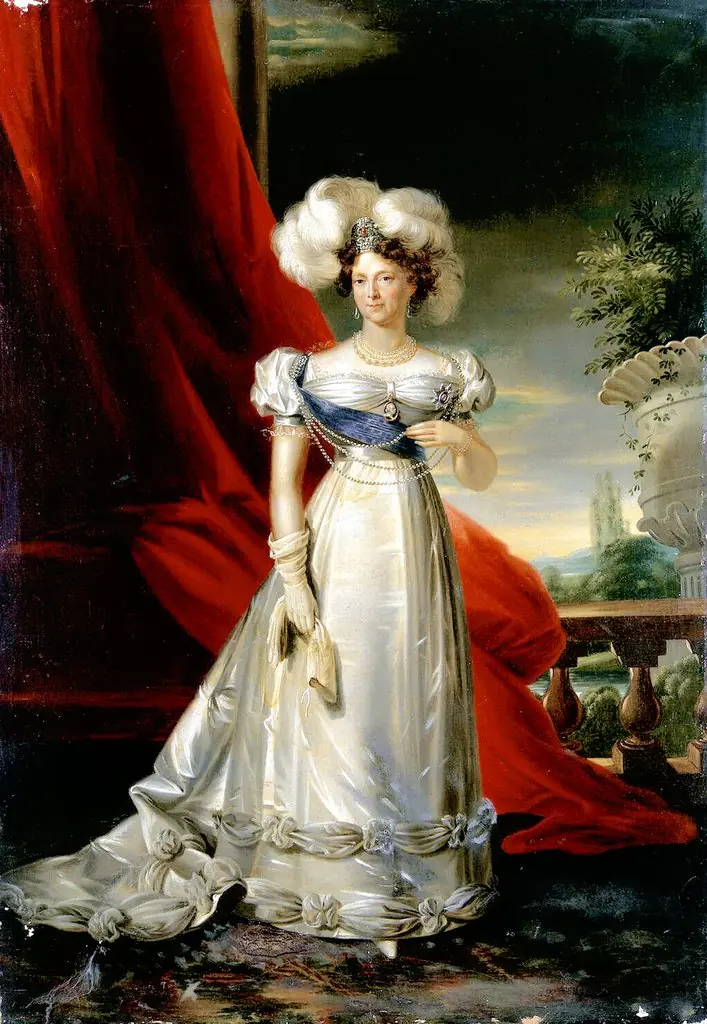 Portrait of the Empress Dowager Maria Feodorovna
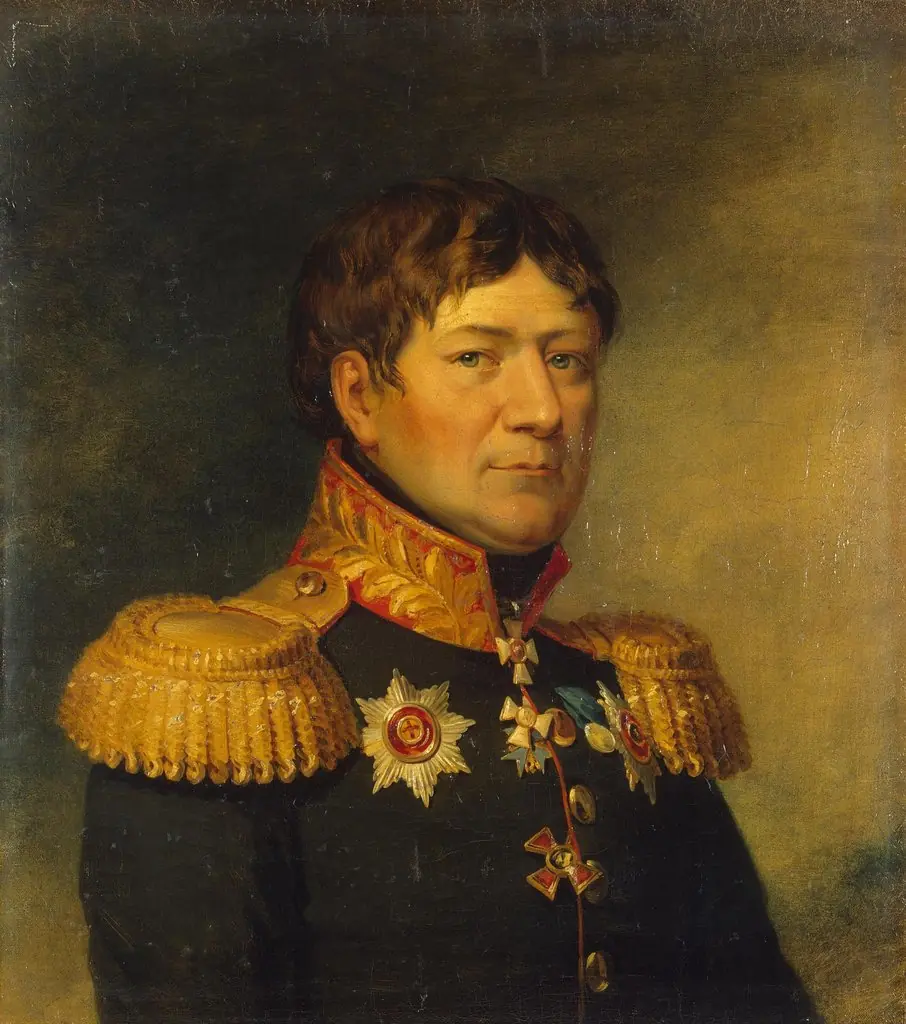 Portrait of Yegor M. Pillar (1767-1830)
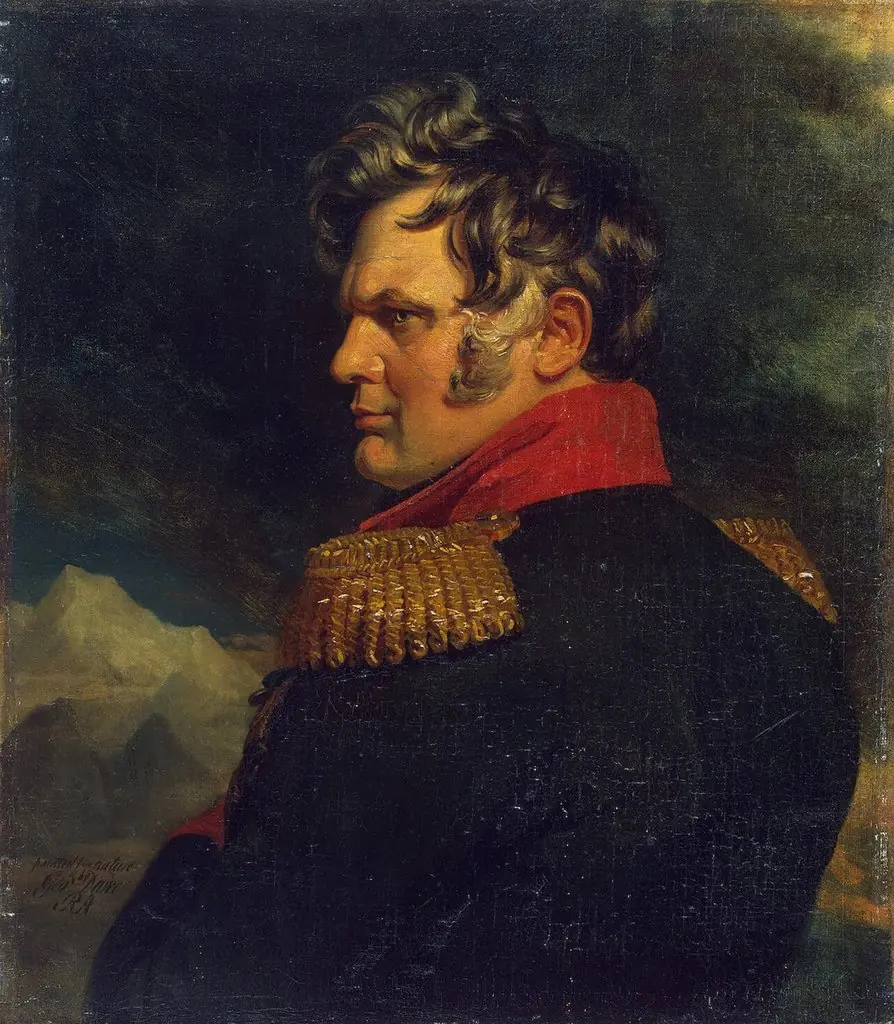 Portrait of Alexei P. Yermolov (1772/77-1861)
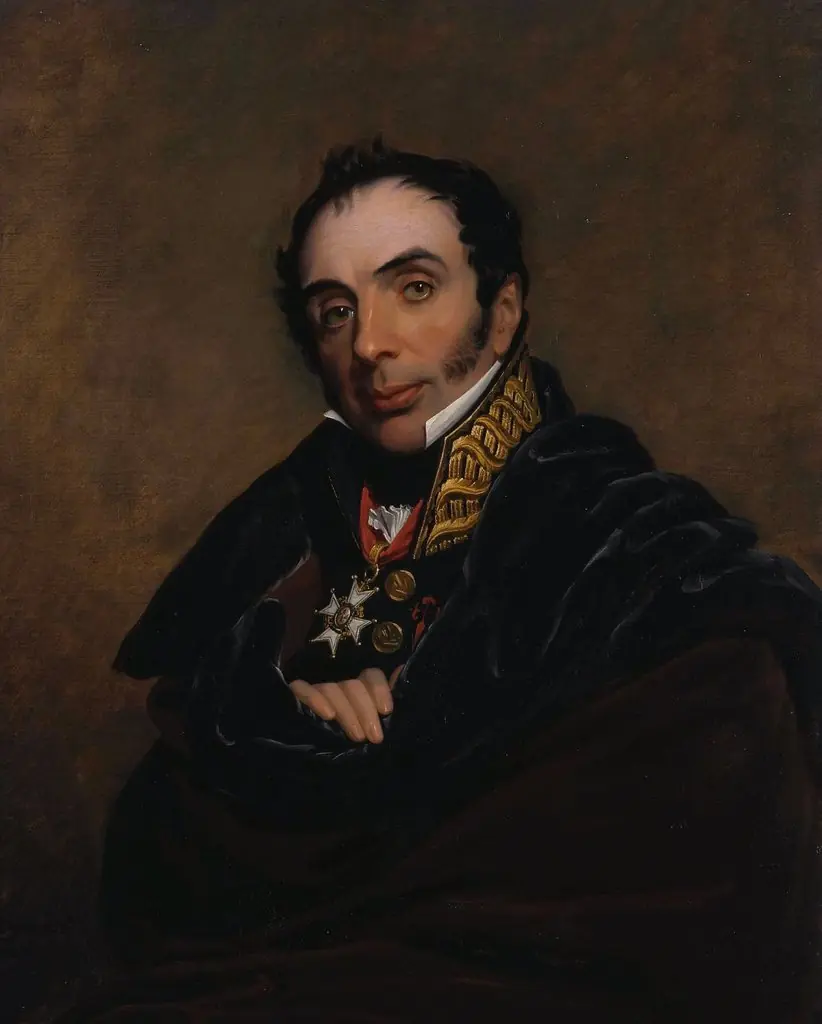 Portrait of Miguel Ricardo de Alava
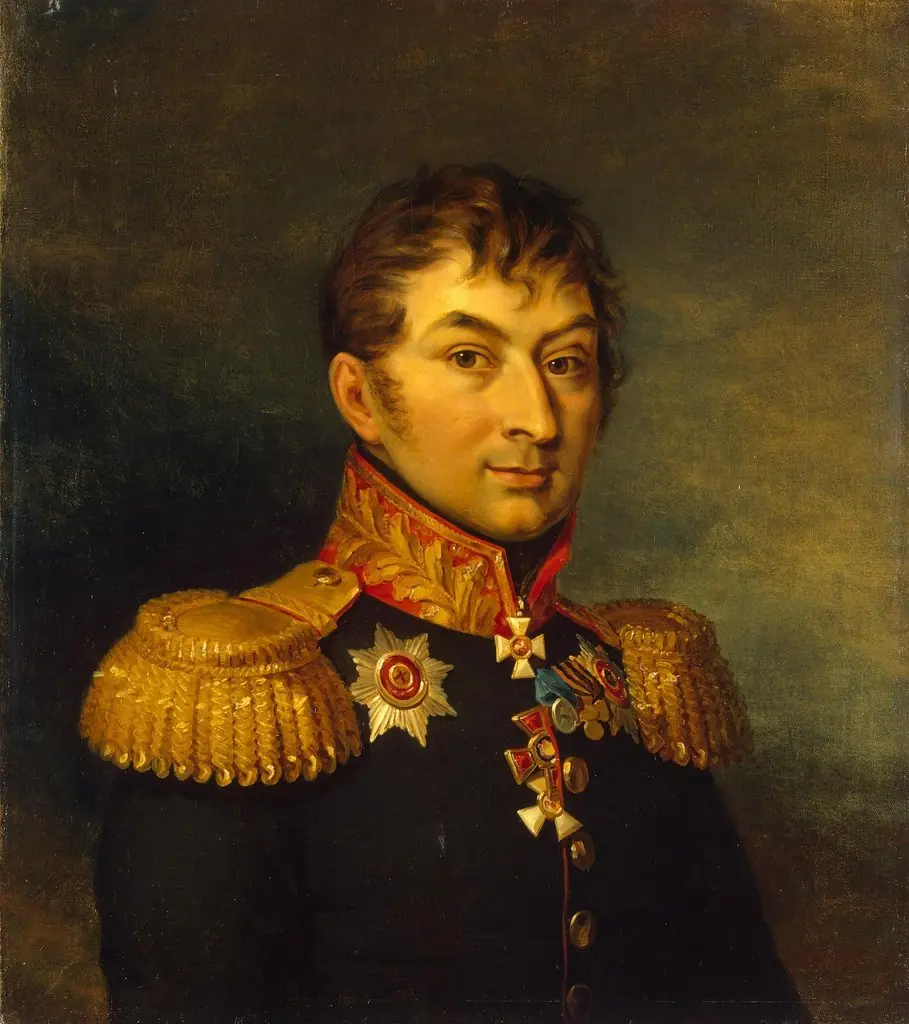 Portrait of Ivan D. Panchulidzev (1759-1815) (1st)
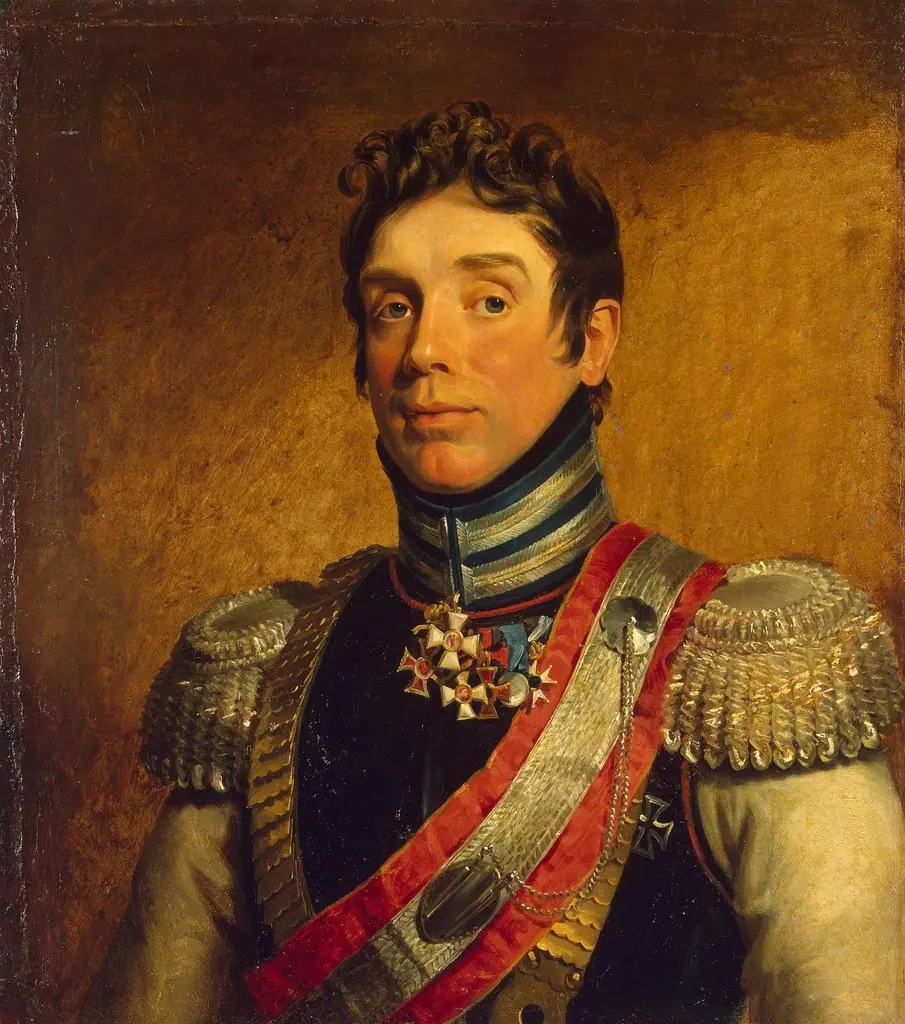 Portrait of Karl V. Budberg (1774-1829)
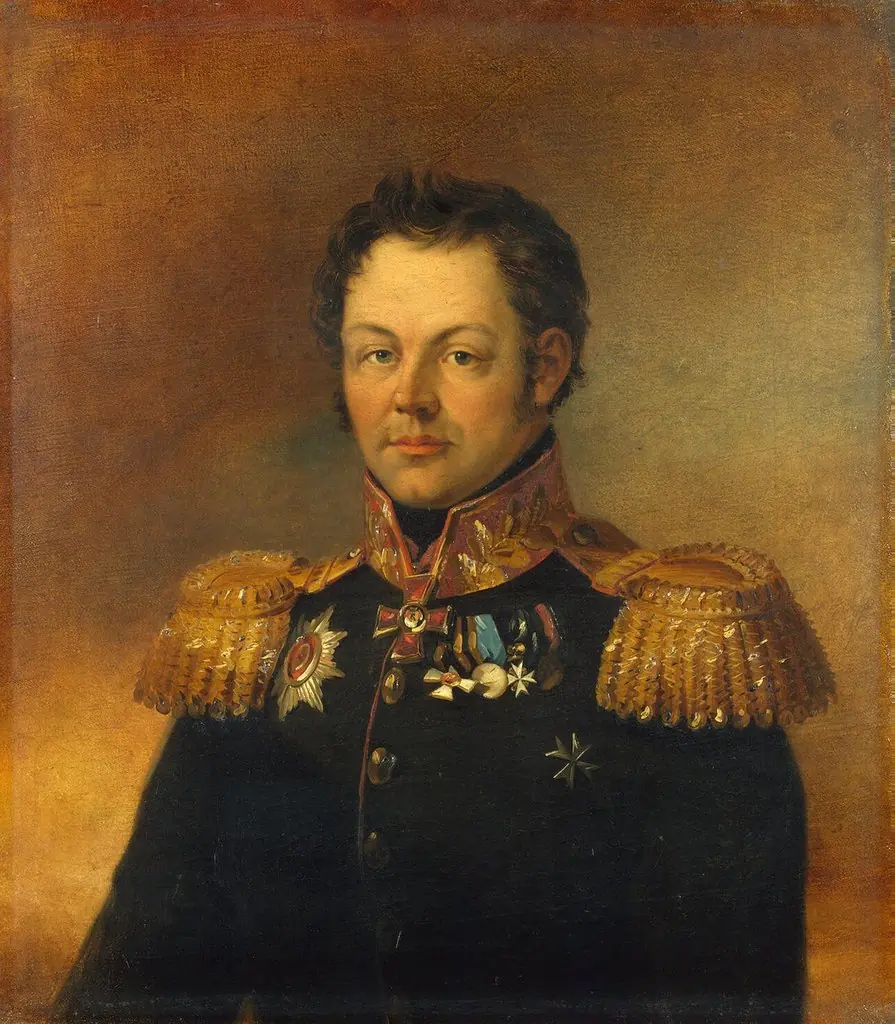 Portrait of Alexander E. Pyker (1776-1834)
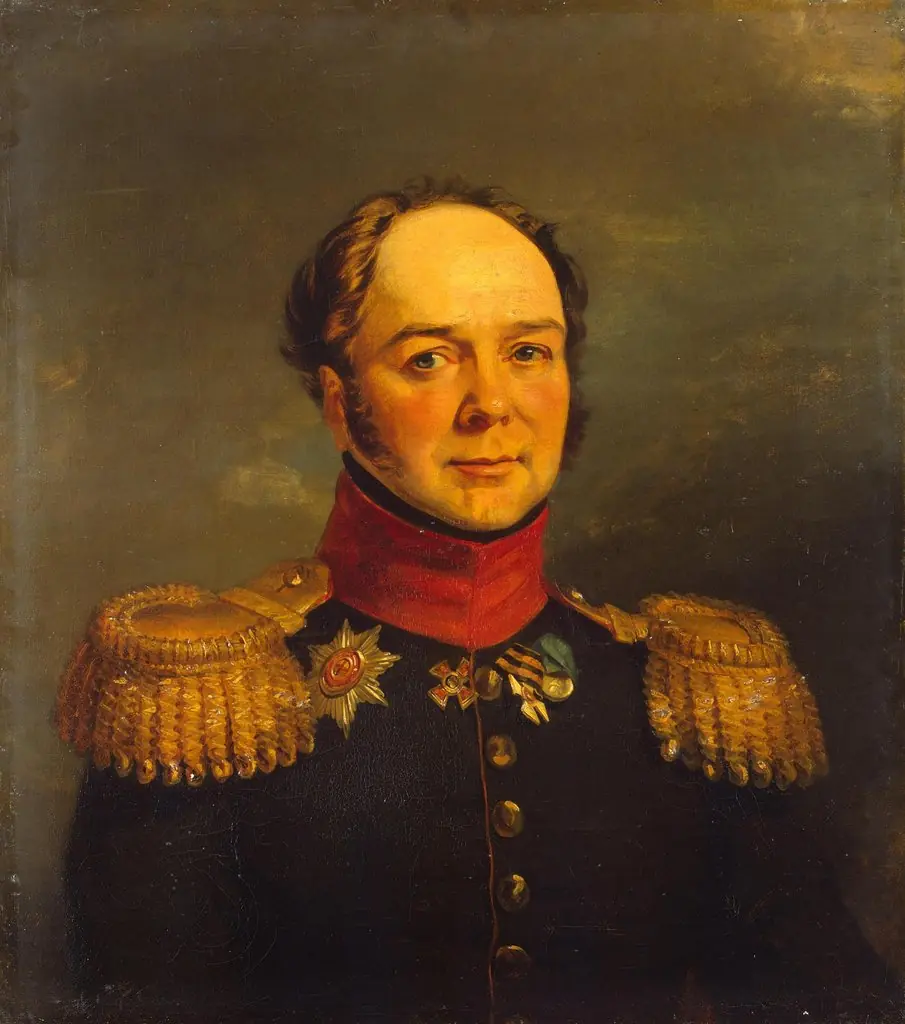 Portrait of Pavel N. Ushakov (1779-1853) (1st)
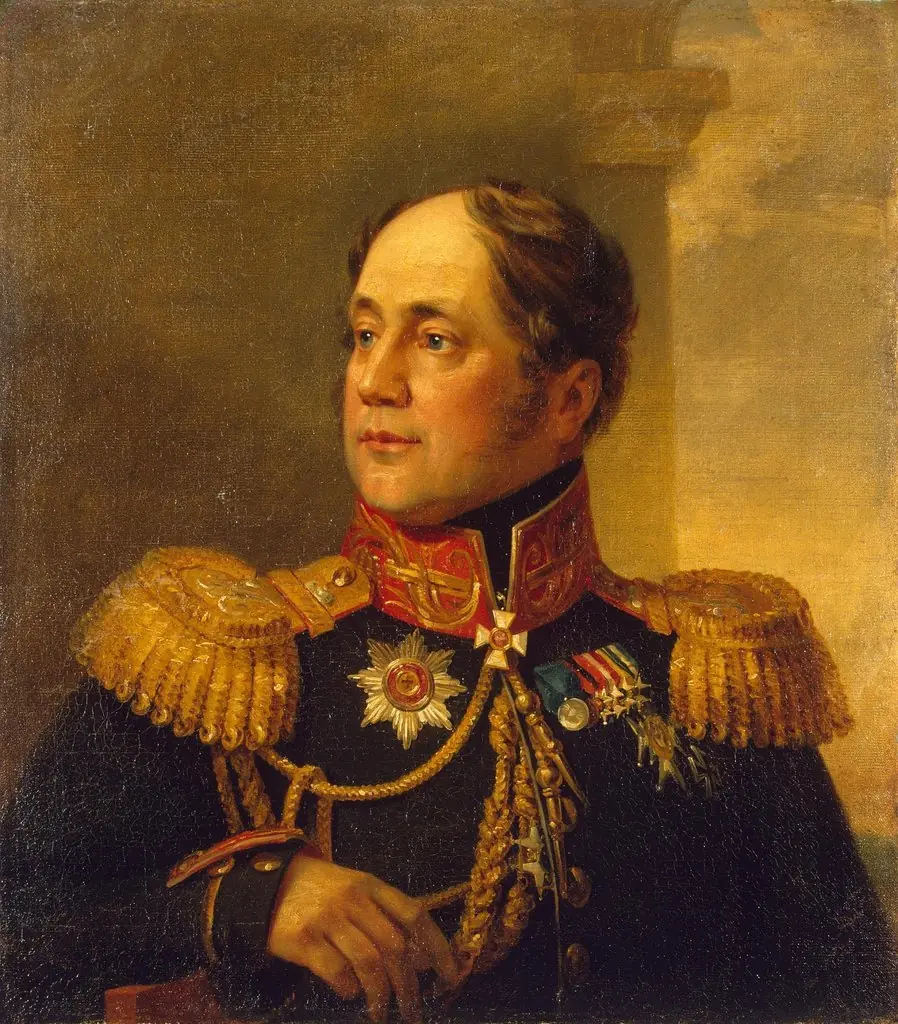 Portrait of Nikolai M. Sipyagin (1785-1828)
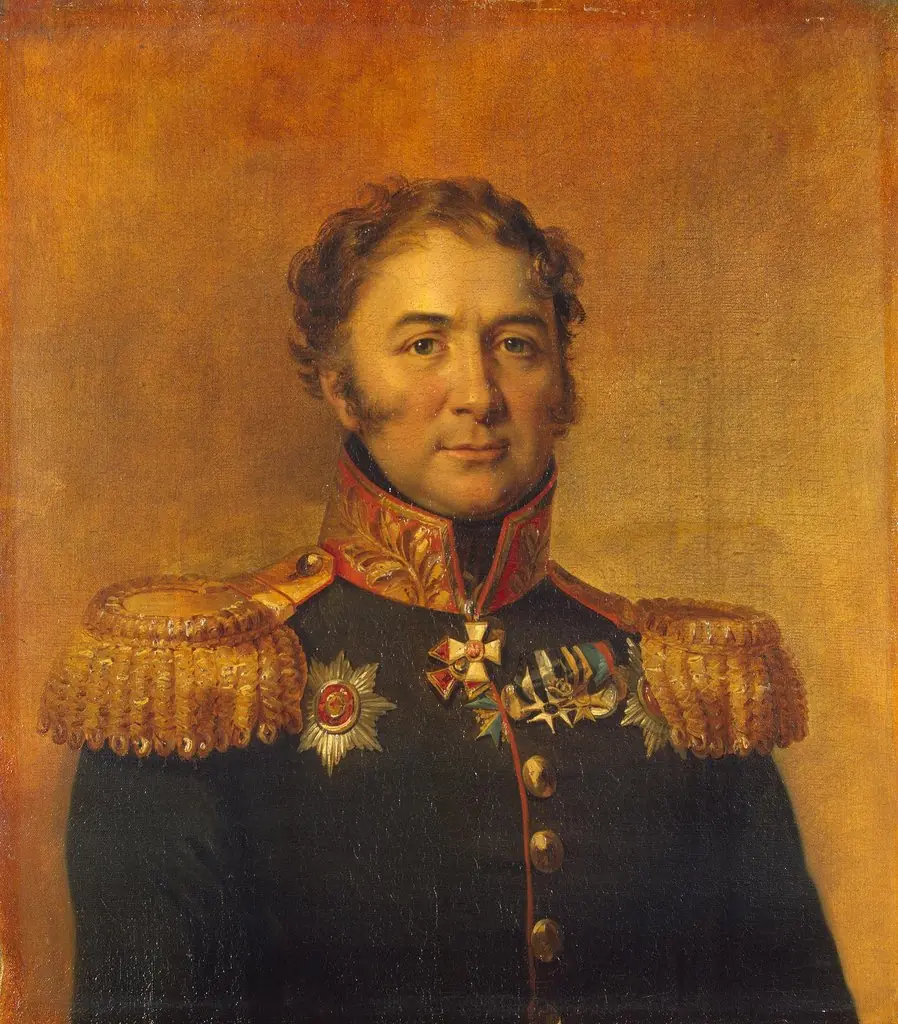 Portrait of Nikolai V. Dekhteryov (1775-1831)
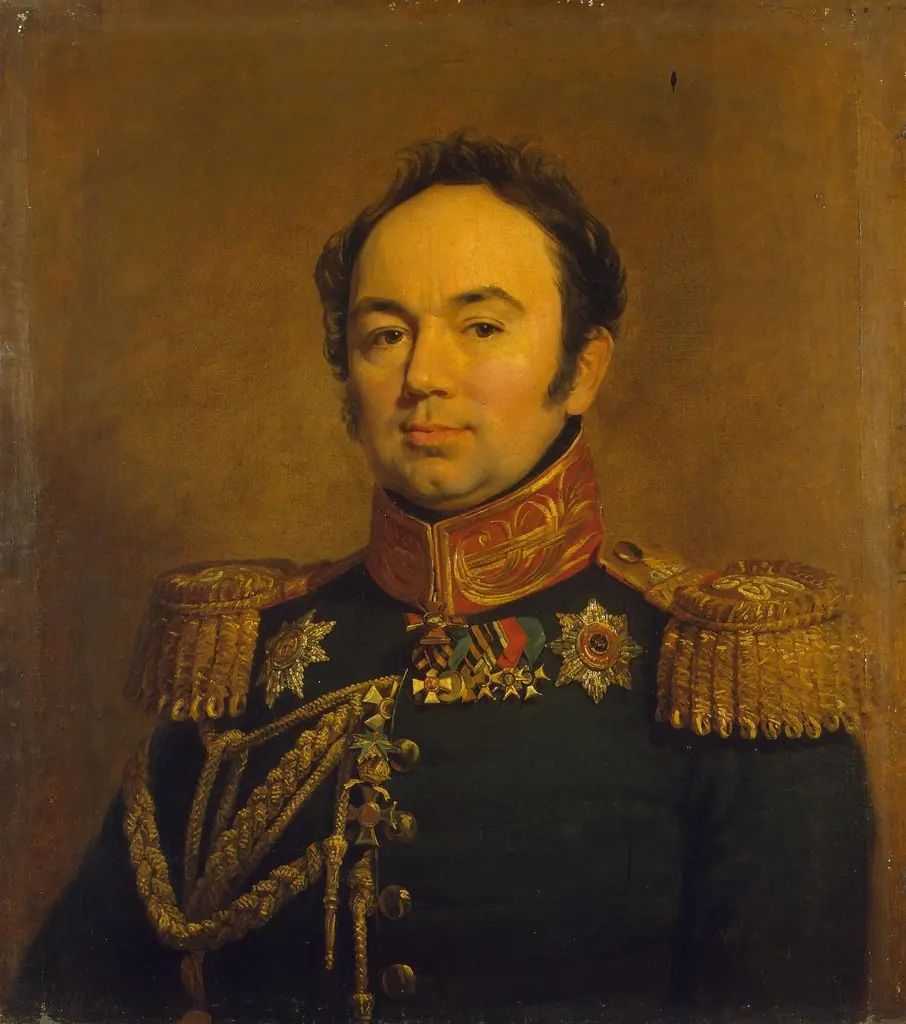 Portrait of Arseny A. Zakrevsky (1786 - 1865) (replica of the 1820 portrait ?)
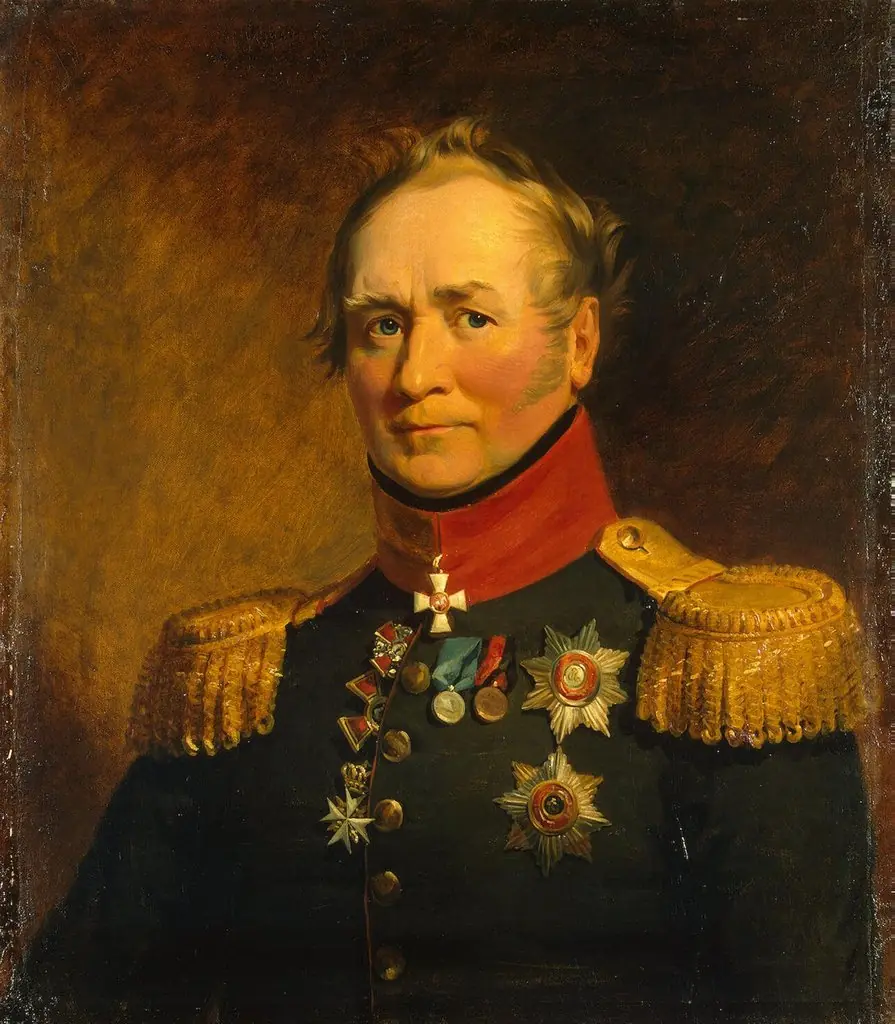 Portrait of Fyodor F. Oerthel (1767/68-1825)
 Portrait of Fyodor K. Korff (1773/74-1823)