Artwork
Portrait of Alexander D. Balashov (1770-1837)
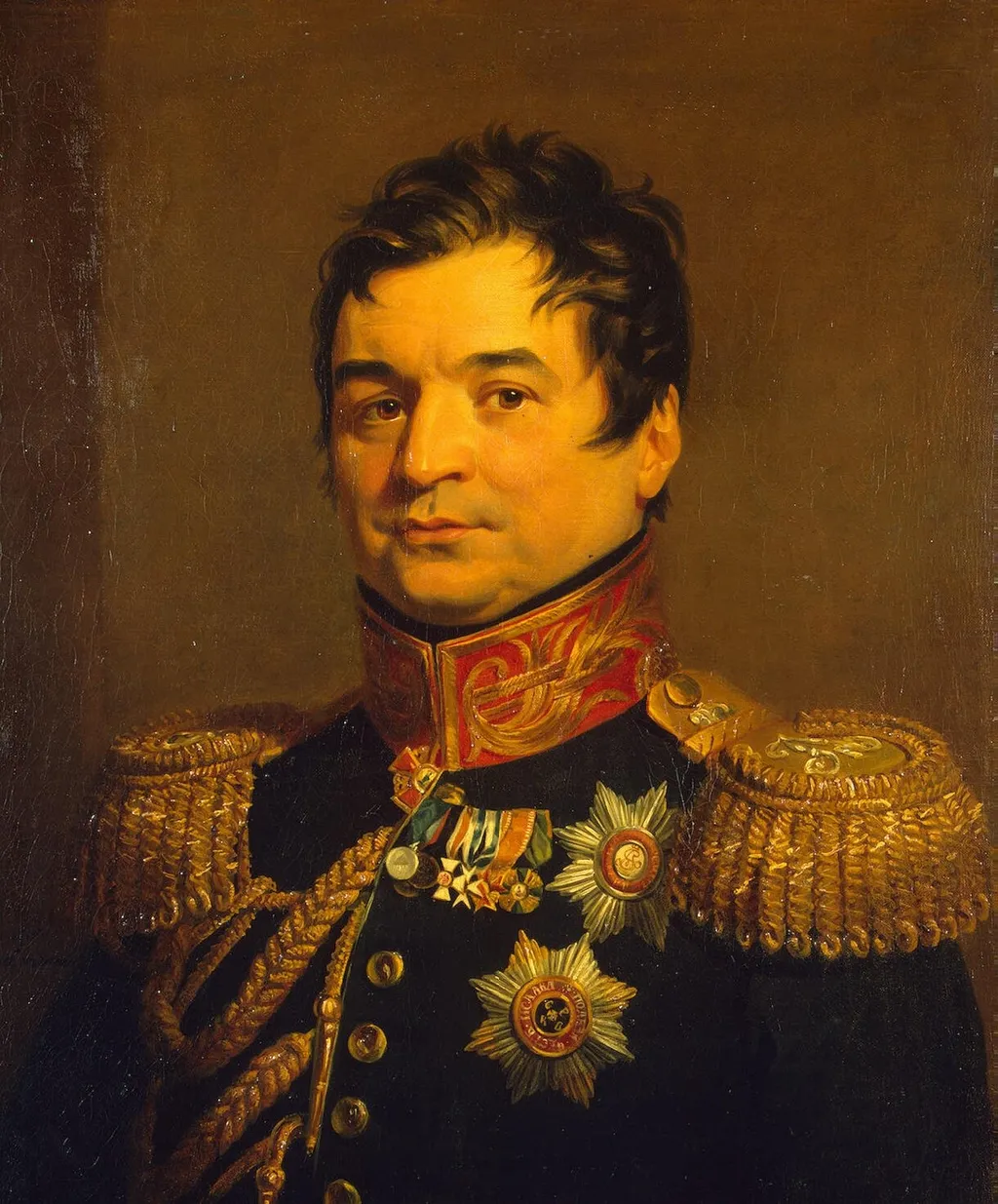
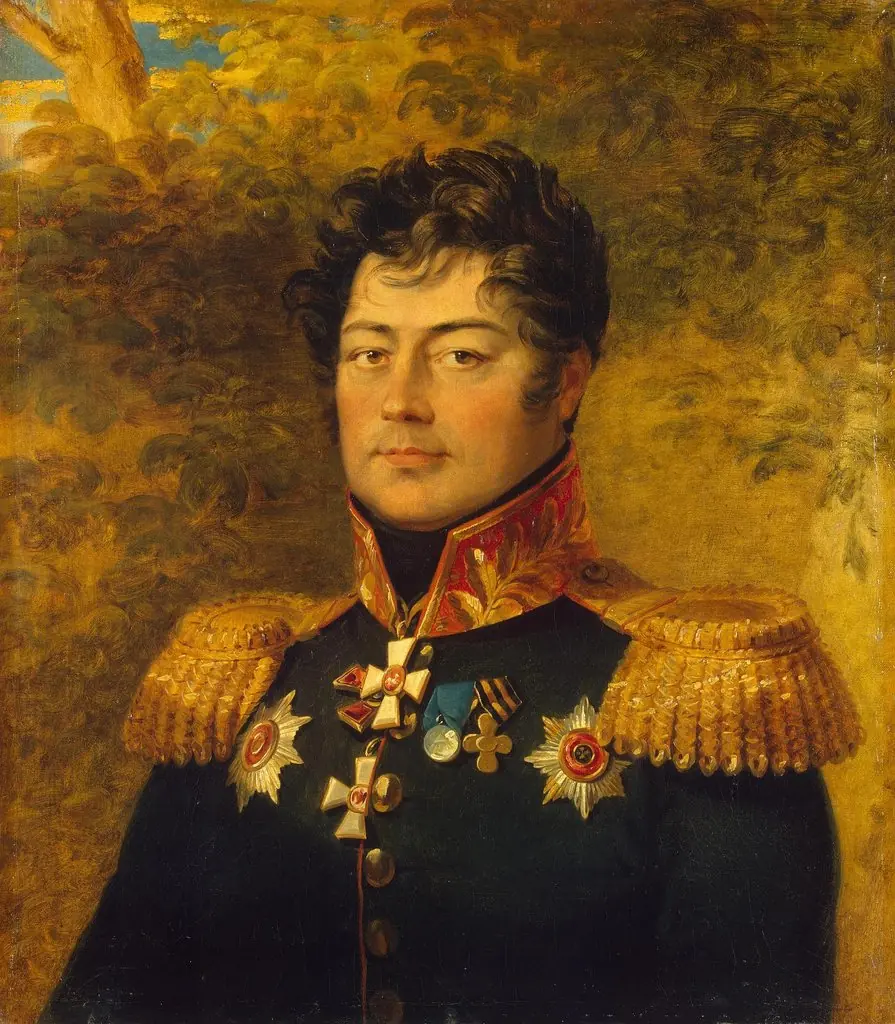
Portrait of Alexander D. Balashov (1770-1837) is an oil painting by George Dawe. It dates from 1822 and is held in the collection of the Hermitage Museum.
About this work
Overview
George Dawe’s 1822 oil portrait presents Alexander D. Balashov, a Russian official of the early nineteenth century, in full military dress. The canvas is held by the State Hermitage Museum in Saint Petersburg, where it forms part of the museum’s extensive portrait collection.
Subject & Meaning
Balashov is shown in a dark uniform richly adorned with gold braid, medals and a star‑shaped decoration on his chest, indicating a senior rank in the Imperial army. His hair is neatly swept back and his expression is solemn, reflecting the formal dignity expected of high‑ranking officers of the period.
Technique & Style
Dawe employs a restrained palette of deep blacks, reds and metallic highlights, rendering the fabric’s texture and the gleam of medals with precise brushwork. The portrait follows the conventions of early‑nineteenth‑century European court portraiture, emphasizing clarity of form and a polished surface.
History & Provenance
Born in England, Dawe moved to Saint Petersburg in 1819, where he quickly attracted the patronage of Russian aristocracy and officials. The Balashov portrait was completed three years after his arrival and entered the Hermitage’s holdings, where it remains on public display.
Context
The work belongs to a broader series of portraits Dawe produced for the Russian elite, documenting the military and administrative hierarchy after the Napoleonic Wars. Uniforms such as the one depicted were standard for senior officers, symbolizing both rank and the state’s emphasis on order during a period of reconstruction.
Artist & collection
Artist
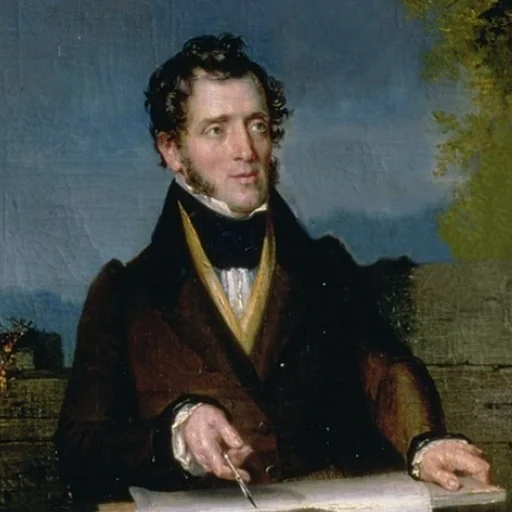
George Dawe (6 February 1781 – 15 October 1829) was an English portraitist who painted 329 portraits of Russian generals active during Napoleon's invasion of Russia for the Military Gallery of the Winter Palace.

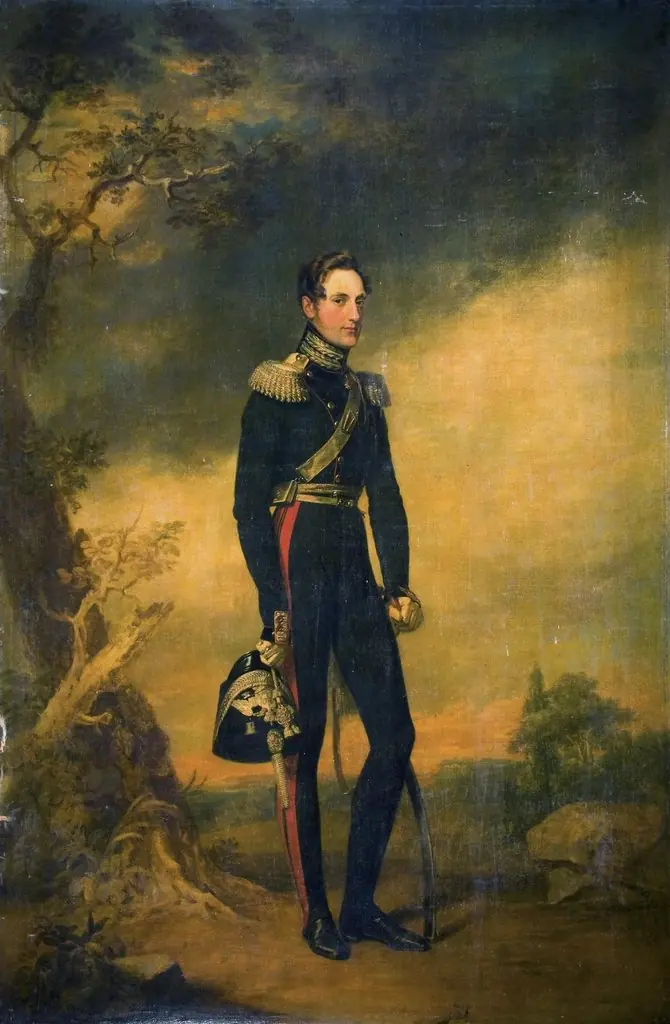 Portrait of Grand Duke Nikolai Pavlovich
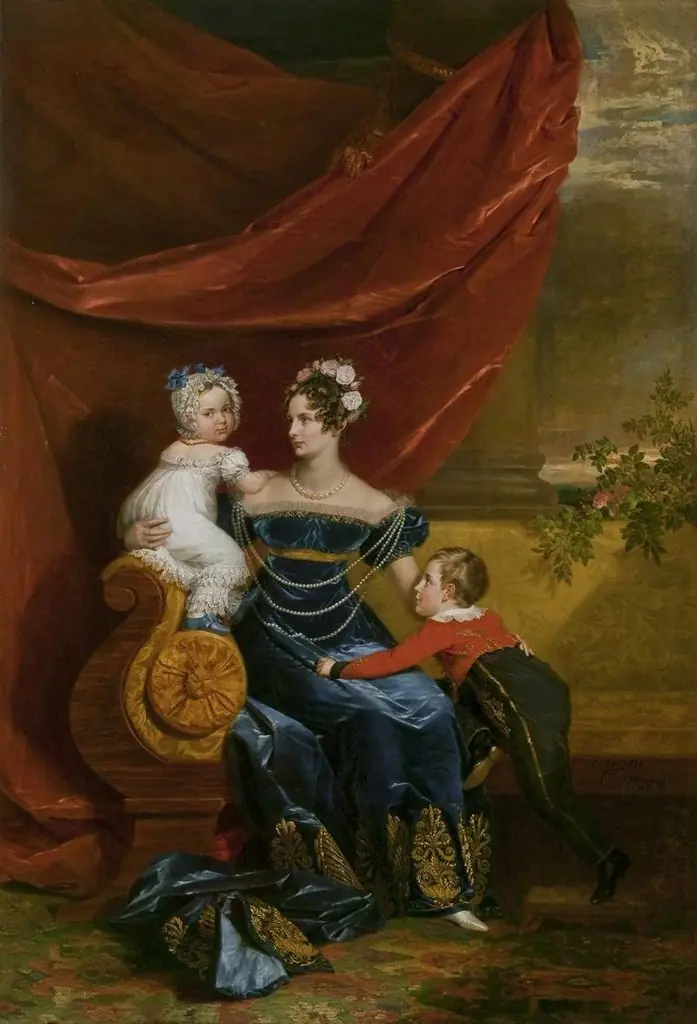 Portrait of Grand Duchess Alexandra Fiodorovna with Children
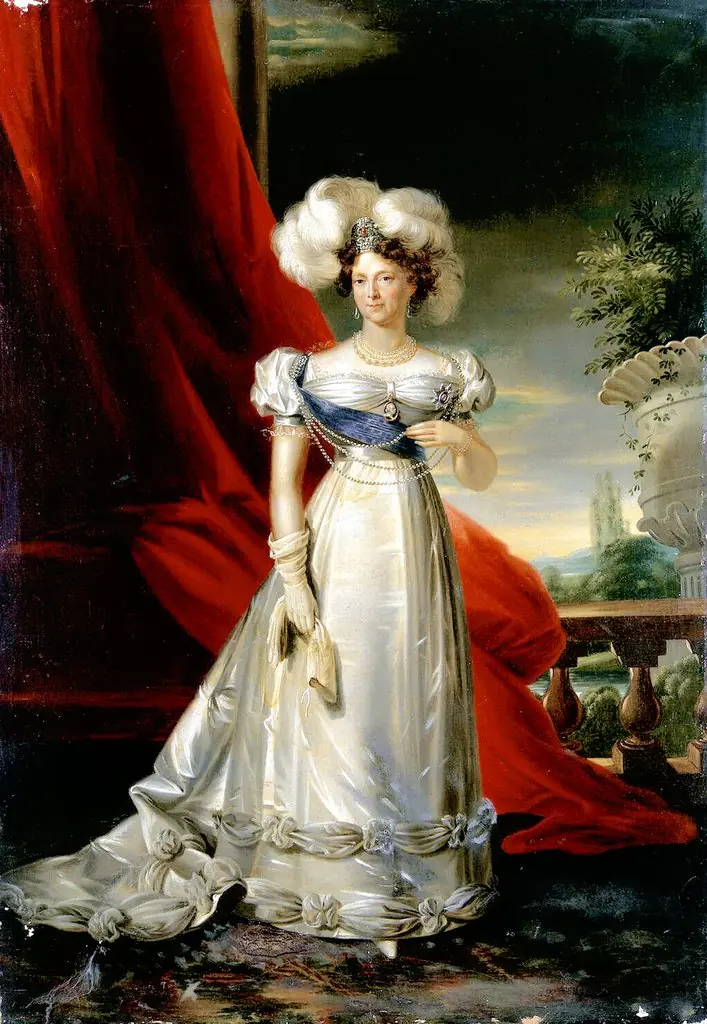 Portrait of the Empress Dowager Maria Feodorovna
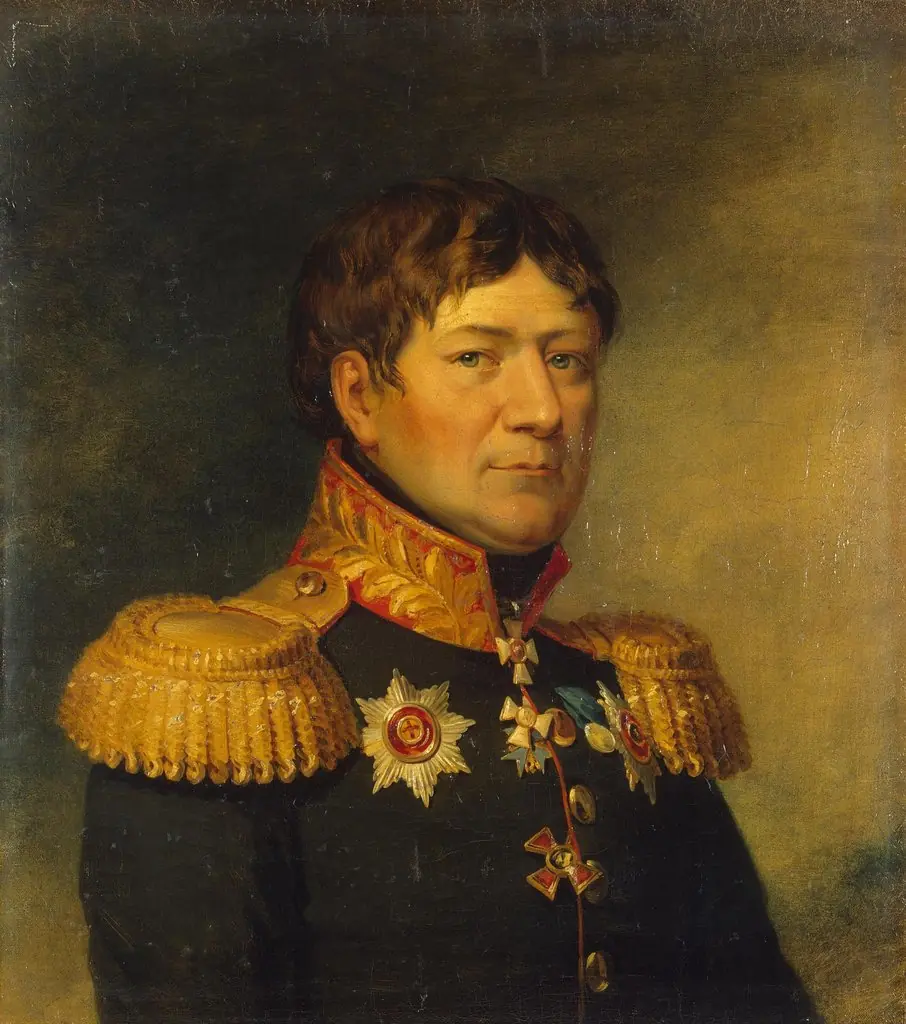 Portrait of Yegor M. Pillar (1767-1830)
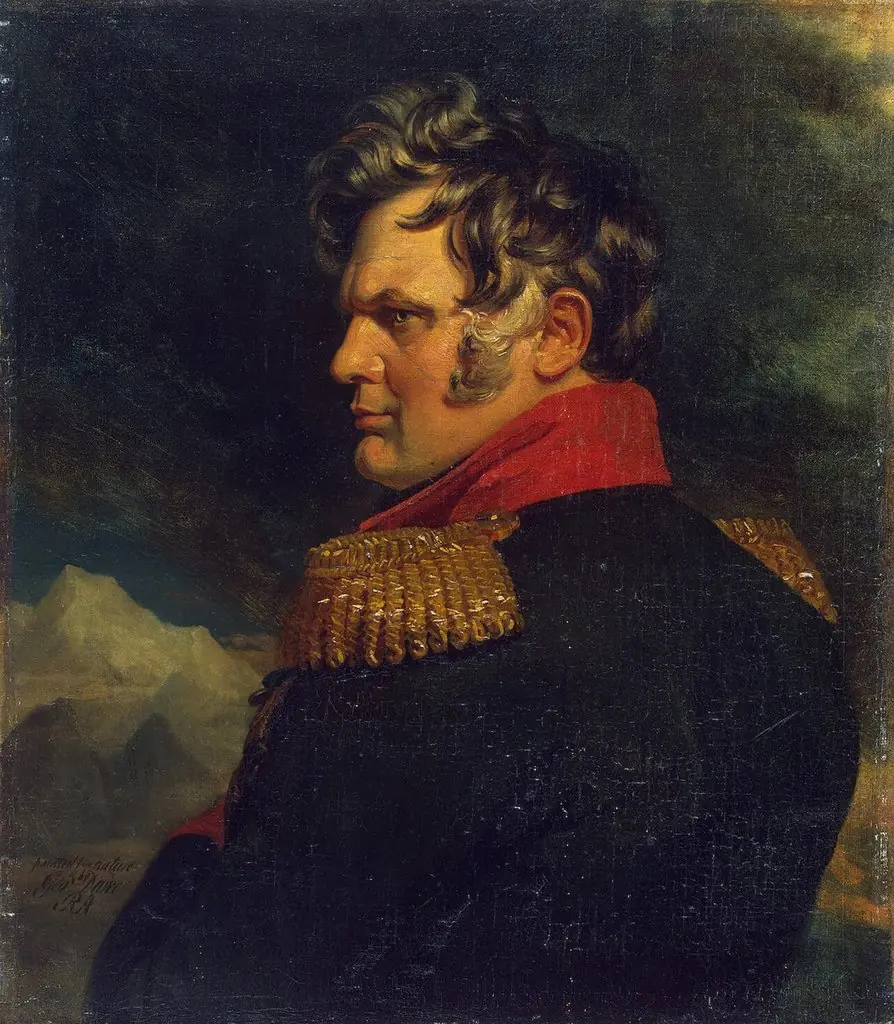 Portrait of Alexei P. Yermolov (1772/77-1861)
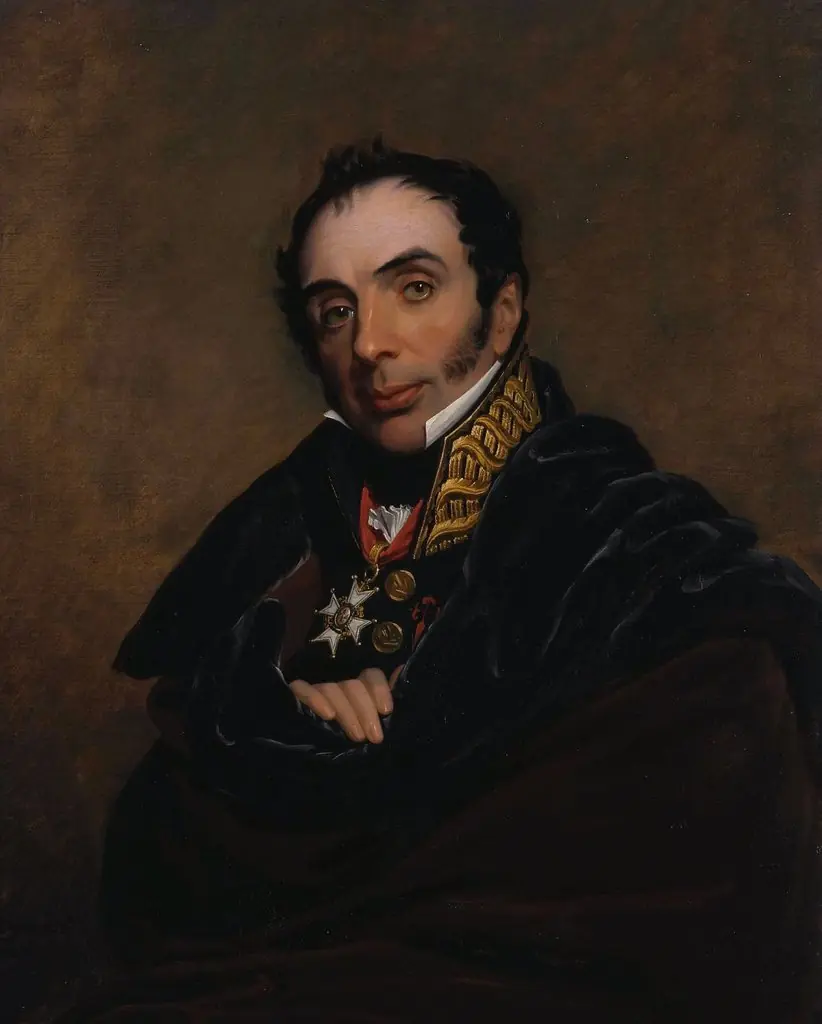 Portrait of Miguel Ricardo de Alava
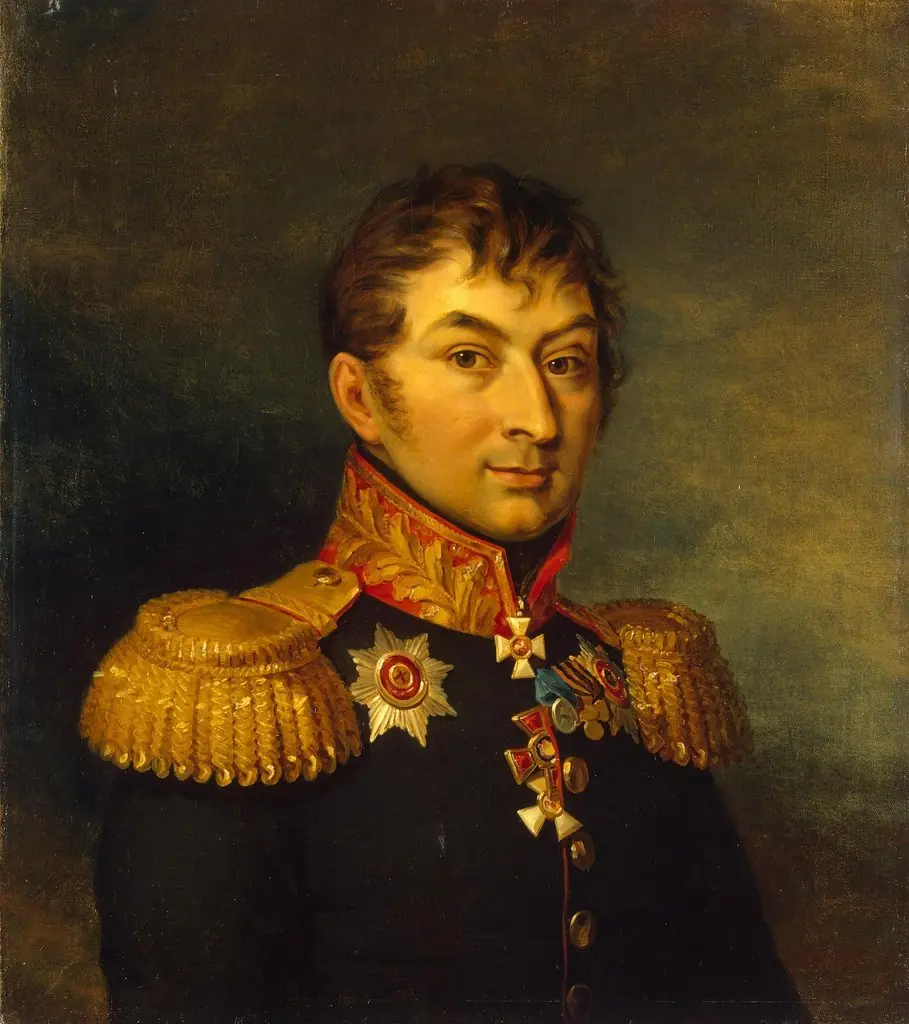 Portrait of Ivan D. Panchulidzev (1759-1815) (1st)
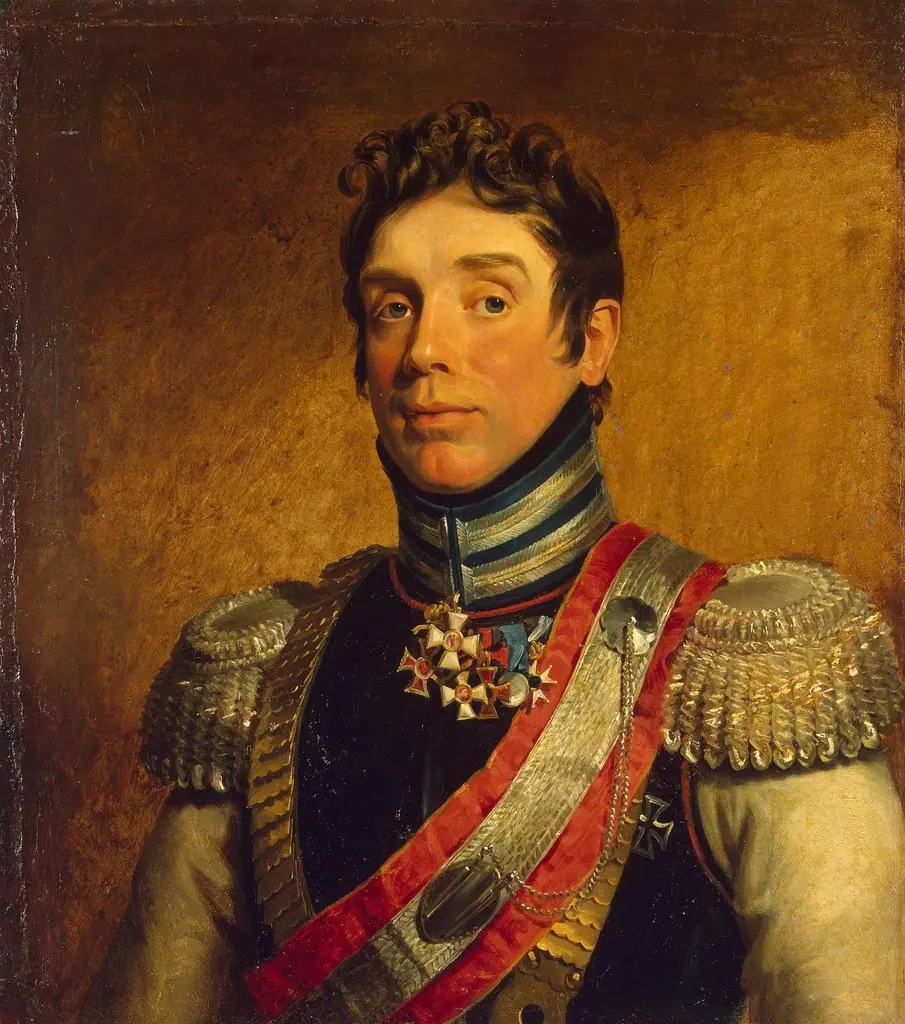 Portrait of Karl V. Budberg (1774-1829)
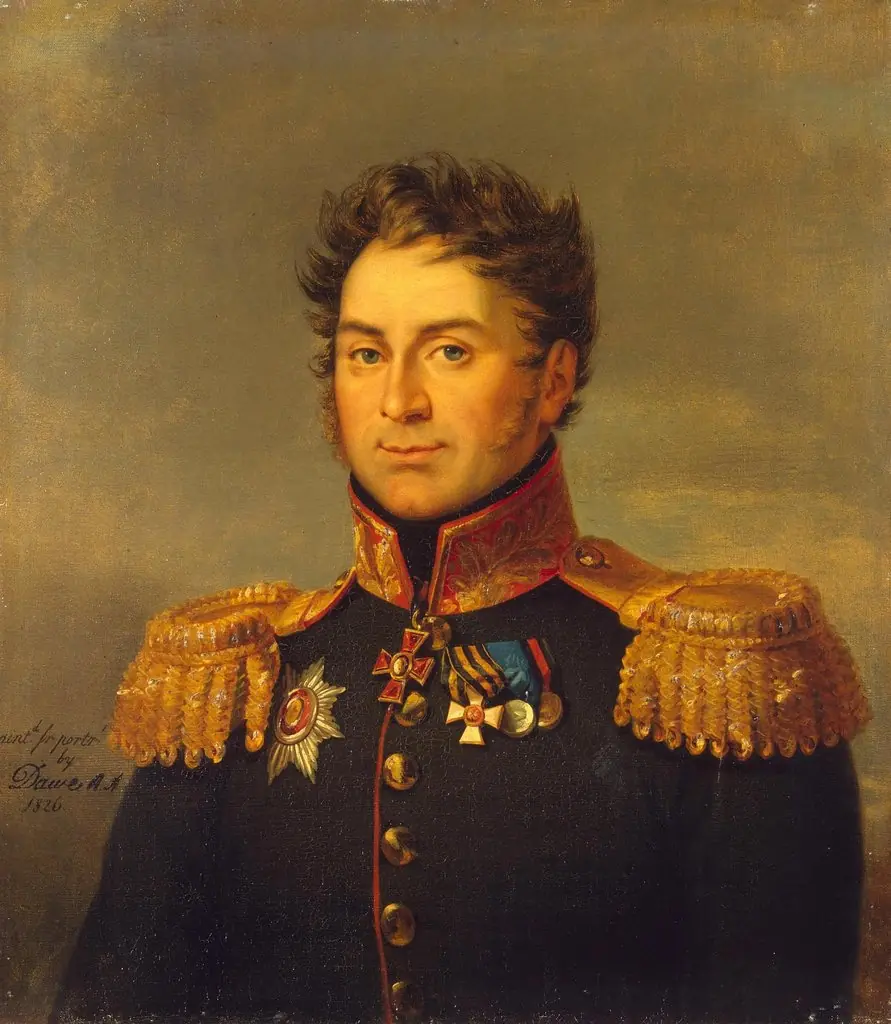 Portrait of Nikolai D. Olsufyev (1779-1817) (3rd)
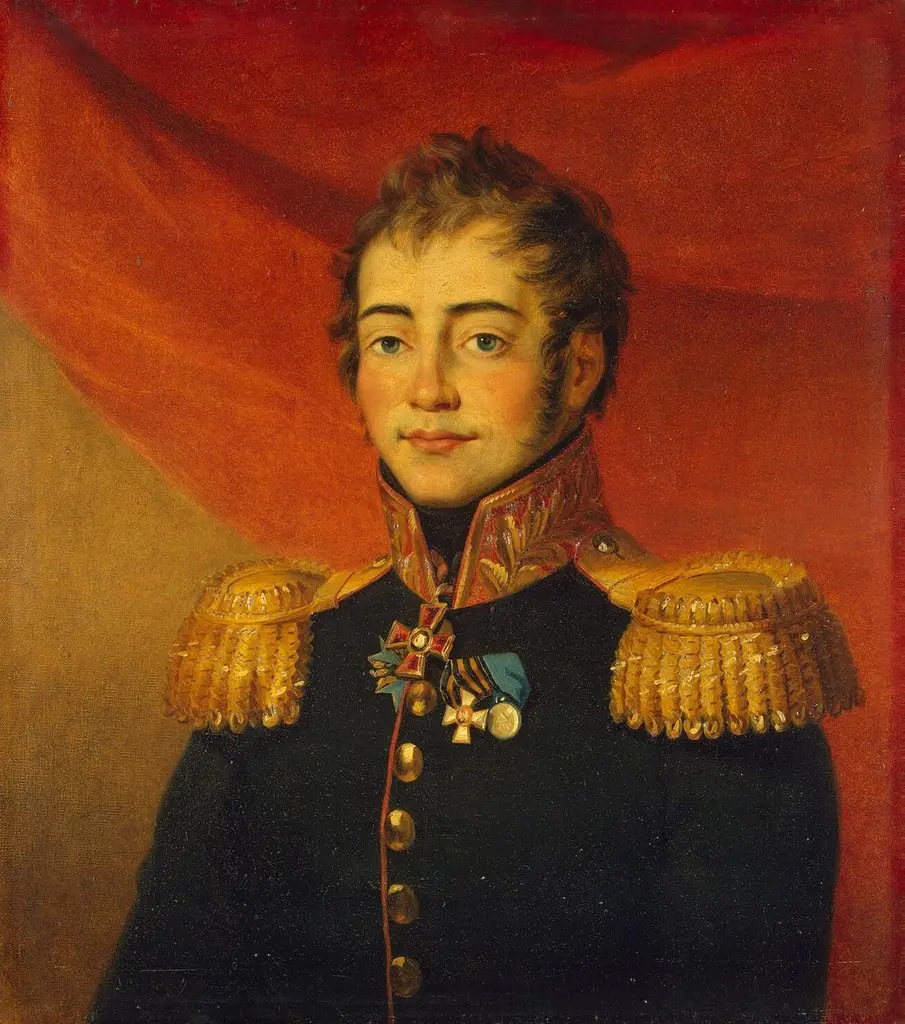 Portrait of Dmitry P. Lyapunov (1775-1821)
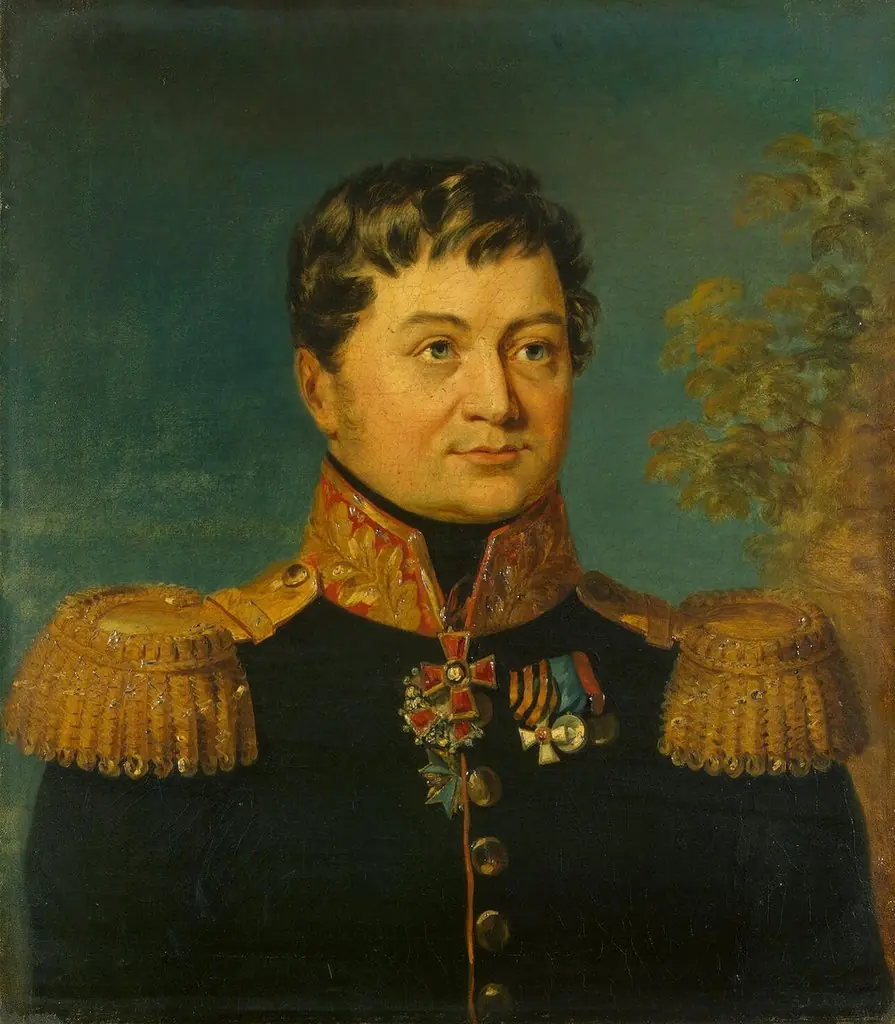 Portrait of Andrey P. Turchaninov (1779 -1830) (2nd)
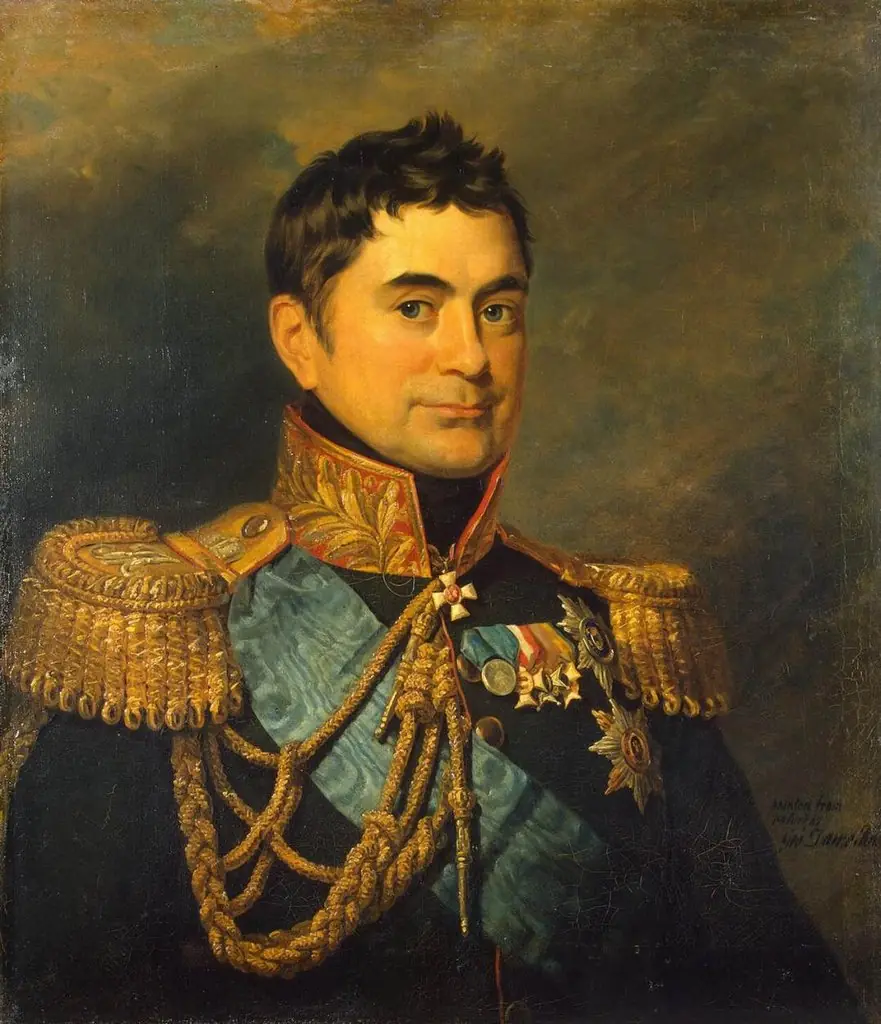 Portrait of Pyotr M. Volkonsky (1776-1852) (replica of the 1823 portrait)
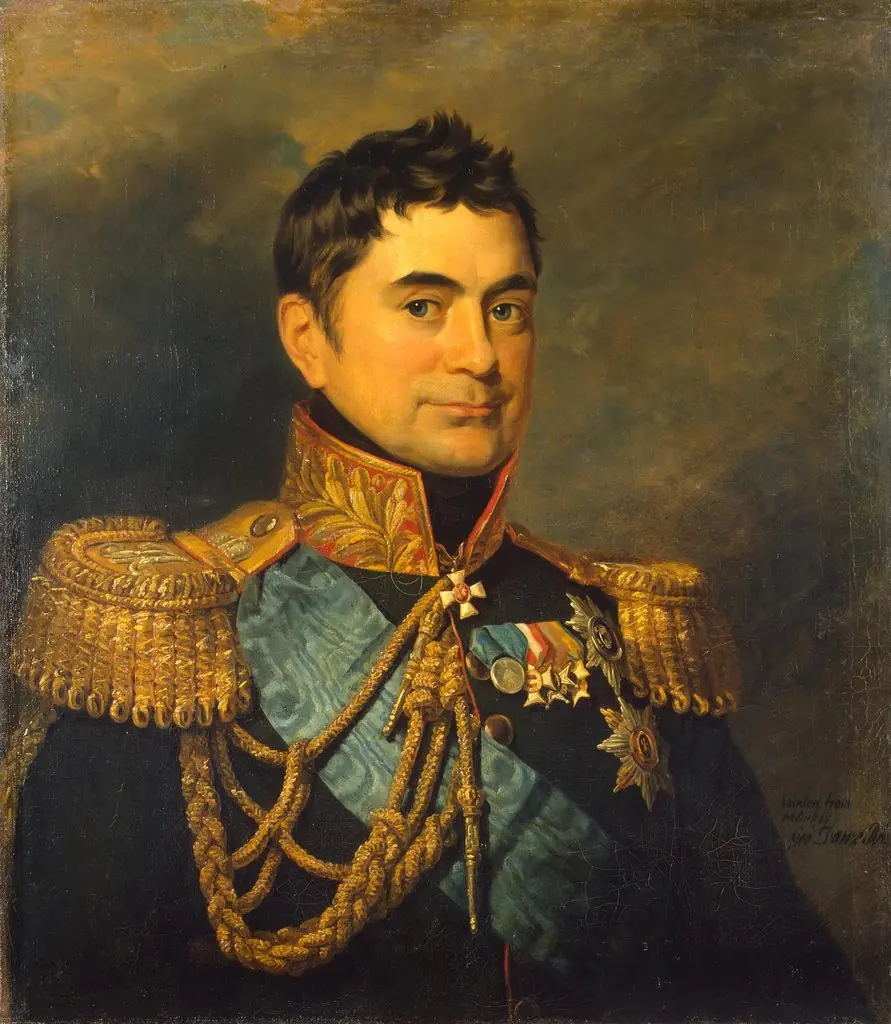 Portrait of Pyotr M. Volkonsky (1776-1852)
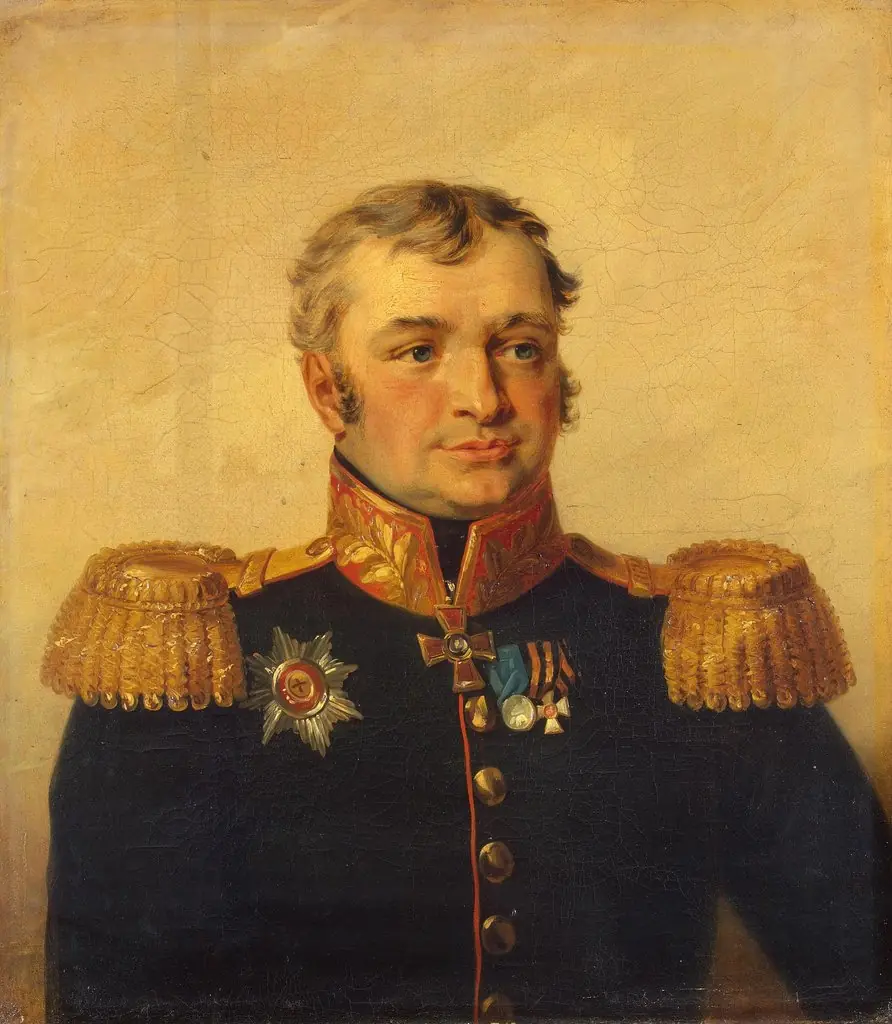 Portrait of Vasily S. Rakhmanov (1764-1816)
 Portrait of Semyon D. Panchulidzev (1767-1817) (2nd)