Artwork
Portrait of Grigory G. Engelhardt (1759-1834)
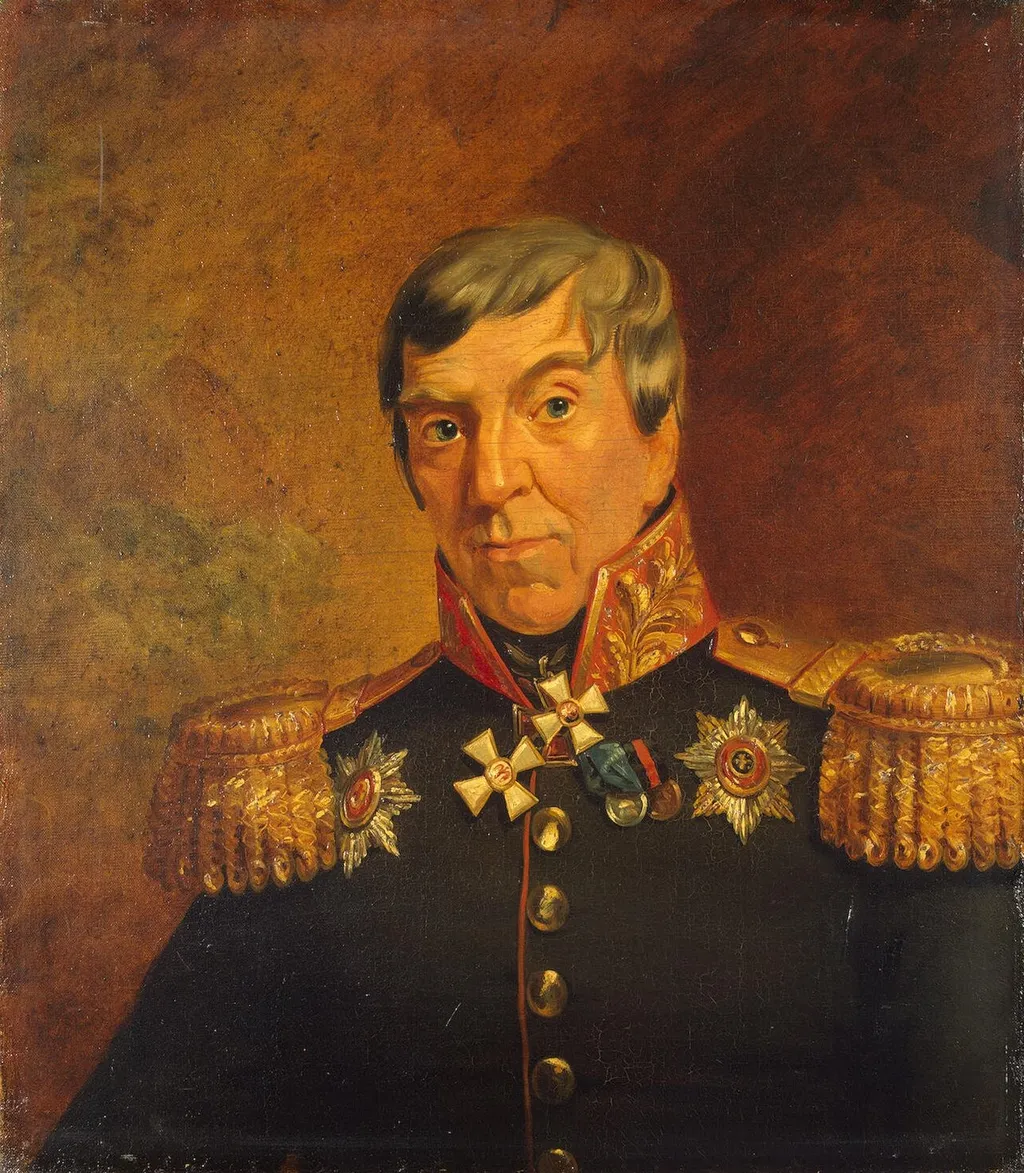
Portrait of Grigory G. Engelhardt (1759-1834) is an oil painting by George Dawe. It dates from 1822 and is held in the collection of the Hermitage Museum.
About this work
Overview
Dawe, then residing in Saint Petersburg, was commissioned to portray prominent figures in the Russian armed forces.
Painted in 1822 by the English artist George Dawe, this portrait captures Grigory G. Engelhardt, a Russian military officer of the early 19th century. Dawe, then residing in Saint Petersburg, was commissioned to portray prominent figures in the Russian armed forces. The work is part of the State Hermitage Museum’s collection, reflecting Dawe’s role in documenting Russia’s military elite during a period of national consolidation after the Napoleonic Wars.
Subject & Meaning
Grigory Engelhardt is depicted in full military dress, his uniform adorned with gold braid, medals, and a red collar bearing ornamental stitching. These elements signify rank and service, emphasizing his status within the imperial army. The composed posture and direct gaze convey quiet authority rather than flamboyance, aligning with the restrained ideals of military professionalism valued in post-war Russia. The portrait serves as a formal record of an officer’s contribution to state service.
Technique & Style
Dawe employed precise brushwork to render the textures of fabric, metal, and skin with clarity. The gold embellishments on the uniform are rendered with subtle highlights, avoiding excessive glitter, while the warm brown background recedes to focus attention on the figure. His style blends English portraiture traditions with Russian expectations of solemnity, resulting in a restrained yet detailed representation that prioritizes dignity over theatricality.
History & Provenance
Commissioned during Dawe’s decade-long residency in Saint Petersburg, the portrait was created as part of a larger project to document Russian military leaders. It entered the Hermitage’s collection shortly after completion, likely through imperial acquisition. Dawe’s position as a foreign artist trusted by the Russian court enabled access to high-ranking subjects, and this work remains one of many in the museum’s holdings from his series on military figures.
Context
In the years following the defeat of Napoleon, Russia’s military aristocracy gained renewed prestige. Portraits like Engelhardt’s were commissioned to affirm loyalty and honor within the imperial hierarchy. Dawe, though British, became a key visual chronicler of this era, his works serving both as personal tributes and state-sanctioned records. The emphasis on uniform detail reflects a broader cultural interest in military order and hierarchy during the reign of Alexander I.
Legacy
Dawe’s portraits of Russian officers, including this one, remain important historical documents for understanding early 19th-century military culture. Though not widely known outside Russia, his body of work provides a visual archive of rank, uniformity, and the visual language of authority in the imperial army. The Hermitage’s preservation of these works ensures their continued role in scholarly study of Russian military identity.
Artist & collection
Artist
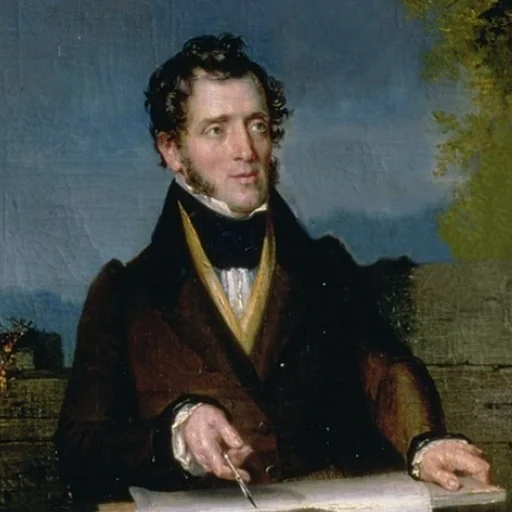
George Dawe (6 February 1781 – 15 October 1829) was an English portraitist who painted 329 portraits of Russian generals active during Napoleon's invasion of Russia for the Military Gallery of the Winter Palace.

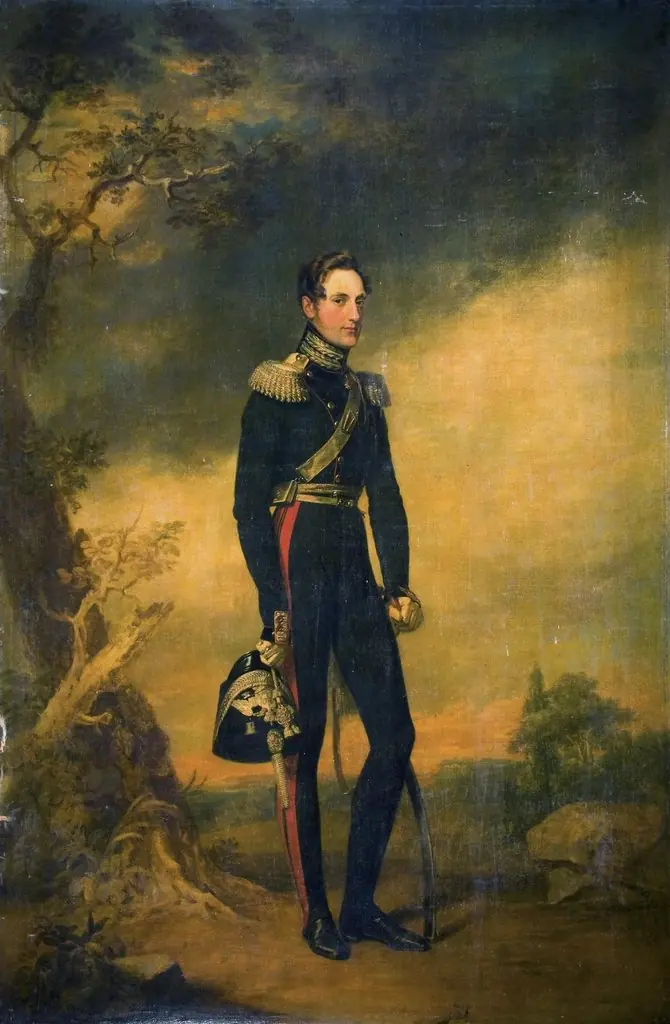 Portrait of Grand Duke Nikolai Pavlovich
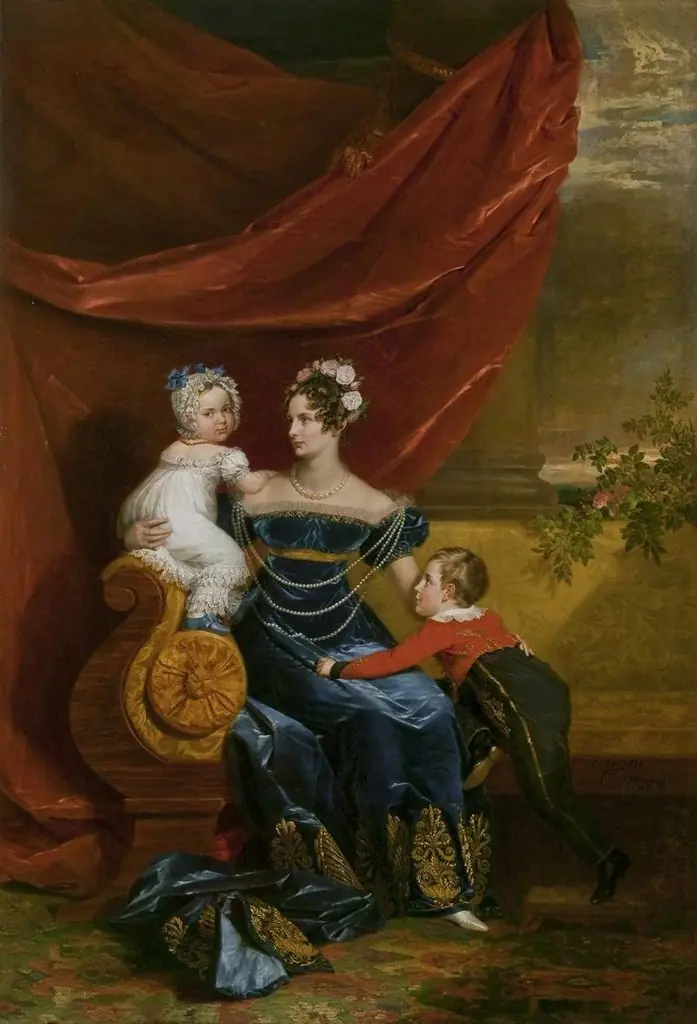 Portrait of Grand Duchess Alexandra Fiodorovna with Children
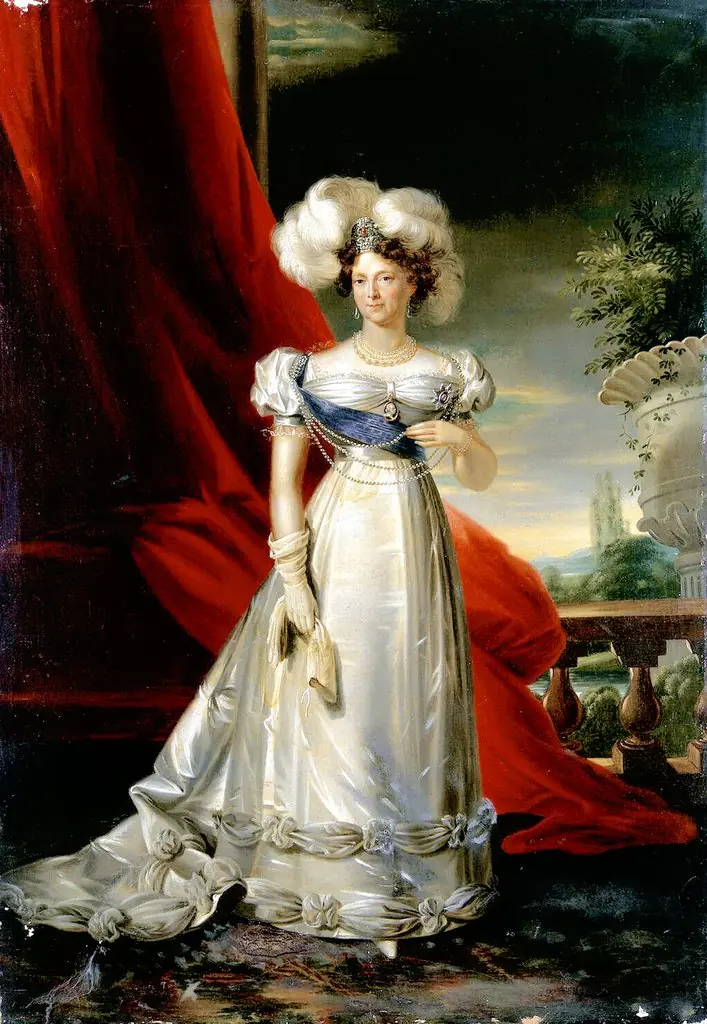 Portrait of the Empress Dowager Maria Feodorovna
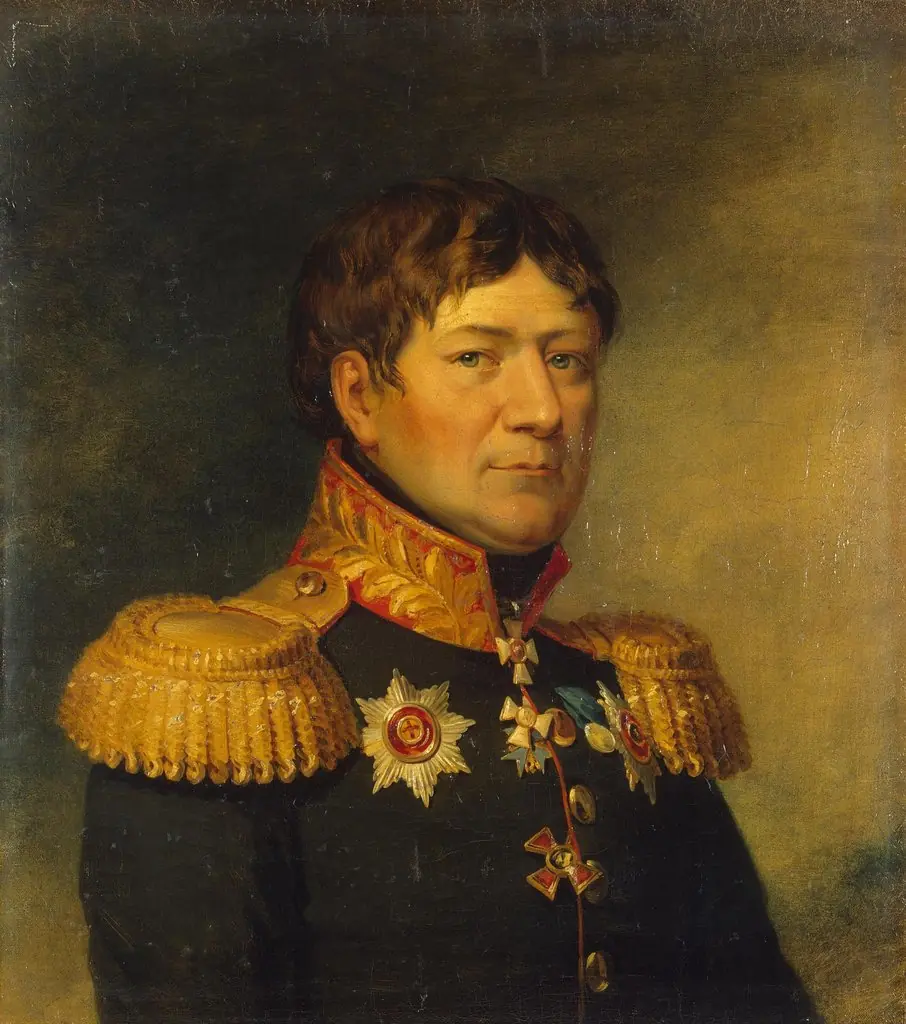 Portrait of Yegor M. Pillar (1767-1830)
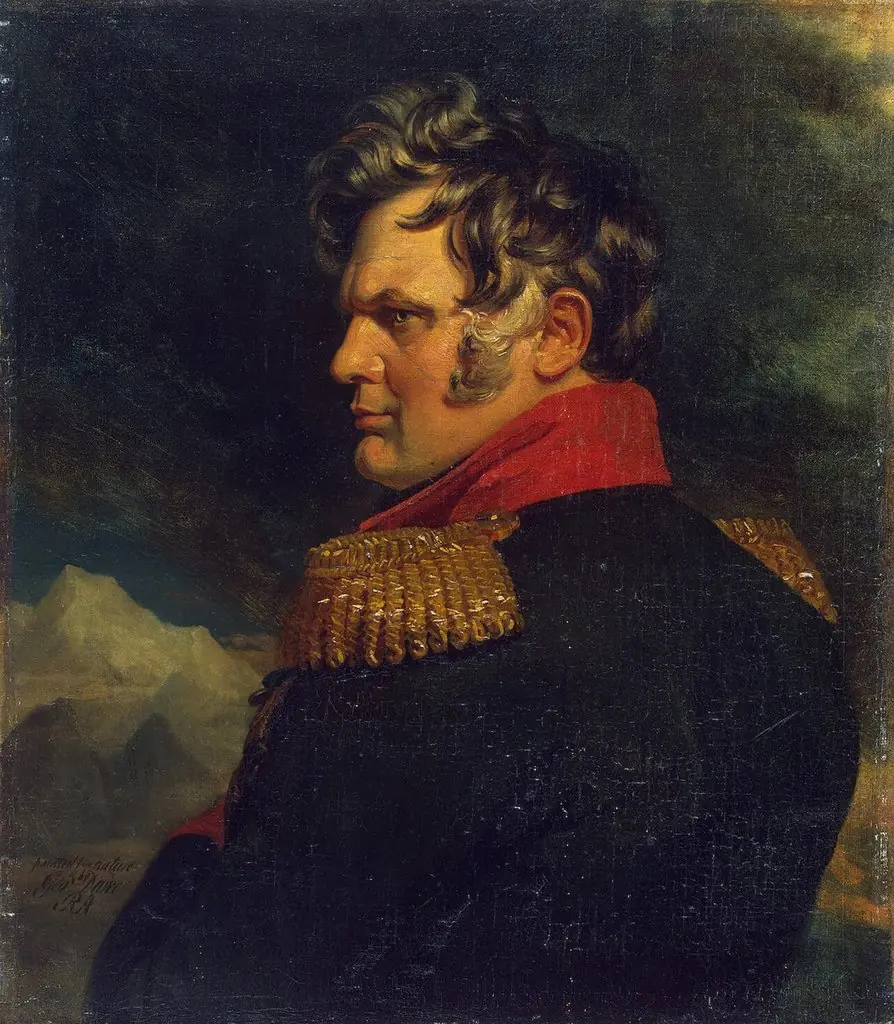 Portrait of Alexei P. Yermolov (1772/77-1861)
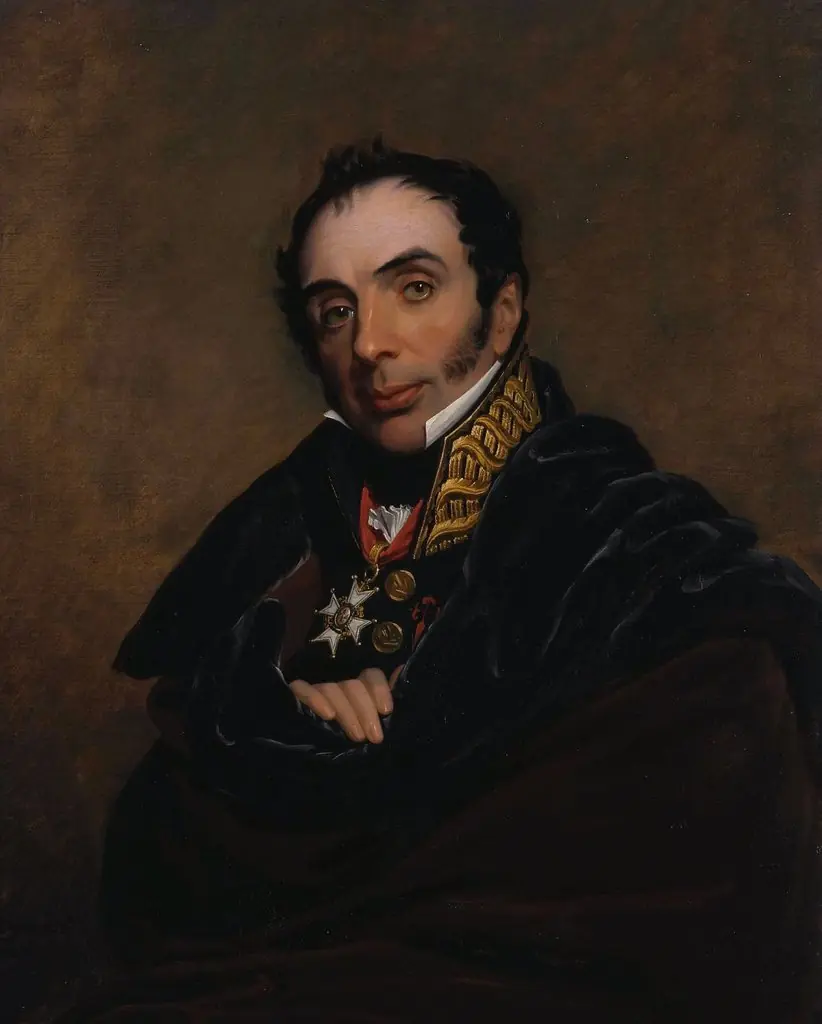 Portrait of Miguel Ricardo de Alava
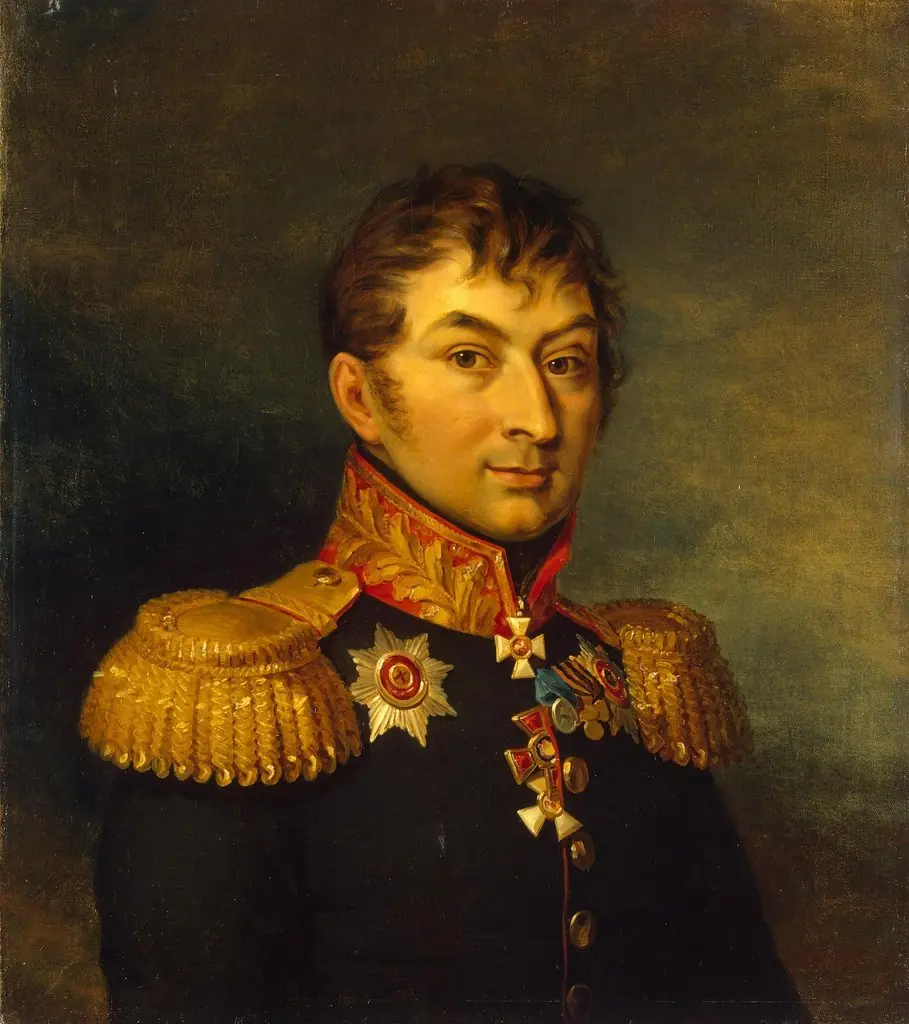 Portrait of Ivan D. Panchulidzev (1759-1815) (1st)
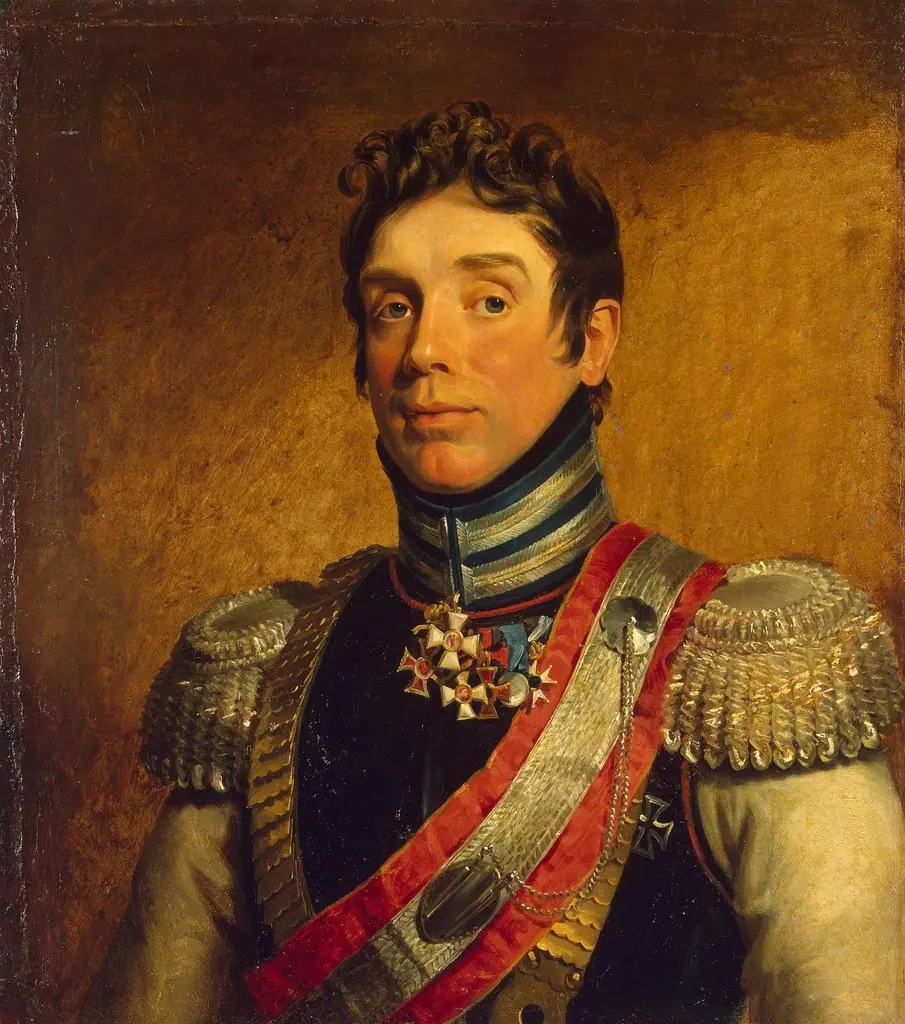 Portrait of Karl V. Budberg (1774-1829)
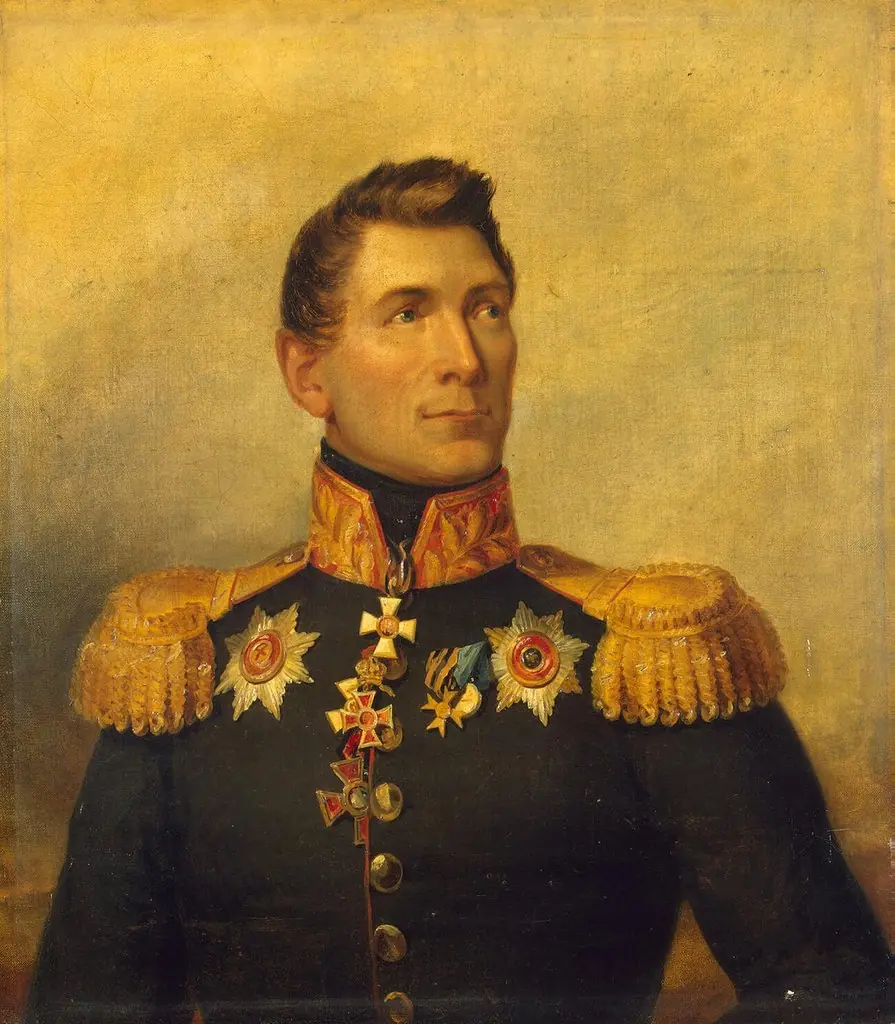 Portrait of Bogdan B. Helfreich (1776-1843)
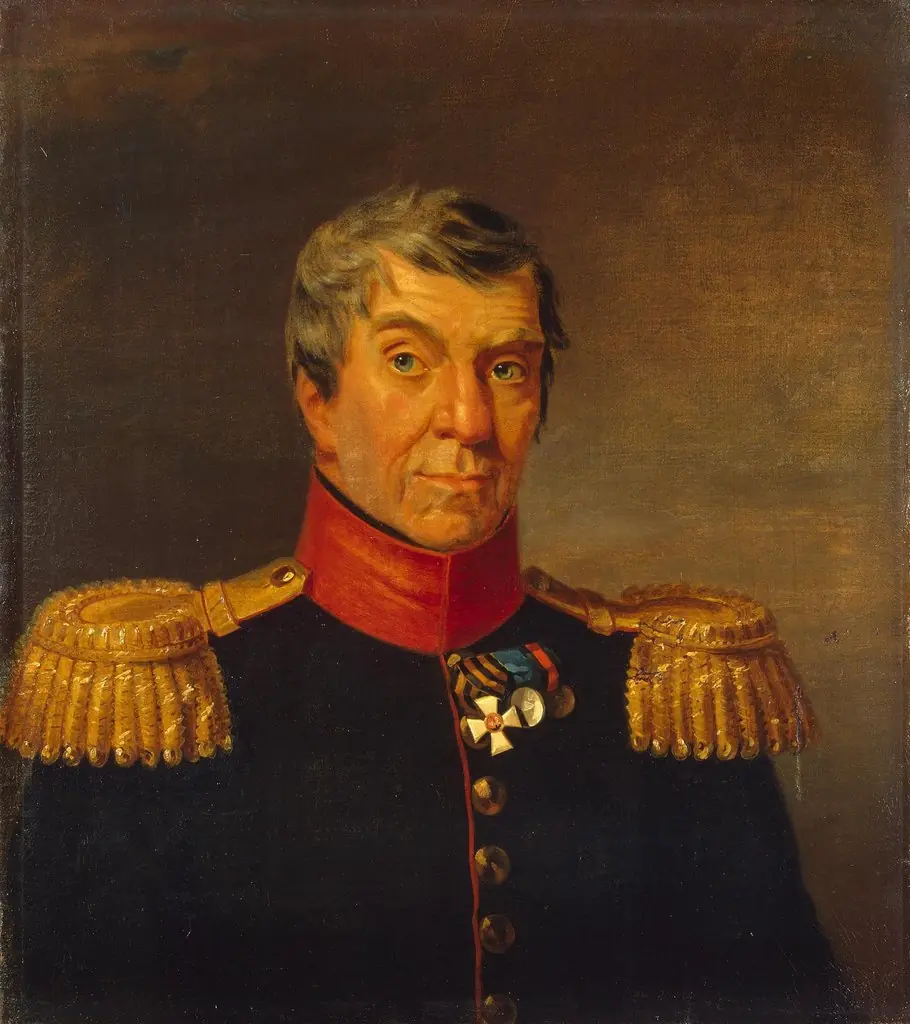 Portrait of Mikhail A. Shkapsky (1754-1815)
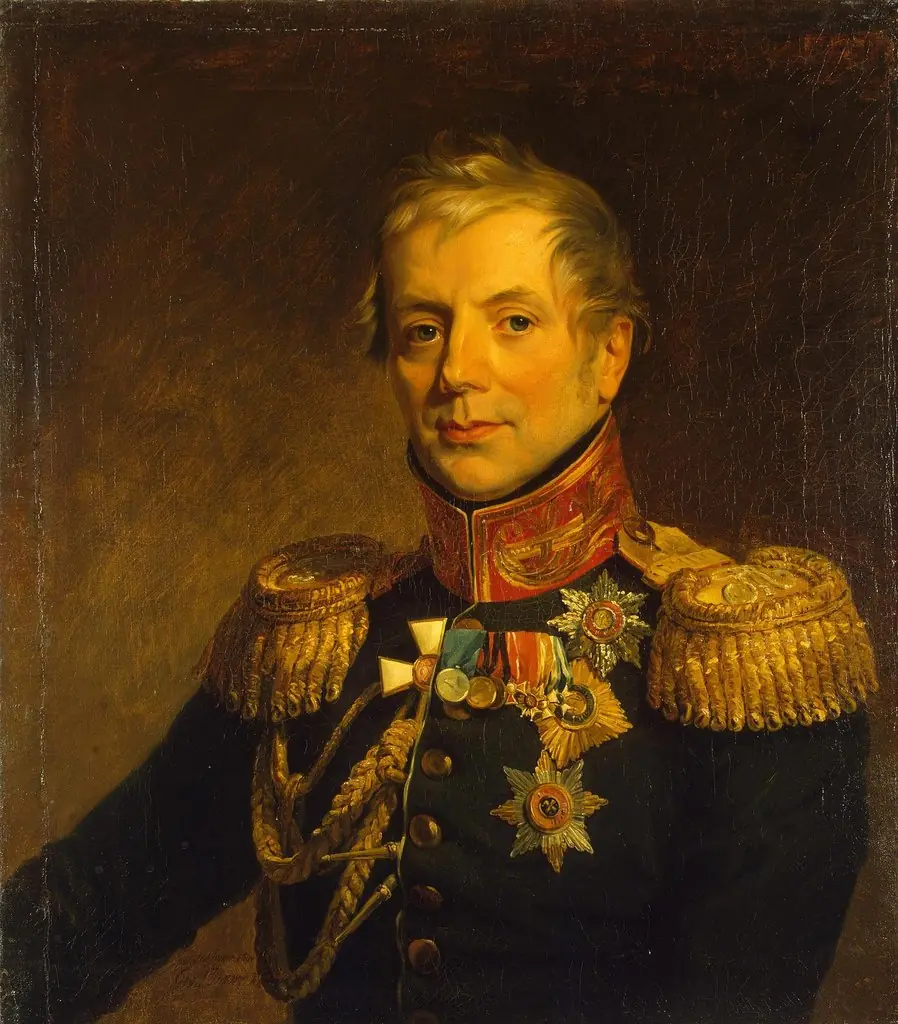 Portrait of Pyotr P. Konovnitsyn (1764-1822) (replica of the 1821 portrait)
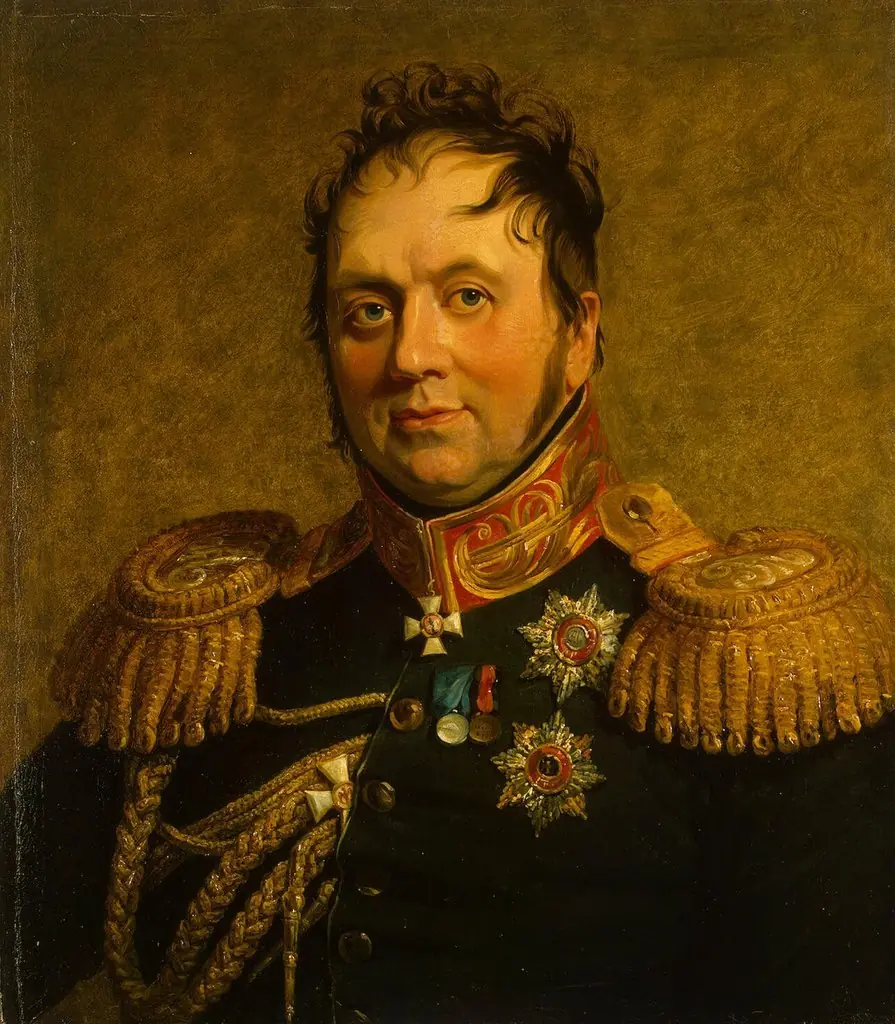 Portrait of Fyodor K. Korff (1773/74-1823)
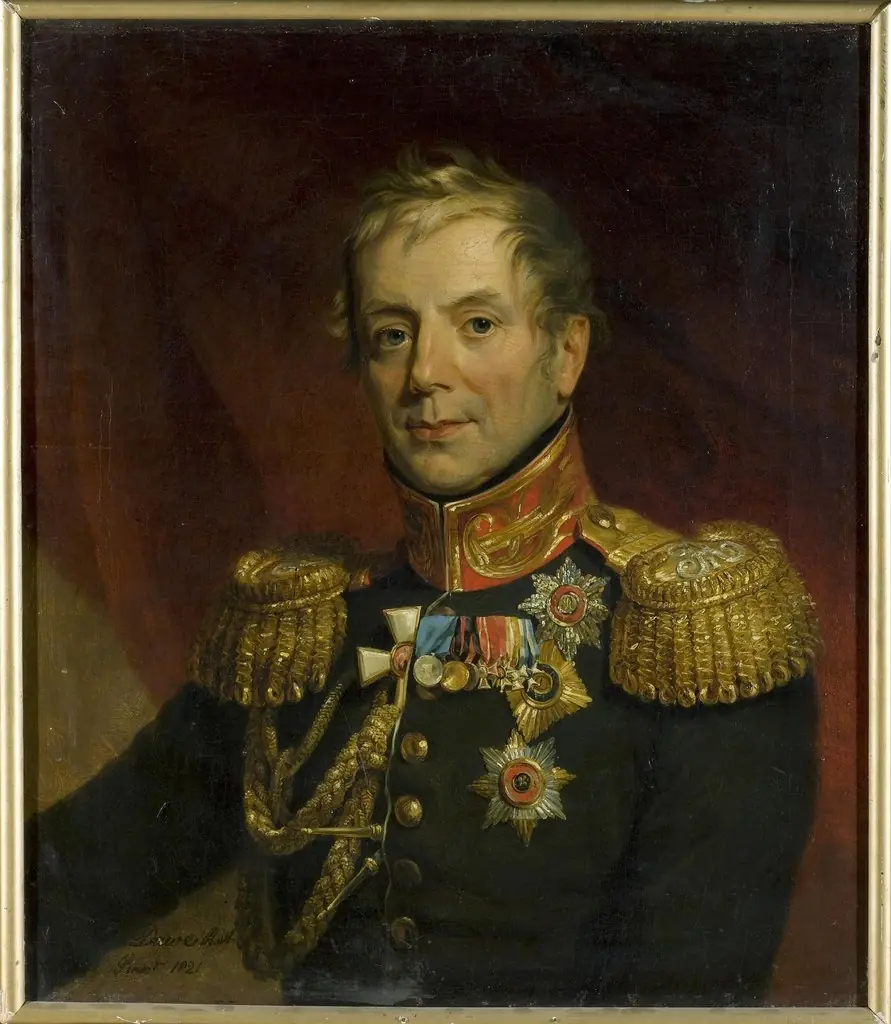 Portrait of Piotr Konovnitsyn (1764-1822)
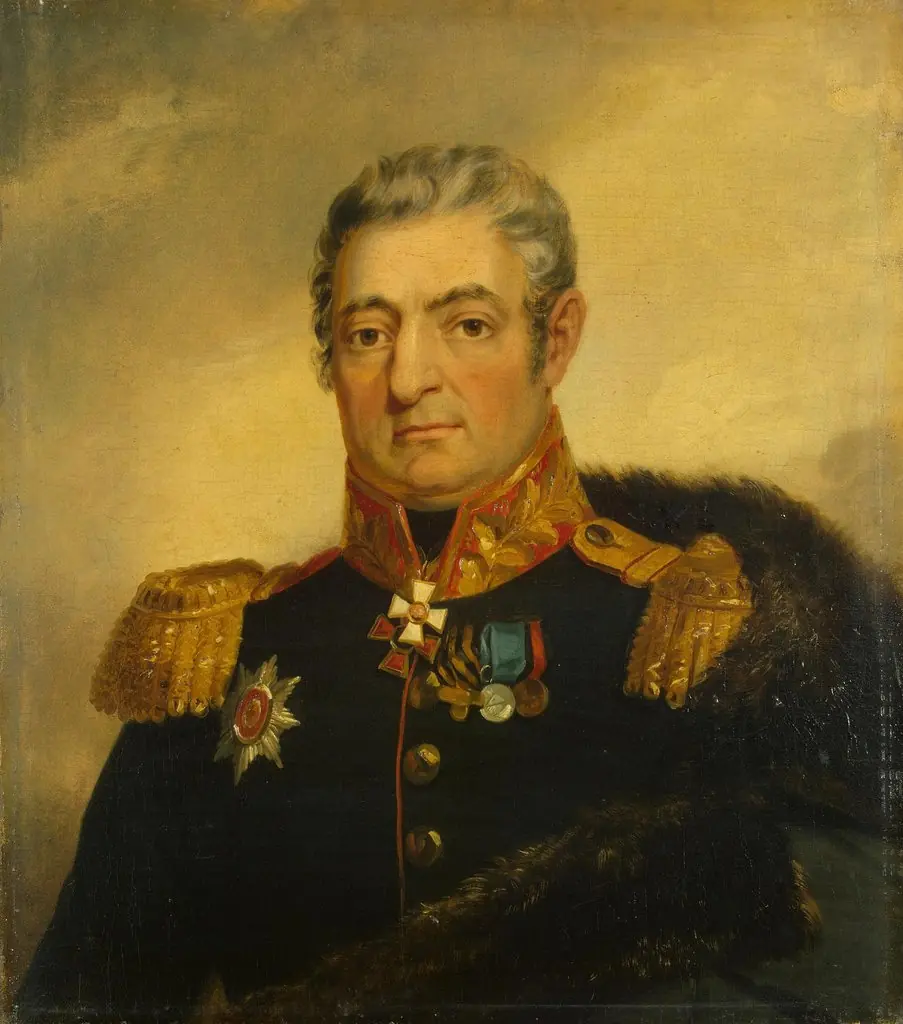 Portrait of Yeremey Ya. Savoini (1766-1836)
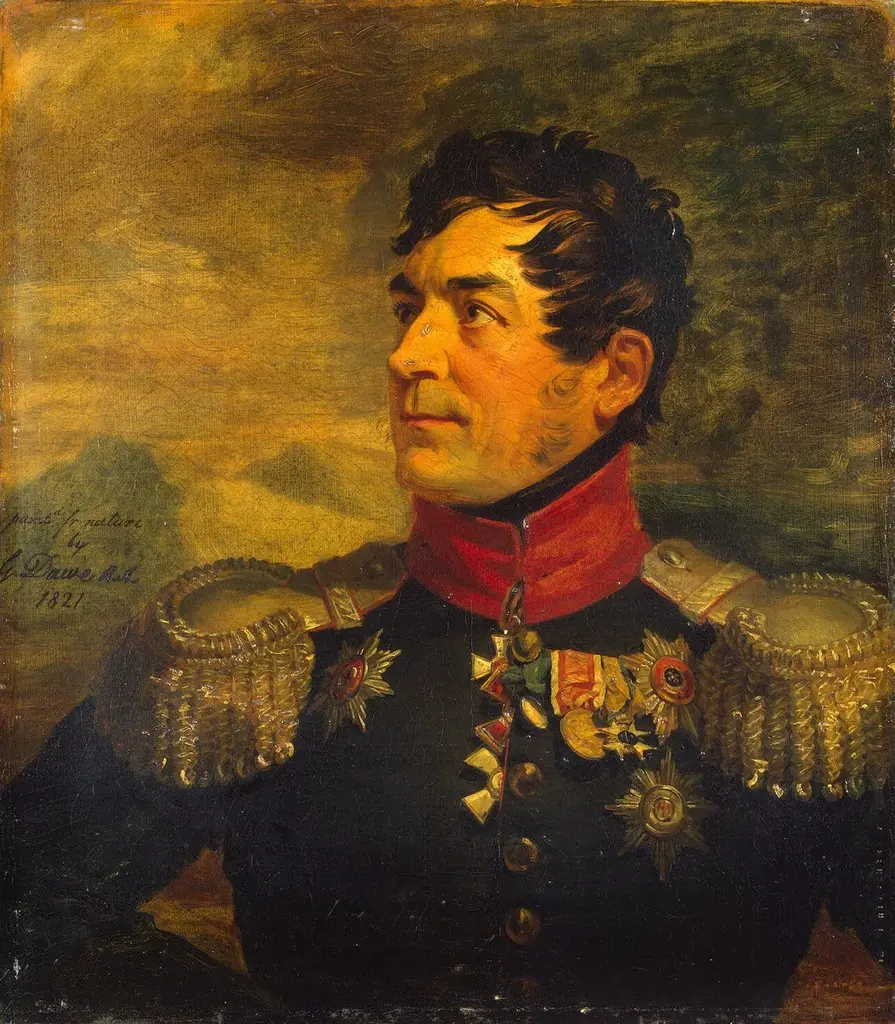 Portrait of Georgy A. Emanuel (1774-1837)
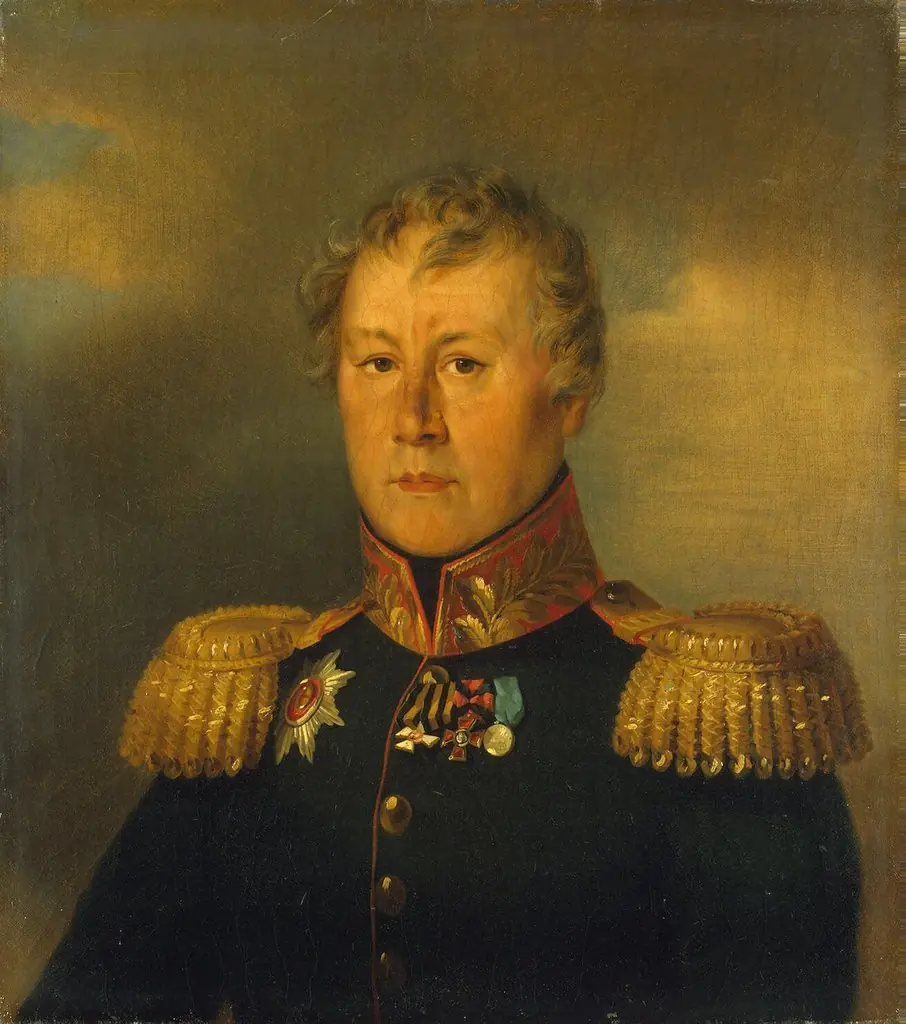 Portrait of Fyodor V. Zvarykin (1765-1826)