Artwork
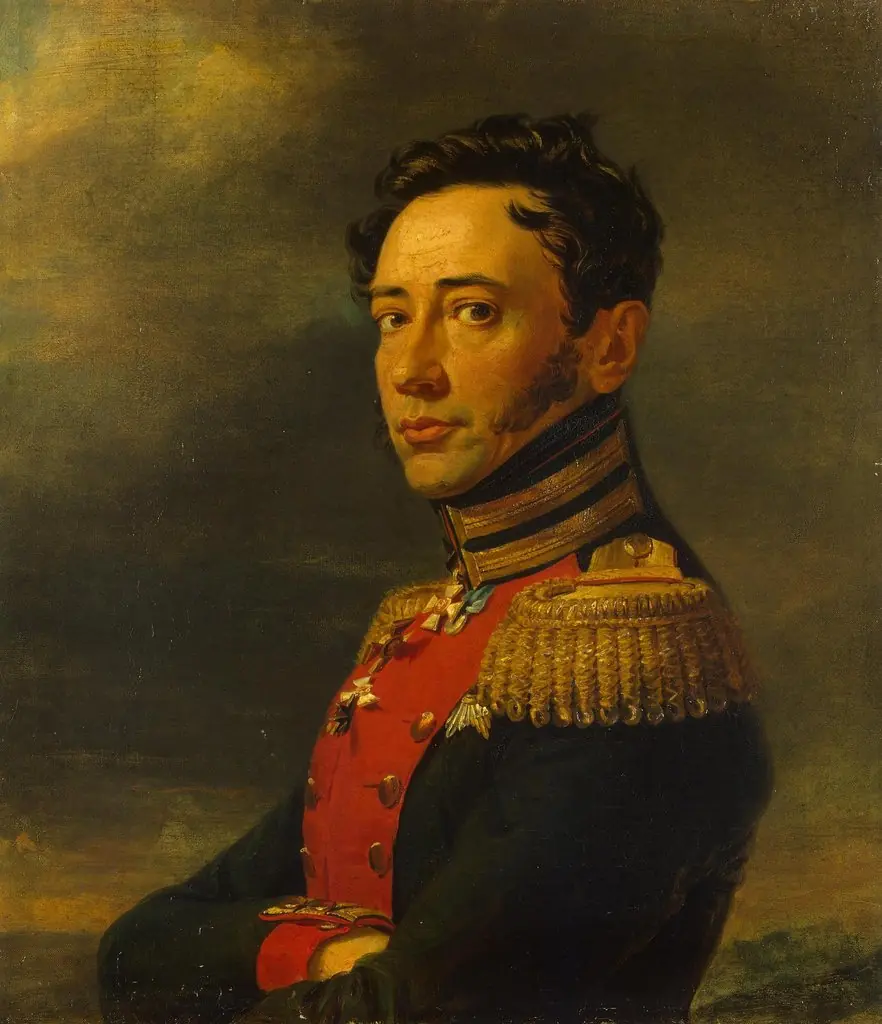
Portrait of Pyotr M. Kaptsevich (1772-1840)
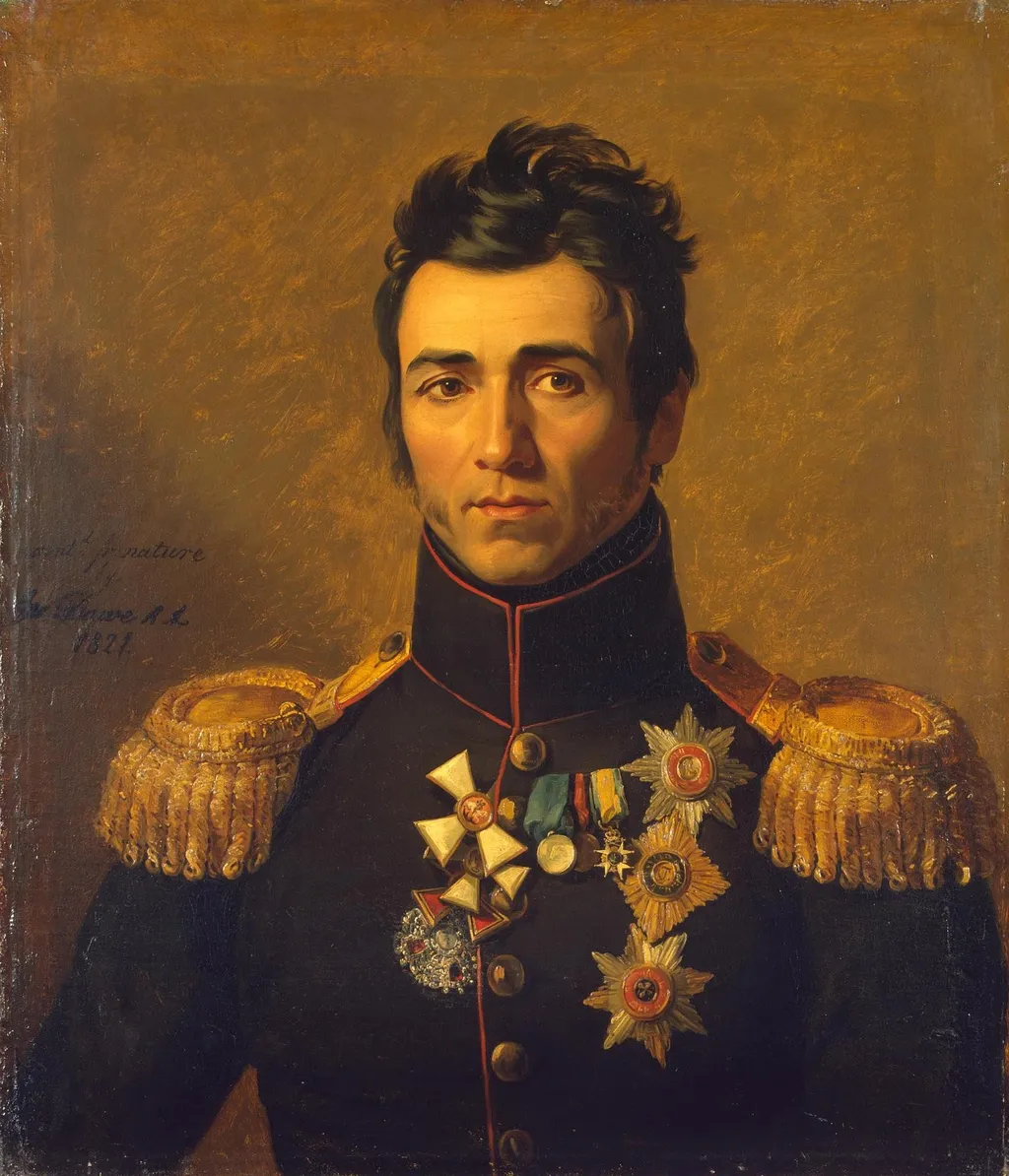
Portrait of Pyotr M. Kaptsevich (1772-1840) is an oil painting by George Dawe. It dates from 1821 and is held in the collection of the Hermitage Museum.
About this work
Overview
The work is one of many in a series commissioned by Tsar Alexander I, intended to honor Russia’s wartime officers.
Painted in 1821 by the English artist George Dawe, this oil portrait captures Pyotr M. Kaptsevich, a Russian general active during the Napoleonic Wars. Dawe, who moved to Saint Petersburg in 1819, was commissioned to document military leaders of the era. The work is one of many in a series commissioned by Tsar Alexander I, intended to honor Russia’s wartime officers. It resides today in the State Hermitage Museum in Saint Petersburg.
Subject & Meaning
Pyotr M. Kaptsevich is portrayed as a decorated military officer, his uniform adorned with multiple orders and medals in gold, red, and green. The arrangement of honors signifies distinguished service, particularly during Russia’s defense against Napoleon’s invasion. His composed demeanor and direct gaze convey authority and stoicism, reflecting the values of duty and discipline expected of imperial officers in early 19th-century Russia.
Technique & Style
Dawe employed careful chiaroscuro to model Kaptsevich’s face, emphasizing the structure of his features with subtle shifts in light and shadow. The rendering of the uniform and medals is precise, with attention to texture and reflective surfaces. The background is muted and warm, drawing focus to the figure. The composition is formal and restrained, typical of official portraiture of the period, prioritizing dignity over theatricality.
History & Provenance
Commissioned as part of a larger project to commemorate Russian military leaders, the portrait entered the imperial collection shortly after its completion. George Dawe, employed by the Russian court, produced over 300 such portraits between 1820 and 1840. The work remained in state custody and was later transferred to the Hermitage Museum, where it has been preserved as part of its historical portrait gallery since the 19th century.
Context
This portrait emerged during a period of national reflection after the Napoleonic Wars, when the Russian state sought to institutionalize the memory of its military heroes. Dawe’s role as a foreign artist commissioned by the Tsar reflects the imperial court’s openness to Western artistic traditions. Similar portraits by Dawe were displayed together, forming a visual archive of service and loyalty within the imperial system.
Legacy
Dawe’s series of military portraits, including this one, established a visual standard for official Russian portraiture in the 1820s and 1830s. Though his style was rooted in British academic traditions, his works became integral to Russia’s historical self-representation. The Hermitage’s collection of these portraits remains a key resource for understanding the intersection of art, military culture, and state identity in early 19th-century Russia.
Own this work as a print
Artist & collection
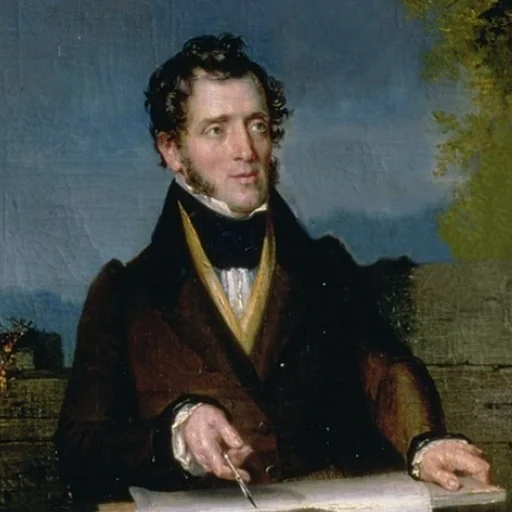
Artist
George Dawe (6 February 1781 – 15 October 1829) was an English portraitist who painted 329 portraits of Russian generals active during Napoleon's invasion of Russia for the Military Gallery of the Winter Palace.

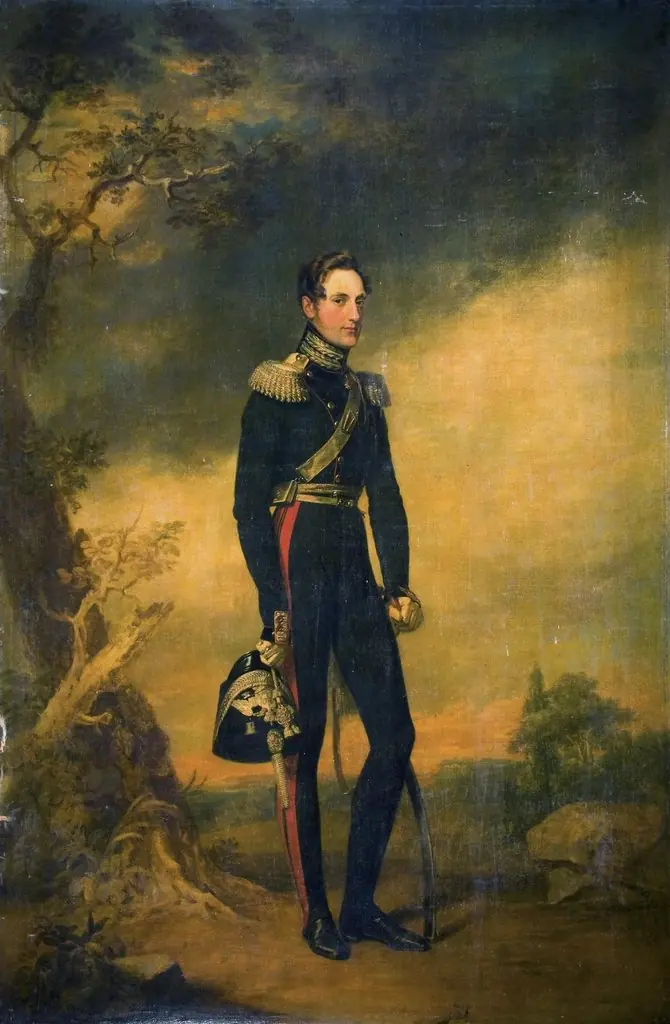 Portrait of Grand Duke Nikolai Pavlovich
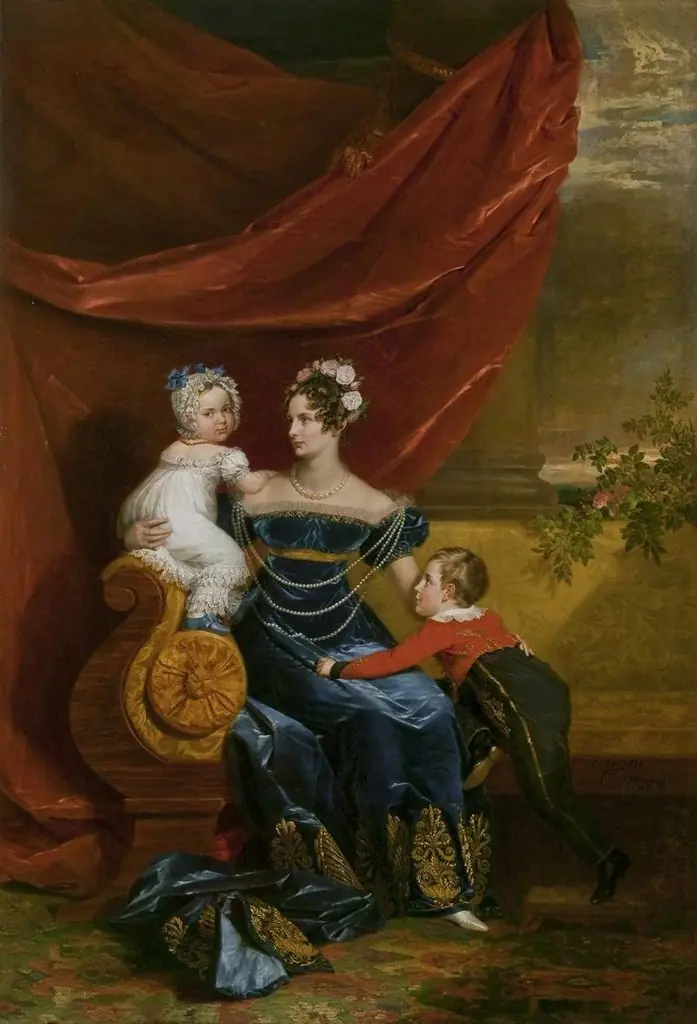 Portrait of Grand Duchess Alexandra Fiodorovna with Children
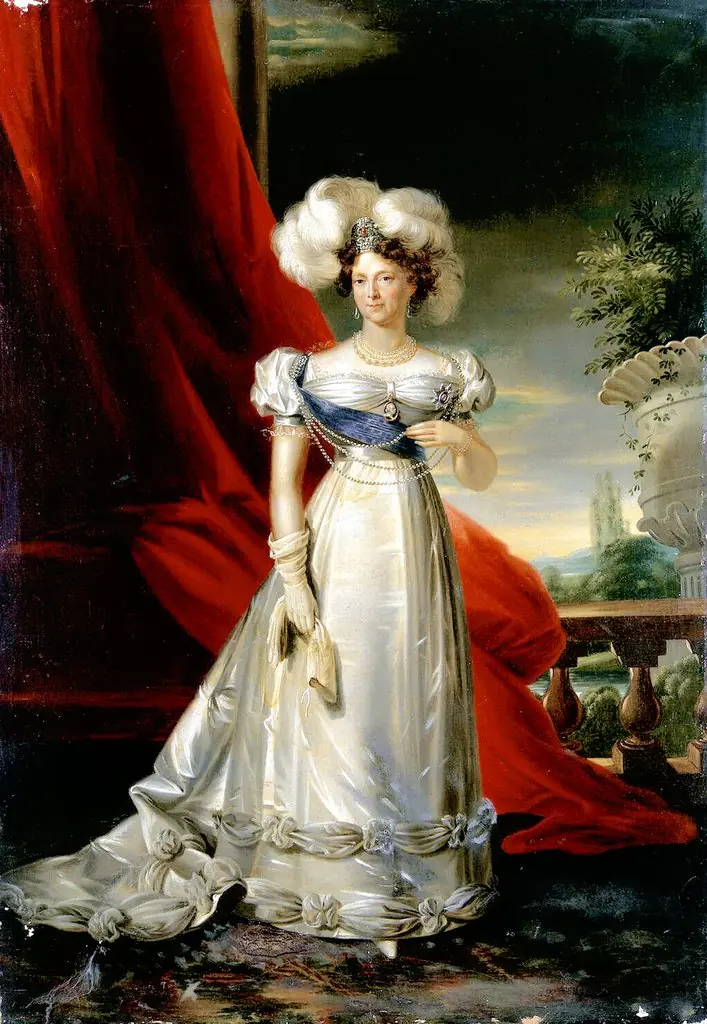 Portrait of the Empress Dowager Maria Feodorovna
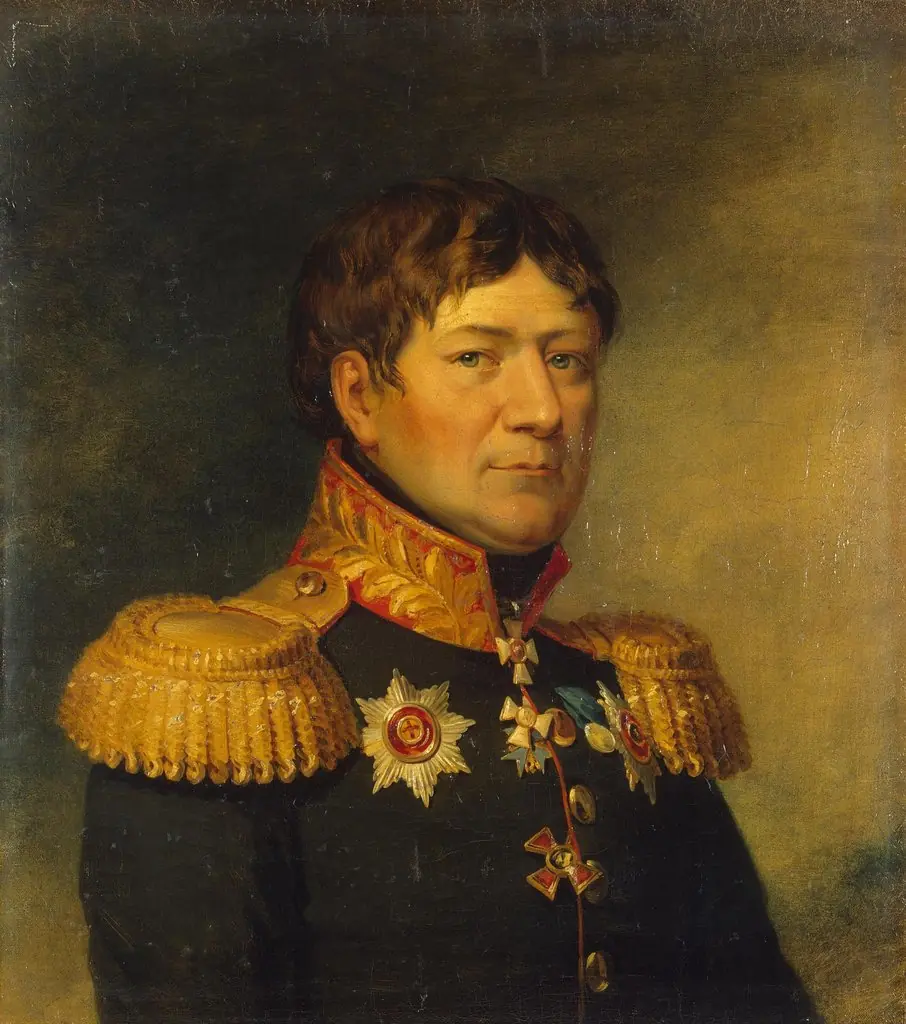 Portrait of Yegor M. Pillar (1767-1830)
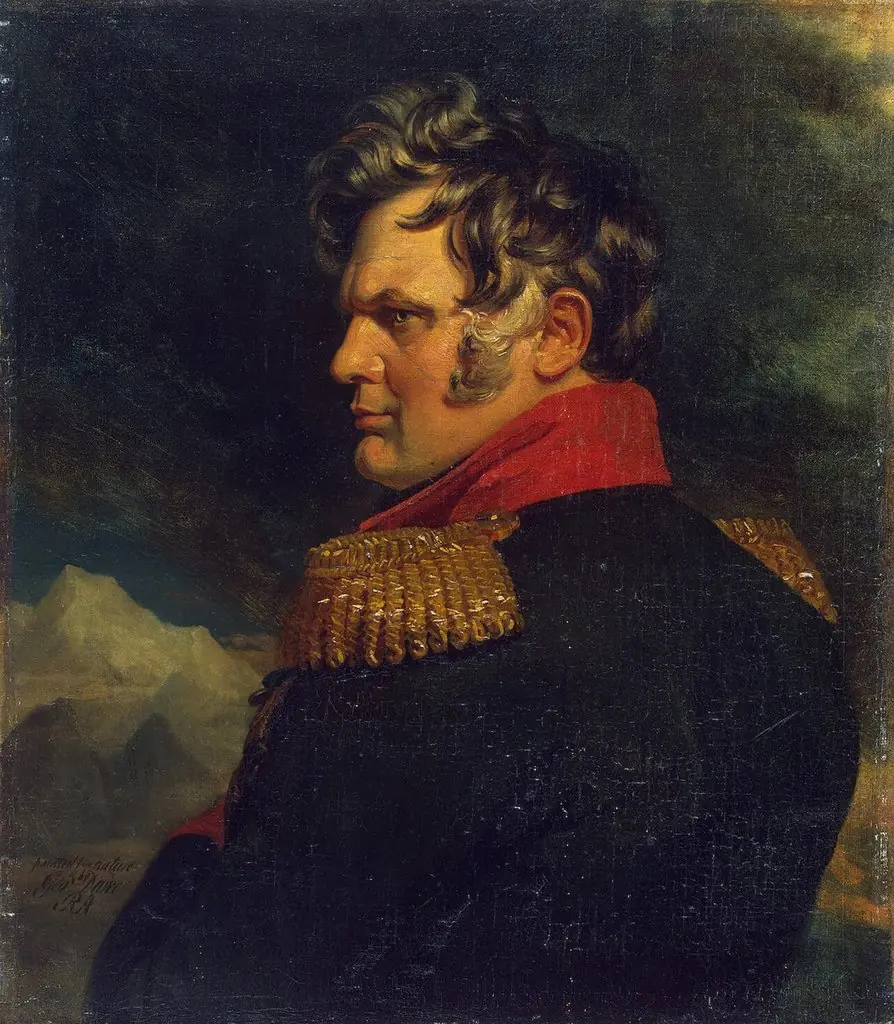 Portrait of Alexei P. Yermolov (1772/77-1861)
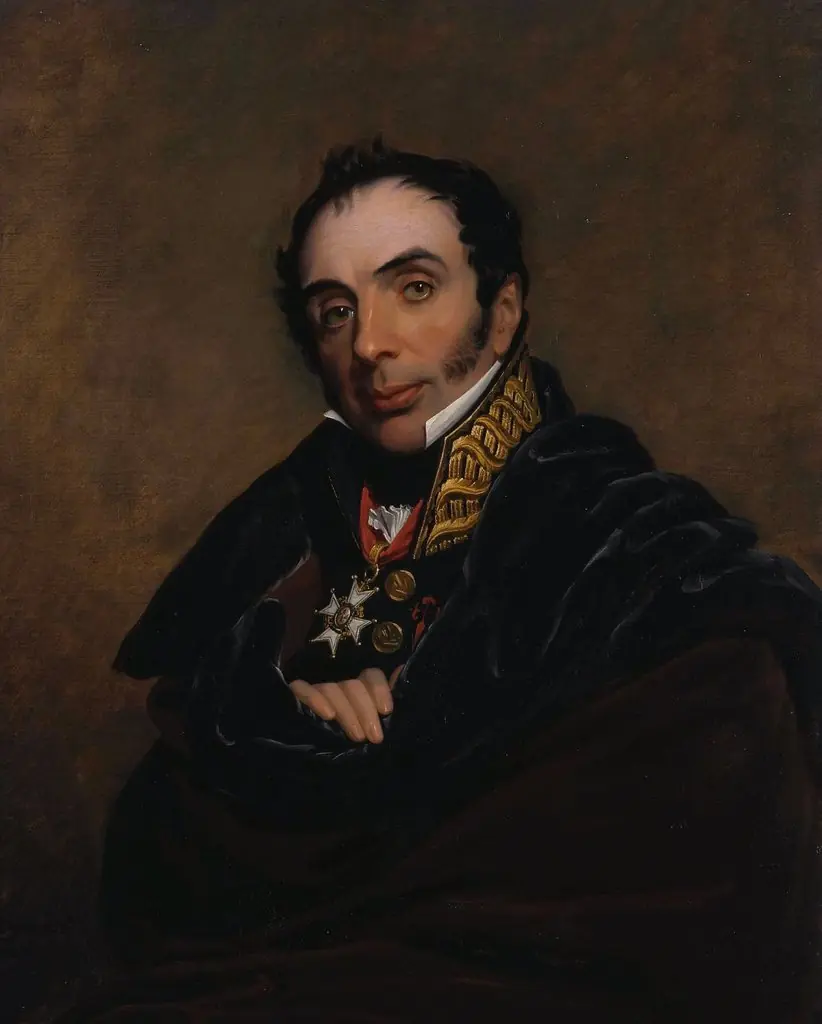 Portrait of Miguel Ricardo de Alava
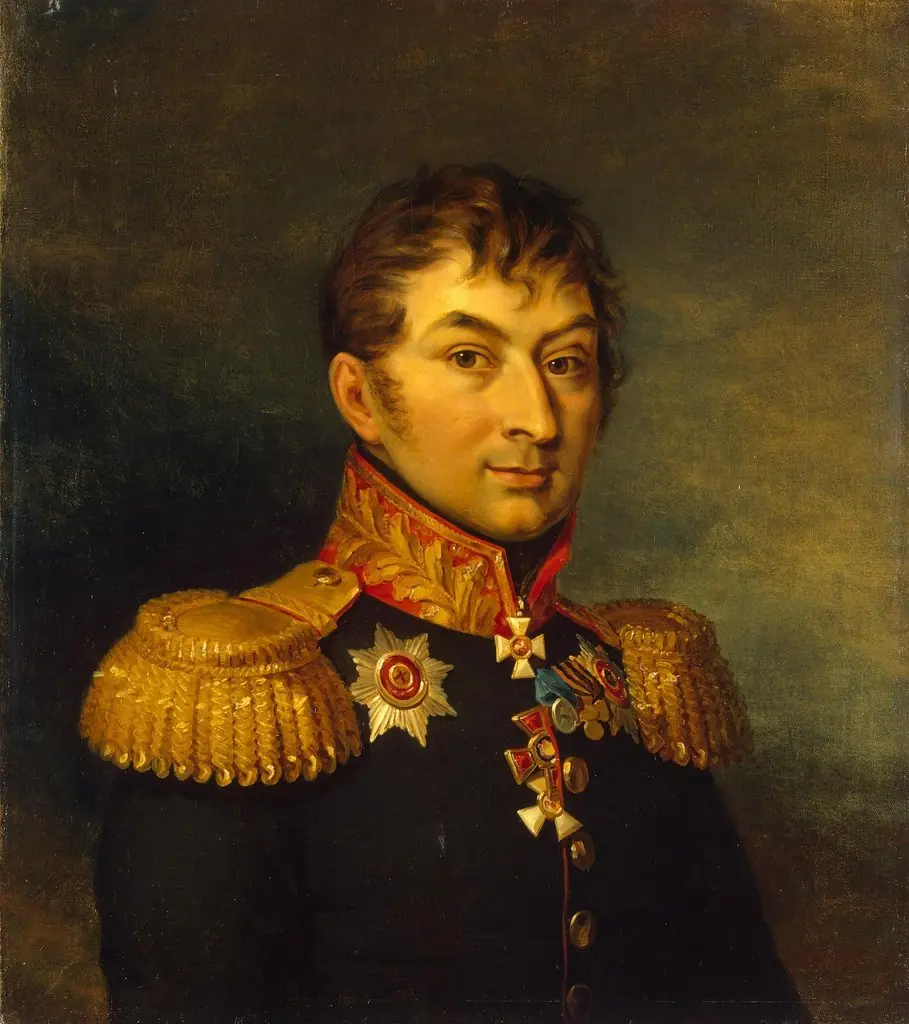 Portrait of Ivan D. Panchulidzev (1759-1815) (1st)
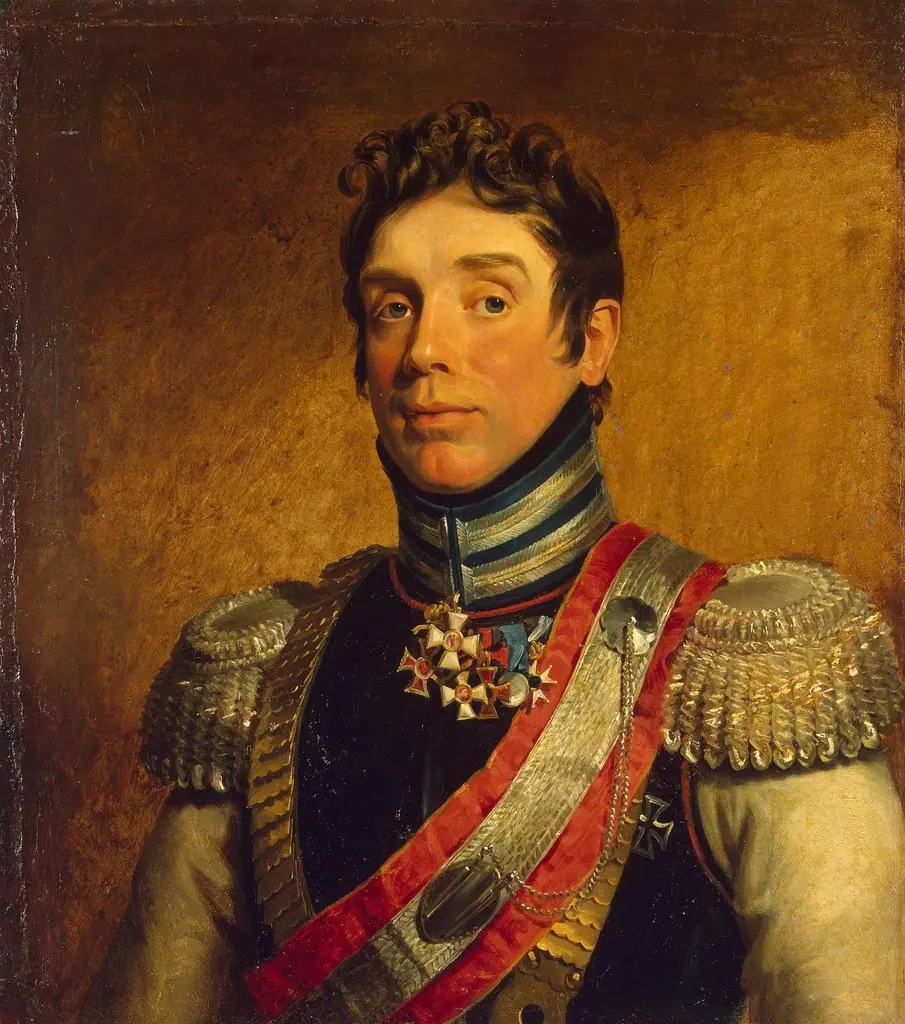 Portrait of Karl V. Budberg (1774-1829)
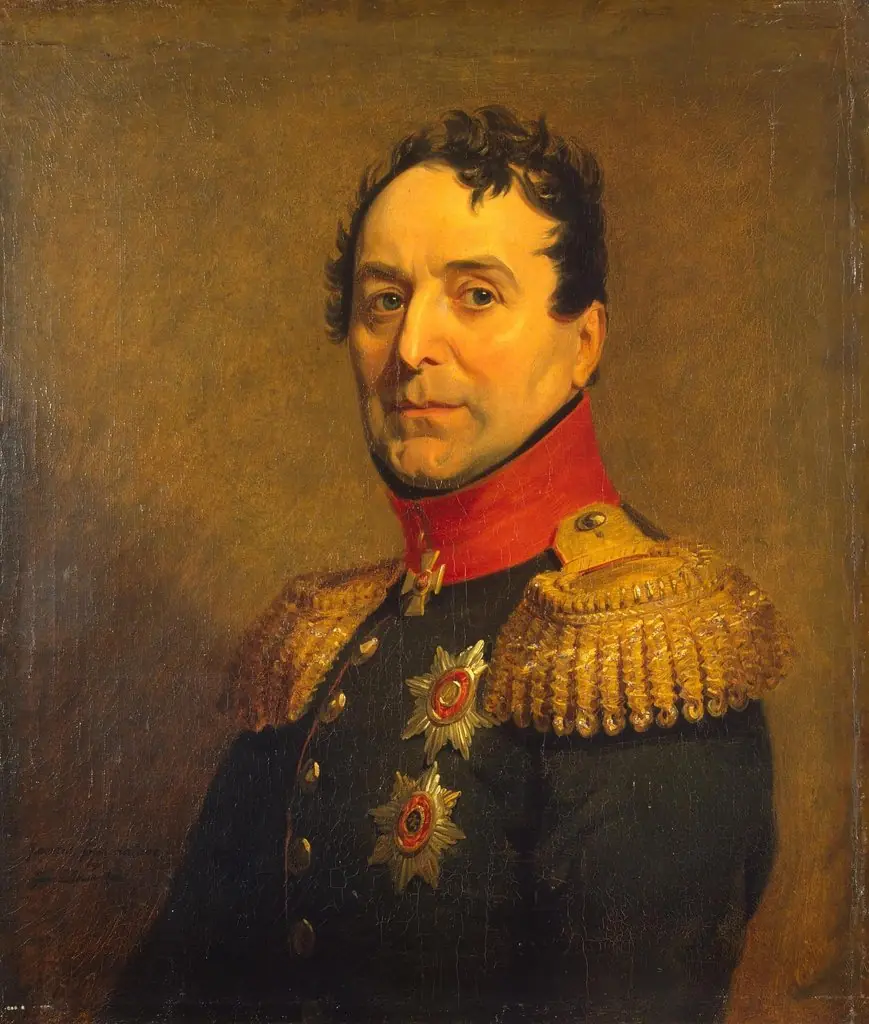 Portrait of Pyotr A. Tolstoy (1769/71-1844)
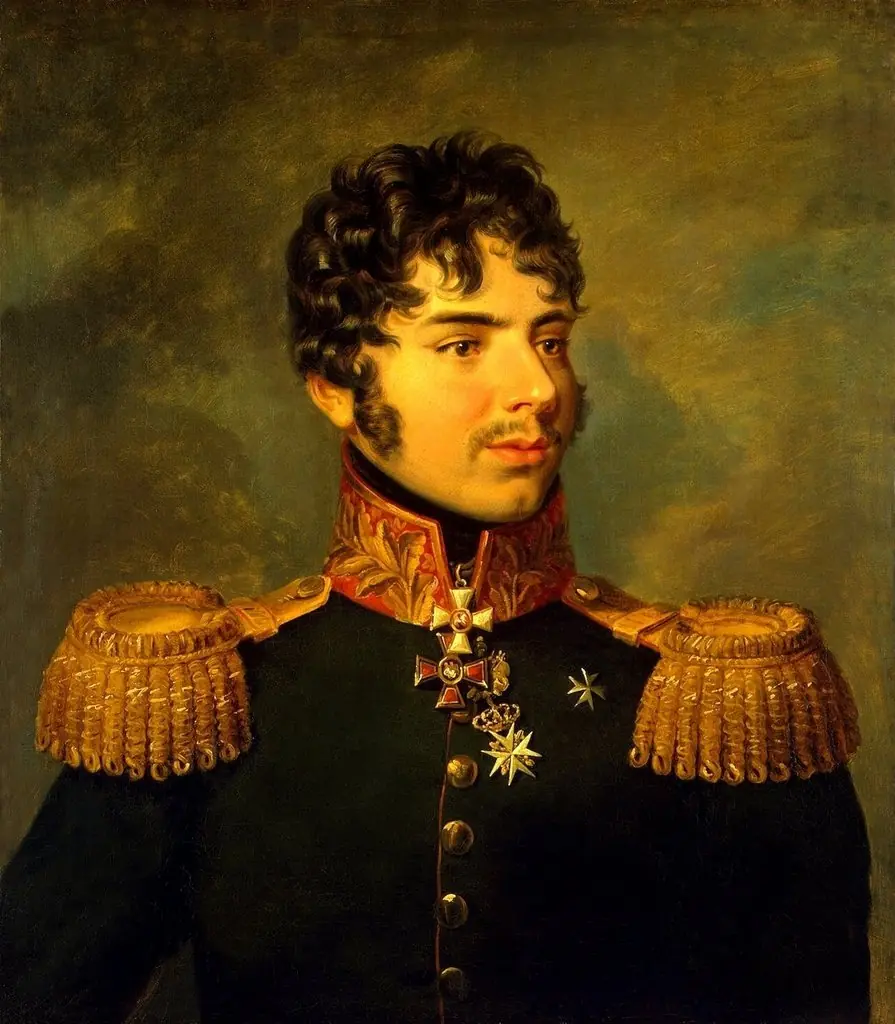 Portrait of Alexander I. Kutaisov (1784-1812)
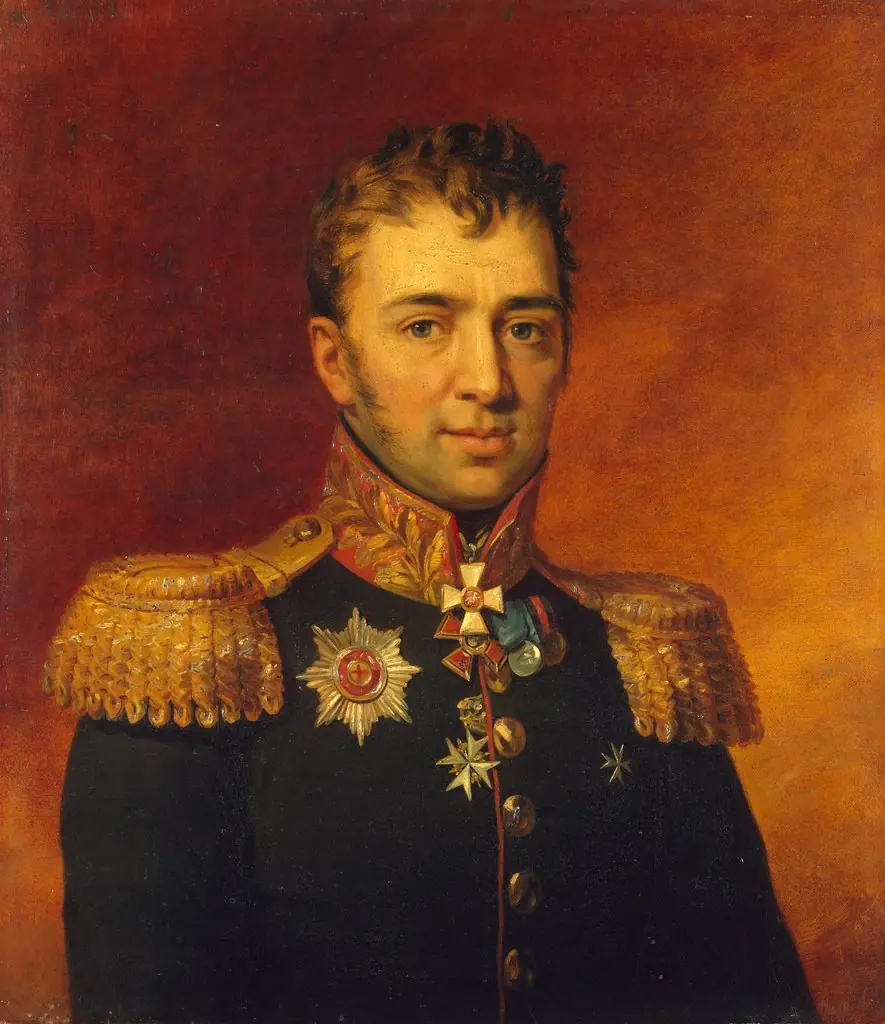 Portrait of Pyotr G. Likhachov (1758-1813)
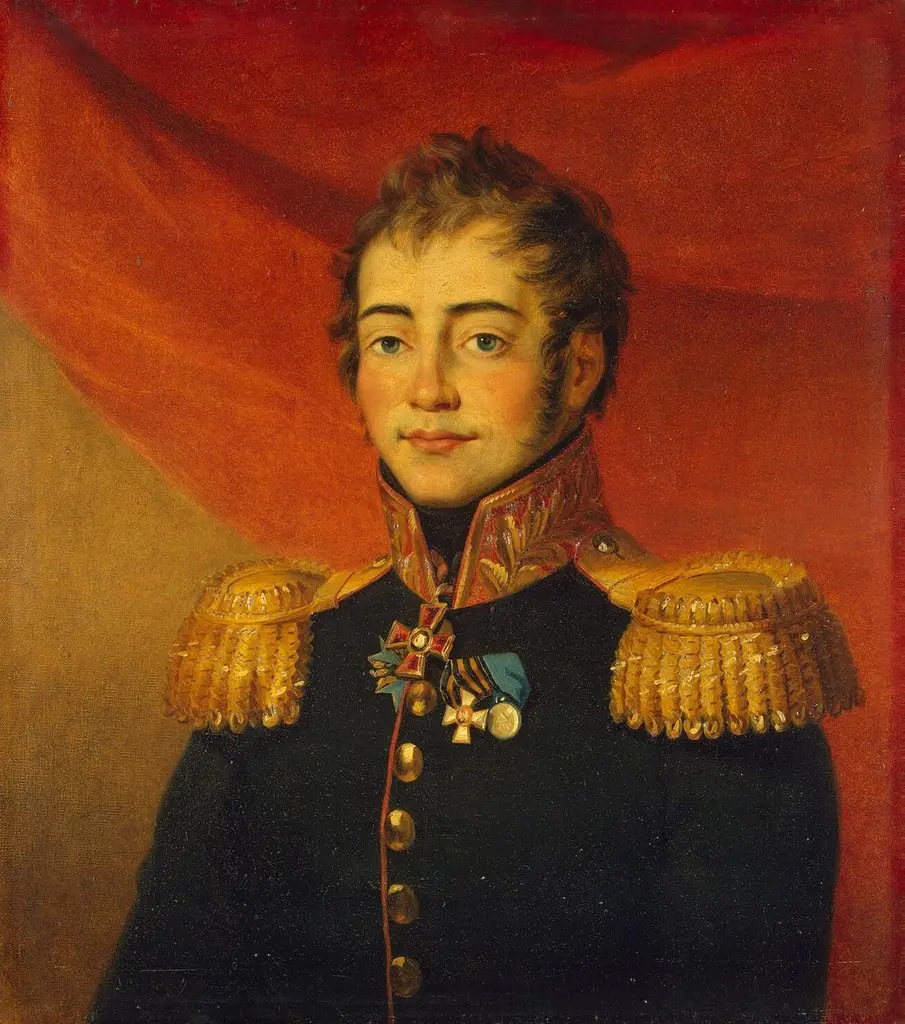 Portrait of Dmitry P. Lyapunov (1775-1821)
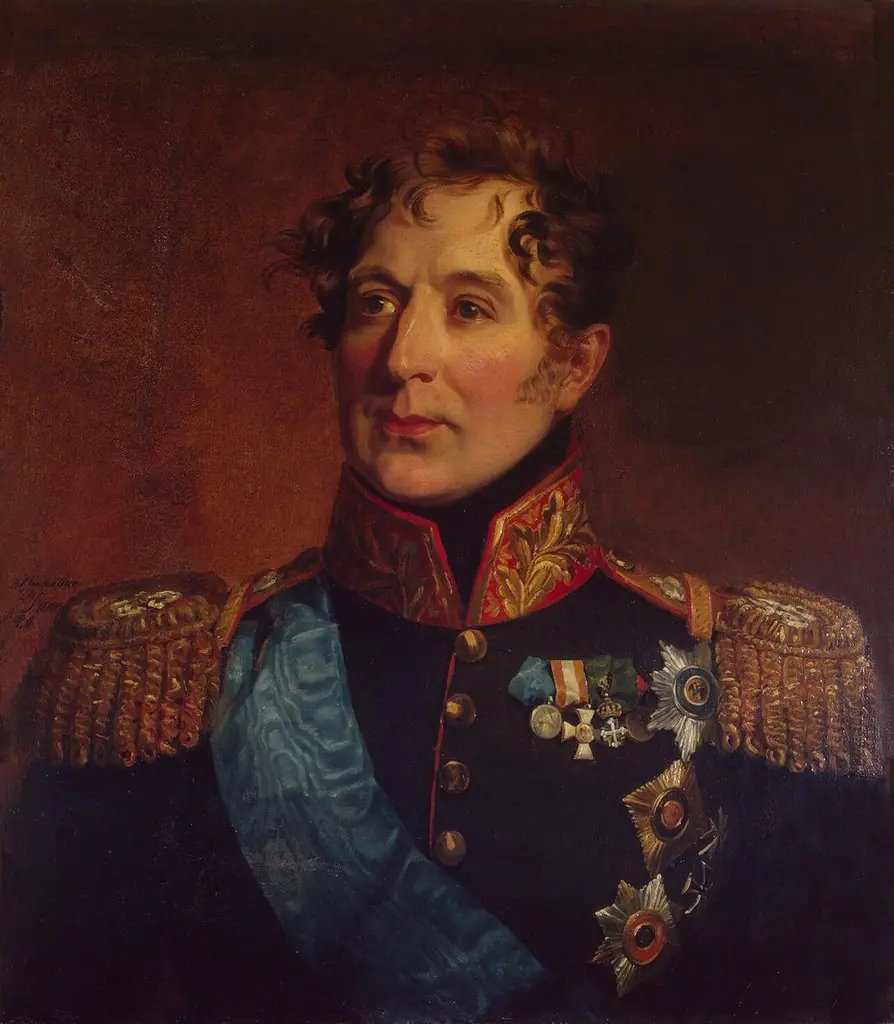 Portrait of Mikhail A. Miloradovich (1771-1825)
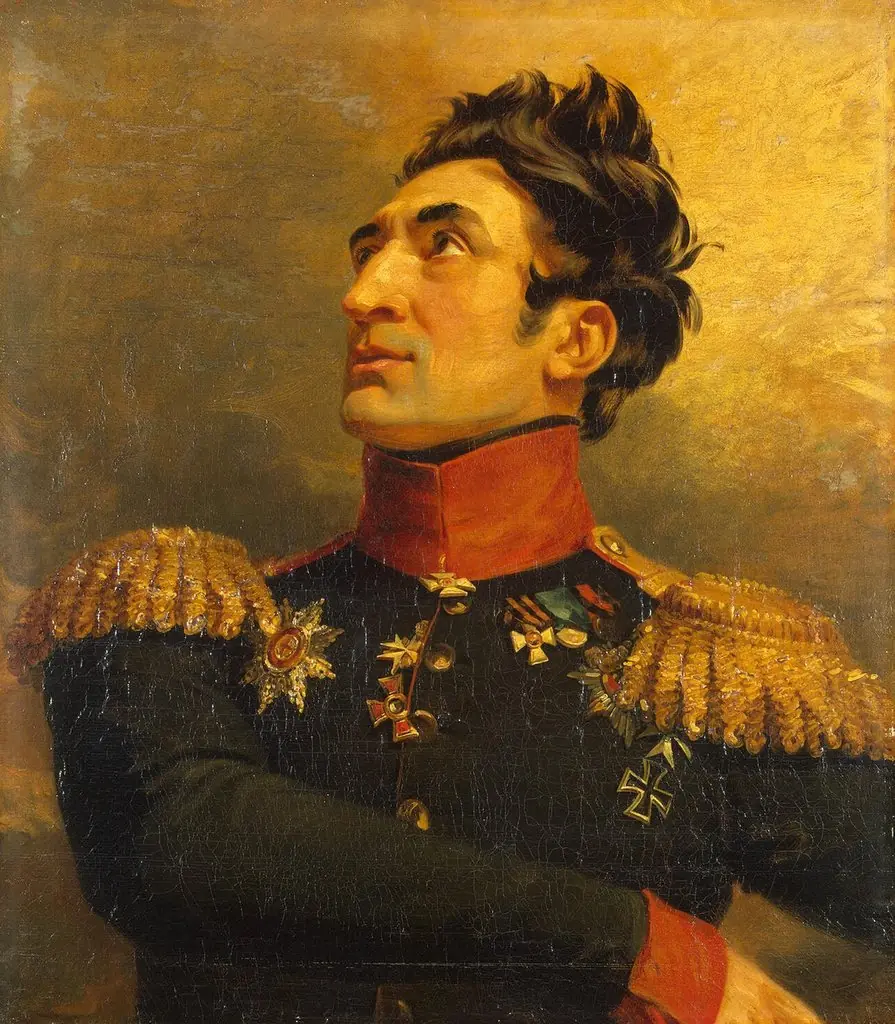 Portrait of Boris V. Poluektov (1779-1843)
 Portrait of Pyotr F. Zheltukhin (1777-1829) (replica of the 1823 portrait)