Artwork
Portrait of Sergey G. Volkonsky (1788-1865)
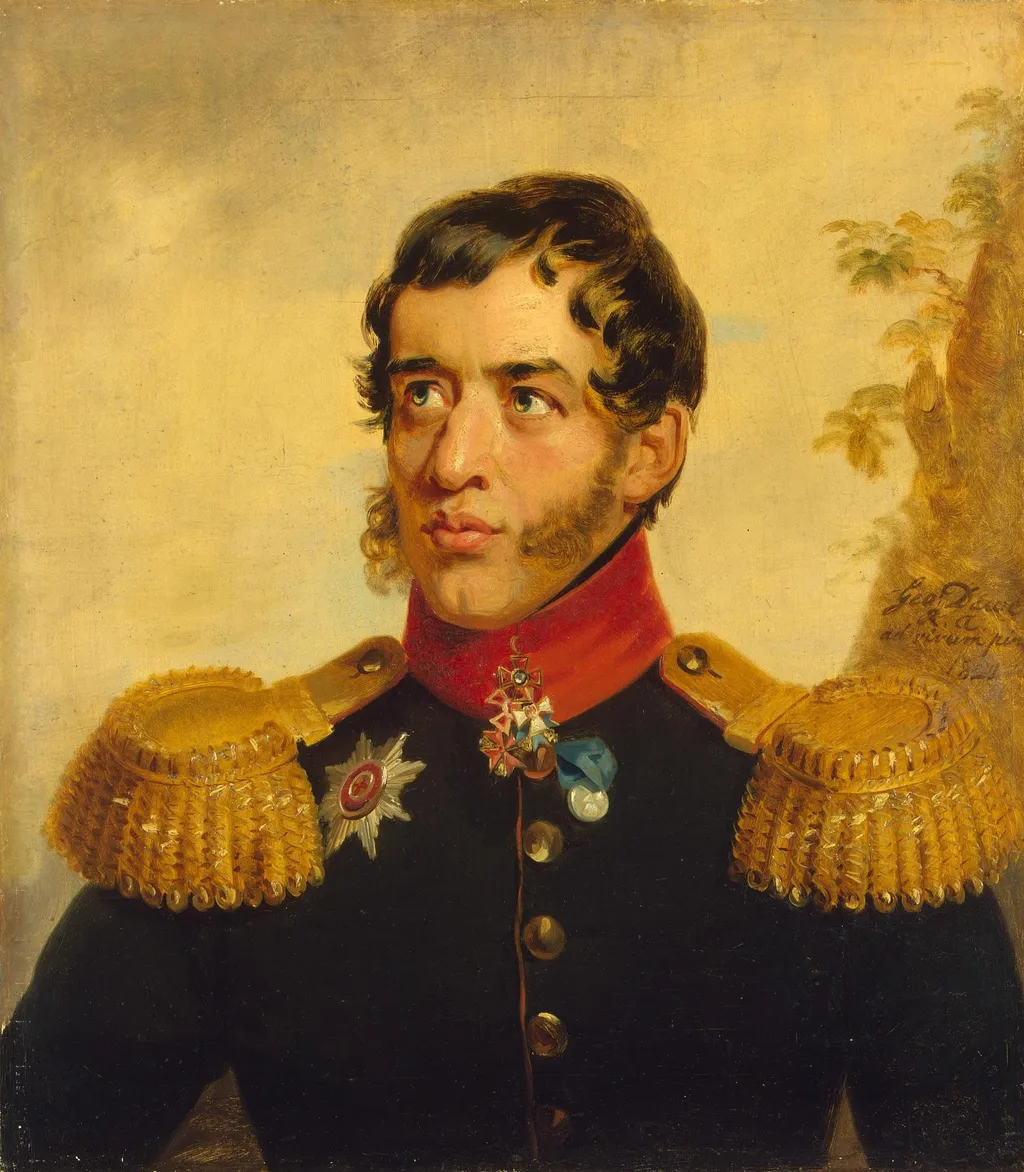
Portrait of Sergey G. Volkonsky (1788-1865) is an oil painting by George Dawe. It dates from 1823 and is held in the collection of the Hermitage Museum.
About this work
Overview
Dawe, who relocated to Saint Petersburg in 1819, was commissioned to document military figures from the Napoleonic Wars.
Painted in 1823 by the English artist George Dawe, this oil-on-canvas portrait depicts Russian general Sergey G. Volkonsky. Dawe, who relocated to Saint Petersburg in 1819, was commissioned to document military figures from the Napoleonic Wars. This work is one of hundreds produced for the Winter Palace’s Military Gallery, a project intended to honor Russian officers who participated in the defense of the empire.
Subject & Meaning
Sergey G. Volkonsky was a decorated general who served in the Russian army during Napoleon’s 1812 campaign. The portrait presents him in full uniform, emphasizing his rank and service. His direct gaze and composed posture convey authority and stoicism, reflecting the ideals of military duty and national loyalty valued in post-war Russia. The medal on his chest signifies recognition for valor, anchoring the image in the context of wartime achievement.
Technique & Style
Dawe employed a restrained, precise technique typical of early 19th-century academic portraiture. The rendering of the black military coat with gold epaulets and red collar is detailed but not ornate, focusing on clarity and dignity. The soft, neutral background and subtle foliage to the right provide depth without distraction. Brushwork is smooth, with attention to texture in fabric and metal, enhancing the subject’s presence without theatricality.
History & Provenance
Commissioned as part of a state-sponsored project to document Russia’s military leadership, the portrait entered the collection of the Winter Palace and later became part of the State Hermitage Museum’s holdings. Dawe’s extensive series of military portraits, totaling nearly 330 works, was assembled between 1820 and 1837. This painting has remained in state custody since its completion, preserving its original institutional context.
Context
The portrait emerged during a period of national reflection following the defeat of Napoleon. Tsar Alexander I sought to consolidate a collective memory of military heroism through visual representation. Dawe, as a foreign artist trusted by the court, was uniquely positioned to execute this project. The resulting gallery served both as a memorial and a tool of imperial propaganda, reinforcing the legitimacy of the ruling dynasty through its military legacy.
Legacy
Dawe’s Military Gallery remains one of the most comprehensive visual records of Russian officers from the Napoleonic era. While individual portraits like Volkonsky’s are not widely exhibited outside the Hermitage, they continue to serve as historical documents. The series influenced later state portraiture in Russia and stands as a testament to the intersection of art, politics, and military identity in early 19th-century Europe.
Own this work as a print
Artist & collection
Artist
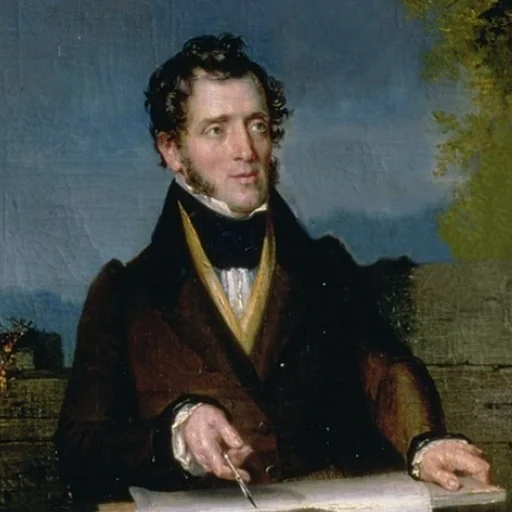
George Dawe (6 February 1781 – 15 October 1829) was an English portraitist who painted 329 portraits of Russian generals active during Napoleon's invasion of Russia for the Military Gallery of the Winter Palace.

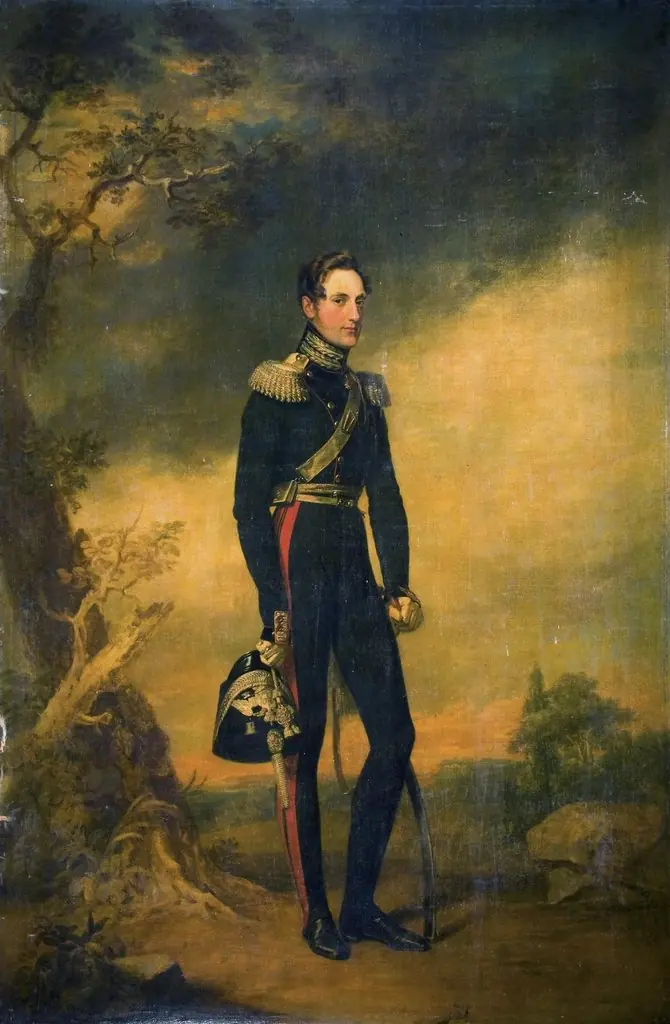 Portrait of Grand Duke Nikolai Pavlovich
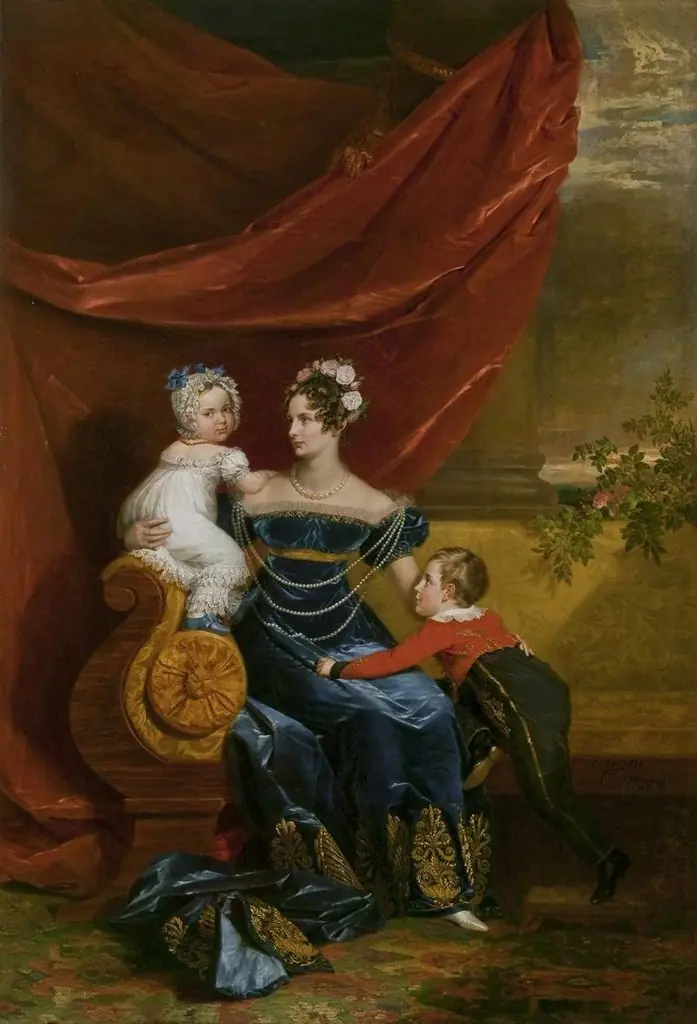 Portrait of Grand Duchess Alexandra Fiodorovna with Children
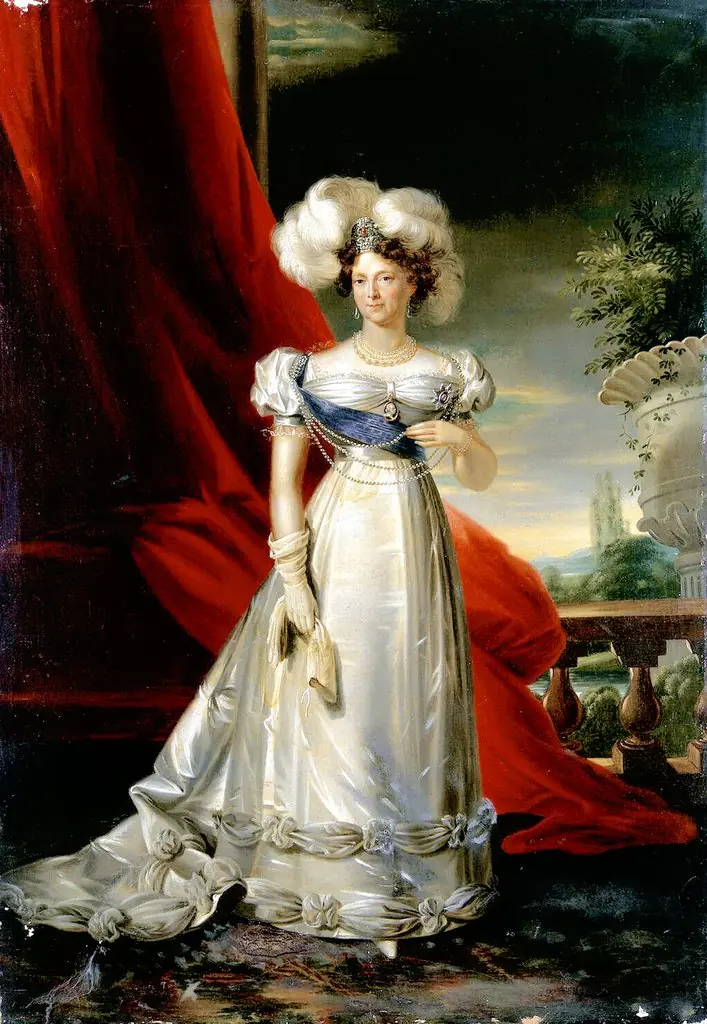 Portrait of the Empress Dowager Maria Feodorovna
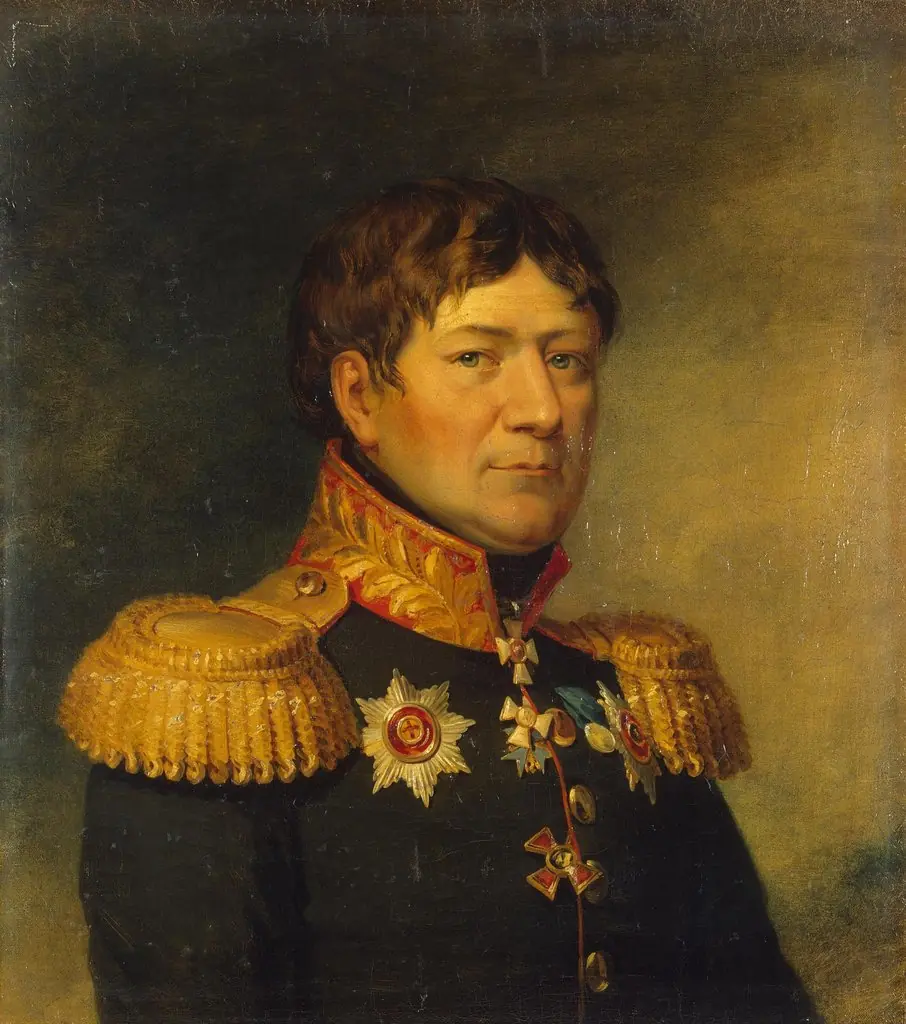 Portrait of Yegor M. Pillar (1767-1830)
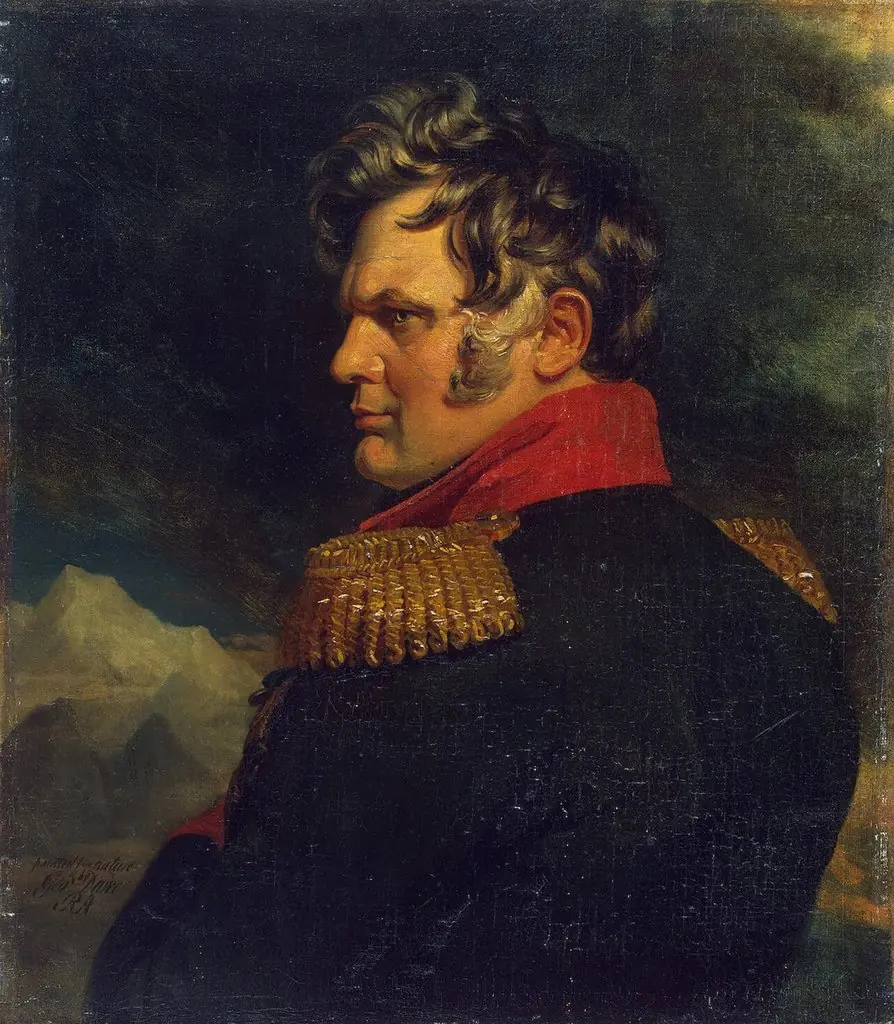 Portrait of Alexei P. Yermolov (1772/77-1861)
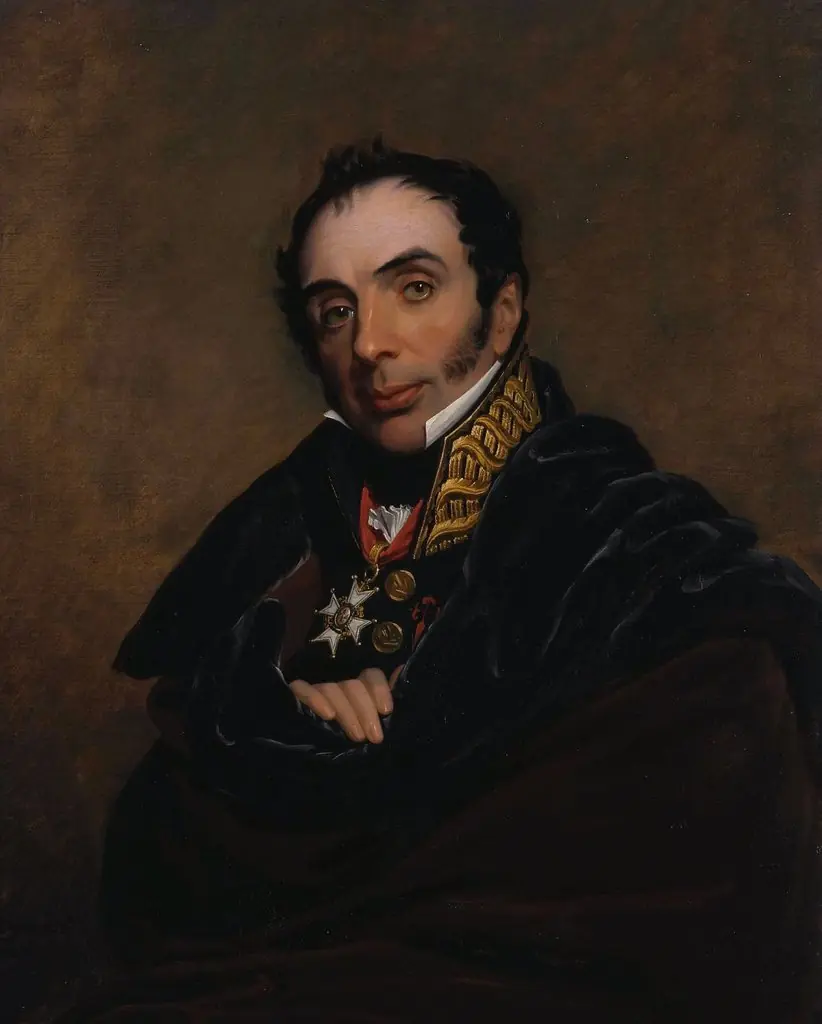 Portrait of Miguel Ricardo de Alava
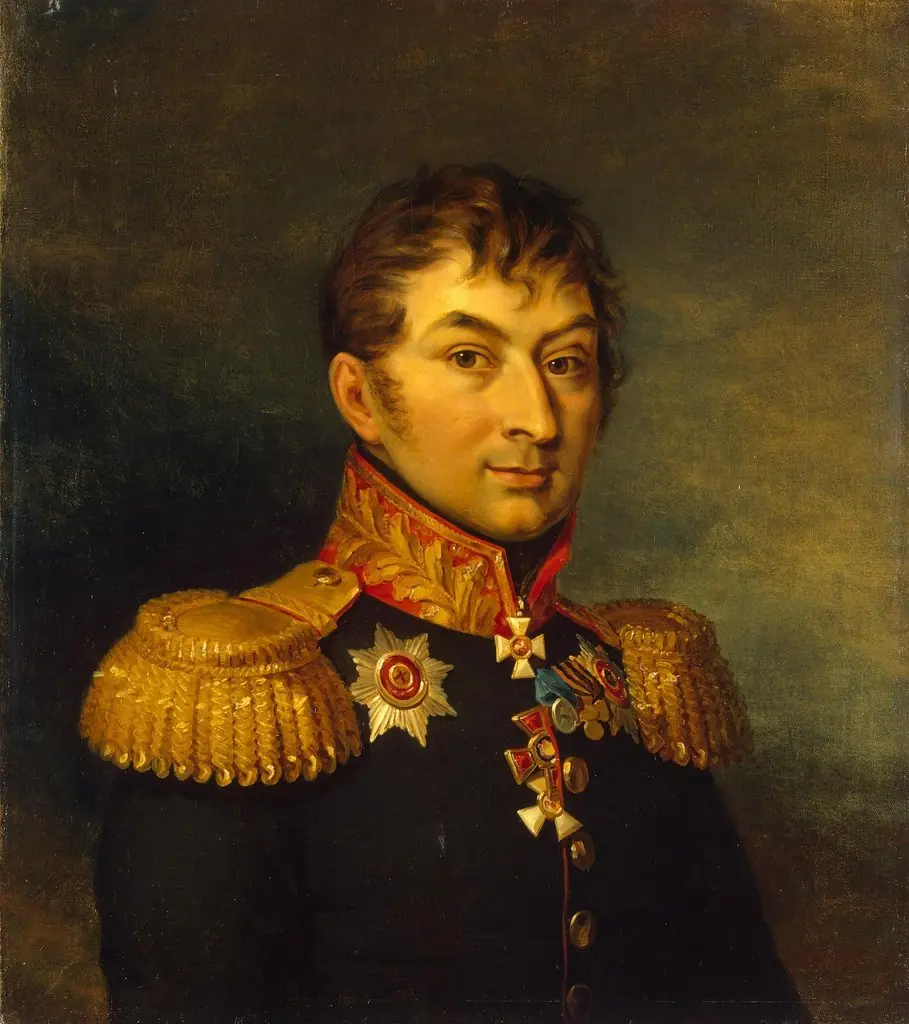 Portrait of Ivan D. Panchulidzev (1759-1815) (1st)
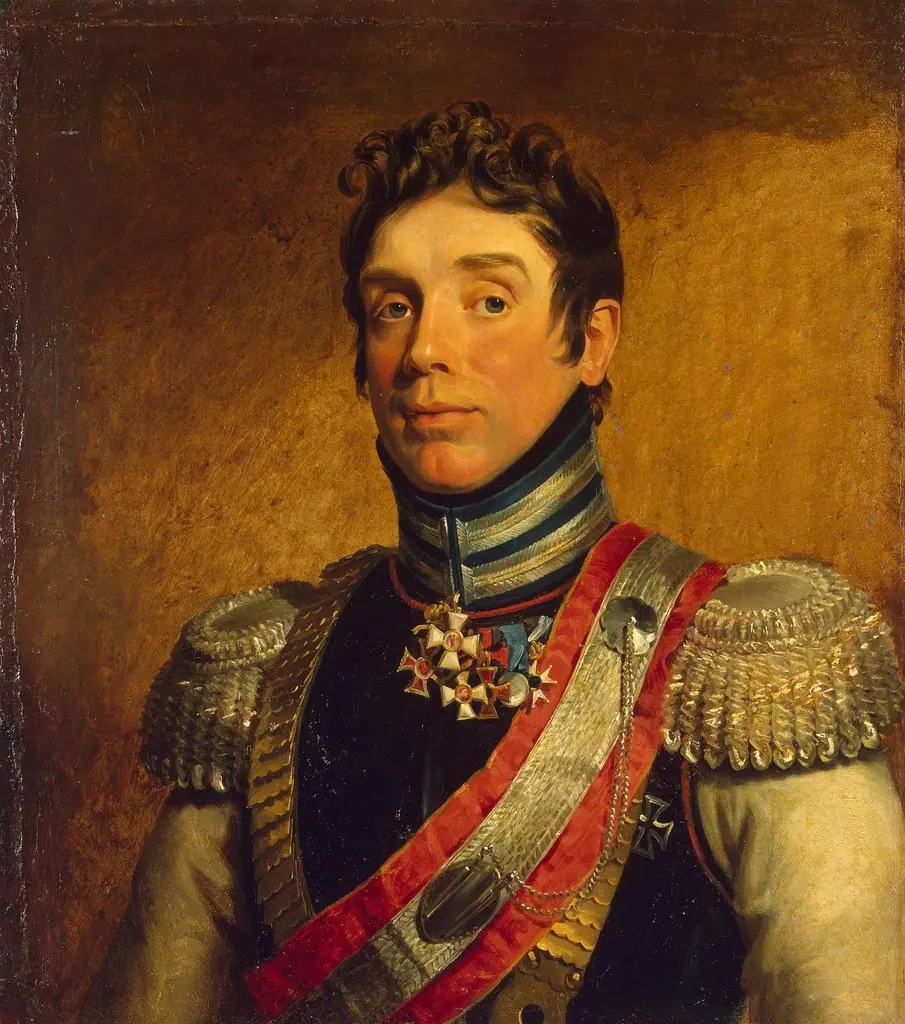 Portrait of Karl V. Budberg (1774-1829)
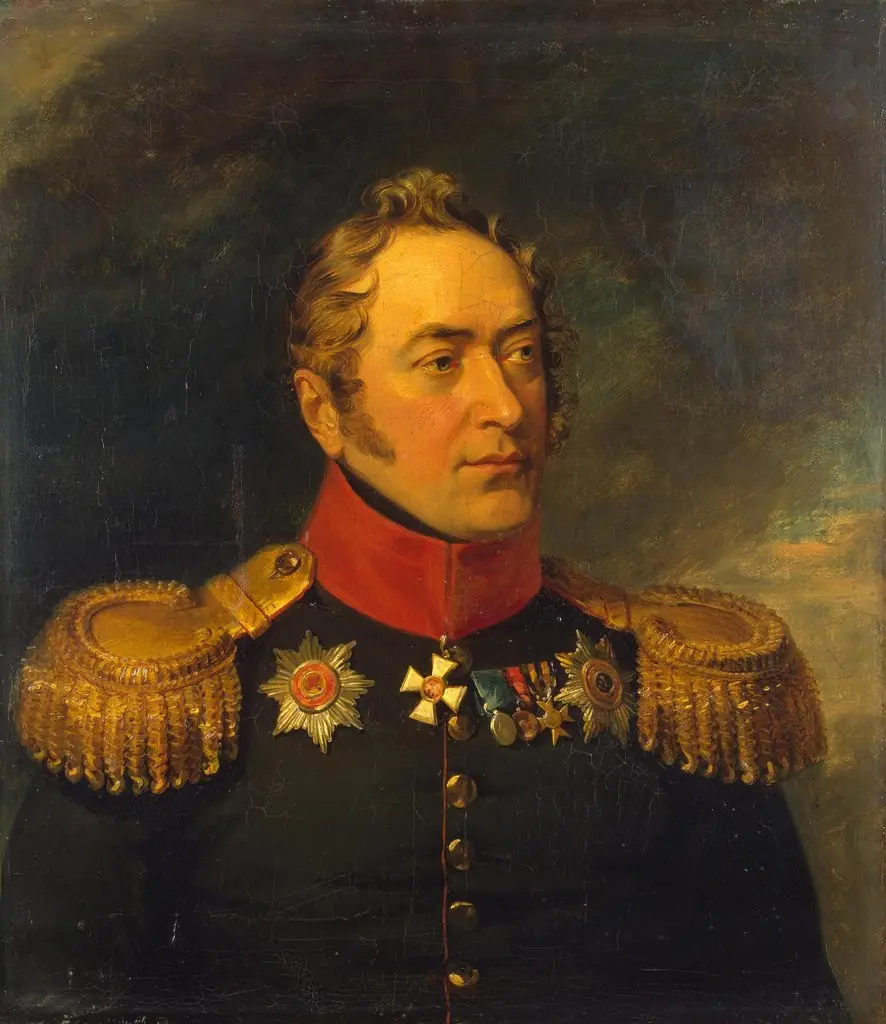 Portrait of Nikolai N. Khovansky (1777-1837)
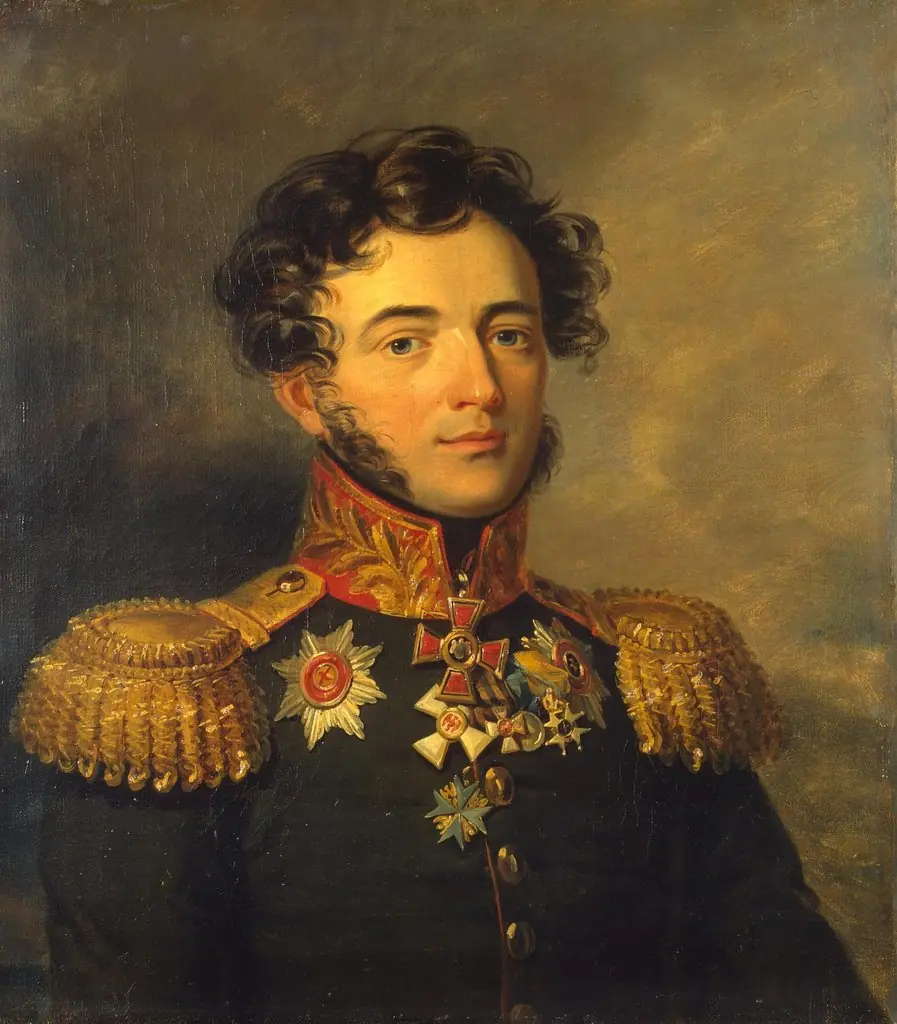 Portrait of Sergey F. Zheltukhin (1776-1833)
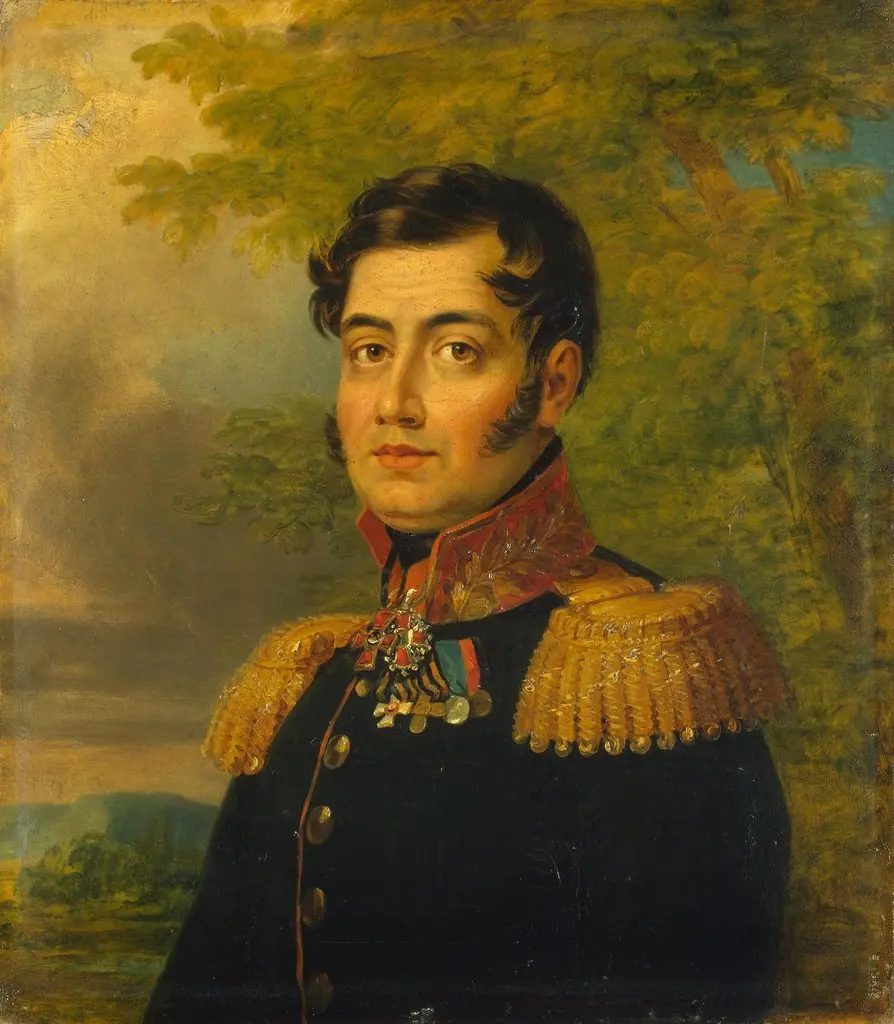 Portrait of Mikhail F. Naumov (1757-1823)
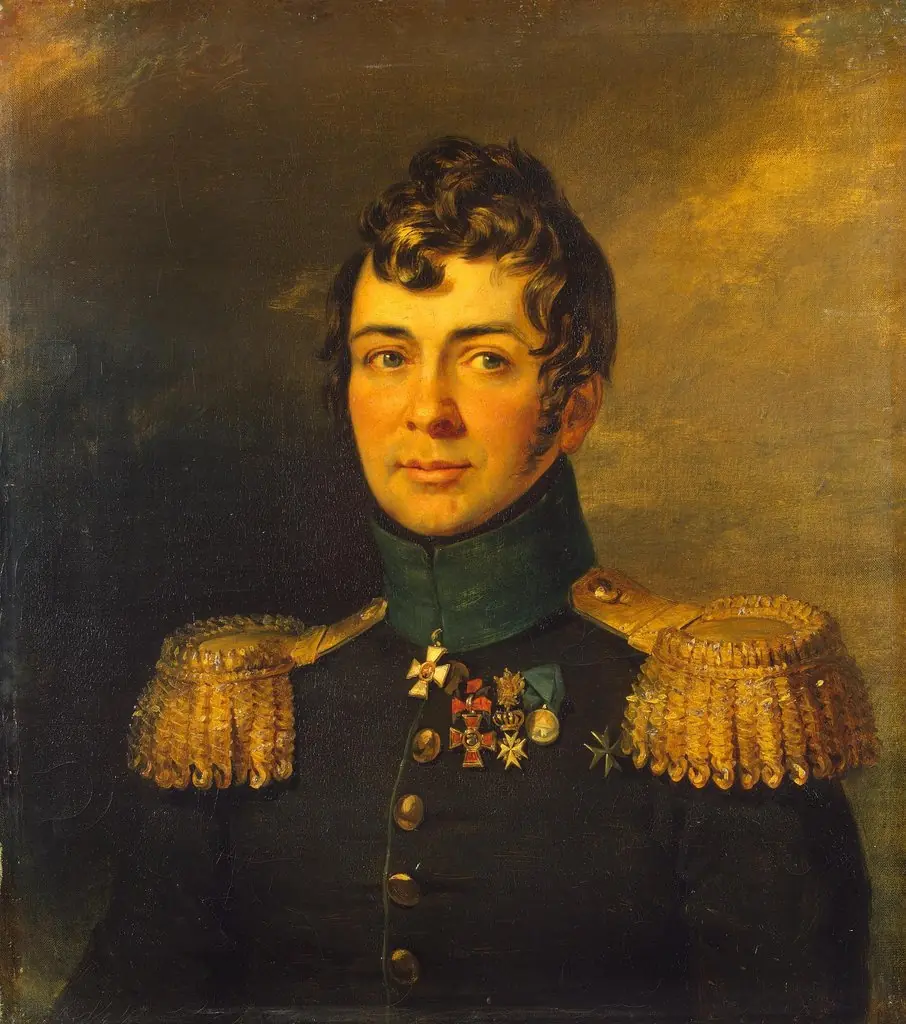 Portrait of Sergey N. Ushakov (1776-1814) (2nd)
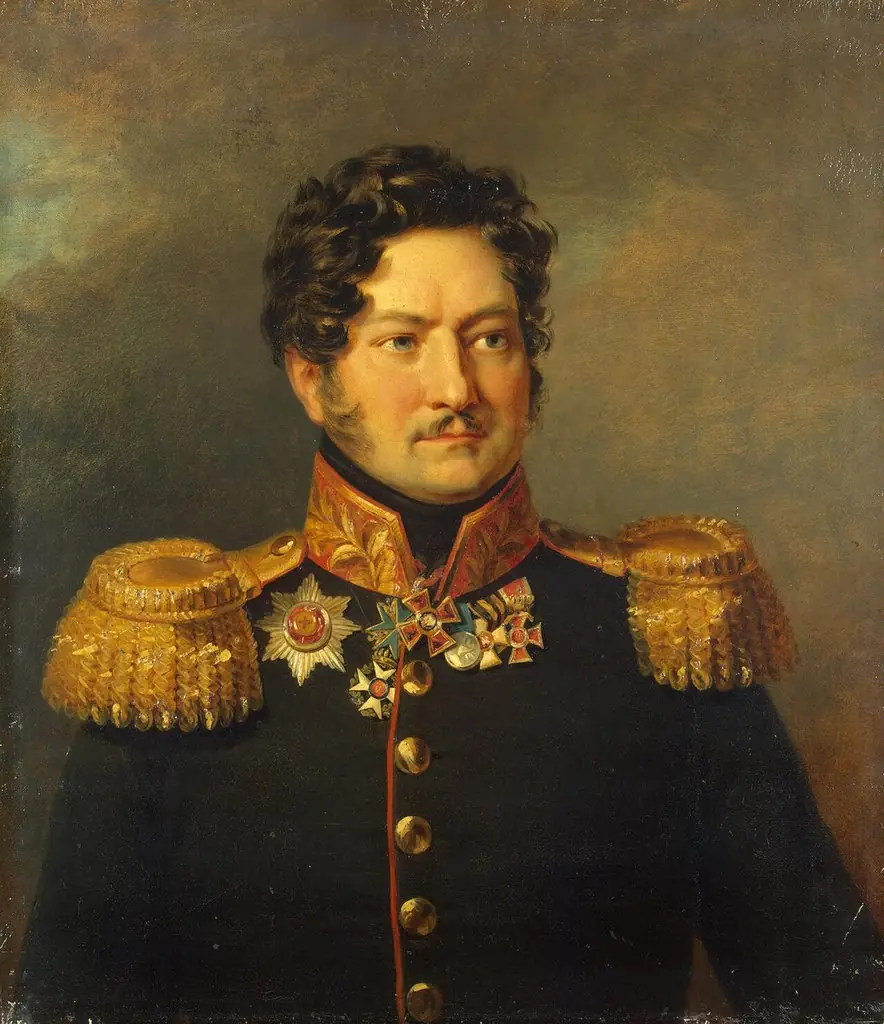 Portrait of Dmitry L. Ignatyev (1771-1833)
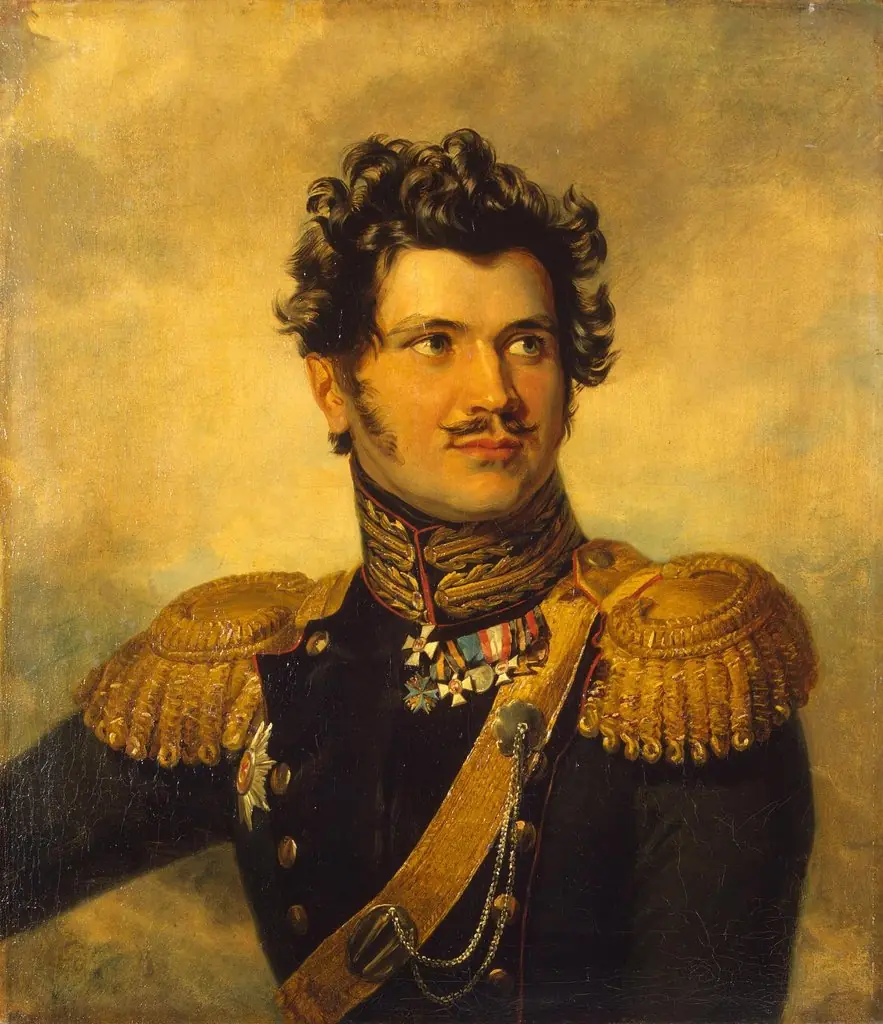 Portrait of Ivan O. Sukhozanet (1788-1861)
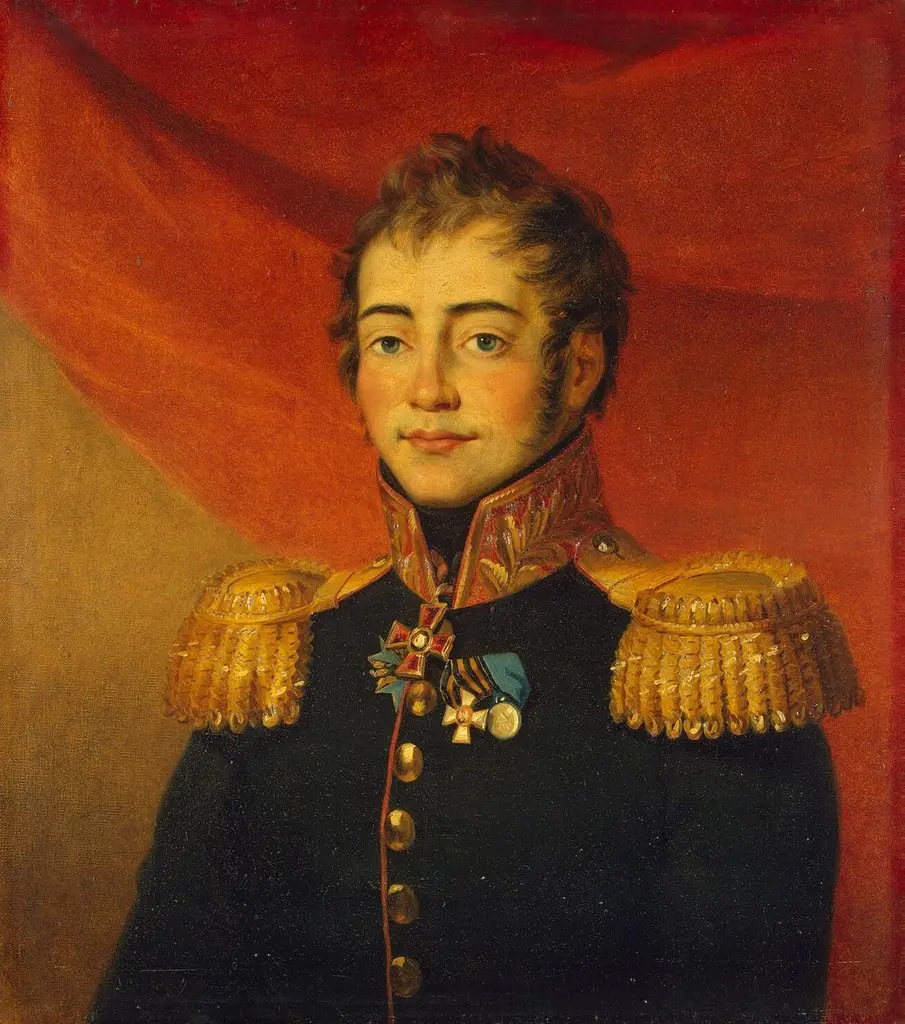 Portrait of Dmitry P. Lyapunov (1775-1821)
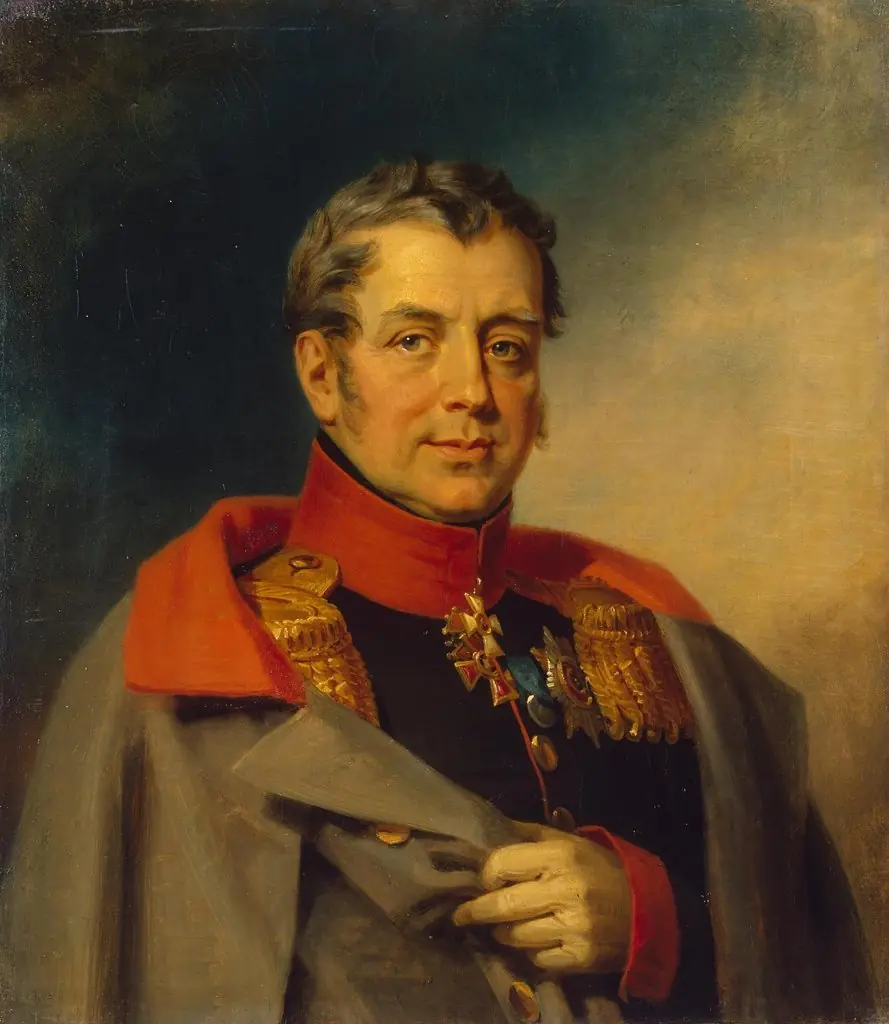 Portrait of Mikhail D. Balk (1764-1818)