Artwork
Portrait of Vasily D. Laptev (1758-1825)
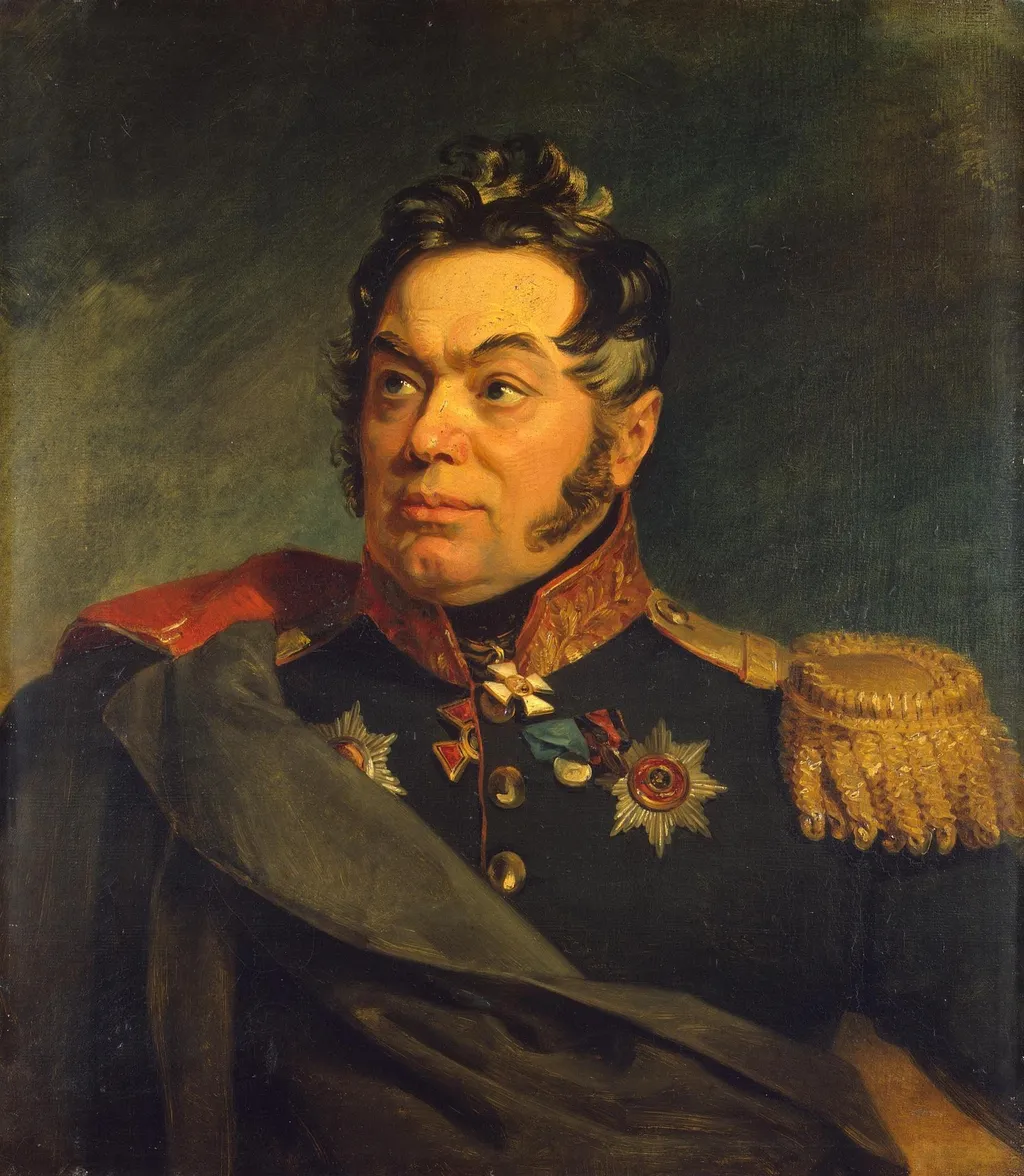
Portrait of Vasily D. Laptev (1758-1825) is an oil painting by George Dawe. It dates from 1822 and is held in the collection of the Hermitage Museum.
About this work
Overview
The portrait is part of the State Hermitage Museum’s collection, where it remains as one of many works produced during Dawe’s tenure in Russia.
Painted in 1822 by the English artist George Dawe, this oil-on-canvas portrait depicts Vasily Danilovich Laptev, a Russian military officer of the early 19th century. Dawe, who relocated to Saint Petersburg in 1819, was commissioned to document prominent figures of the Russian Empire. The portrait is part of the State Hermitage Museum’s collection, where it remains as one of many works produced during Dawe’s tenure in Russia.
Subject & Meaning
Vasily Laptev is portrayed in formal military attire, his demeanor composed and austere. The gold buttons, medals, and red sash signify his rank and service, likely earned during the Napoleonic Wars. The absence of symbolic props or elaborate settings emphasizes his identity as a professional soldier, reflecting the values of discipline and duty central to the Russian military elite of the era.
Technique & Style
Dawe employed precise brushwork to render the texture of fabric and the reflective surfaces of metal decorations. Subtle contrasts of light and shadow, characteristic of chiaroscuro, define the contours of the uniform and the planes of the face. The dark, neutral background isolates the figure, directing attention to the details of his attire and the quiet intensity of his expression.
History & Provenance
Commissioned during Dawe’s time in Russia, the portrait was created alongside his larger project documenting military leaders for the Winter Palace’s Military Gallery. Though not one of the 329 portraits in that official series, this work shares the same documentary intent and stylistic approach. It entered the Hermitage’s holdings shortly after completion, likely through imperial acquisition.
Context
In the early 1820s, Saint Petersburg was a center of cultural exchange, with foreign artists like Dawe welcomed by the Russian court. Portraiture served both personal and political functions, reinforcing the status of military elites after the victories of 1812–1814. Dawe’s presence reflected broader trends of European artists contributing to Russian imperial imagery.
Legacy
Dawe’s portraits, including this one, remain valuable historical records of Russian military figures from the post-Napoleonic period. While less celebrated than his gallery works, individual portraits like Laptev’s demonstrate his technical skill and his role in shaping the visual identity of Russia’s officer class during a transformative era.
Own this work as a print
Artist & collection
Artist
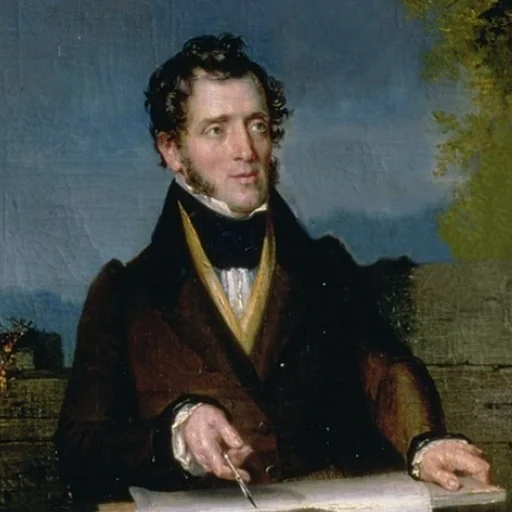
George Dawe (6 February 1781 – 15 October 1829) was an English portraitist who painted 329 portraits of Russian generals active during Napoleon's invasion of Russia for the Military Gallery of the Winter Palace.

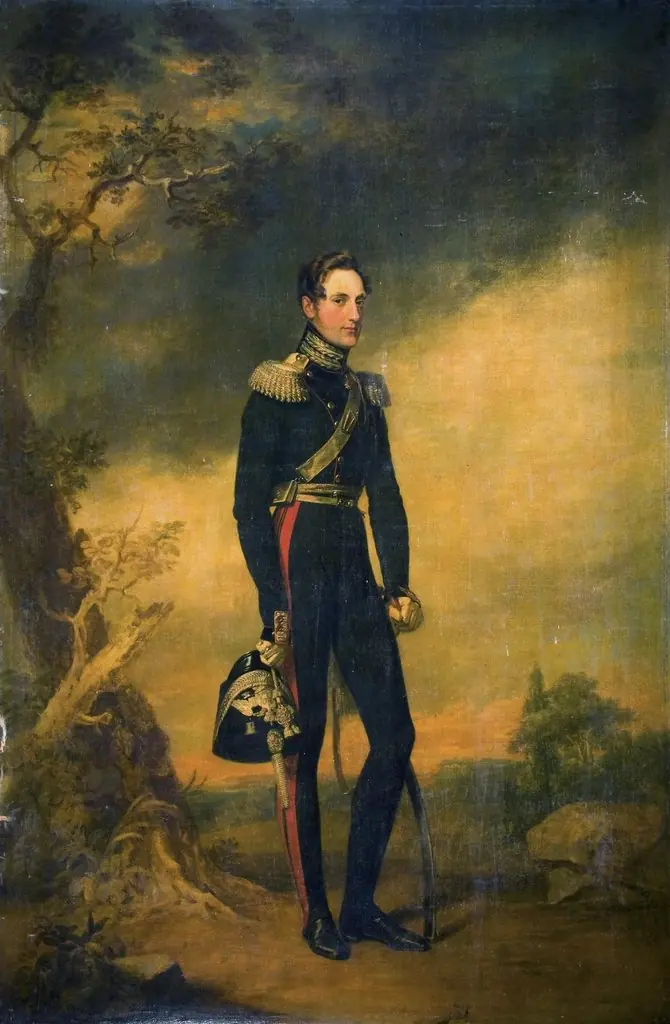 Portrait of Grand Duke Nikolai Pavlovich
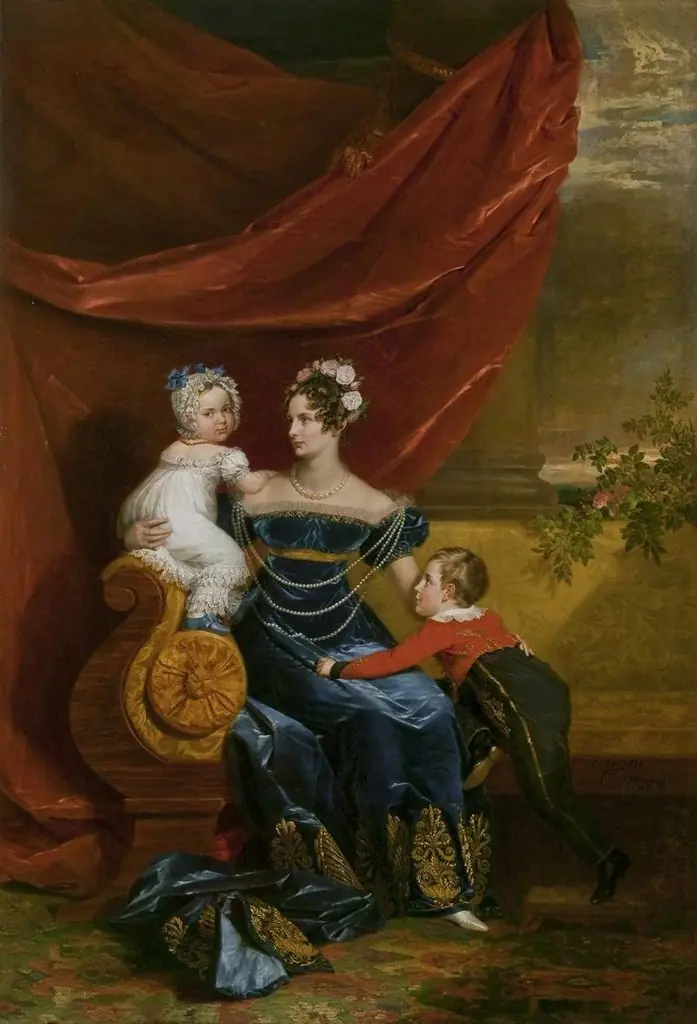 Portrait of Grand Duchess Alexandra Fiodorovna with Children
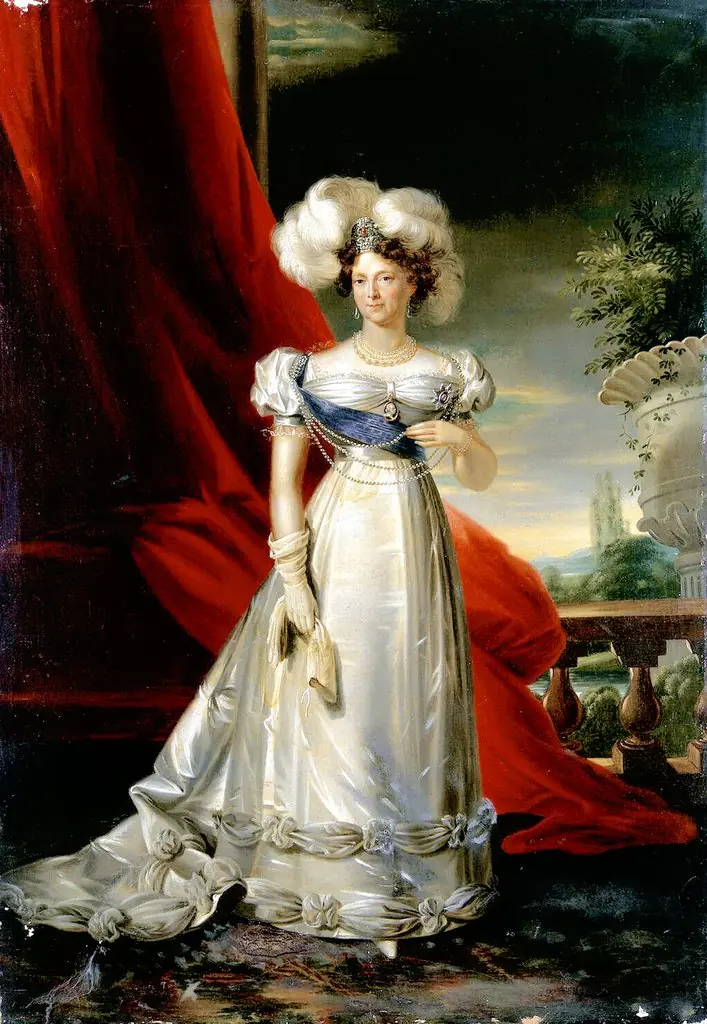 Portrait of the Empress Dowager Maria Feodorovna
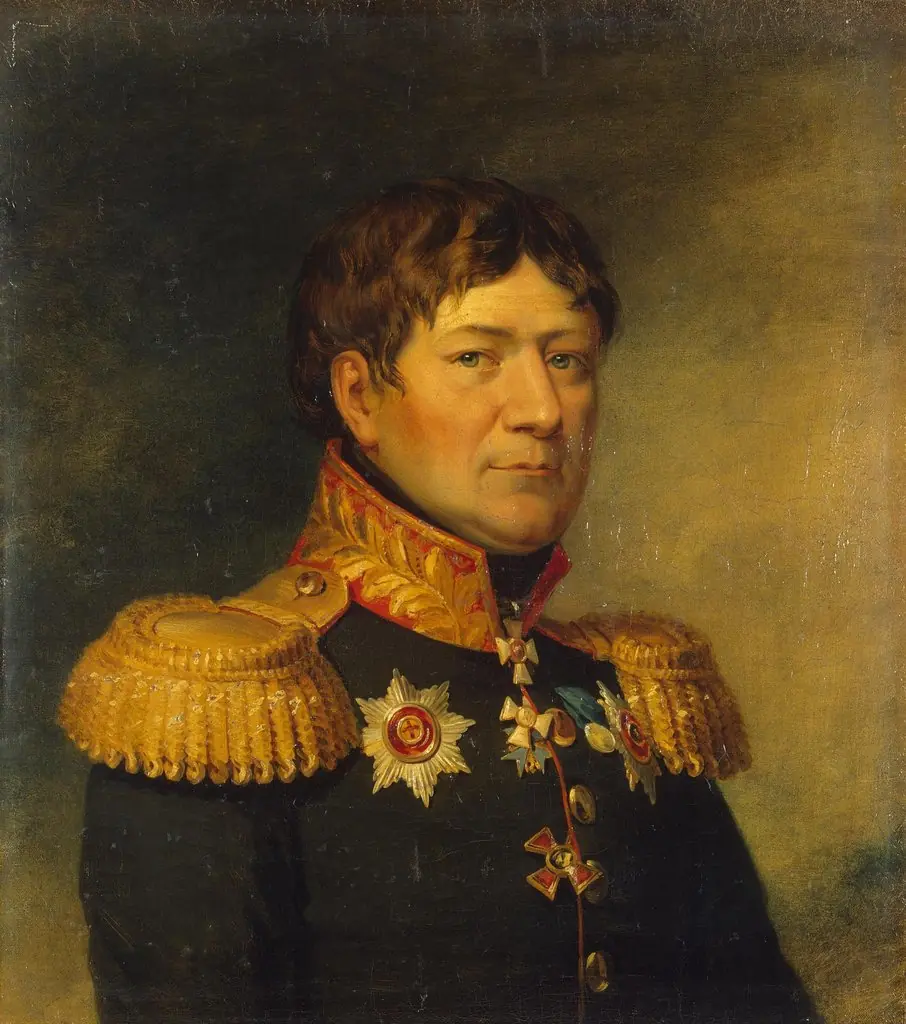 Portrait of Yegor M. Pillar (1767-1830)
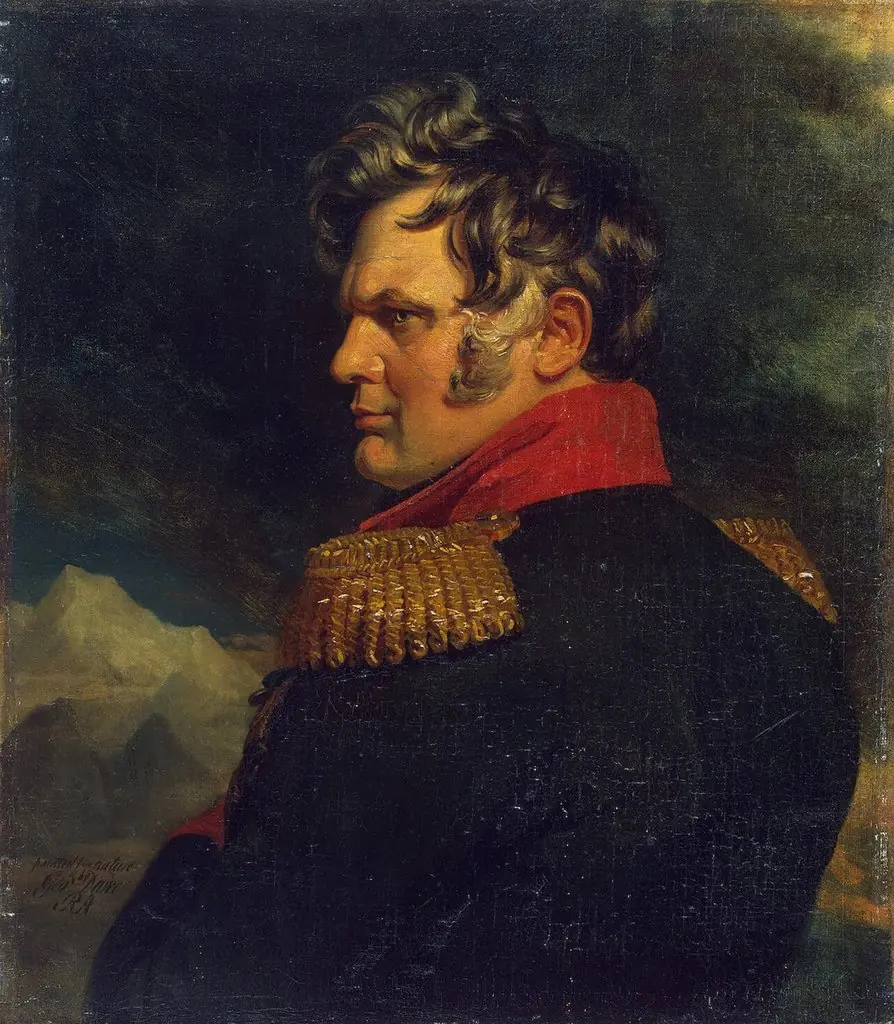 Portrait of Alexei P. Yermolov (1772/77-1861)
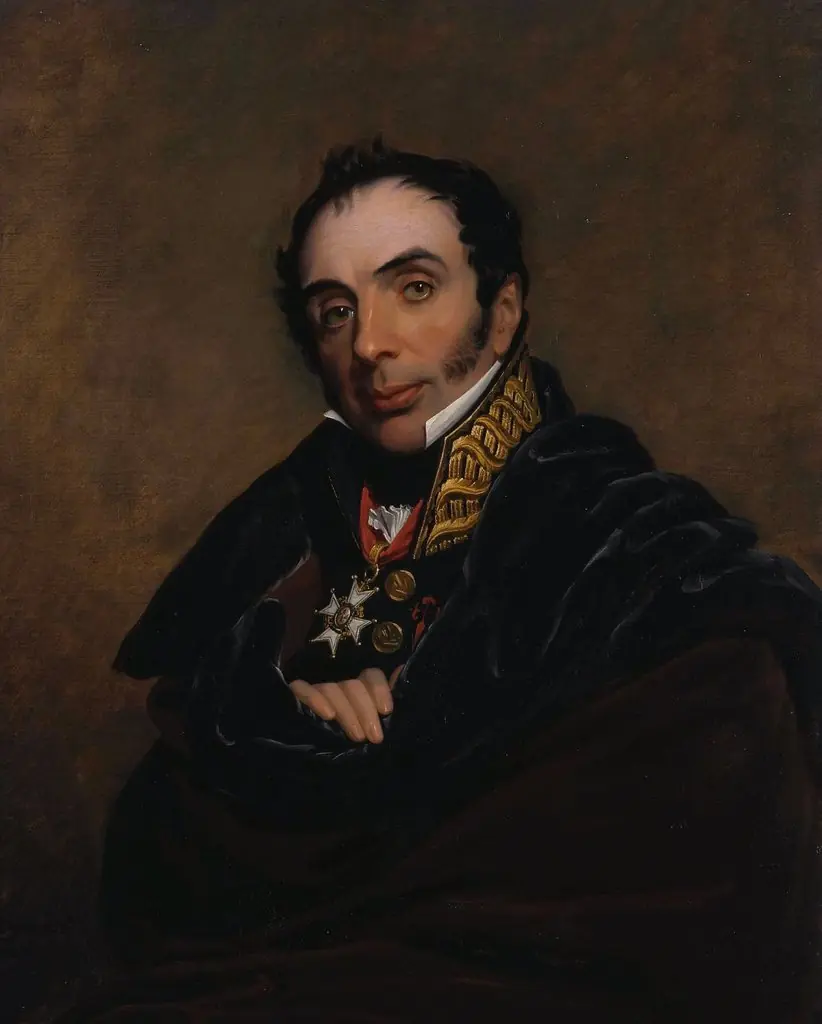 Portrait of Miguel Ricardo de Alava
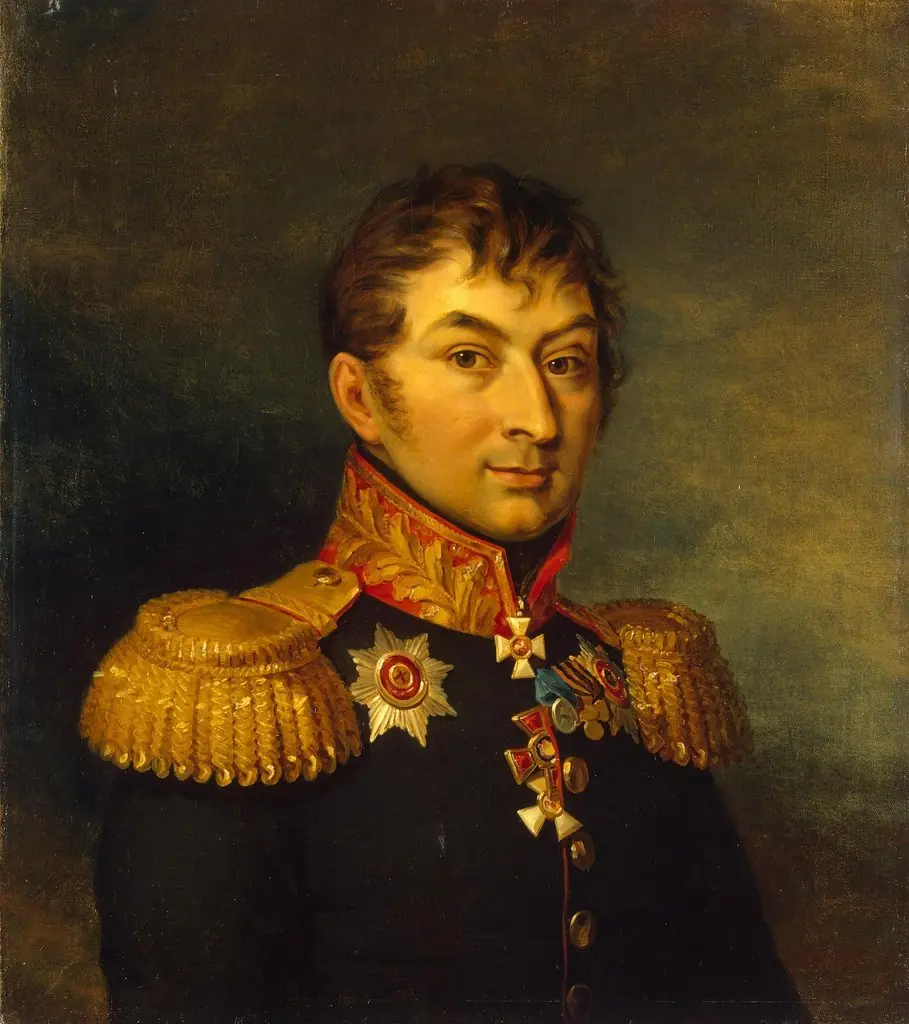 Portrait of Ivan D. Panchulidzev (1759-1815) (1st)
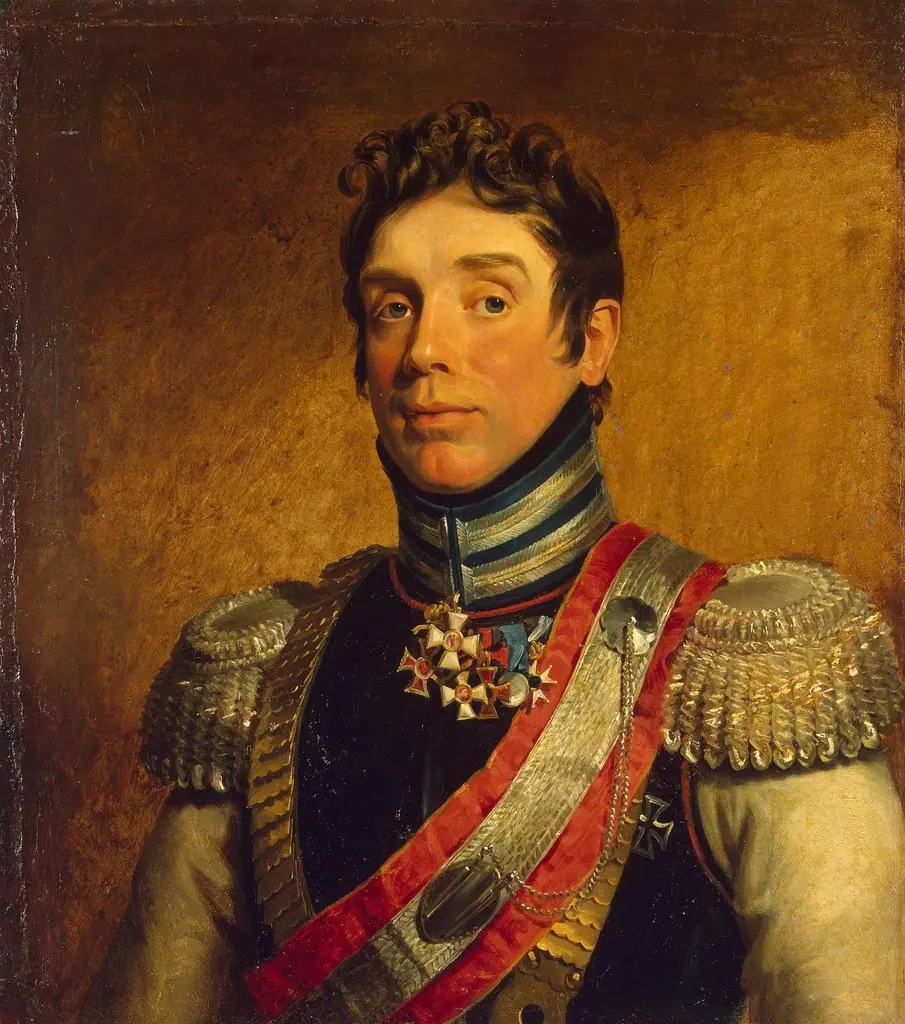 Portrait of Karl V. Budberg (1774-1829)
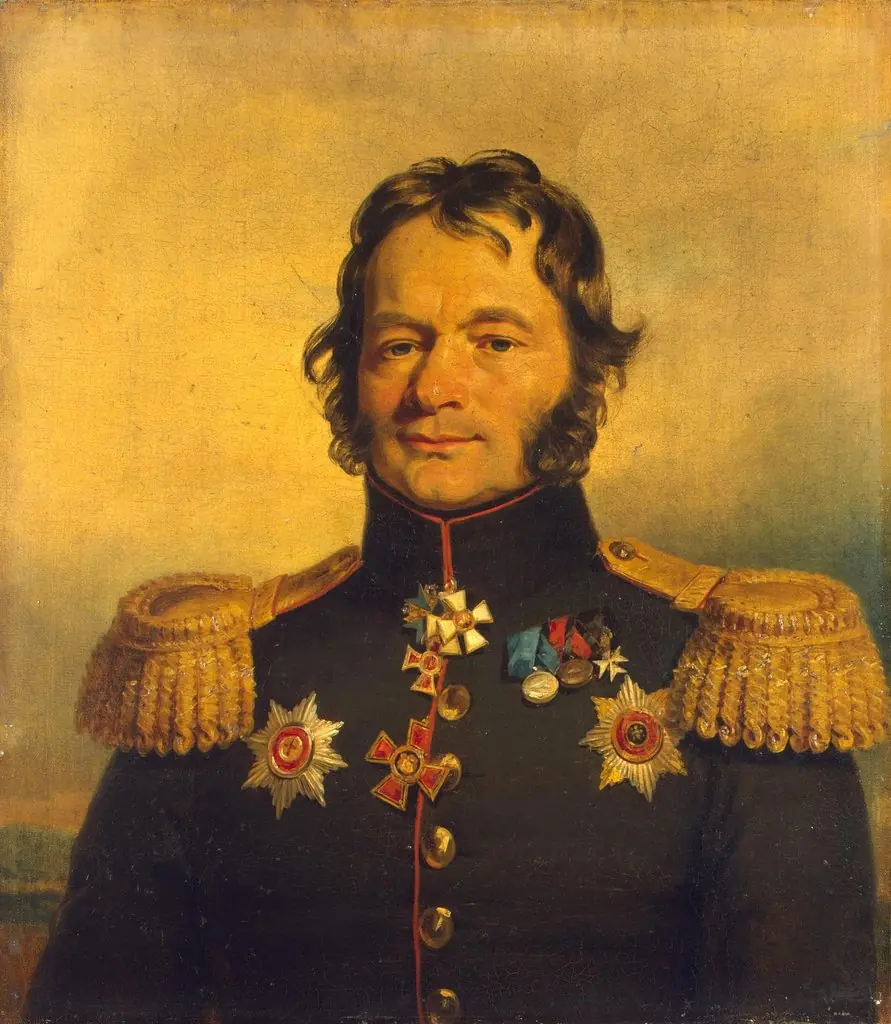 Portrait of Vasily G. Kostenetsky (1769-1831)
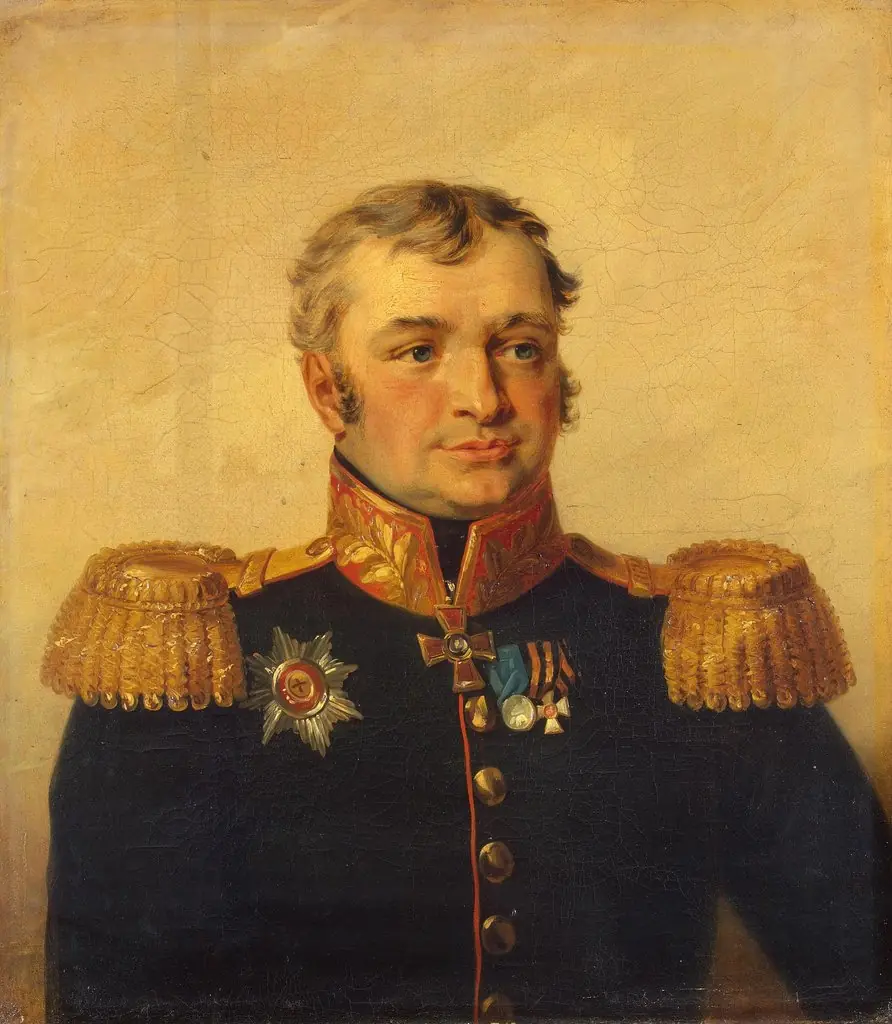 Portrait of Vasily S. Rakhmanov (1764-1816)
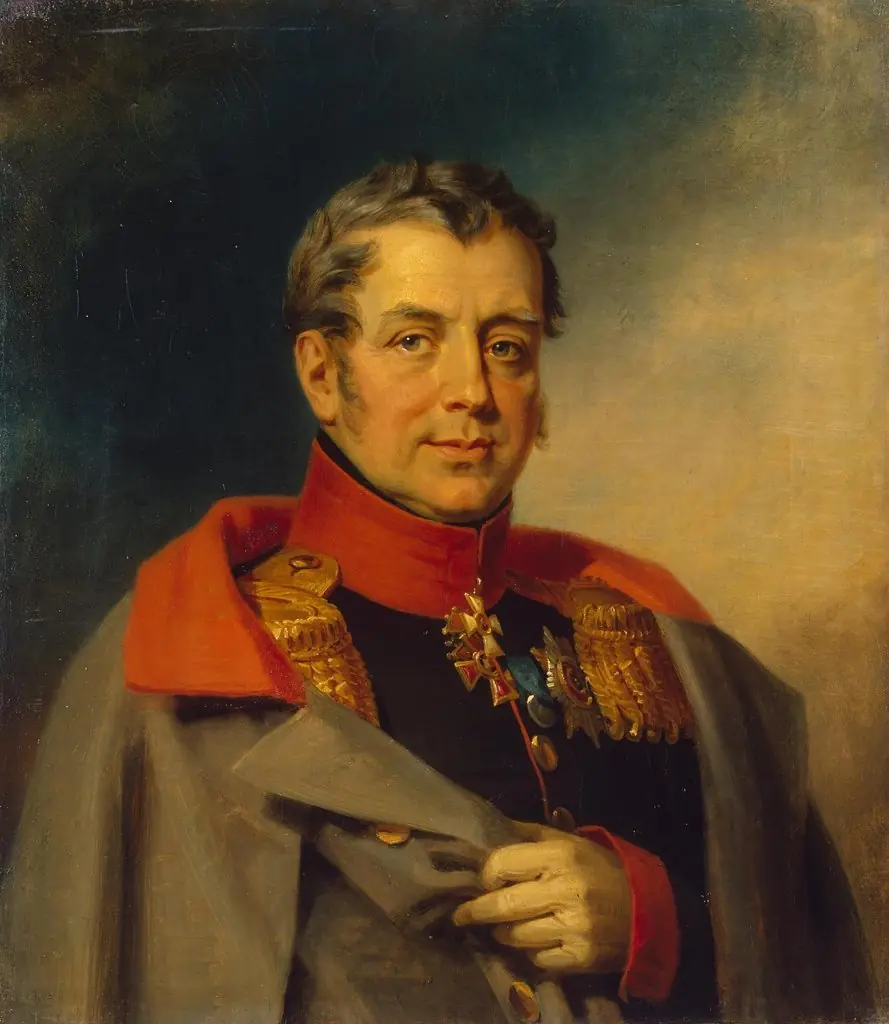 Portrait of Mikhail D. Balk (1764-1818)
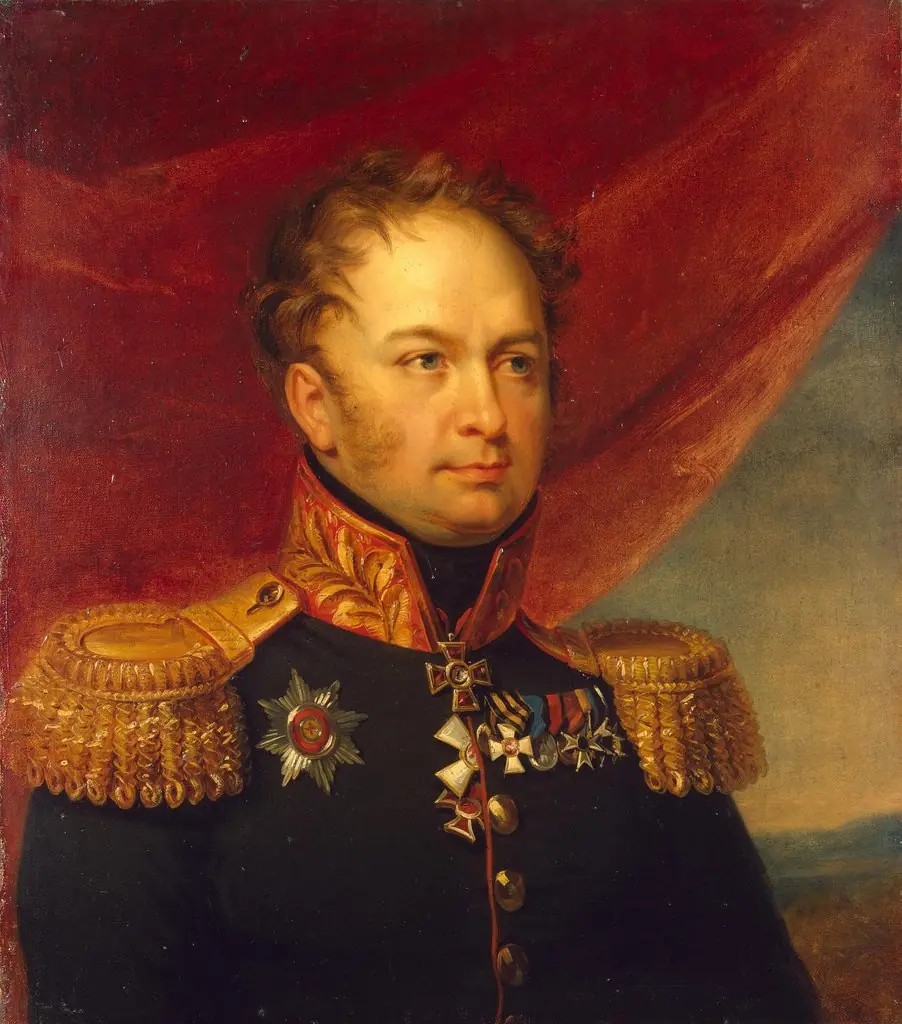 Portrait of Mikhail F. Vlodek (1780-1849)
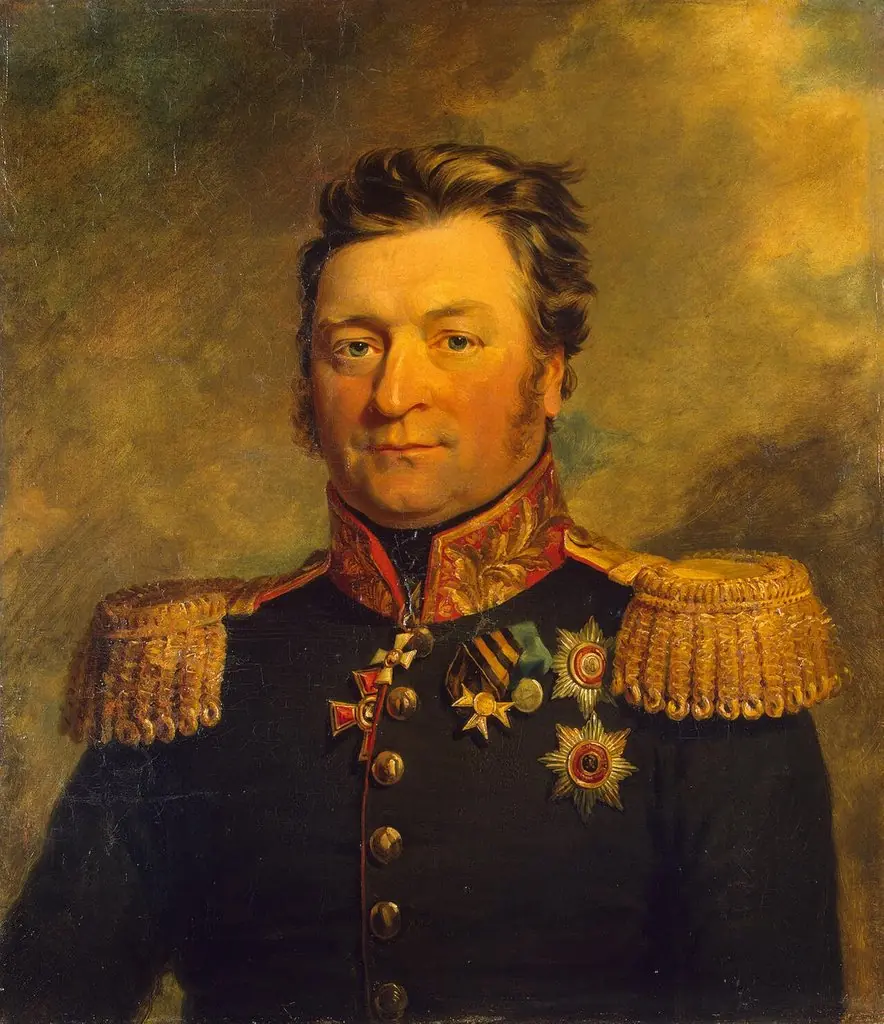 Portrait of Alexander L. Voinov (1768/70-1832)
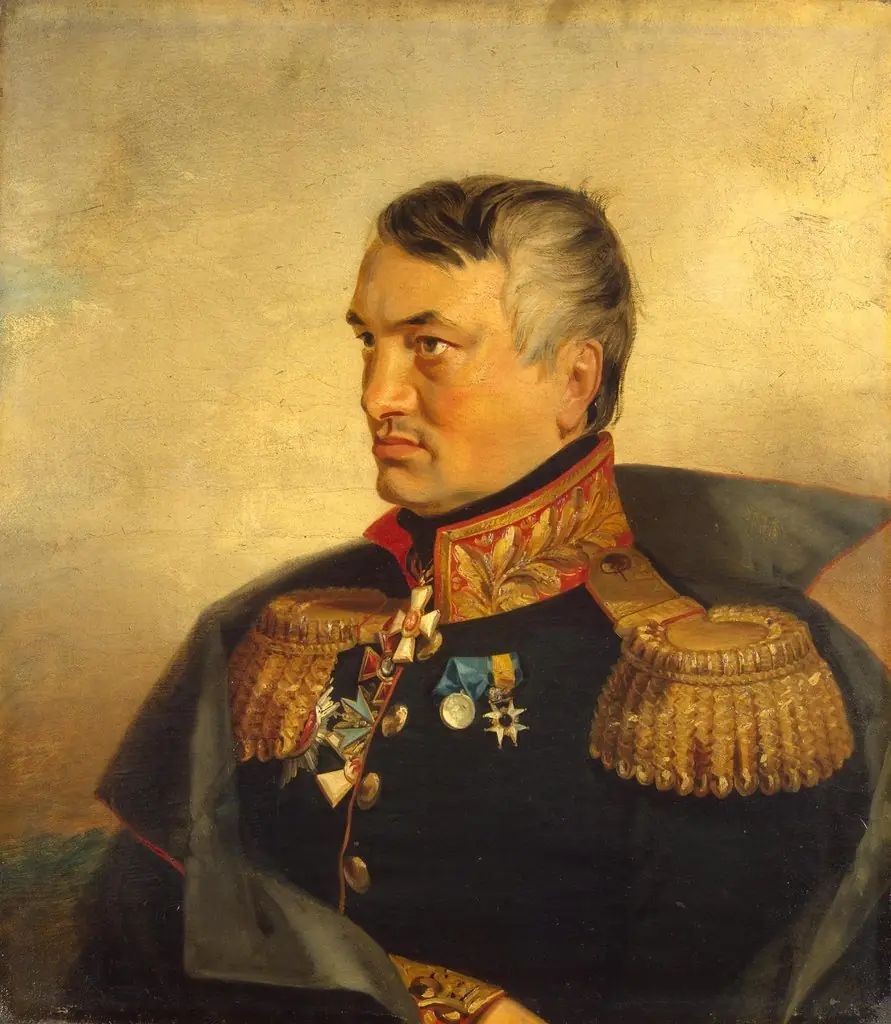 Portrait of Nikolai V. Vasilchikov (1781-1849) (3rd)
 Portrait of Andrey I. Gorchakov (1779-1855)
 Portrait of Vasily D. Ilovaisky (1788-1860) (12th)