Artwork
Bird Study: Bohemian Waxwing
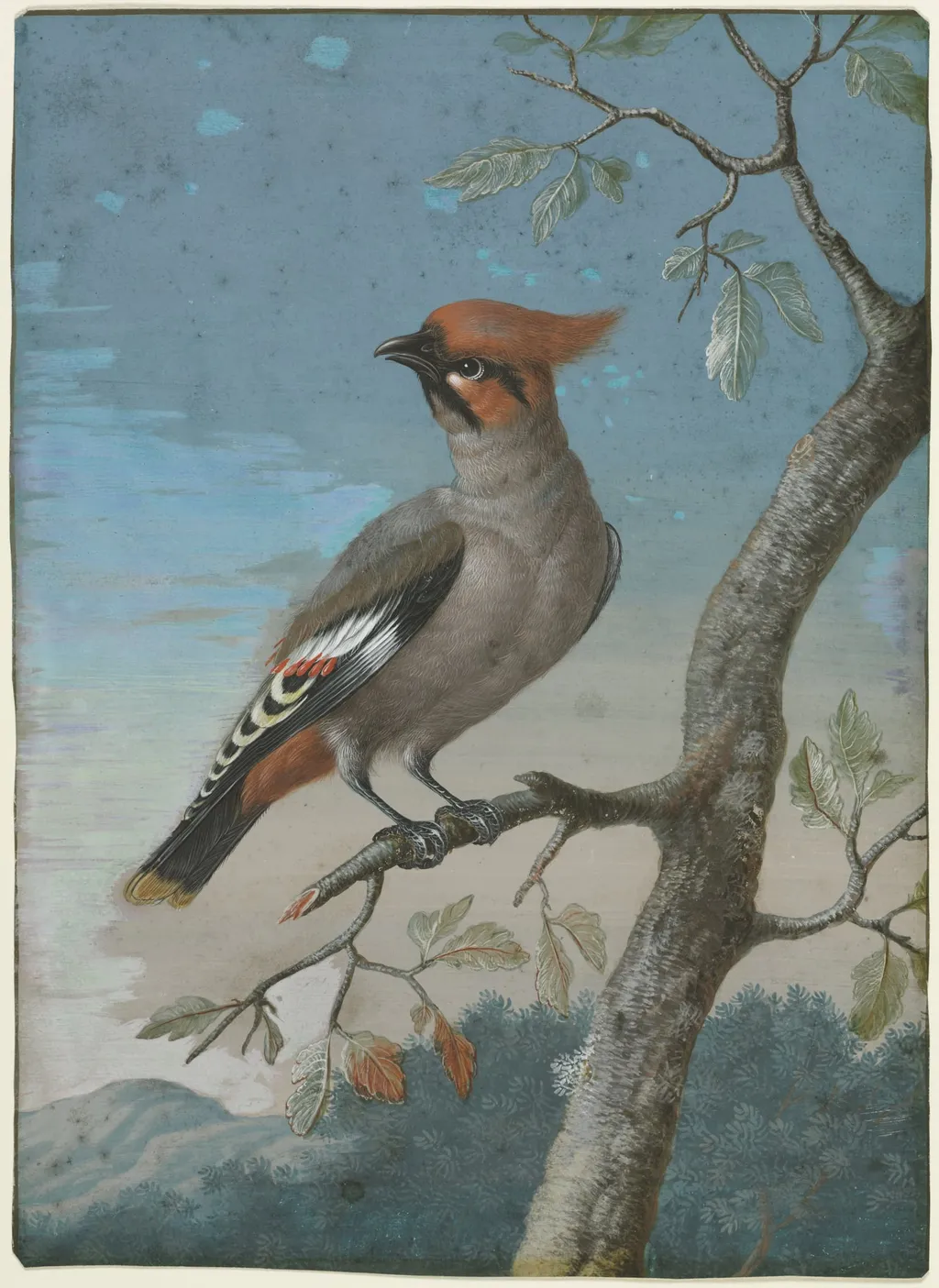
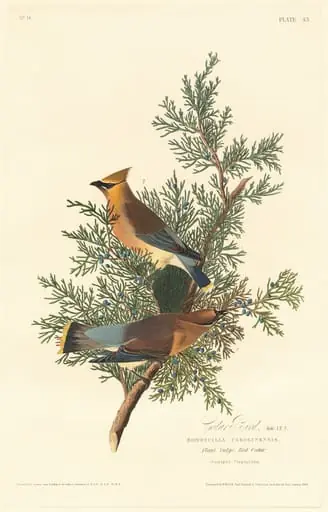
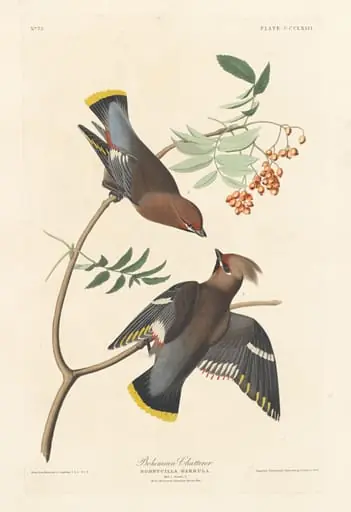
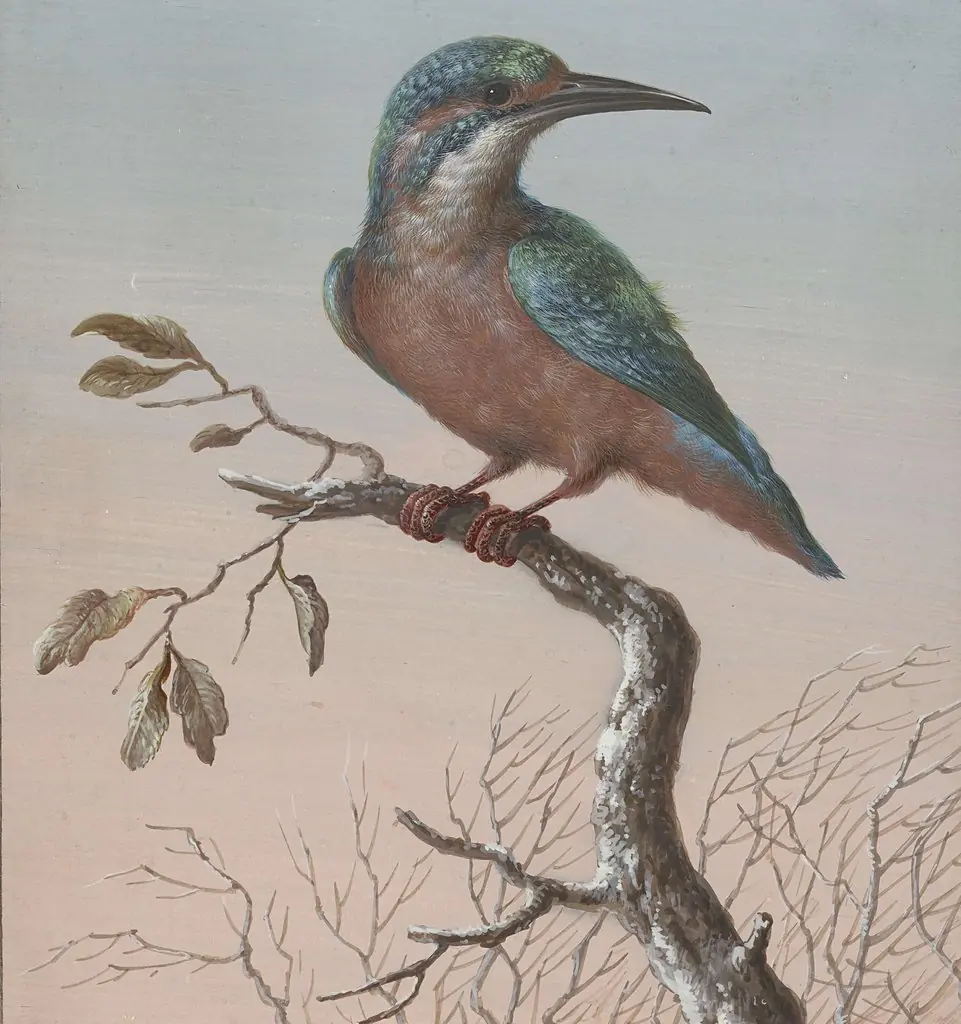
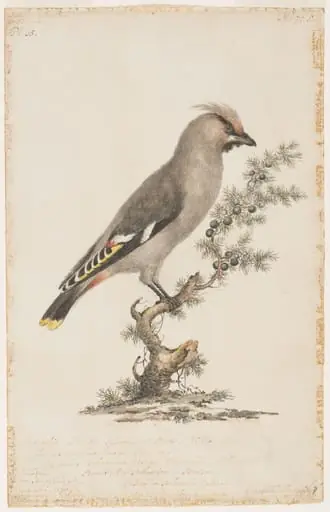
Bird Study: Bohemian Waxwing is a drawing by the Baroque artist George Edwards. It dates from 1741 and is held in the collection of the Cleveland Museum of Art.
About this work
Overview
Created in 1741 by George Edwards, this drawing depicts a Bohemian waxwing perched on a slender branch. Executed in ink and watercolor, it belongs to a series of ornithological studies produced during the early 18th century. The work is held in the collection of The Cleveland Museum of Art and reflects Edwards’ dedication to documenting avian species with scientific precision.
Subject & Meaning
The Bohemian waxwing, identified by its distinctive crest, black eye stripe, and crimson wing markings, is rendered mid-song with its beak slightly open.
The Bohemian waxwing, identified by its distinctive crest, black eye stripe, and crimson wing markings, is rendered mid-song with its beak slightly open. The bird’s poised posture and naturalistic expression suggest observation in the wild rather than studio staging. Edwards’ focus on a single specimen underscores his interest in capturing behavioral and anatomical accuracy over symbolic or decorative intent.
Technique & Style
Edwards employed fine ink linework and translucent watercolor washes to render the bird’s layered plumage with meticulous detail. The texture of feathers, the sheen of the crest, and the subtle gradation of gray and brown tones demonstrate a disciplined approach to natural history illustration. The sparse background—blue sky with soft clouds—directs attention entirely to the subject, avoiding ornamental distraction.
History & Provenance
This drawing was produced during Edwards’ extensive study of birds, later compiled into his multi-volume work A Natural History of Uncommon Birds. It entered The Cleveland Museum of Art’s collection through established provenance linked to 18th-century British naturalists. Its preservation reflects its value as both a scientific record and an example of pre-modern biological documentation.
Context
In the mid-1700s, European naturalists increasingly turned to visual documentation to classify species newly encountered through global exploration. Edwards’ work aligned with this trend, bridging art and science at a time when illustrated field guides were rare. His drawings served as references for scholars and collectors, contributing to the foundation of modern ornithology.
Legacy
Edwards’ avian studies, including this drawing, influenced later natural history illustrators such as John James Audubon. Though not widely known today outside specialist circles, his precise renderings remain valuable for their fidelity to species morphology. The work exemplifies how art functioned as a tool of empirical inquiry before the advent of photography.
Own this work as a print
Artist & collection