Artwork
Portrait of Sir Thomas Baring, 2nd Baronet
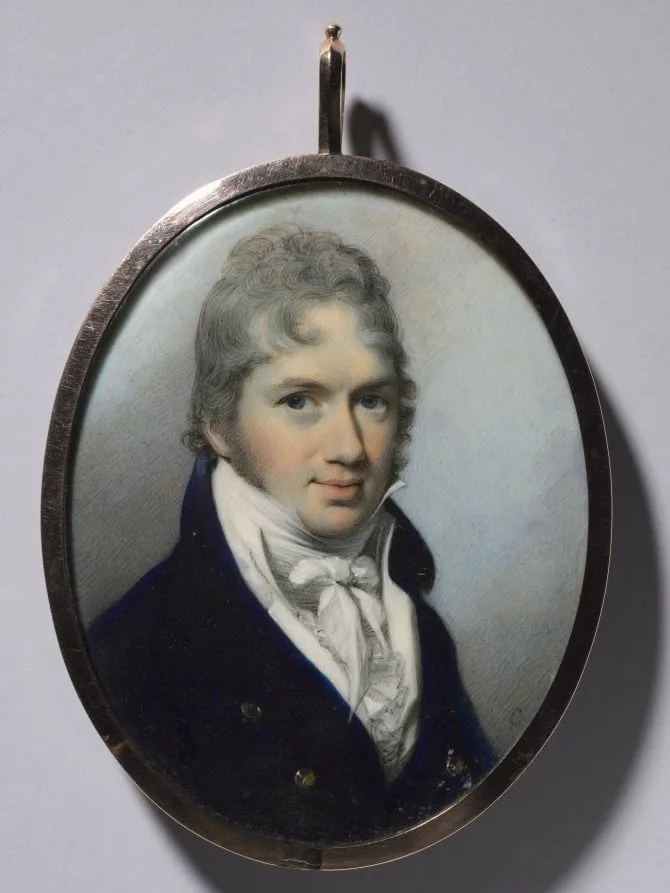
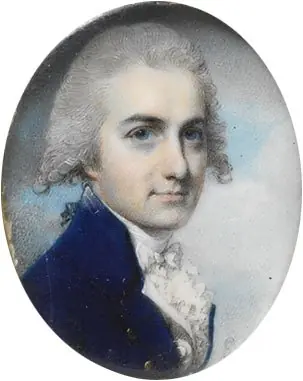
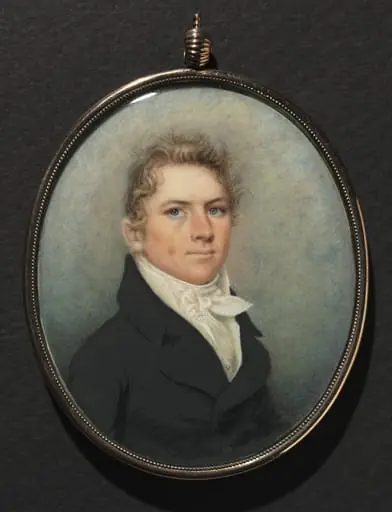
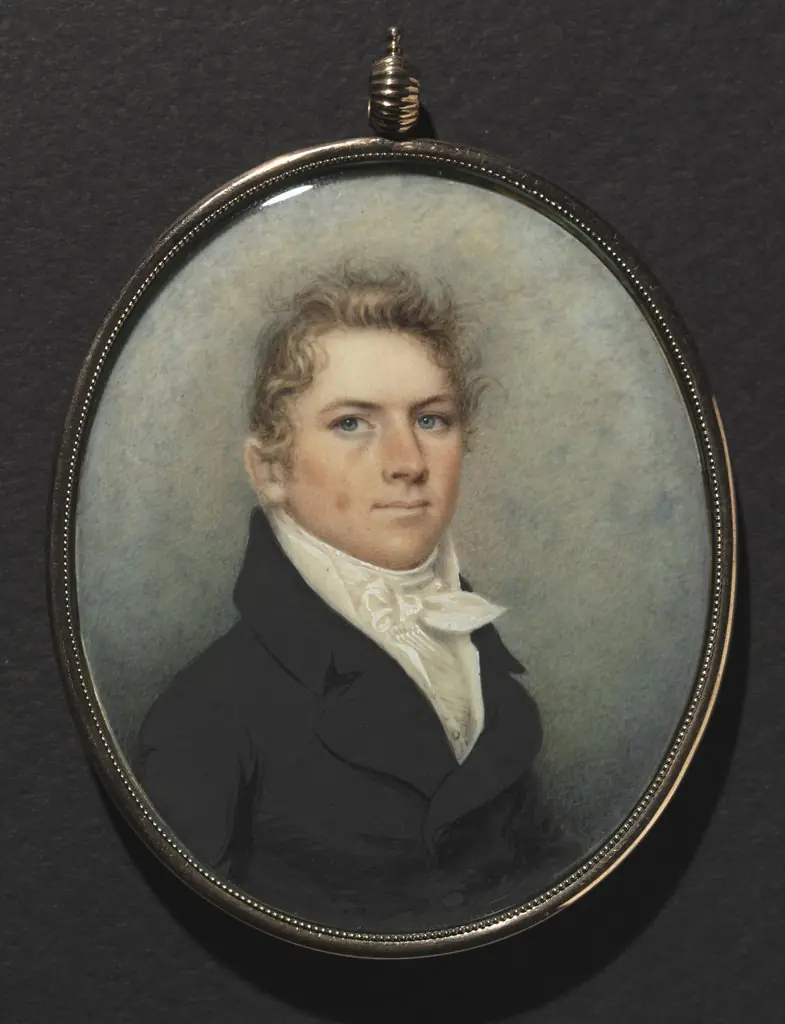
Portrait of Sir Thomas Baring, 2nd Baronet is an unspecified portrait miniature by the British Romanticist artist George Engleheart. It dates from 1803 and is held in the collection of the Cleveland Museum of Art.
About this work
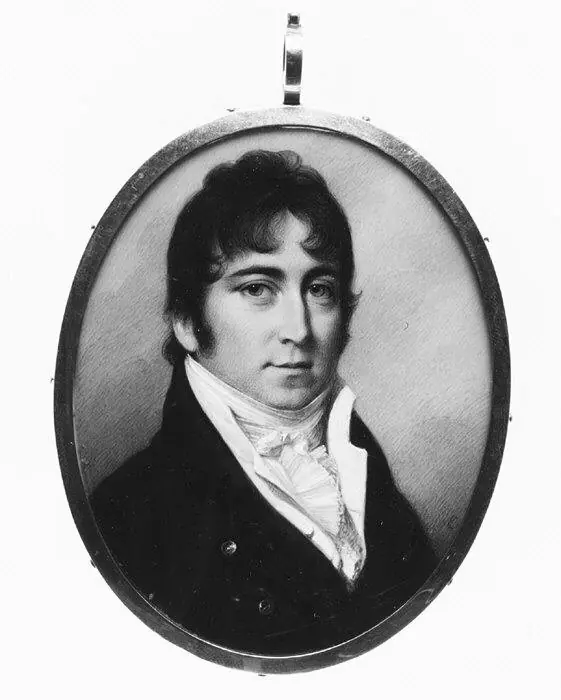
This is Sir Thomas Baring, a banker and future baronet—though when the portrait was painted, he hadn’t yet inherited the title.
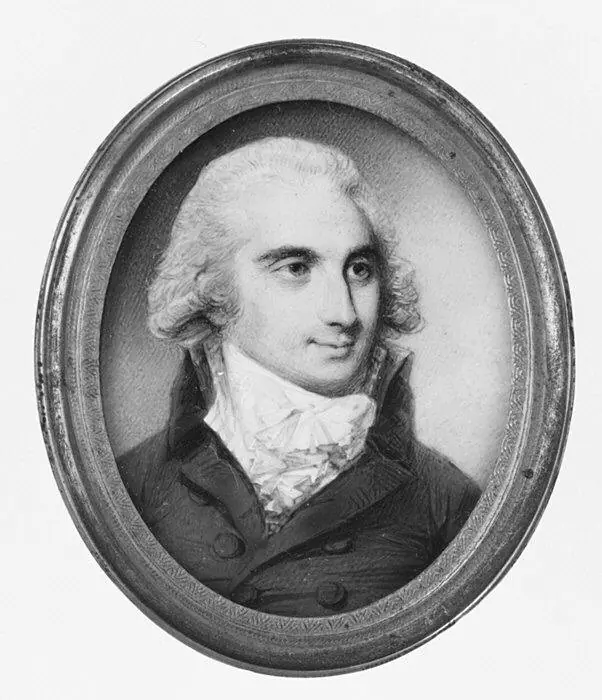
A man in a dark coat and white cravat looks straight at you. His powdered hair is tied back, and his face is lit softly from the side.
This is Sir Thomas Baring, a banker and future baronet—though when the portrait was painted, he hadn’t yet inherited the title. The artist, Engleheart, was known for tiny, precise miniatures, but this is a larger work, showing Baring’s quiet confidence.
To see more portraits like this, look up England, 19th century, mod euro.
Overview
This miniature portrait depicts Sir Thomas Baring, a prominent early‑19th‑century British banker and politician, rendered in the precise style for which George Engleheart was renowned. Though the work entered the museum catalogued simply as “Portrait of a Man” in 1942, later research identified the sitter as Thomas Baring (1772‑1848), who would become the second Baronet in 1810.
Subject & Meaning
Thomas Baring is shown in a dark blue coat with brass buttons, a white waistcoat with a high collar, and a frilled bow tie—typical attire for a gentleman of his era. His hair, cut short and curled around the forehead, follows the à l’antique fashion that evoked classical Roman statesmen, underscoring his status and confidence as a member of the influential Baring banking family.
Technique & Style
Engleheart’s miniature work is noted for its meticulous brushwork and fine detail, even at a slightly larger scale than his usual pieces. The sitter’s face is illuminated by a subtle side light, while the background includes a delicate rendering of plaited brown hair. A small area of pigment loss is visible on the lower right edge of the coat, typical of the medium’s fragility.
History & Provenance
Previous owners Leo Schidlof and Edward Greene recognized the sitter as a Baring, a claim supported by G. C. Williamson’s biography of Engleheart. The portrait entered the museum’s collection in 1942 under a generic title, and subsequent scholarship confirmed the identification of Thomas Baring, who served as a Member of Parliament, a partner at Baring Brothers & Co. from 1804, and chairman of the London and Southwestern Railroad (1832‑33).
Context
Baring Brothers & Co. played a pivotal role in financing the 1802 Louisiana Purchase, a transaction that doubled the United States’ territory and provided funds for Napoleon’s campaigns. Thomas Baring’s involvement in such high‑profile financial and political affairs situates the portrait within the broader narrative of early‑19th‑century British commerce and imperial expansion.
Artist & collection
Artist
George Engleheart (1750–1829) was an English painter of portrait miniatures, and a contemporary of Richard Cosway, John Smart, William Wood, and Richard Crosse.