Artwork
Summer Landscape
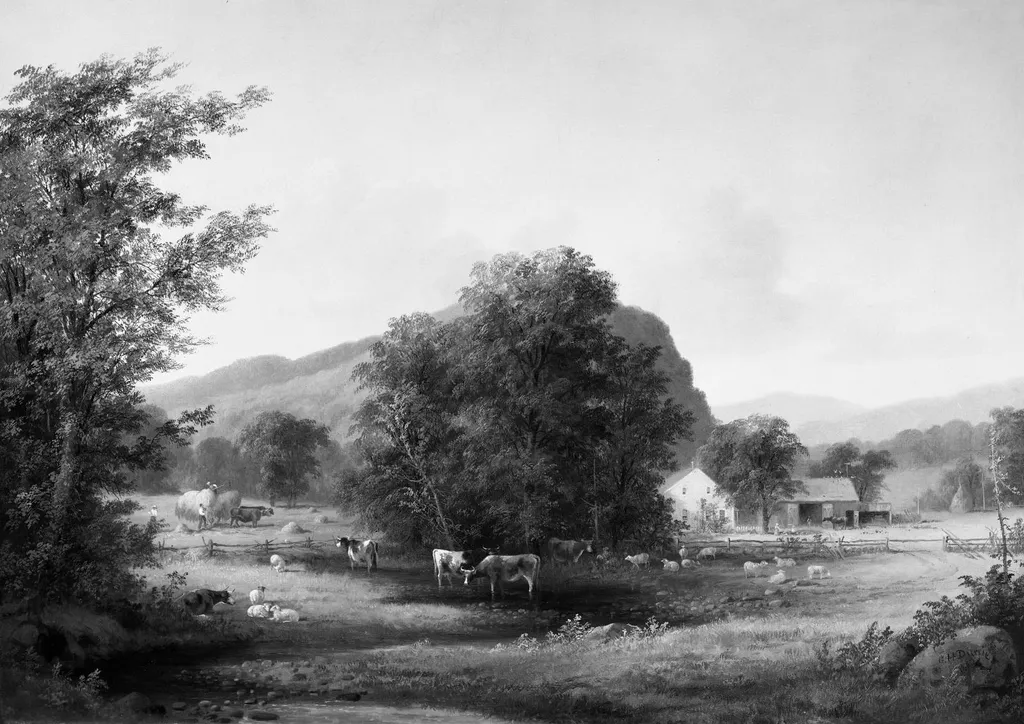
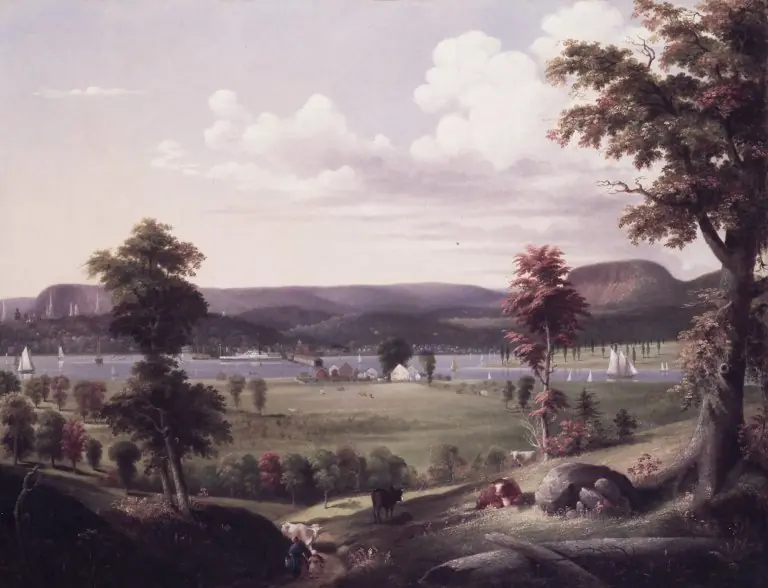
Summer Landscape is an oil painting by the Hudson River School artist George Henry Durrie. It dates from 1862 and is held in the collection of the Museum of Fine Arts Boston.
About this work
Overview
Though better known for winter subjects, this piece captures a serene summer day in the American countryside.
Painted in 1862, *Summer Landscape* is an oil on canvas work by American artist George Henry Durrie. It presents a quiet rural scene characteristic of his output during the mid-19th century. Though better known for winter subjects, this piece captures a serene summer day in the American countryside. The painting resides in the collection of the Museum of Fine Arts, Boston, where it contributes to the institution’s representation of regional landscape traditions.
Subject & Meaning
The scene depicts a modest farmstead nestled in a gentle valley, with cows grazing beside a narrow stream and a lone figure tending a field. A barn and outbuildings stand quietly in the background, while a few distant figures suggest daily labor without drama. The composition avoids narrative intensity, instead emphasizing stillness and routine. It reflects an idealized vision of agrarian life, grounded in observation rather than sentimentality.
Technique & Style
Durrie employed soft, blended brushwork to render atmospheric effects, particularly in the hazy morning light that diffuses across the landscape. Colors are muted, with pale greens, warm browns, and pale blues creating a cohesive tonal harmony. Forms are simplified but deliberately arranged, with trees framing the scene and a low hill providing depth. The technique avoids dramatic contrast, reinforcing the painting’s calm, contemplative mood.
History & Provenance
Created during the height of the Hudson River School’s influence, *Summer Landscape* was produced shortly after the outbreak of the Civil War, a time when idealized rural imagery offered psychological respite. The painting remained in private hands until acquired by the Museum of Fine Arts, Boston, where it has been held since the late 19th century. Its provenance reflects the growing institutional interest in American genre and landscape painting during that era.
Context
Durrie worked within the broader Hudson River School tradition, though his focus on small-scale, everyday rural life distinguished him from contemporaries who favored grand vistas. His paintings resonated with urban audiences seeking connection to an imagined pastoral past. *Summer Landscape* aligns with a mid-century cultural preference for tranquil, orderly countryside scenes, contrasting with the turbulence of industrialization and war.
Legacy
Though not widely celebrated in his lifetime, Durrie’s work, including *Summer Landscape*, has endured as a quiet testament to 19th-century American rural life. His ability to convey peace through understated detail influenced later regionalist painters. The painting remains a representative example of how ordinary landscapes were elevated in art to reflect values of stability and harmony during a period of national upheaval.
Artist & collection

Artist
George Henry Durrie (June 6, 1820 – October 15, 1863) was an American landscape artist noted especially for his rural winter snow scenes, which became very popular after they were reproduced as lithographic prints by Currier and Ives.

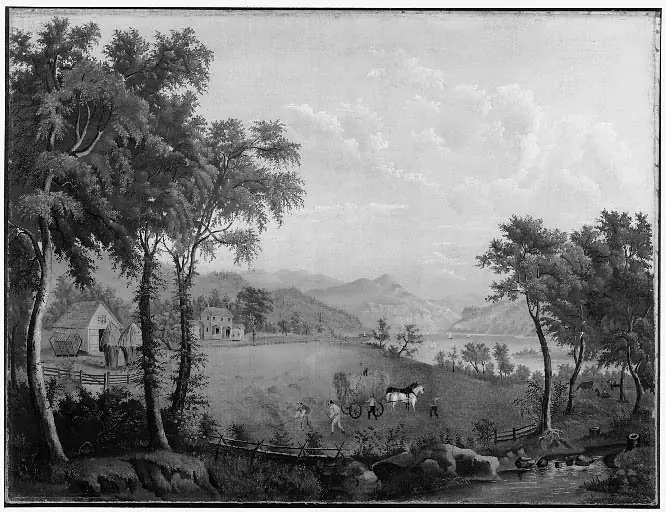 Summer Landscape: Haymaking (after American Harvesting)
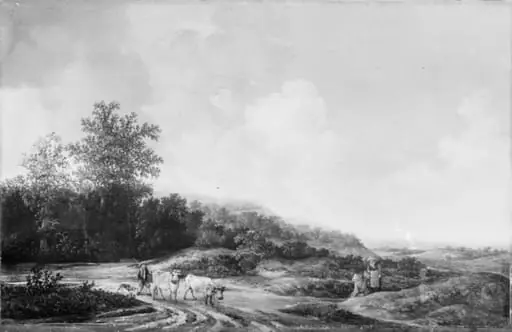 Hilly Landscape
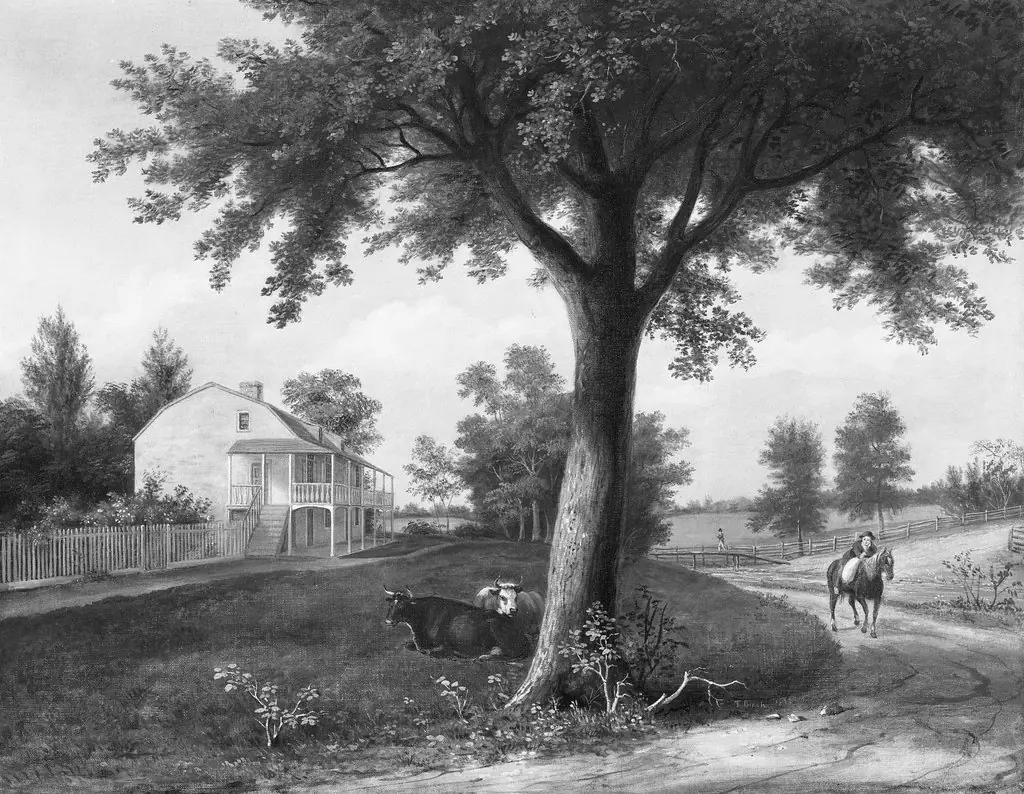 Milford, North Wales, Pennsylvania
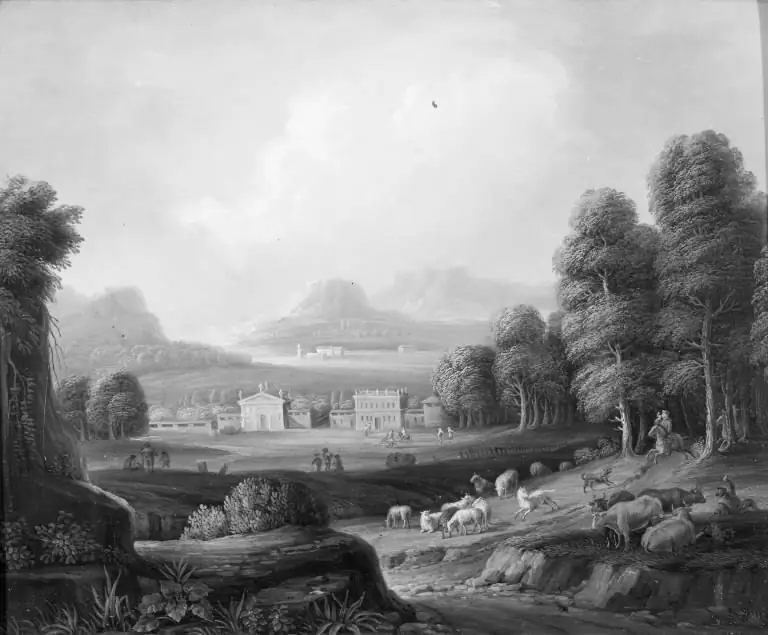 A Landscape with Villas in the Middle Distance and Mountains in the Background
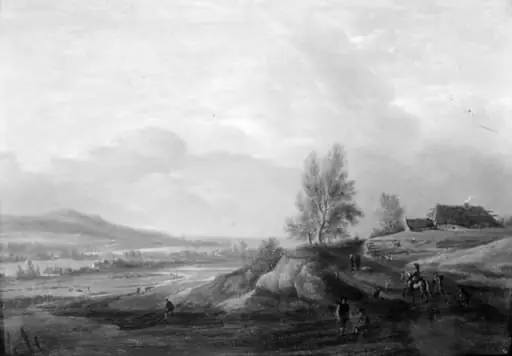 Flodlandskab
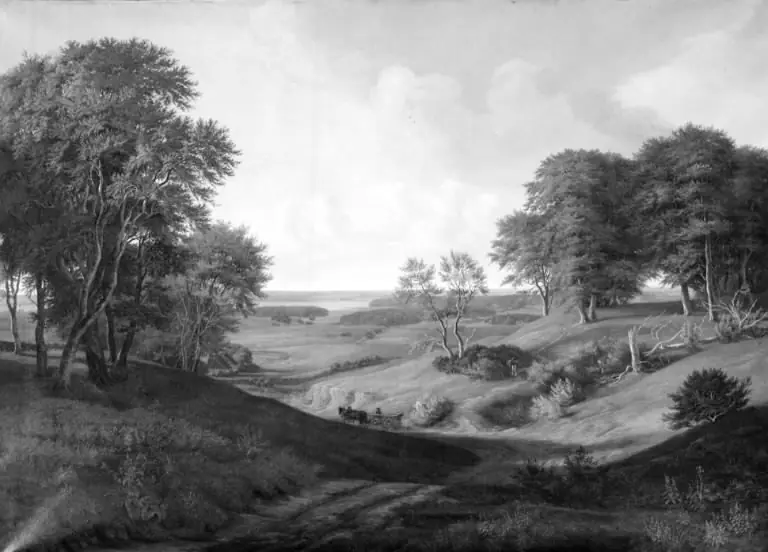 Parti i nærheden af Nøddebo
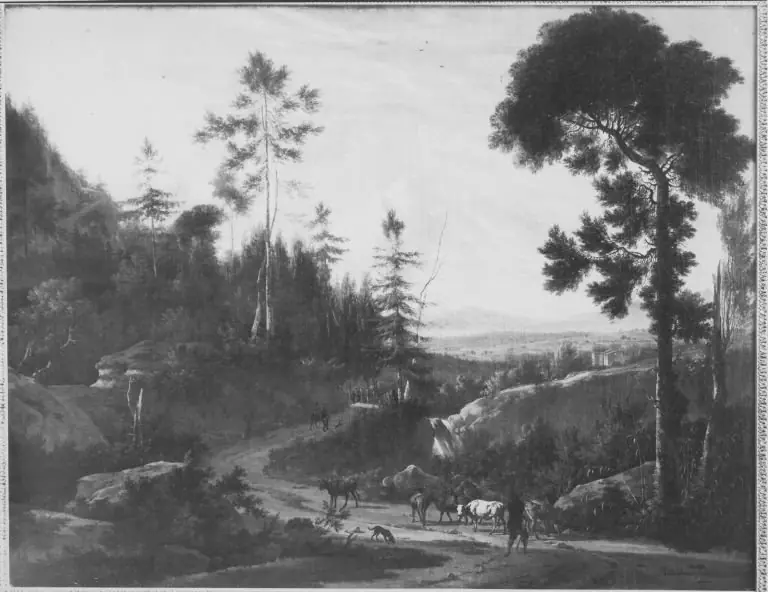 Landschaft mit Hirten
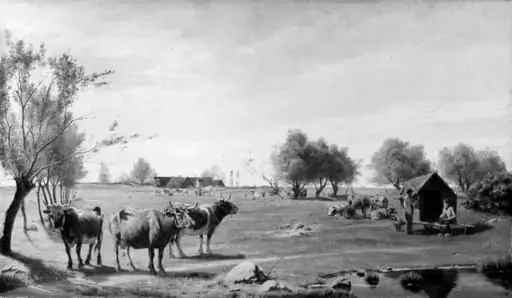 Cows in a Field
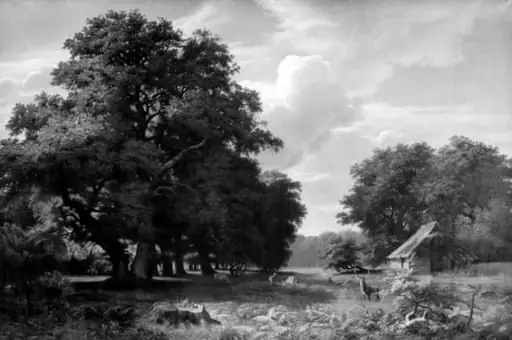 Landskab fra Frijsenborg Dyrehave. Bygevejrsdag
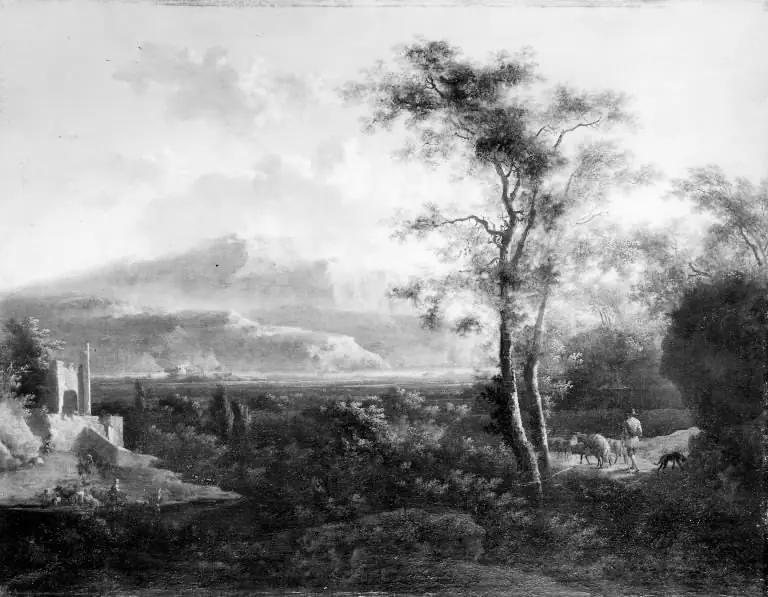 Italianate Landscape
 Italianate Landscape
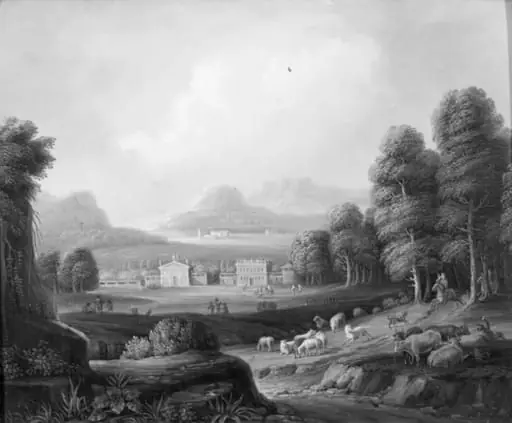 A Landscape with Villas in the Middle Distance and Mountains in the Background