Artwork
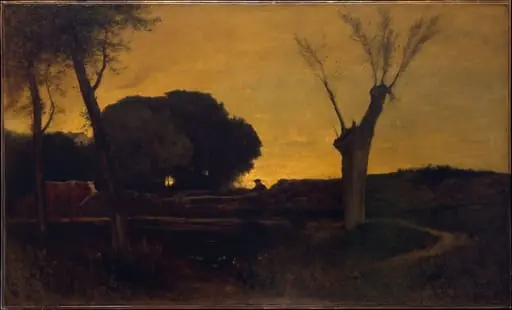
Afterglow
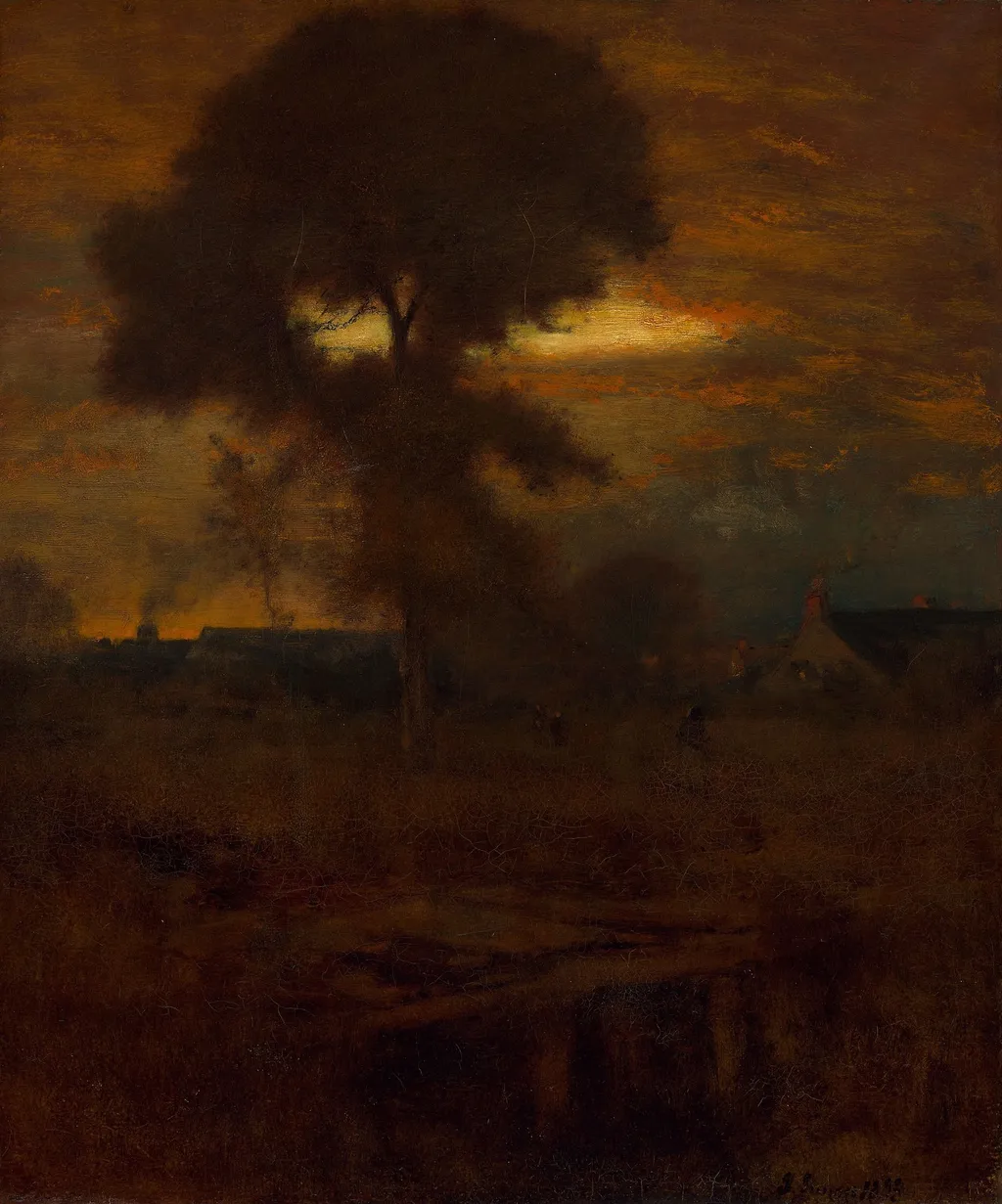
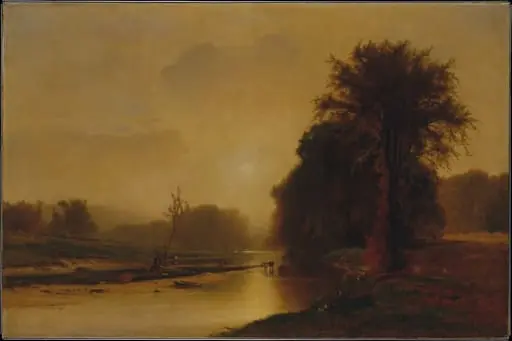
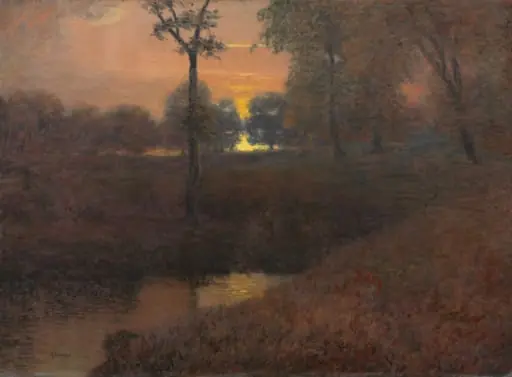
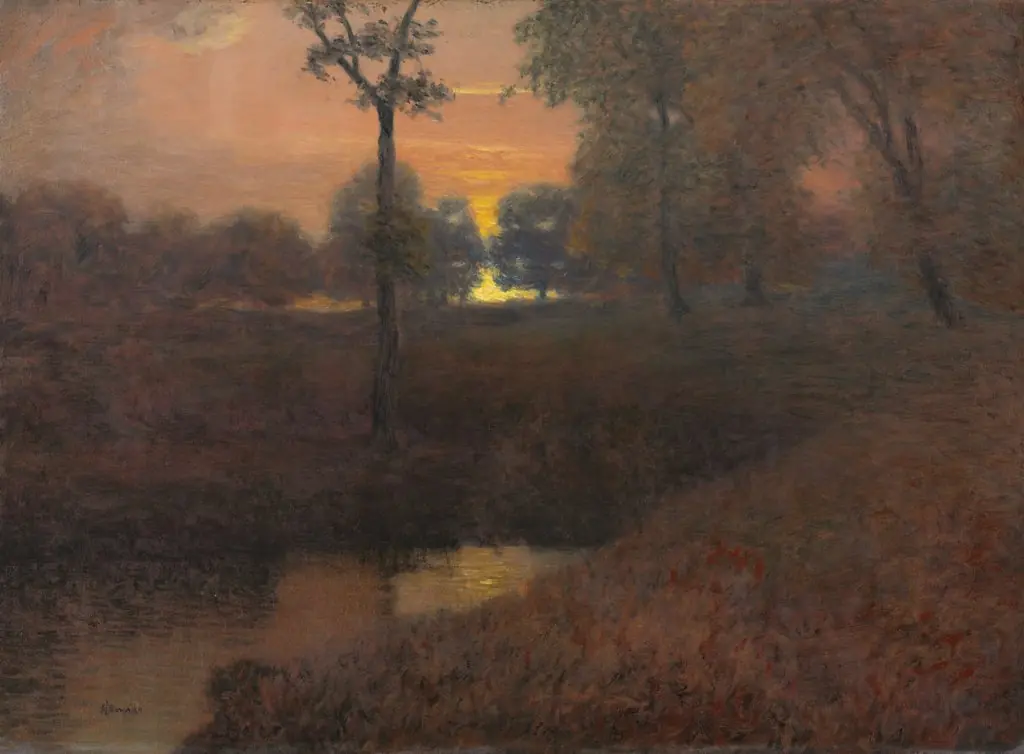
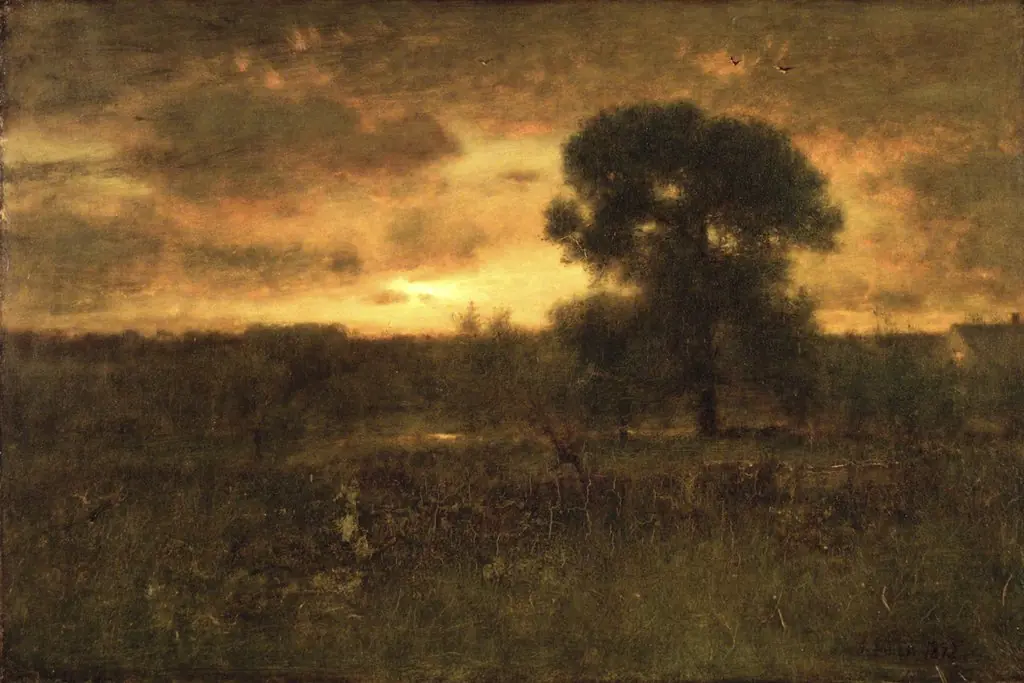
Afterglow is an oil painting by George Inness. It is held in the collection of the Art Institute of Chicago.
About this work
Overview
George Inness completed *Afterglow* in 1897, near the end of his career, using oil on canvas. The painting resides in the Art Institute of Chicago’s collection. It exemplifies his mature style, moving beyond the detailed realism of his early Hudson River School influences toward a more atmospheric, emotionally charged approach to landscape.
Subject & Meaning
The fading light suggests transition—not end, but transformation—mirroring metaphysical themes of inner peace and transcendence.
The painting depicts a quiet evening scene centered on a solitary, darkened tree silhouetted against a fading sky. The composition evokes stillness and introspection, aligning with Inness’s interest in Swedenborgian spirituality, which saw nature as a manifestation of divine presence. The fading light suggests transition—not end, but transformation—mirroring metaphysical themes of inner peace and transcendence.
Technique & Style
Inness employed soft, blended brushwork to dissolve boundaries between land, sky, and atmosphere. Rather than sharp outlines, he used subtle gradations of warm gold and cool blue to model form and depth. The tree’s textured bark is suggested through layered pigment, not detailed rendering, emphasizing mood over literal description. Light is not merely observed but felt, diffused and enveloping.
History & Provenance
Painted in 1897, *Afterglow* belongs to Inness’s final period, when his work had fully absorbed influences from the Barbizon School and European tonalism. It entered the Art Institute of Chicago’s collection shortly after his death, part of a broader effort to preserve the legacy of American landscape painting that moved beyond topographical representation toward emotional resonance.
Context
Inness’s shift from detailed realism to atmospheric abstraction paralleled broader changes in late 19th-century art, as painters sought to convey inner states rather than external accuracy. His engagement with Swedenborg’s writings placed him apart from contemporaries focused on realism or impressionism, positioning him as a spiritual modernist who used landscape as a vehicle for contemplation.
Legacy
Though less widely known than his Hudson River School peers, Inness influenced later American tonalists and early modernists drawn to emotional abstraction in landscape. *Afterglow* stands as a quiet testament to his belief that nature could express the ineffable—his work paved the way for artists who prioritized mood, light, and symbolic form over narrative or detail.
Own this work as a print
Artist & collection

Artist
George Inness (May 1, 1825 – August 3, 1894) was an American landscape painter. Now recognized as one of the most influential American artists of the nineteenth century, Inness was influenced by the Hudson River School…