Artwork
Fruit-piece
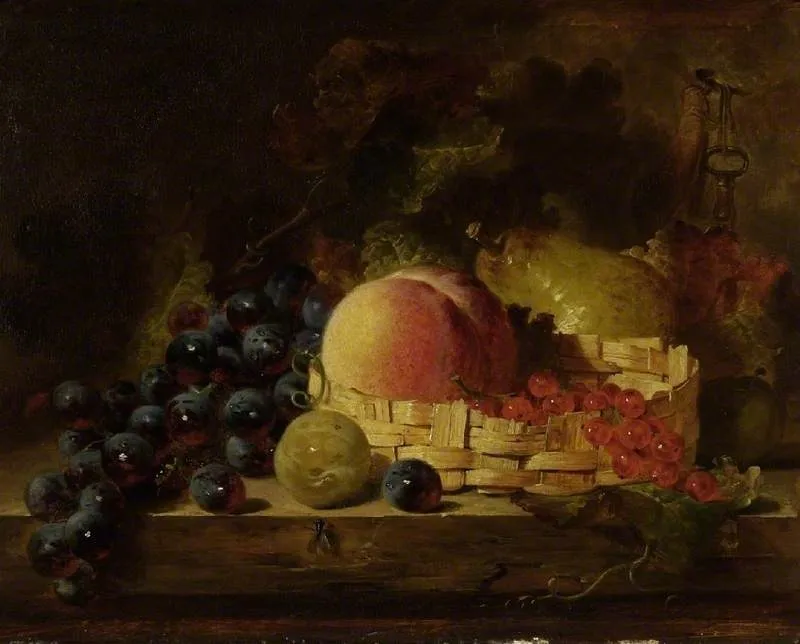
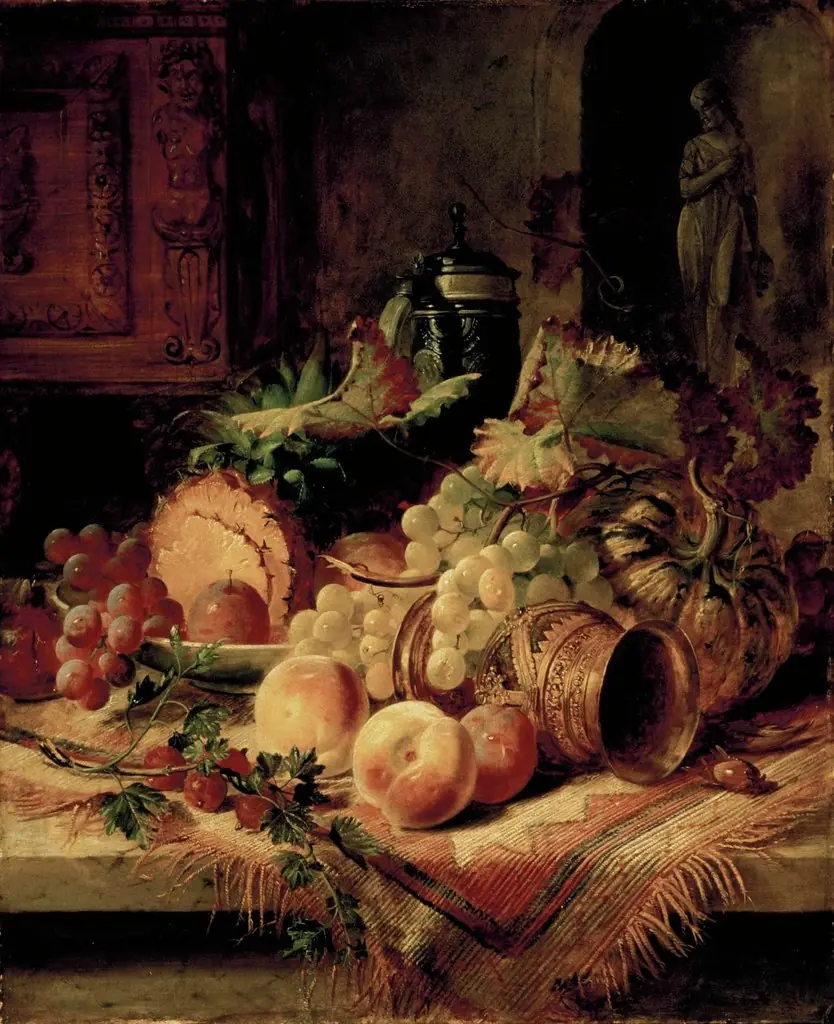
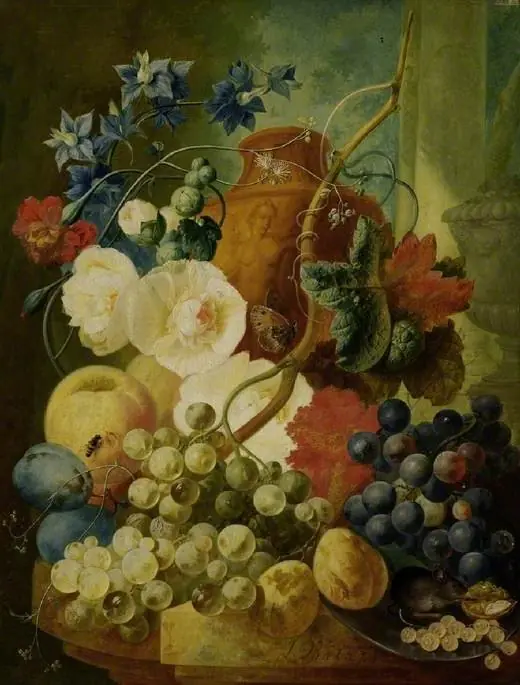
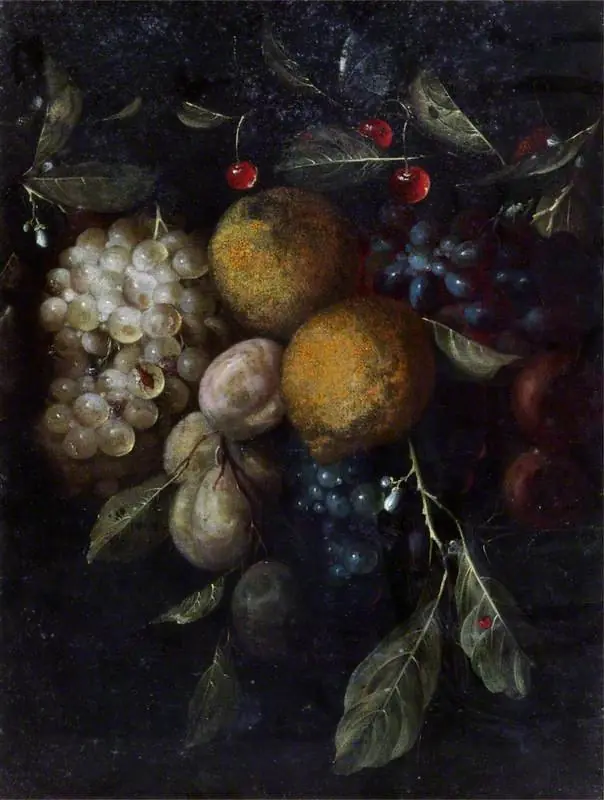
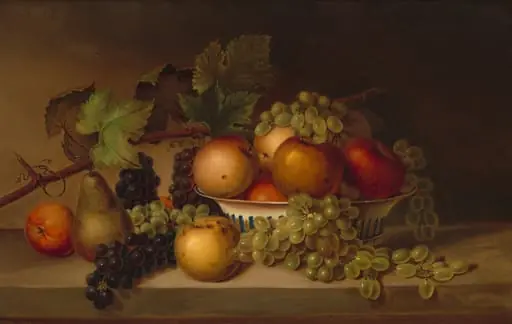
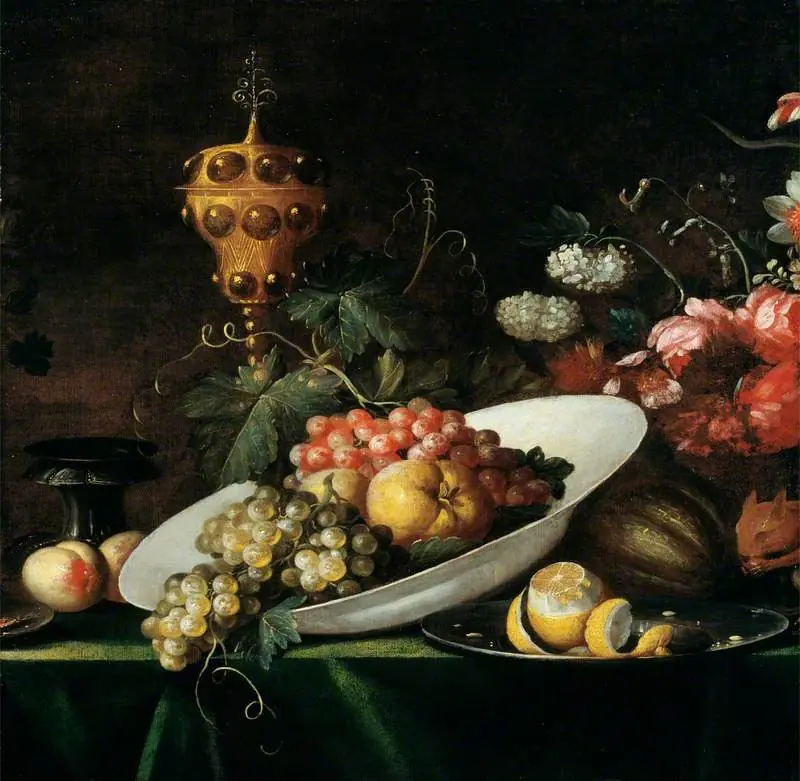
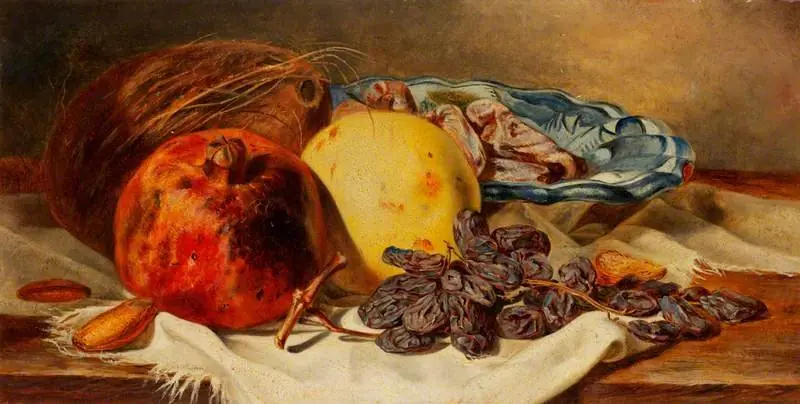
Fruit-piece is an oil painting by George Lance. It dates from 1843 and is held in the collection of the Fitzwilliam Museum.
About this work
Overview
Its dark, undefined background isolates the subject, enhancing the tactile presence of the fruit through controlled lighting.
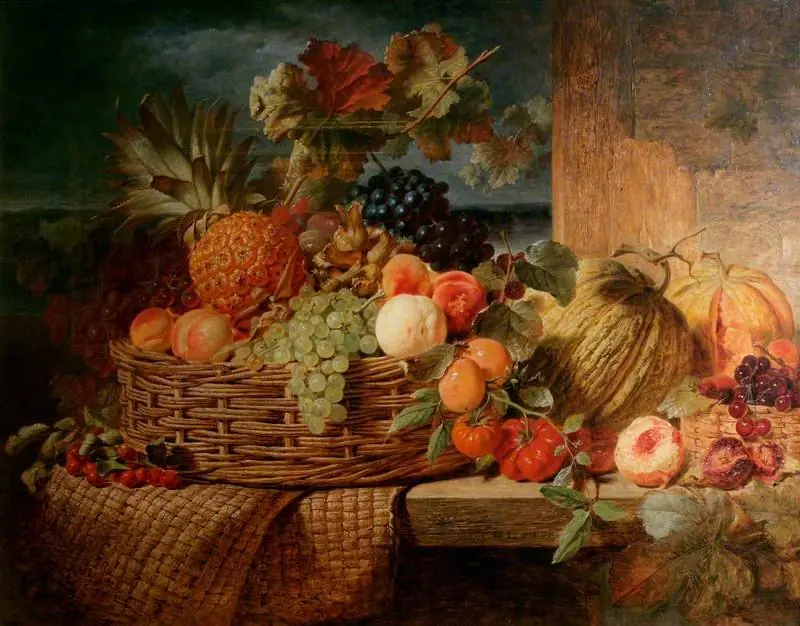
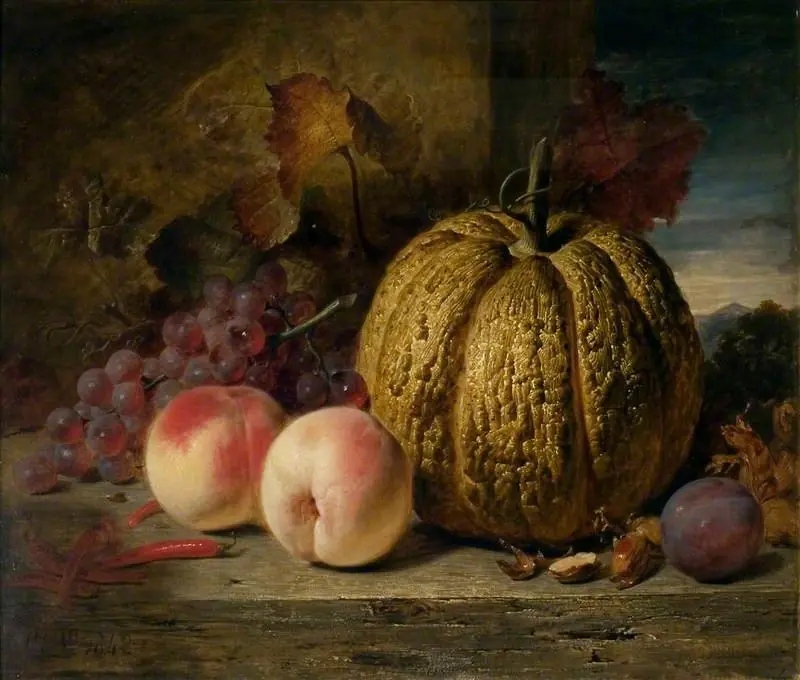
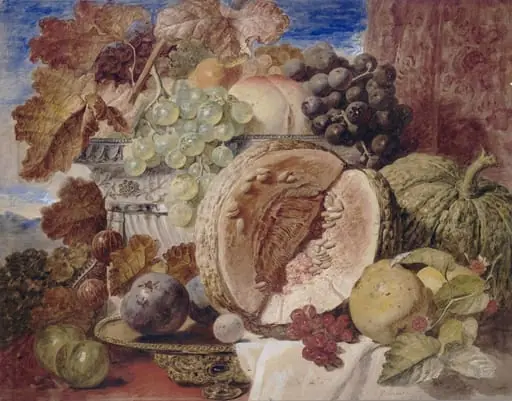
Painted around 1843 by George Lance, this oil still life presents a modest arrangement of fruit—grapes, plums, and a peach—spilled across a wooden surface and contained within a woven basket. The composition is unadorned, focusing entirely on the natural forms and surfaces of the produce. Its dark, undefined background isolates the subject, enhancing the tactile presence of the fruit through controlled lighting.
Subject & Meaning
The arrangement of common, ripe fruit suggests a quiet celebration of seasonal abundance. There is no symbolic allegory or overt moral message; instead, the work honors the ordinary beauty of everyday objects. The slight imperfections in the skin of the peach and the dewy sheen on the grapes imply transience, subtly acknowledging the fleeting nature of freshness without sentimentality.
Technique & Style
Lance employed oil paint with meticulous brushwork to render the varied textures of fruit surfaces—smooth skin, dusty bloom, and soft bruising. Chiaroscuro is used deliberately to model form, with light falling from one side to cast deep shadows that define volume. The dark background acts as a neutral stage, allowing the rich, saturated hues of the fruit to emerge with quiet intensity.
History & Provenance
The painting entered the collection of the Fitzwilliam Museum in Cambridge, where it remains today. While little is documented about its early ownership, its presence in the museum since the 19th century suggests it was acquired during a period of growing interest in British still life. No major exhibitions or alterations are recorded, preserving its original condition.
Context
In mid-19th century Britain, still life painting was often dismissed as secondary to historical or portrait subjects. Yet artists like Lance maintained a quiet tradition of observing domestic objects with precision. This work reflects a broader trend among regional painters who found dignity in the commonplace, aligning with Victorian values of observation and restraint.
Legacy
Though not widely known today, George Lance’s still lifes contributed to a sustained British tradition of observational painting. Fruit-piece exemplifies a quiet, untheatrical approach that prioritized technical fidelity over dramatic effect. It stands as a modest but enduring record of how everyday materials were rendered with care in an era increasingly focused on industrial progress.
Artist & collection