Artwork
Fruit piece
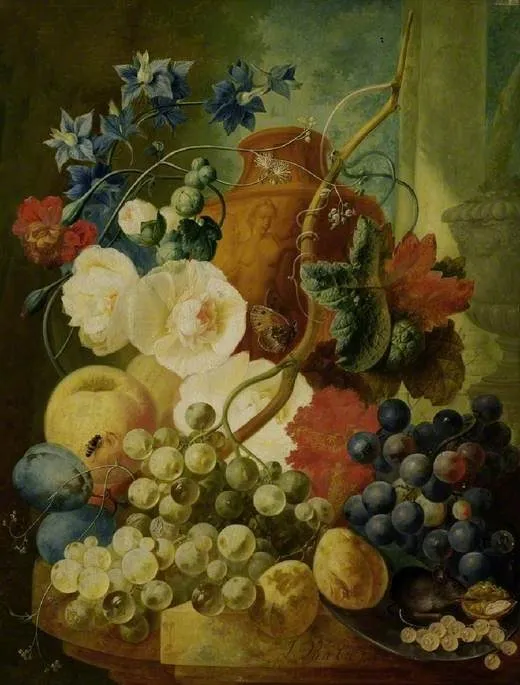
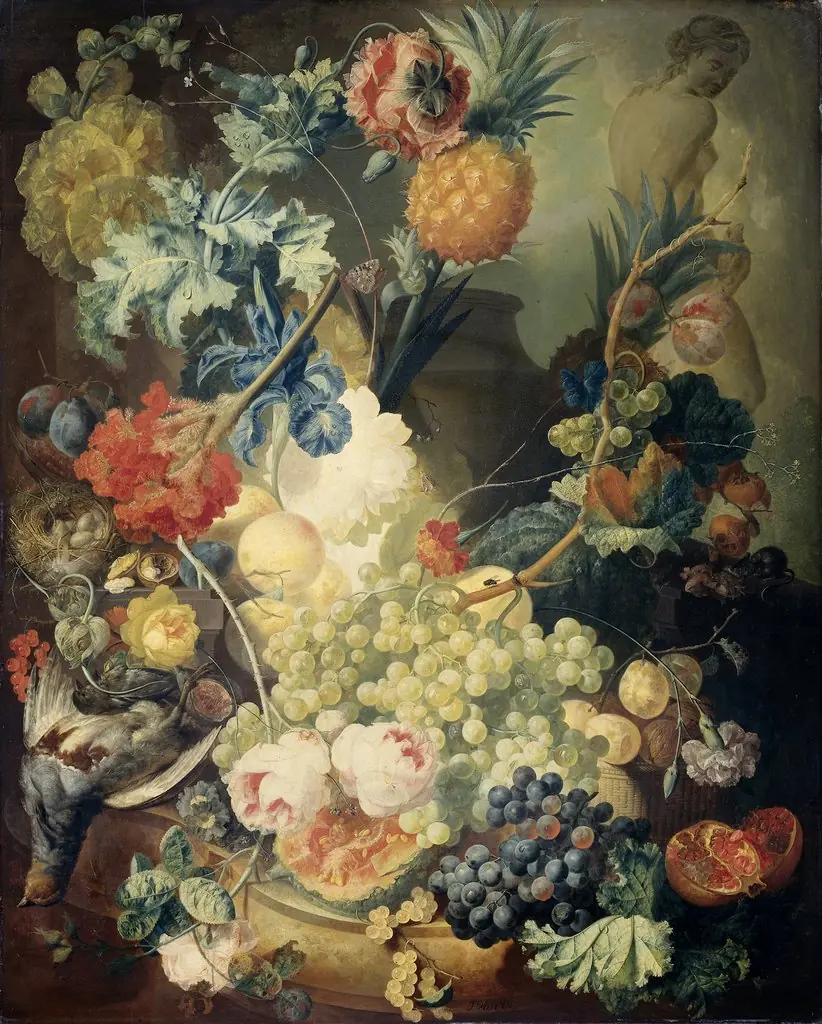
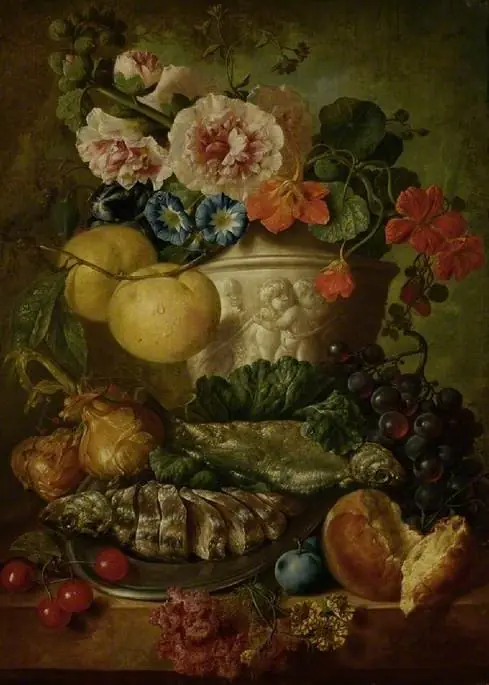
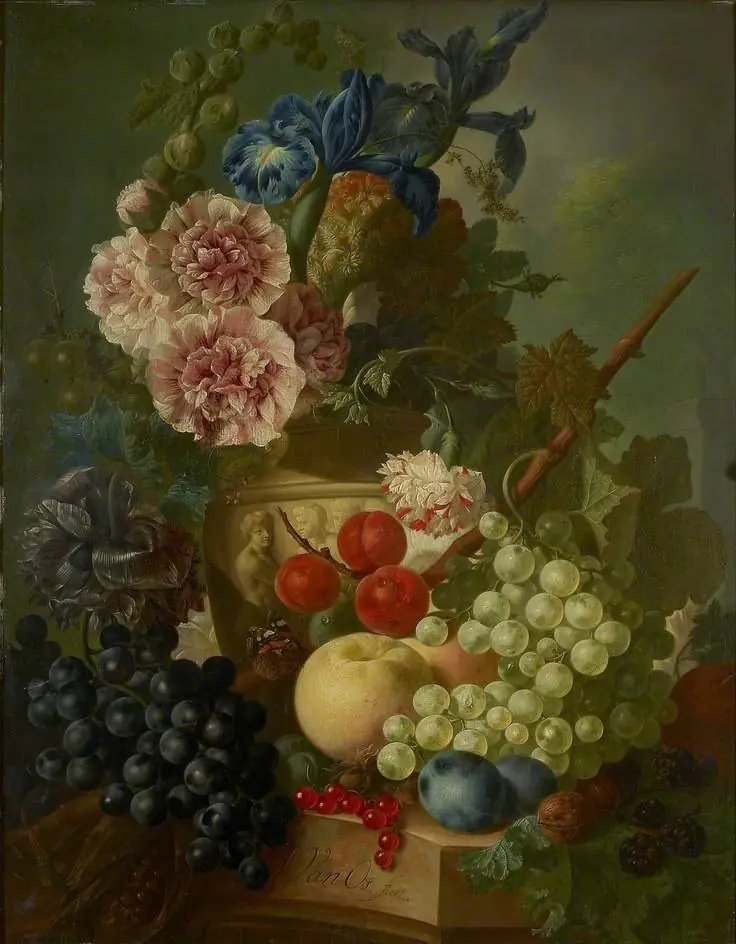
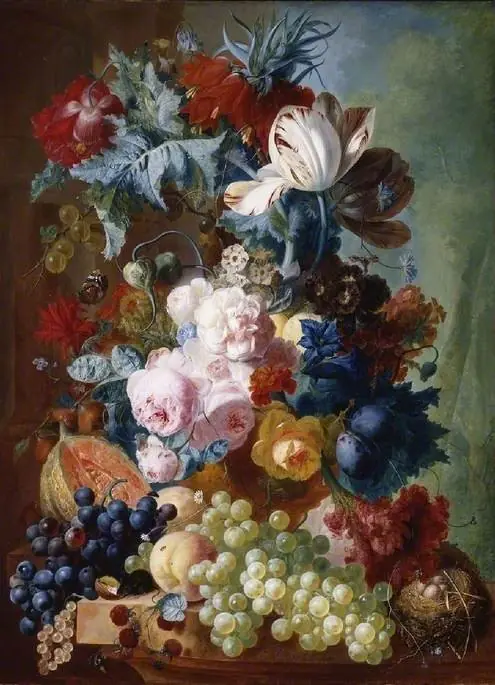
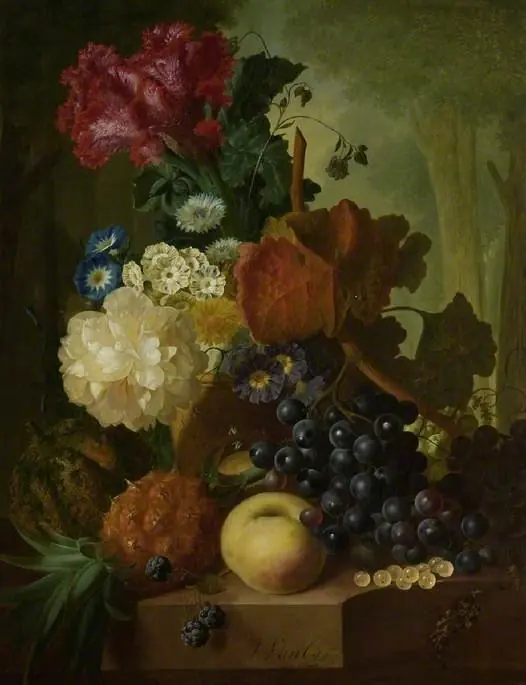
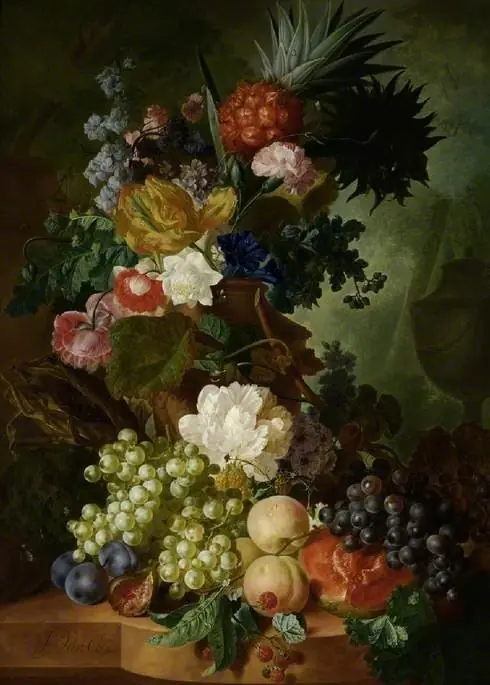
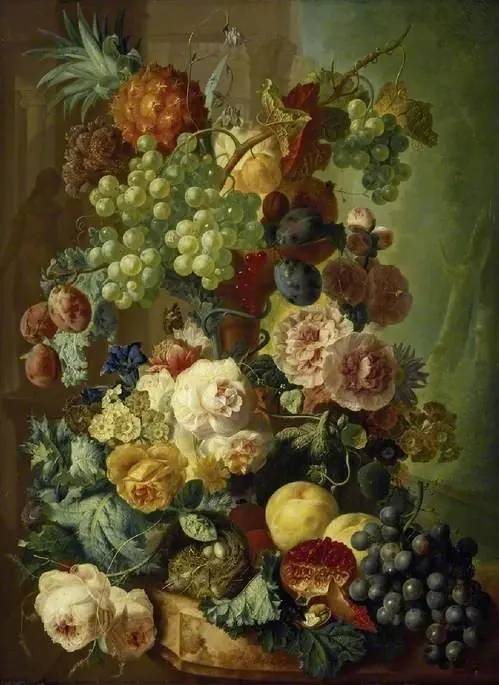
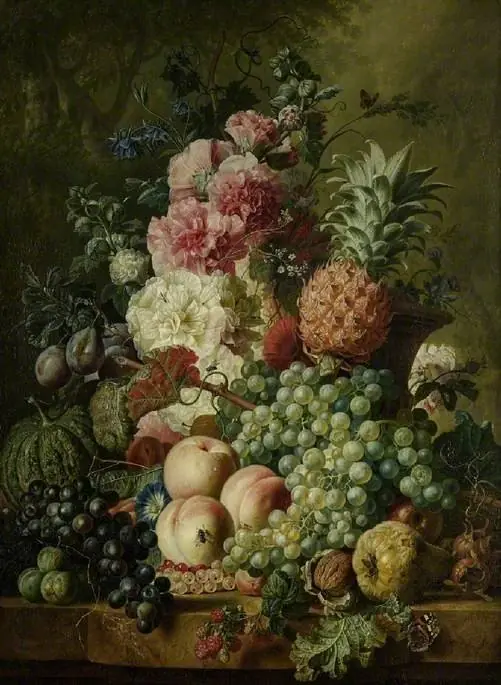
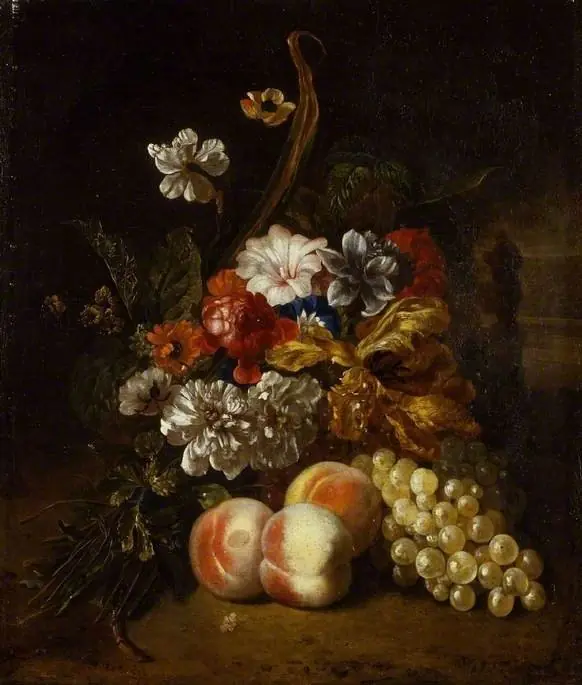
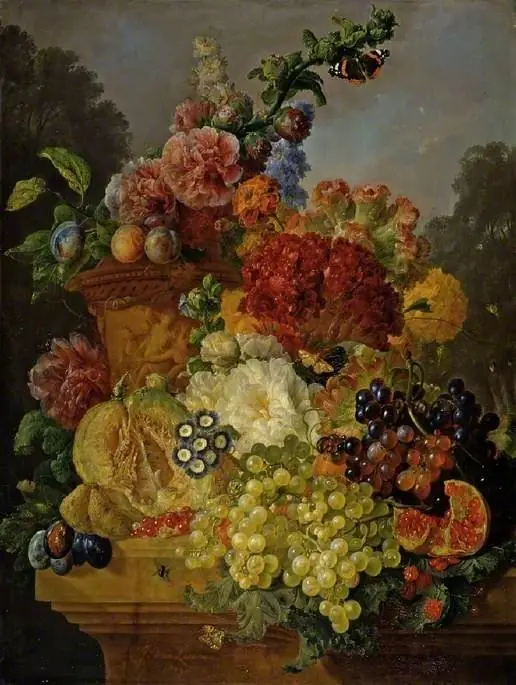
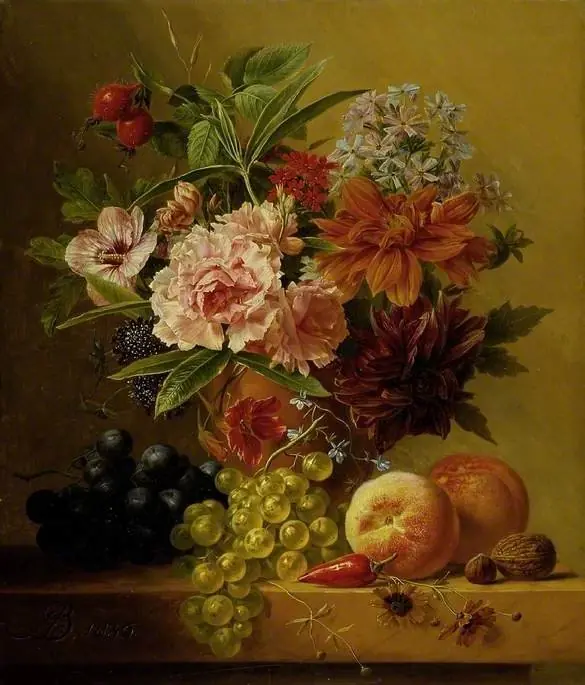
Fruit piece is an oil painting by Jan van Os. It dates from 1786 and is held in the collection of the Fitzwilliam Museum.
About this work
Overview
Painted around 1786, *Fruit piece* is an oil-on-canvas still life by Jan van Os, a member of a Dutch artistic family known for floral and fruit compositions.
Painted around 1786, *Fruit piece* is an oil-on-canvas still life by Jan van Os, a member of a Dutch artistic family known for floral and fruit compositions. The work resides in the Fitzwilliam Museum’s collection and exemplifies the quiet precision characteristic of late 18th-century Dutch still life painting. It presents an arrangement of seasonal produce and blossoms, rendered with restrained elegance and attention to natural detail.
Subject & Meaning
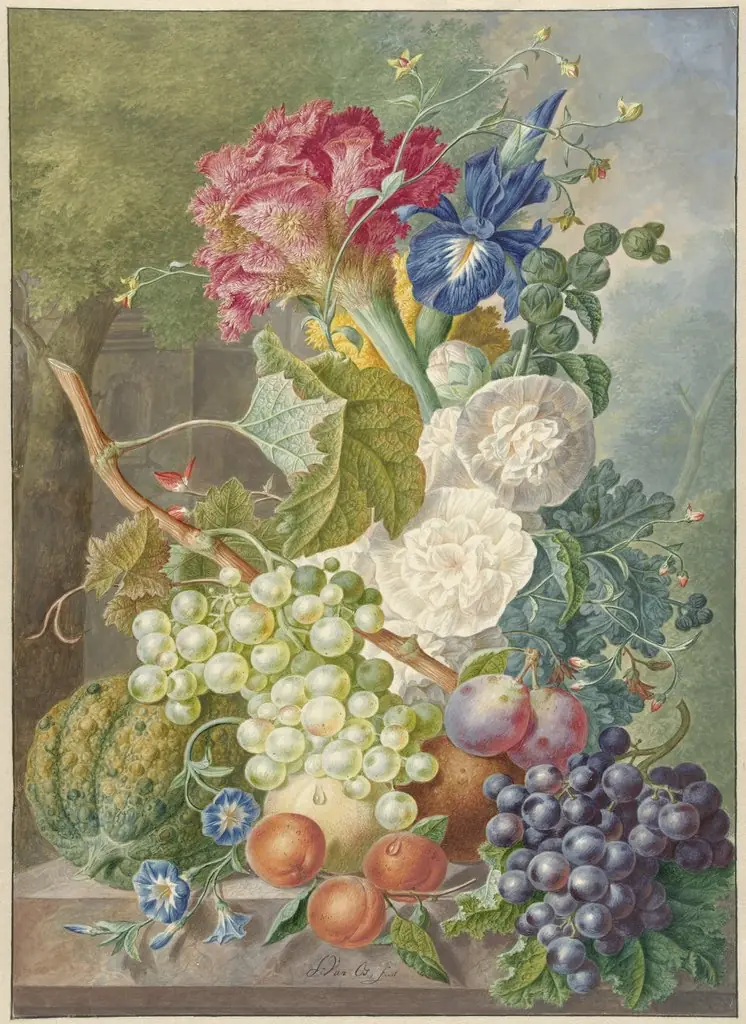
The composition features grapes, lemons, a peach, and a selection of flowers and foliage, arranged without overt symbolism. Unlike earlier vanitas works, this piece avoids moralizing undertones, instead emphasizing the sensory richness of everyday botanical forms. The selection reflects seasonal abundance and the cultivated taste of its time, inviting contemplation rather than allegory.
Technique & Style
Van Os employed fine brushwork to capture the translucence of grape skins, the matte texture of peach fuzz, and the delicate curl of petals. The palette is subdued—dominated by olive greens, pale yellows, and earthy browns—creating a harmonious, almost monochromatic tone. Light falls softly across the surface, modeling forms with gentle contrast and enhancing the sense of stillness and order.
History & Provenance
The painting entered the Fitzwilliam Museum’s collection in the 19th century, likely through a private acquisition or bequest. Its provenance before that is not well documented, though it aligns with the output of Jan van Os’s workshop, which produced similar still lifes for Dutch bourgeois patrons. The work has remained in institutional care since its acquisition, preserving its original condition.
Context
In late 18th-century Holland, still life painting remained popular among collectors who valued domestic tranquility and natural observation. Van Os worked within a tradition that favored meticulous detail and balanced composition over dramatic flair. His work reflects the Enlightenment-era interest in the natural world, where art served as a quiet record of botanical variety and seasonal cycles.
Legacy
Jan van Os’s still lifes, including this one, contributed to the continuity of Dutch floral painting into the modern era. While not revolutionary, his restrained approach influenced later artists who sought to capture nature’s subtleties without sentimentality. Today, his works are studied for their technical discipline and their role in sustaining a regional artistic tradition through changing tastes.
Artist & collection
Artist
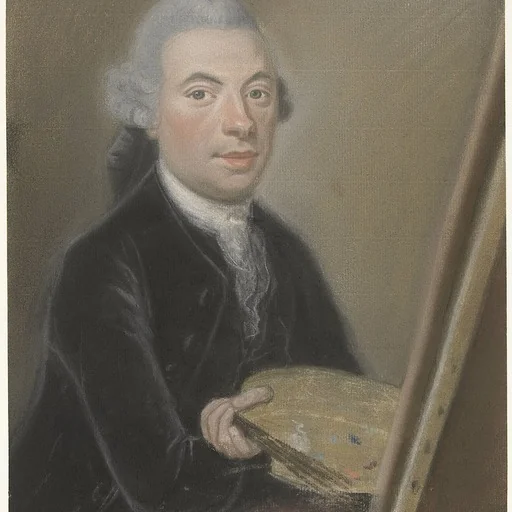
Jan van Os (23 February 1744 – 7 February 1808) was a Dutch painter and a member of the renowned Van Os family of artists.