Artwork
Why the Pifflers Lost their Return Match
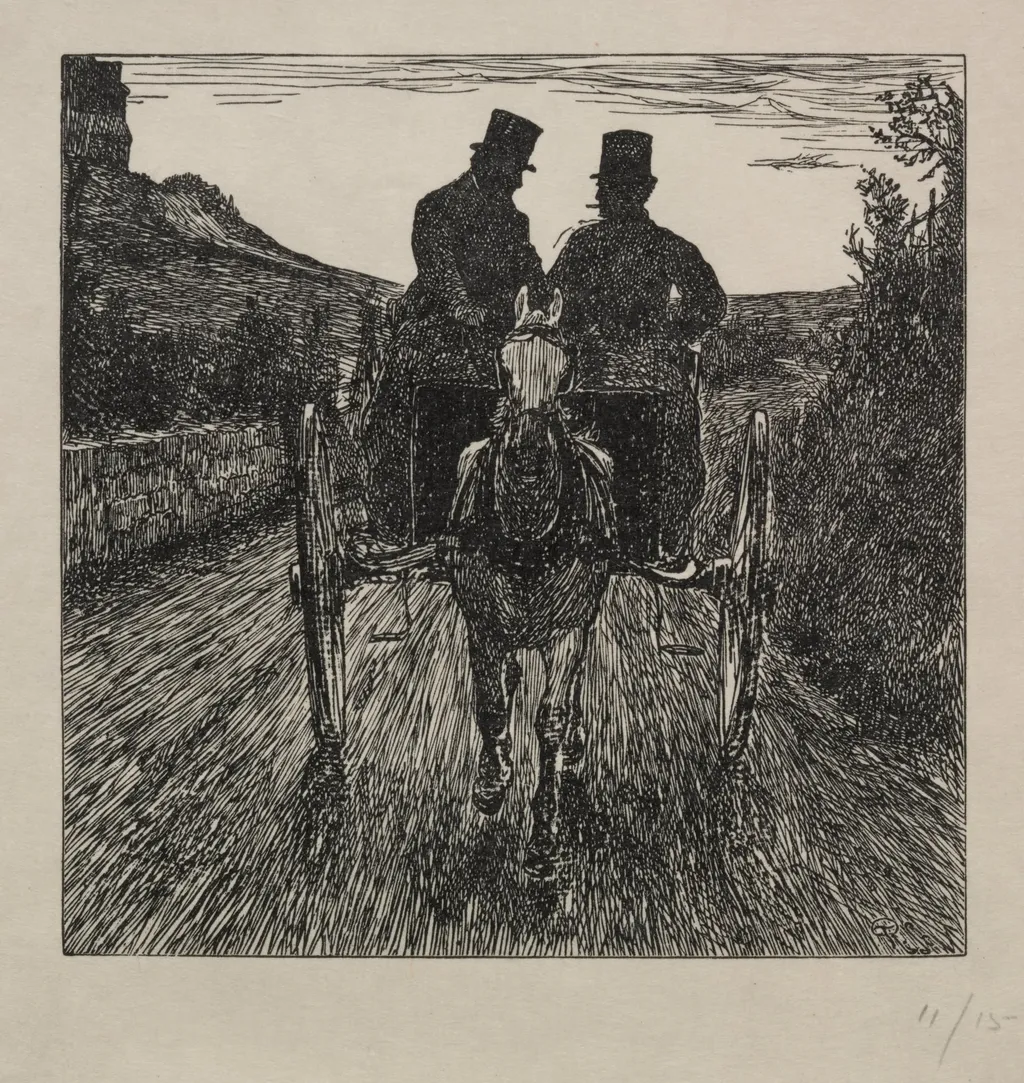
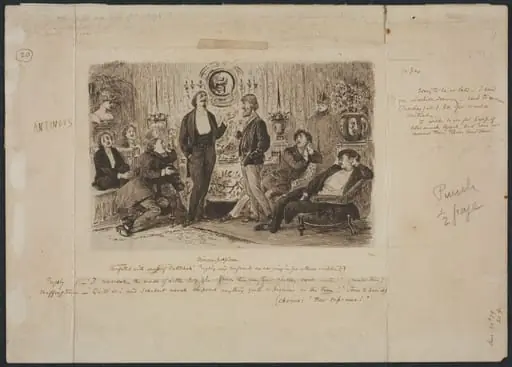
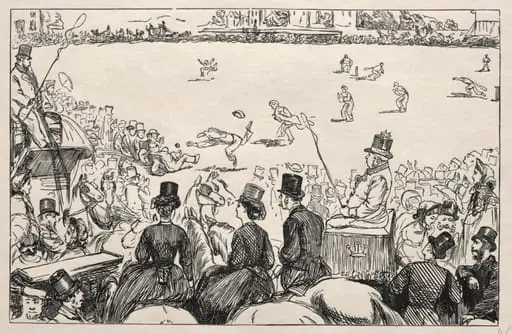
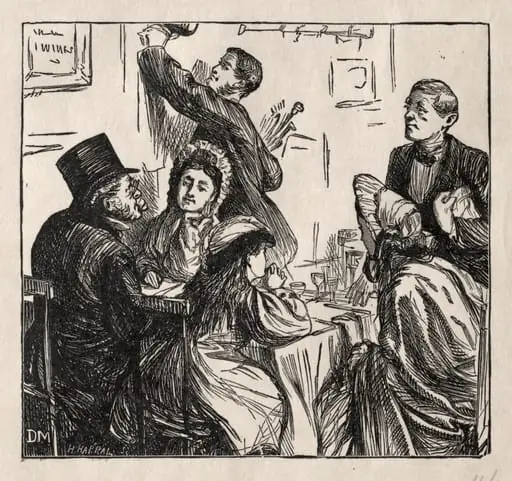
Why the Pifflers Lost their Return Match is a print by the Impressionist artist George Louis Palmella Busson Du Maurier. It dates from 1865 and is held in the collection of the Cleveland Museum of Art.
About this work
Overview
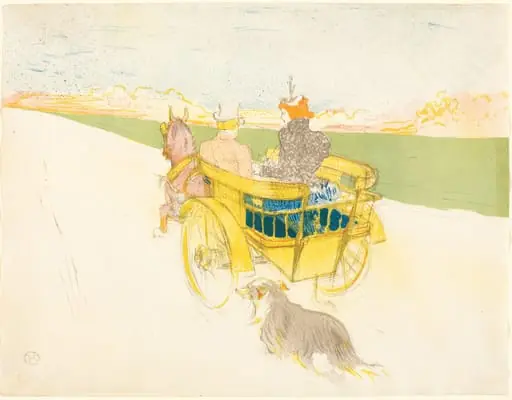
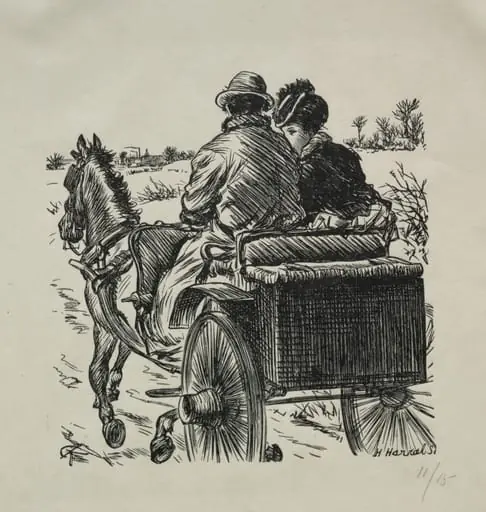
Created in 1865 by the French‑British illustrator George Louis Palmella Busson du Maurier, this black‑and‑white print captures a fleeting moment of two gentlemen in top hats conversing within a horse‑drawn carriage. The vehicle moves through a field of tall grass beneath a gently rolling, cloud‑streaked sky, offering a light‑hearted glimpse into a 19th‑century leisure scene.
Subject & Meaning
The composition presents two men turned away from the viewer, engaged in quiet dialogue as their carriage proceeds. The title, *Why the Pifflers Lost their Return Match*, suggests a narrative of a disputed game or friendly rivalry, inviting viewers to imagine a humorous backstory behind the subdued exchange.
Technique & Style
Du Maurier employs swift, sketchy lines that emphasize movement and atmosphere rather than precise detail. The monochrome medium relies on varied hatching to render texture in the grass, the horse’s form, and the distant hills, reflecting a spontaneous, illustrative approach typical of his work for periodicals such as *Punch*.
History & Provenance
The print is part of the Cleveland Museum of Art’s collection, where it has been held since acquisition by the museum. Du Maurier, later known for novels like *Peter Ibbetson* and *Trilby*, produced this work during his early career as a satirical illustrator, prior to his literary fame.
Context
Produced in the mid‑Victorian era, the image reflects contemporary leisure activities and the popularity of carriage travel among the middle and upper classes. Its humorous tone aligns with the satirical visual culture of the period, where illustrators often paired everyday scenes with witty titles to comment on social pastimes.
Artist & collection
Artist
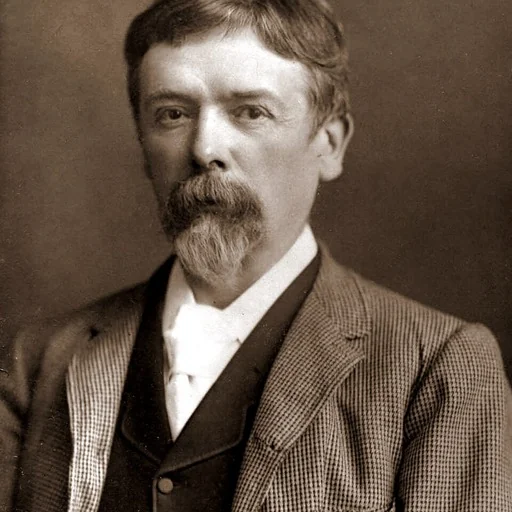
George Louis Palmella Busson Du Maurier
George Louis Palmella Busson du Maurier (French: ; 6 March 1834 – 8 October 1896) was a French-British cartoonist, illustrator, and novelist.