Artwork
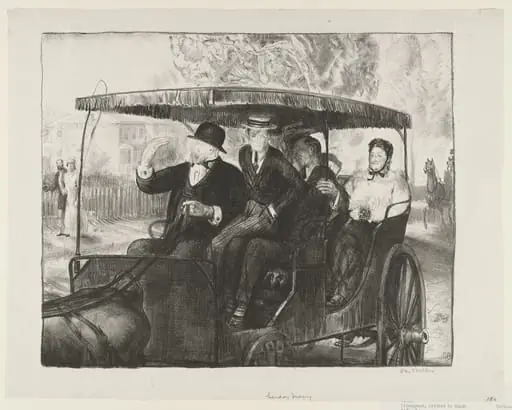
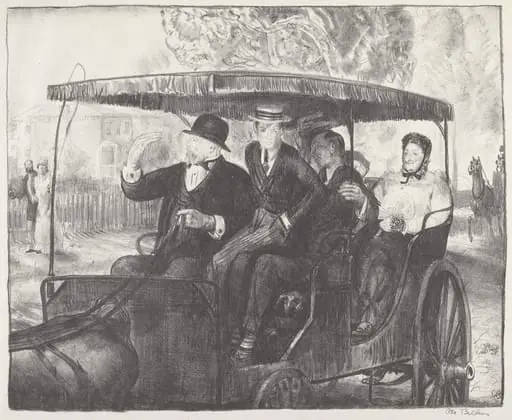
Sunday 1897
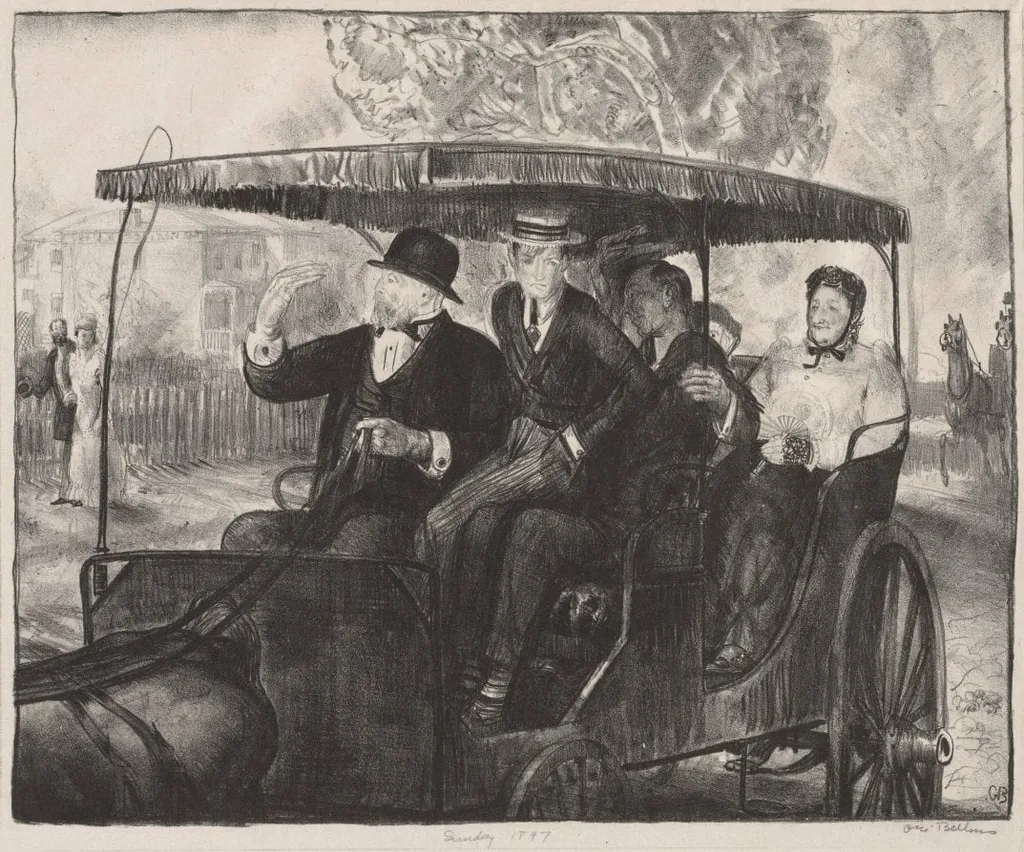
Sunday 1897 is a print by George Bellows. It dates from 1921 and is held in the collection of the Cleveland Museum of Art.
About this work
Check out George Bellows (American, 1882–1925) to see more of his bold, sketchy style.
This sketch shows a group of people riding in a horse-drawn carriage. The man in the front holds his hat like he’s waving. The woman next to him fans herself. The background is blurry, but you can see trees and a street. Everyone is dressed in old-fashioned clothes.
The artist used quick, loose lines to show movement. The faces look lively, even though it’s just a sketch. The date in the corner says *Sunday 1897*, but the painting was made later.
Check out George Bellows (American, 1882–1925) to see more of his bold, sketchy style.
Overview
George Bellows created the drawing titled *Sunday 1897* in 1921, though it depicts a scene from nearly a quarter-century earlier. Executed in ink and wash, it captures a fleeting moment of urban leisure rather than a polished composition. Though classified as a print, it functions more as a rapid observational sketch. The work resides in The Cleveland Museum of Art’s collection, reflecting Bellows’ enduring interest in the rhythms of everyday city life.
Subject & Meaning
The scene portrays a horse-drawn carriage carrying two passengers through a tree-lined street, suggesting a Sunday outing in late 19th-century New York. The man gestures with his hat, the woman fans herself—small, intimate gestures that convey relaxation and routine. Bellows avoids narrative drama, instead emphasizing the quiet dignity of ordinary moments. The dated title anchors the image in a specific time, even as the drawing’s execution belongs to a later era of artistic reflection.
Technique & Style
Bellows employed swift, fluid ink lines and diluted washes to suggest motion and atmosphere. The background dissolves into soft blurs, while the figures retain crisp, energetic contours. Facial expressions are rendered with minimal detail yet convey vitality. The loose handling reflects his affinity for immediacy over finish, aligning with the Ashcan School’s emphasis on spontaneous observation. The sketch-like quality invites the viewer to witness the scene as if in passing.
History & Provenance
Created in 1921, the drawing was likely made from memory or preliminary studies, not direct observation. Bellows, then at the height of his career, frequently revisited earlier urban scenes as subjects for reflection. The work entered The Cleveland Museum of Art’s collection through documented acquisition, though its exact path from studio to museum remains unrecorded in public sources. Its survival as a sketch underscores Bellows’ value of process over finality.
Context
In the early 20th century, American artists increasingly turned from idealized subjects to the unvarnished realities of city life. Bellows, alongside peers like Robert Henri, rejected academic conventions in favor of dynamic, candid depictions of working- and middle-class leisure. *Sunday 1897* fits within this movement, capturing a transitional moment in urban transportation and social custom before automobiles dominated the streets.
Legacy
Though less known than Bellows’ large-scale paintings, works like this sketch reveal his commitment to capturing transient human behavior. Its informal nature influenced later generations of illustrators and realist draftsmen who valued immediacy and emotional resonance over technical polish. The drawing remains a quiet testament to Bellows’ ability to find significance in the unremarkable, preserving the pulse of a bygone urban rhythm.
Artist & collection
Artist
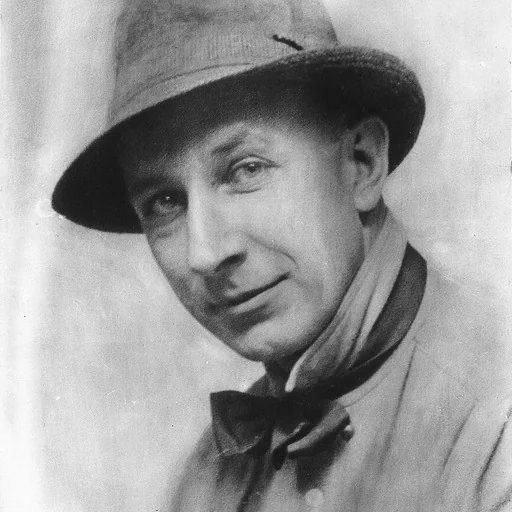
George Wesley Bellows (August 12 or August 19, 1882 – January 8, 1925) was an American realist painter, known for his bold depictions of urban life in New York City.

 Untitled
 The Omnibus
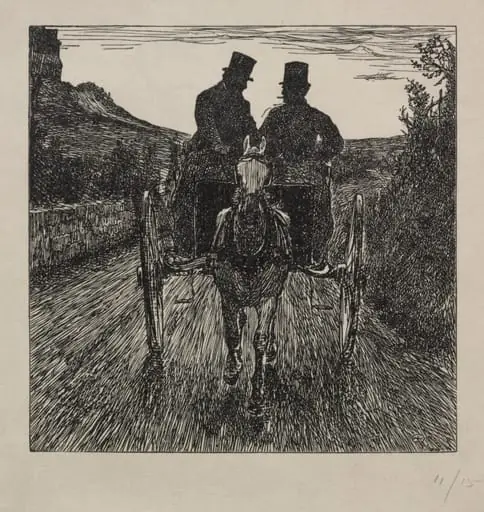 Why the Pifflers Lost their Return Match
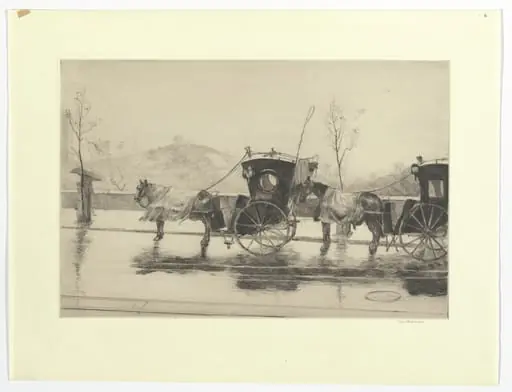 Untitled
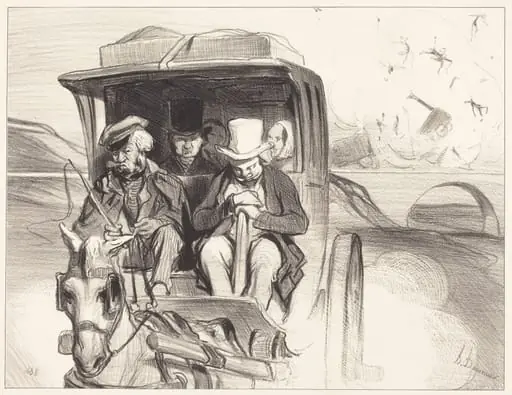 Allons donc... que diable cocher...
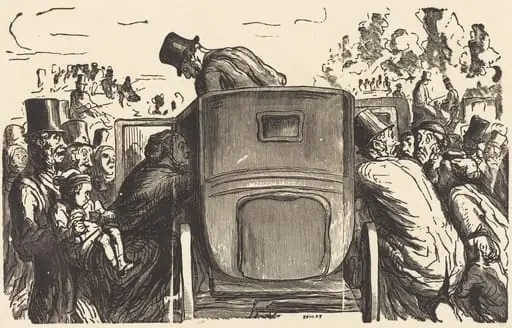 Exposition universelle: L'Etranger trouve toutes les facilites desirables...
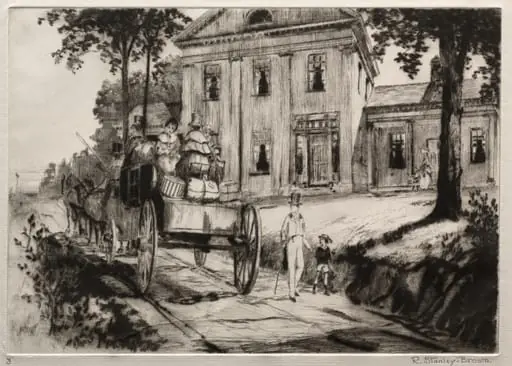 The Thirties
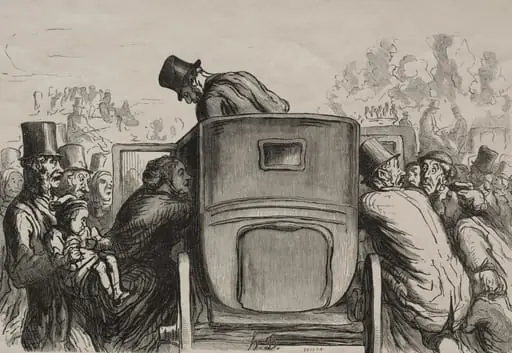 At the Universal Exhibition: The visitor will find all means of transportation desirable to return to his hotel.
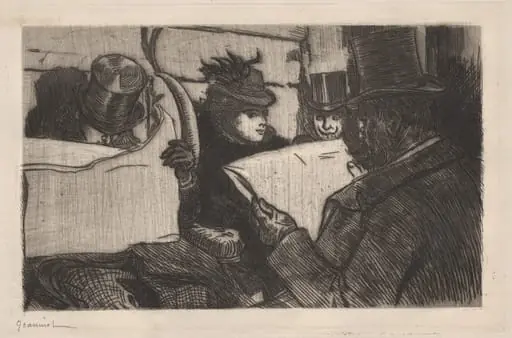 Evening Train (Le Train du Soir)
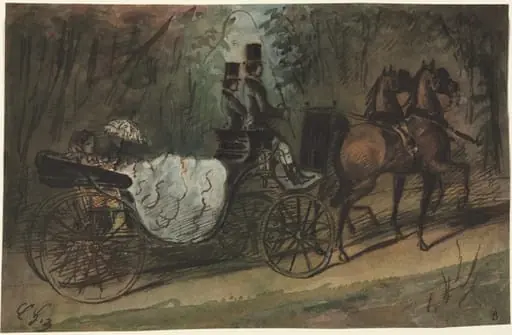 Carriage in the Bois de Boulogne
 Artists Returning from the Salon
 Sunday 1897