Artwork
The Wrestlers
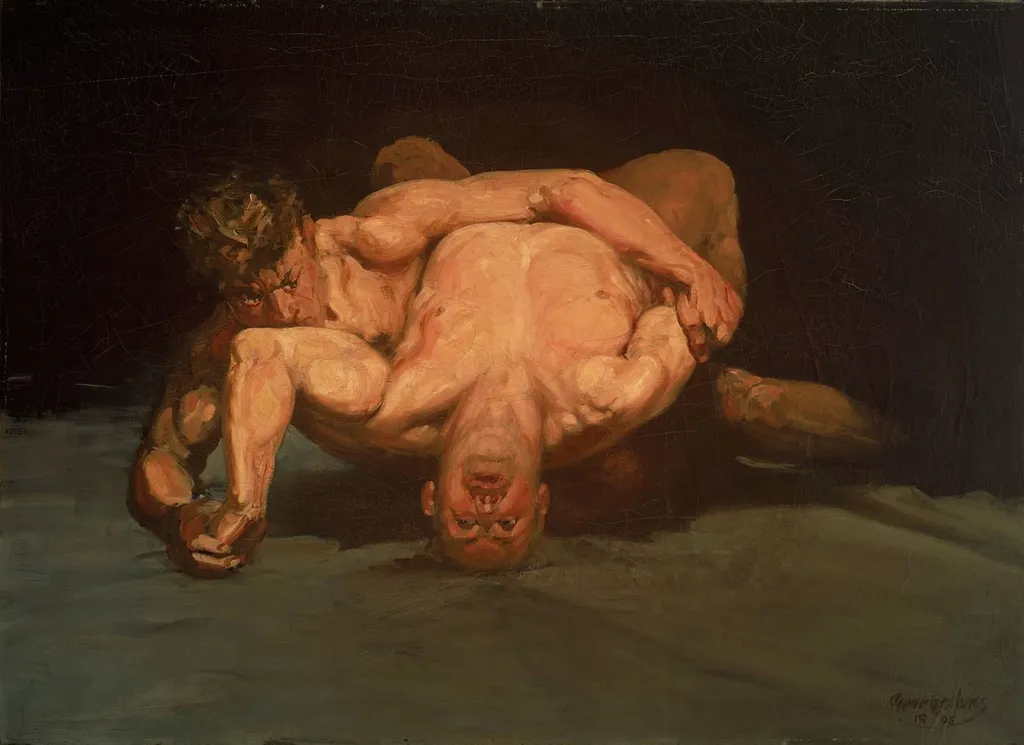
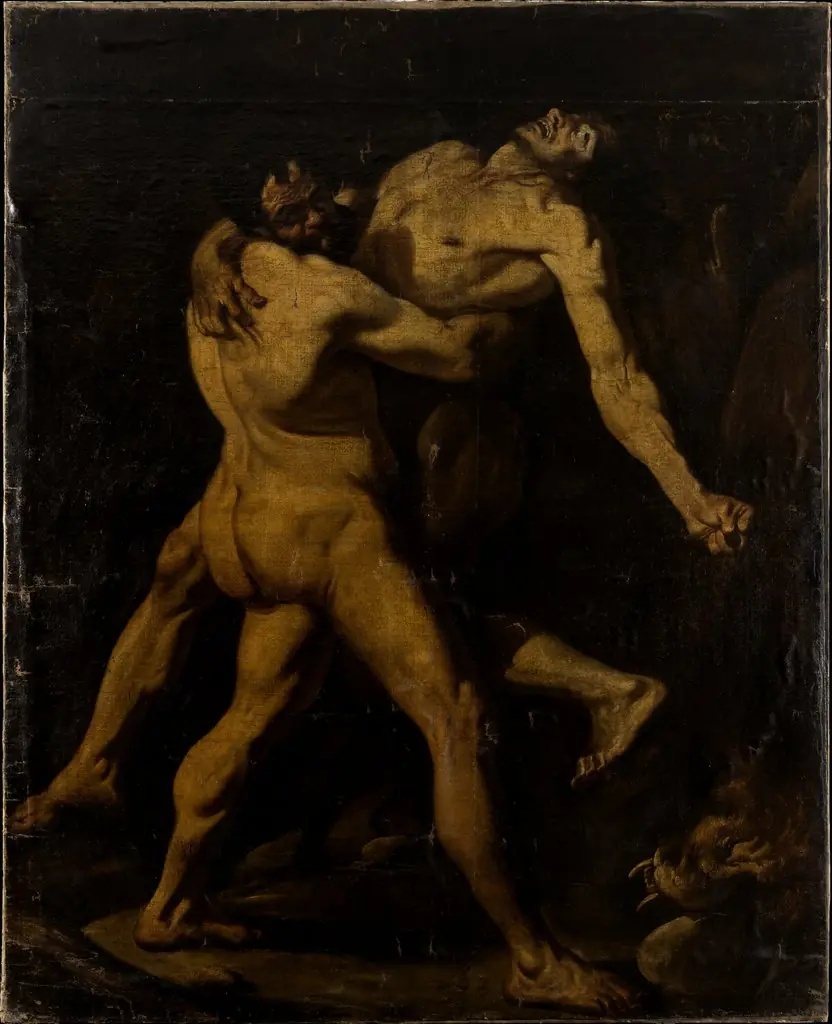
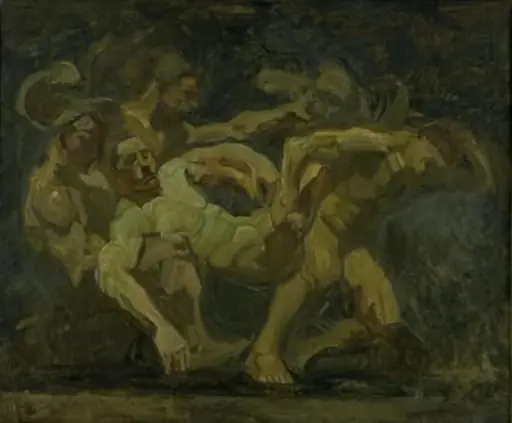
The Wrestlers is an oil painting by the Post-Impressionist artist George Luks. It dates from 1905 and is held in the collection of the Museum of Fine Arts Boston.
About this work
Overview
Though not exhibited at the 1910 Exhibition of Independent Artists, it was reproduced in a related newspaper article, signaling its growing notoriety.
Painted in 1905 by George Luks, The Wrestlers is an oil-on-canvas work now in the collection of the Museum of Fine Arts, Boston. It portrays two nude male figures locked in physical struggle, rendered with vigorous brushwork and unidealized realism. Though not exhibited at the 1910 Exhibition of Independent Artists, it was reproduced in a related newspaper article, signaling its growing notoriety. Luks intended the piece to provoke the conservative tastes of academic institutions.
Subject & Meaning
The painting presents two wrestlers in intimate, sweaty contact, their bodies stripped of social adornment and reduced to primal motion. Luks rejected idealized classical forms, instead emphasizing raw physicality and unvarnished humanity. The scene evokes urban grit rather than mythic heroism, reflecting the artist’s interest in the unpolished realities of city life and the human body as a site of struggle, not beauty.
Technique & Style
Luks employed thick, energetic brushstrokes and a muted palette dominated by earth tones, contrasting with the pale skin of the figures. His handling recalls the bold, direct technique of Manet and other modern painters who prioritized expressive gesture over polished finish. The composition is tightly cropped, focusing attention on the tension between bodies, with no background to distract from their physical engagement.
History & Provenance
Created as a deliberate affront to the Pennsylvania Academy of the Fine Arts, the painting was later included in the 1908 Ashcan School exhibition, aligning it with a group of artists challenging academic norms. John French Sloan praised it in his diary as among the finest he had seen. Though absent from the 1910 Independent Artists show, its image appeared in a New York World article, helping cement its reputation beyond institutional circles.
Context
The Wrestlers emerged during a period when American artists were redefining subject matter and technique in opposition to European academic traditions. Luks’ depiction of nude men in a non-mythological context challenged prevailing norms. Comparisons to works by Eakins and Slevogt highlight a transatlantic interest in the physicality of sport and the human form, though Luks’ approach was more immediate and less studied.
Legacy
By the 1990s, critics recognized The Wrestlers as a defining work in Luks’ oeuvre, noted for its unflinching texture and emotional intensity. Art historians have linked its painterly vigor to broader modernist trends, particularly the rejection of refinement in favor of expressive truth. Its enduring presence in museum collections underscores its role in redefining American realism through raw, unmediated observation.
Own this work as a print
Artist & collection
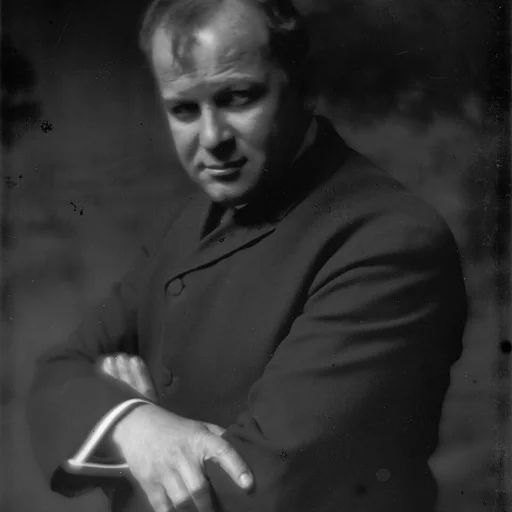
Artist
George Benjamin Luks (August 13, 1867 – October 29, 1933) was an American artist, identified with the aggressively realistic Ashcan School of American painting.