Artwork
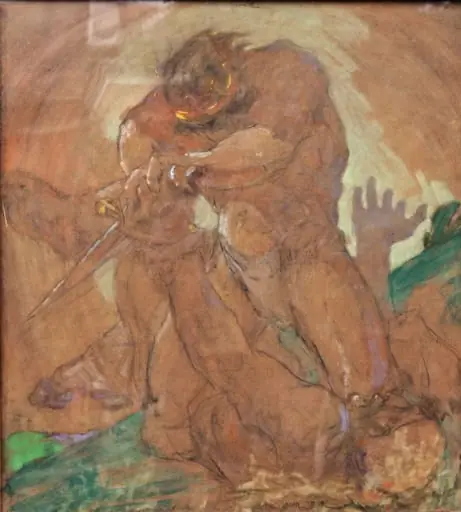
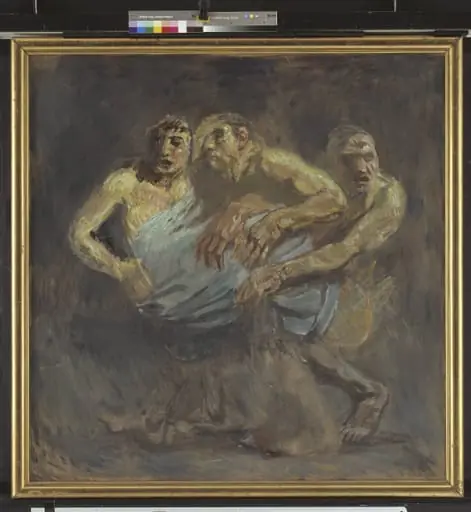
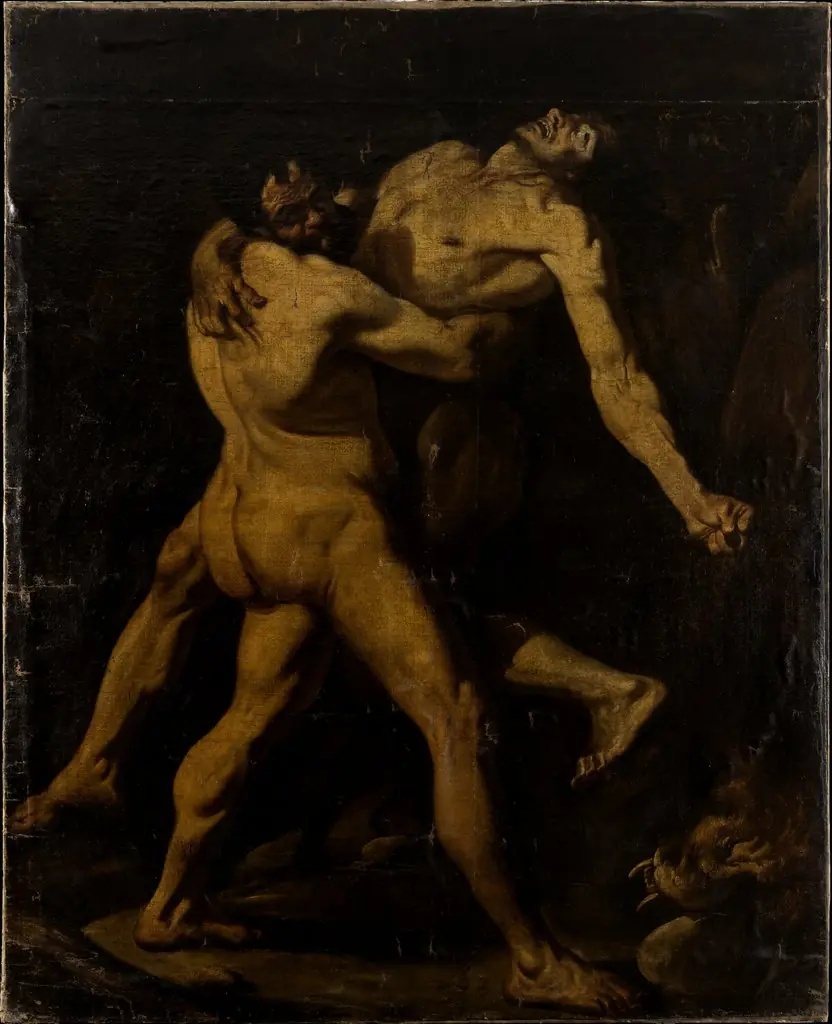
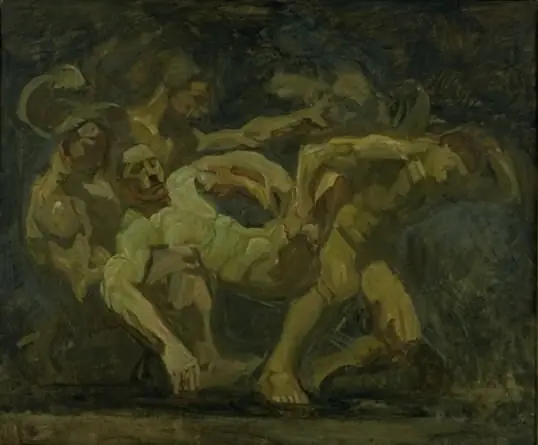
The Fight for the Corpse of Patroclus
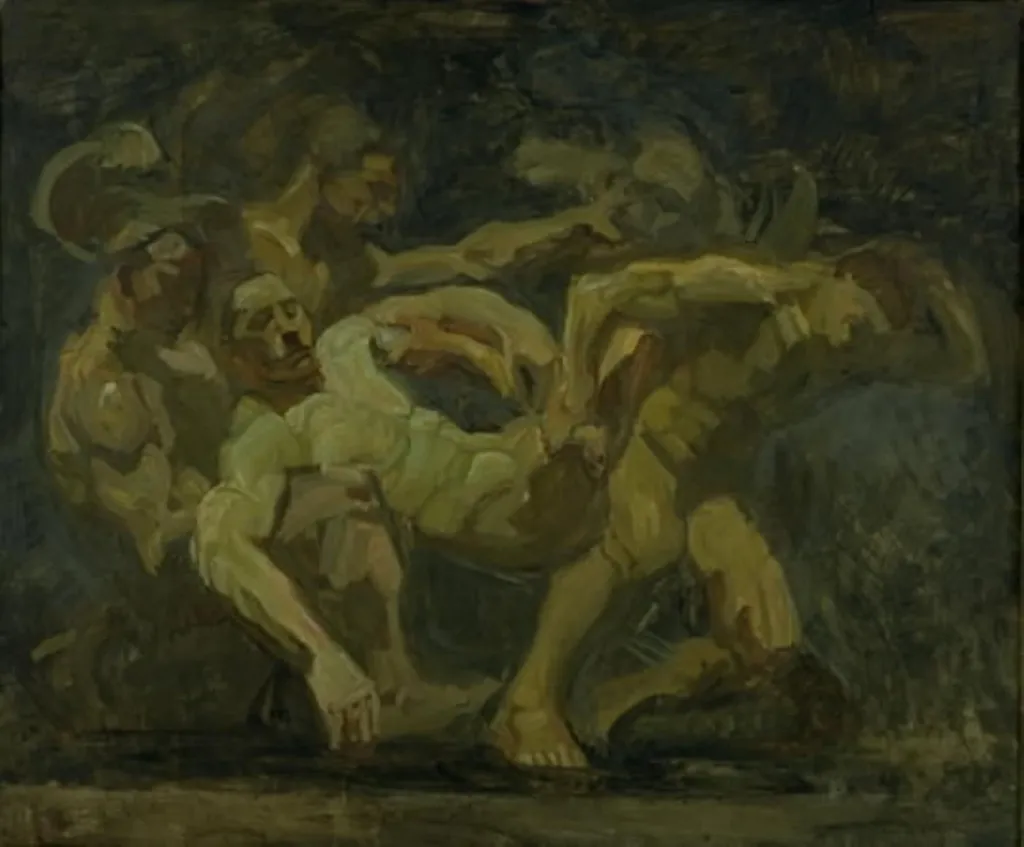
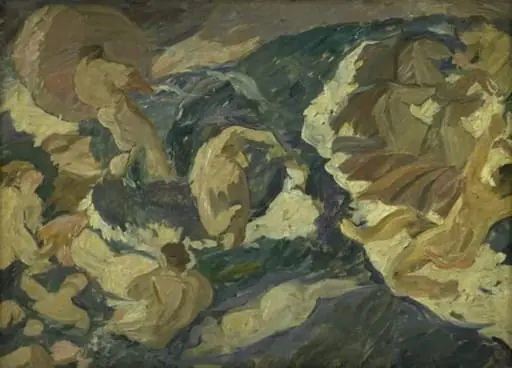
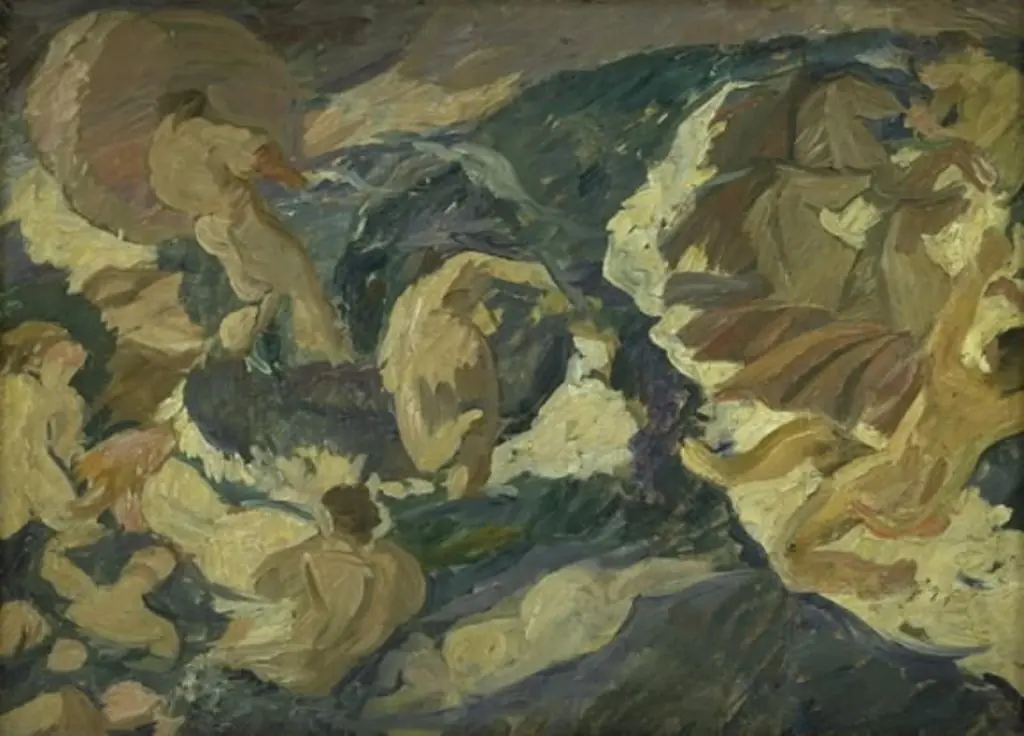
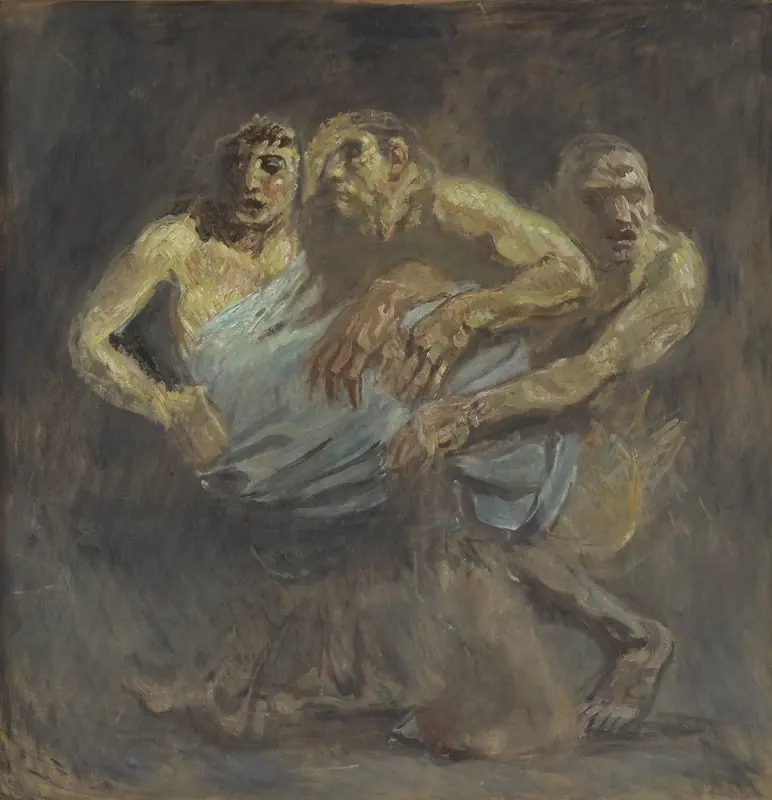
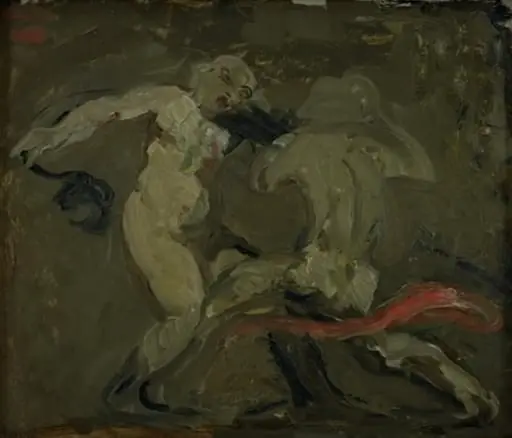
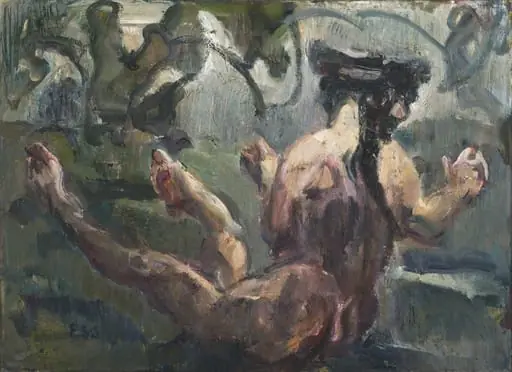
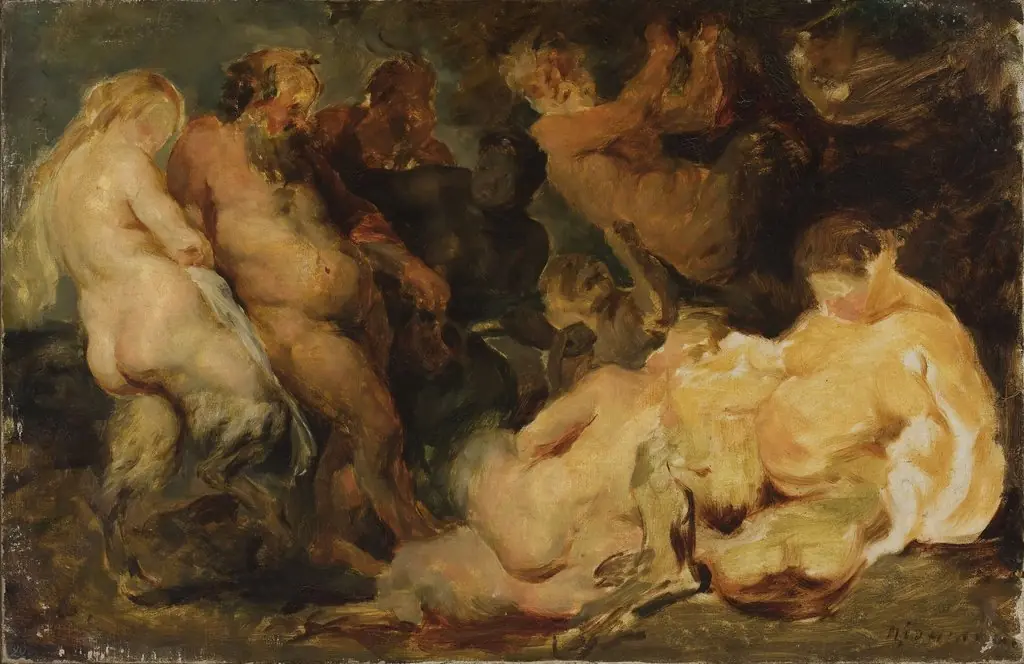
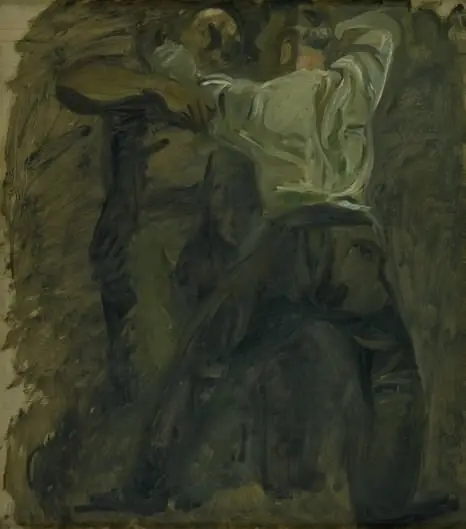
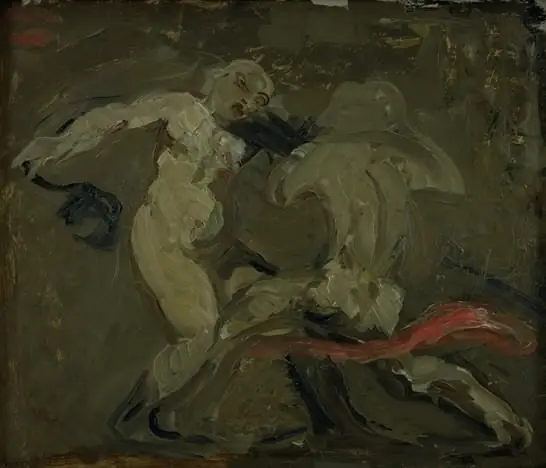
The Fight for the Corpse of Patroclus is a photography by Unknown. It dates from 1907 and is held in the collection of the Statens Museum for Kunst. This photograph, created in 1907 by 194_person, depicts a violent struggle over a fallen warrior’s body.
About this work
Overview
This photograph, created in 1907 by 194_person, depicts a violent struggle over a fallen warrior’s body. Shot in a studio setting, it mimics the intensity of ancient battle scenes through staged human forms. The image is held in the Museum of Ethnography, where it is presented as a study in physical conflict and ritualized mourning, rather than a historical record.
Subject & Meaning
The composition centers on the corpse of Patroclus, surrounded by a tangle of nude figures locked in combat. Their strained postures and contorted faces convey desperation and grief, echoing Homeric accounts of the Trojan War. The absence of weapons and armor shifts focus to the raw physicality of the struggle, emphasizing the human cost of honor and loss.
Technique & Style
The photograph employs chiaroscuro lighting to heighten emotional tension, casting deep shadows that carve the bodies from a dark backdrop. Skin tones rendered in muted yellows and browns unify the figures with the earth, suggesting both mortality and ritual. The staged arrangement, though photographic, deliberately recalls classical sculpture and painted narratives of battle.
History & Provenance
Created in 1907, the work emerged during a period of renewed interest in classical antiquity and ethnographic representation. It entered the Museum of Ethnography’s collection shortly after its making, likely as an example of how modern visual culture reinterpreted ancient myth. Its origins as a studio photograph, not a documentary image, were acknowledged in early cataloging.
Context
At the turn of the 20th century, artists and scholars increasingly used photography to explore myth, identity, and the human form. This image reflects broader trends in European visual culture that sought to bridge classical literature and contemporary aesthetics. It was not intended as historical reconstruction but as a symbolic meditation on violence and mourning.
Legacy
The photograph remains a reference point in studies of modern reinterpretations of classical themes. Its use of staged realism influenced later photographic explorations of myth and the body. While not widely exhibited, it continues to be cited in academic discussions on the intersection of ethnography, performance, and ancient narrative in early 20th-century art.
Artist & collection

 Domestic Scene
 Giacomo and Cardinal Marco, investing Andrea, Abbot of San Zeno, with his Benefice
 The Nymph of Fontainebleau
 Portrait of a Woman
 Madonna and Child with Saints in the Enclosed Garden
 Venus and Minerva
 Family Group of Four on Sofa
 Wall painting from Room H of the Villa of P. Fannius Synistor at Boscoreale