Artwork
Coast scene
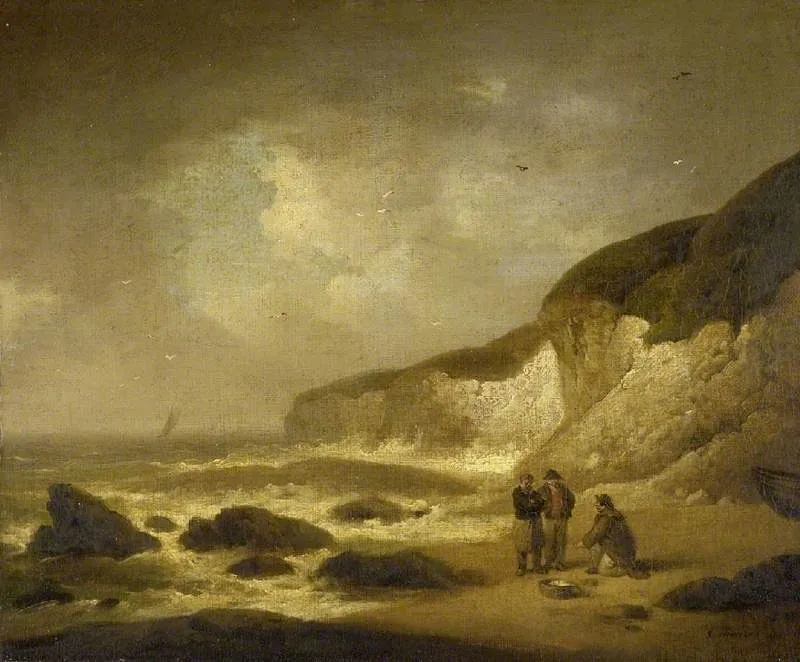
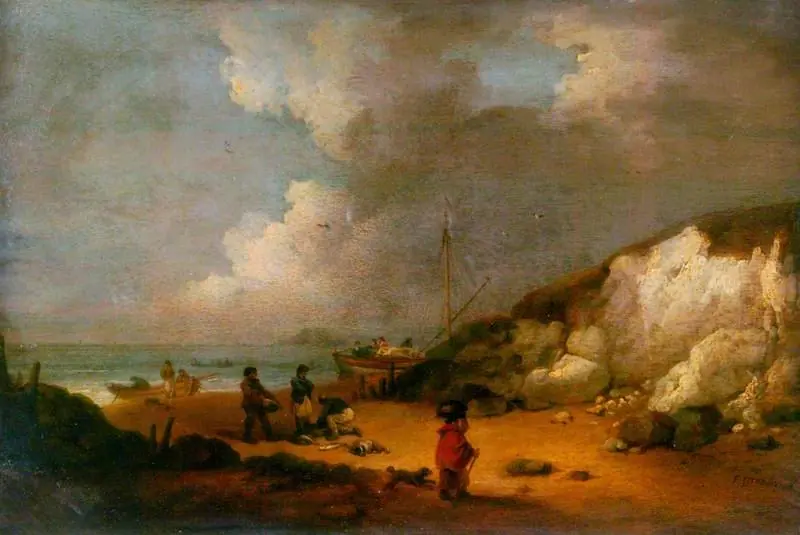
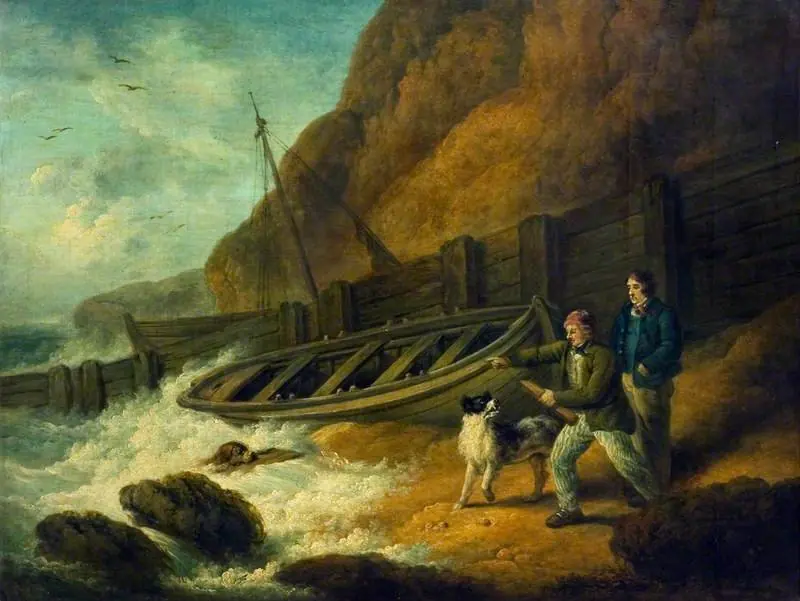
Coast scene is an oil painting by George Morland. It dates from 1793 and is held in the collection of the Fitzwilliam Museum. Painted around 1793, this oil on canvas depicts a quiet coastal moment in rural England.
About this work
Overview
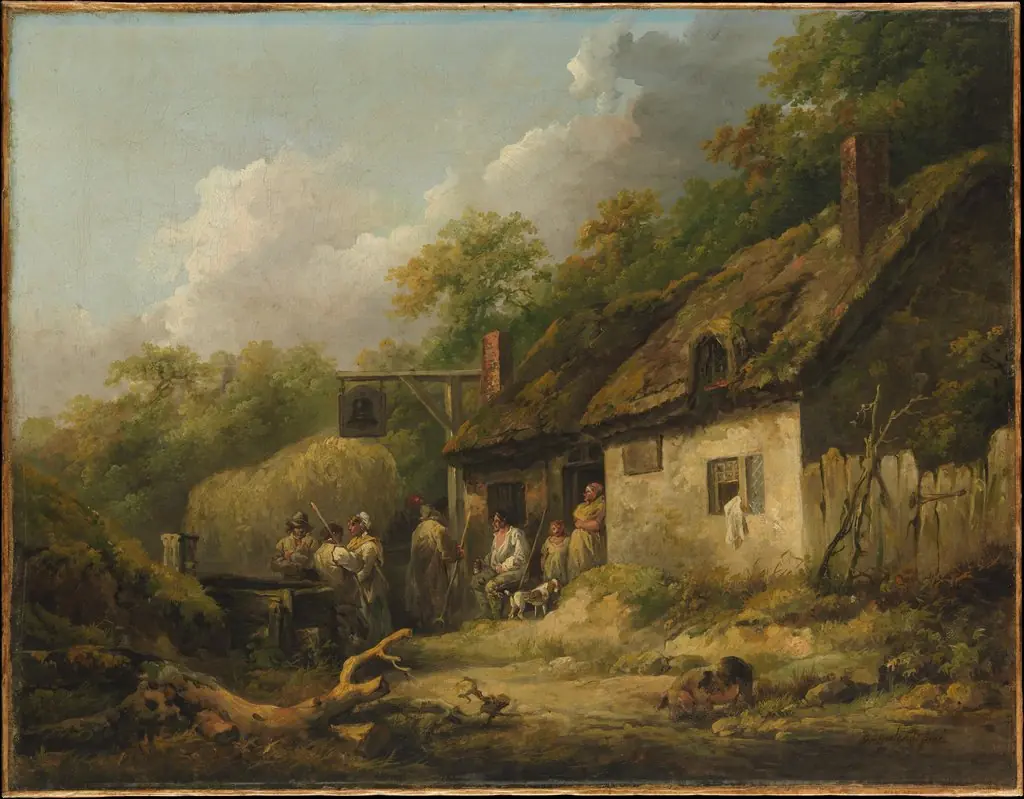
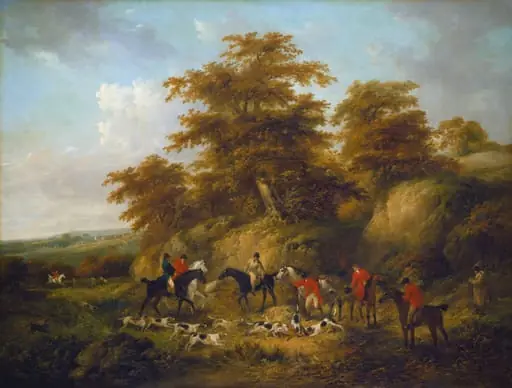
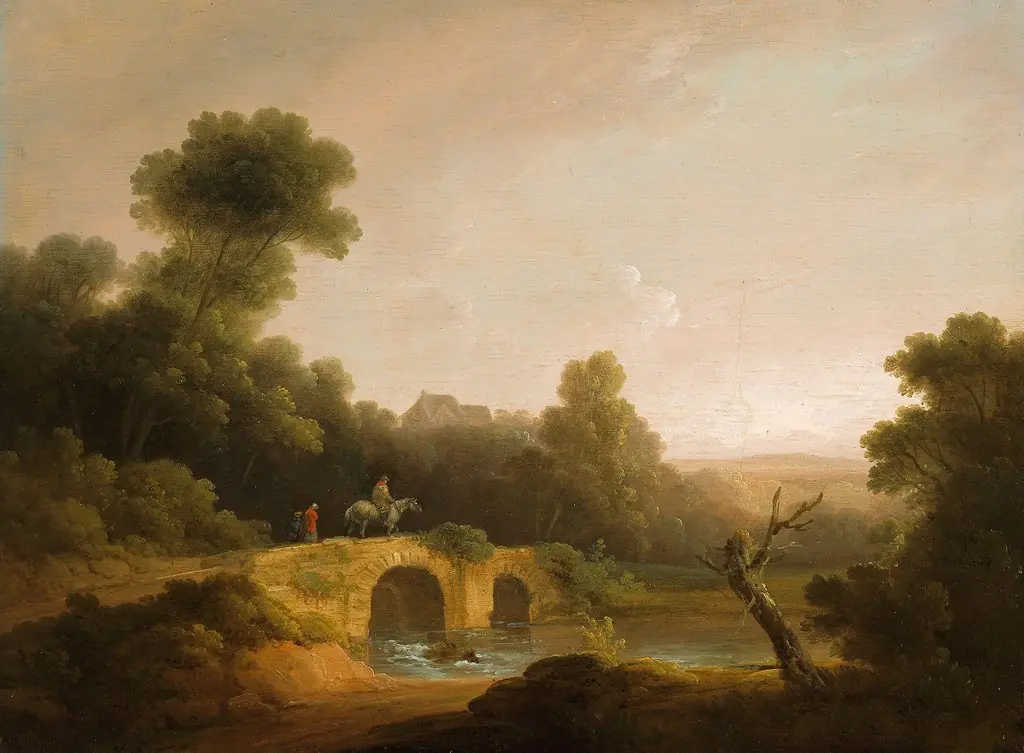
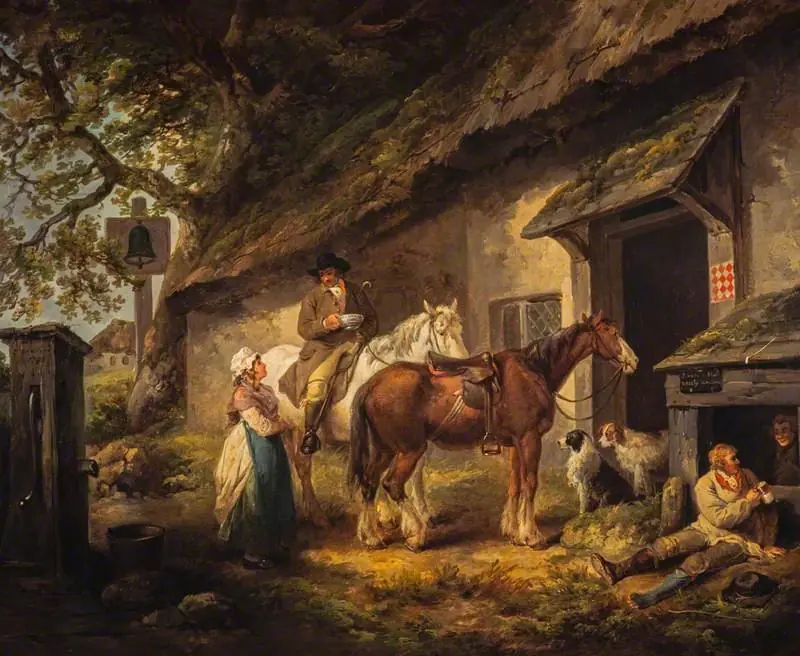
Painted around 1793, this oil on canvas depicts a quiet coastal moment in rural England. George Morland, known for his focus on everyday rural and seaside life, rendered the scene with a subdued palette and careful attention to natural detail. The work reflects his mature style, shaped by Dutch landscape traditions and a preference for unidealized settings over grand narratives.
Subject & Meaning
Three figures in dark, simple garments stand along a rocky shore, their postures suggesting quiet reflection rather than action.
Three figures in dark, simple garments stand along a rocky shore, their postures suggesting quiet reflection rather than action. They face the sea, their conversation implied but not depicted, enhancing the painting’s introspective tone. The absence of narrative detail invites contemplation of isolation, labor, or the passage of time, aligning with Morland’s interest in the dignity of ordinary lives.
Technique & Style
Morland employed chiaroscuro to model forms and deepen spatial recession, using muted grays and browns to convey the overcast atmosphere. Textured brushwork captures the roughness of rocks and the movement of waves, while the sky’s diffuse light softens edges and unifies the composition. His approach owes much to Dutch 17th-century landscape conventions, particularly in its restrained emotional tone and attention to atmospheric conditions.
History & Provenance
The painting entered the Fitzwilliam Museum’s collection in the 19th century, likely through a bequest or acquisition from a private collector. Morland’s works were widely reproduced as engravings during his lifetime, making them accessible beyond elite circles. Despite his popularity in print, Morland’s personal circumstances remained unstable, and many of his paintings passed through multiple hands before finding institutional homes.
Context
In the 1790s, British art saw a growing interest in landscapes and scenes of rural life, moving away from classical idealism. Morland’s focus on coastal laborers and weather-worn environments resonated with contemporary audiences seeking authenticity. His work coincided with broader cultural shifts toward Romantic sensibilities, though he avoided overt sentimentality, favoring quiet observation instead.
Legacy
Morland’s influence endured through his prints and the accessibility of his subjects, shaping later 19th-century British landscape painting. While not formally trained in academic traditions, his ability to convey mood through light and texture contributed to a more naturalistic approach in British art. Today, his works are valued for their unembellished portrayal of coastal life and their quiet emotional resonance.
Artist & collection
Artist
George Morland (26 June 1763 – 29 October 1804) was an English painter. His early work was influenced by Francis Wheatley, but after the 1790s he came into his own style. His best compositions focus on rustic scenes:…