Artwork
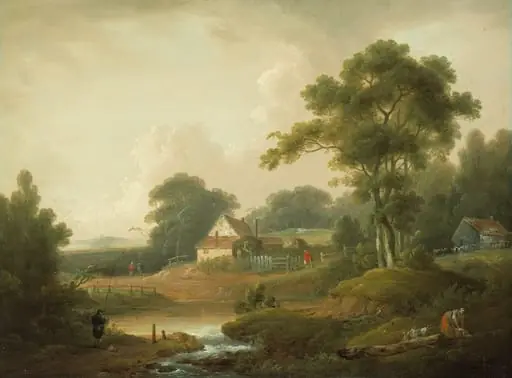
Landscape with Fisherman and Washerwoman
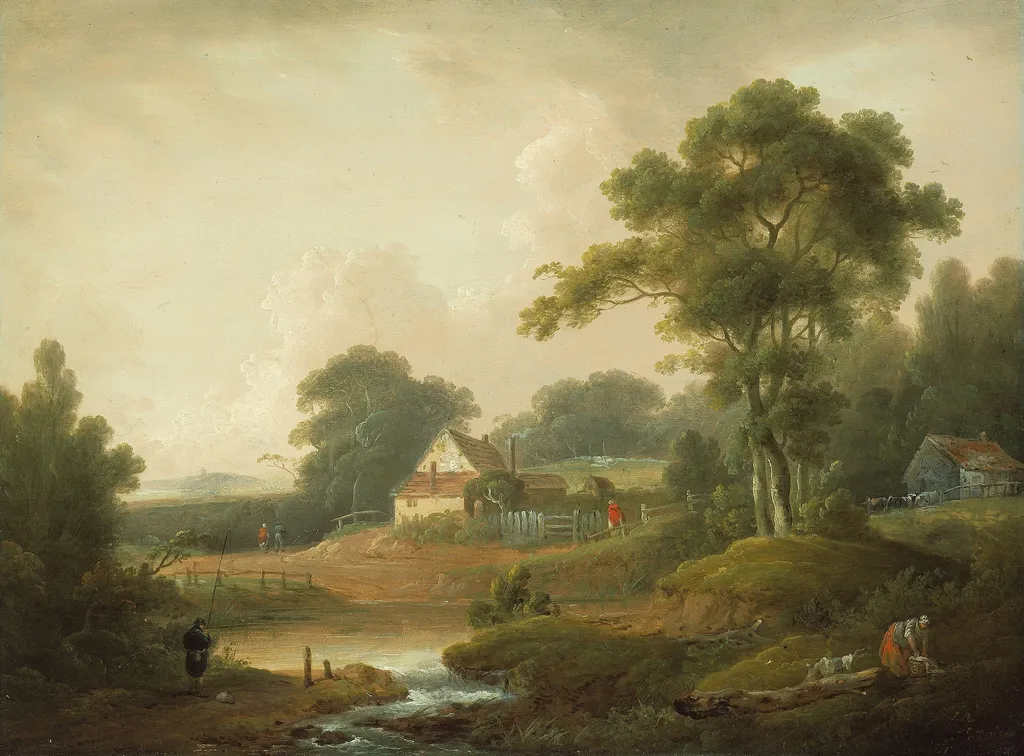
Landscape with Fisherman and Washerwoman is an unspecified painting by George Morland. It dates from 1796 and is held in the collection of the Art Institute of Chicago. Created in 1796, this oil painting presents a quiet riverside scene where a fisherman and a washerwoman occupy opposite banks.
About this work
Overview
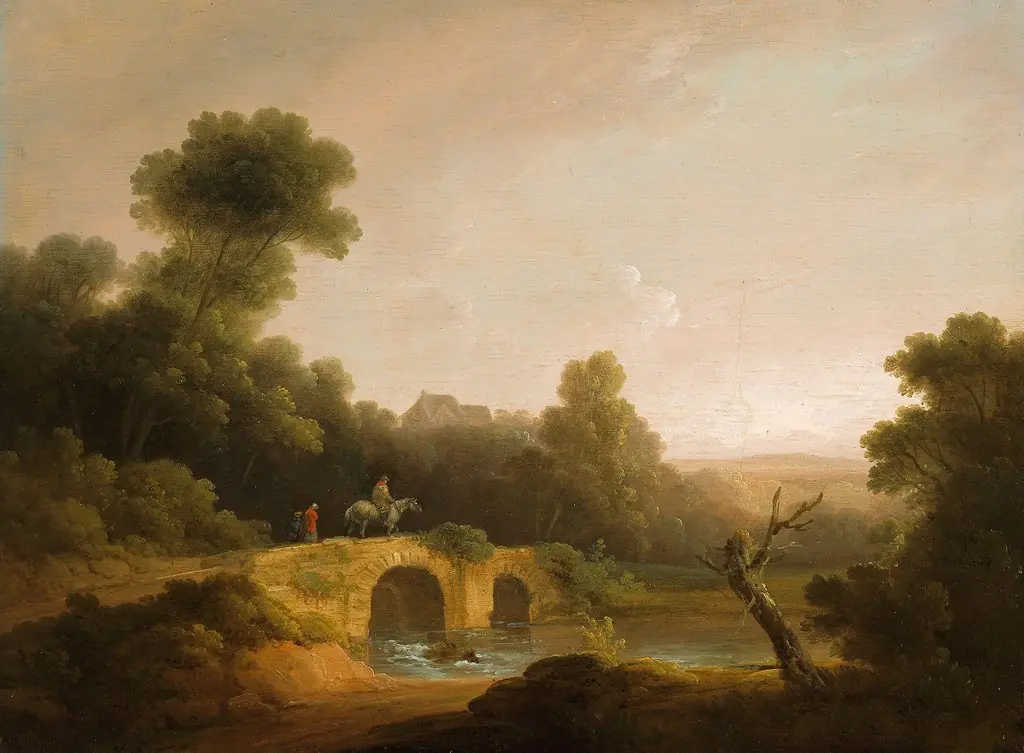
Created in 1796, this oil painting presents a quiet riverside scene where a fisherman and a washerwoman occupy opposite banks. The composition balances figures against a gently rolling landscape, with a modest dwelling and distant trees receding into muted hills. The palette of subdued greens, browns, and blues reinforces the tranquil atmosphere, inviting the viewer into a simple, bucolic moment.
Subject & Meaning
The work captures everyday rural labor: a fisherman poised with his rod and a washerwoman engaged in washing garments at the water’s edge. By juxtaposing these two occupations, the artist highlights the interdependence of subsistence activities within a pastoral setting, suggesting a harmonious rhythm between nature and human toil.
Technique & Style
Executed with a texture reminiscent of Dutch Golden Age landscapes, the brushwork renders foliage and water with layered, tactile strokes. Morland employs a restrained color scheme, allowing subtle tonal variations to model form and convey depth. The composition’s balanced placement of figures and background elements reflects a disciplined yet naturalistic approach to genre painting.
History & Provenance
Painted by George Morland, a prolific English artist known for depictions of rustic life, the piece entered the market during a period when his images were frequently reproduced as prints. While the prints generated significant profit for publishers, Morland himself received modest remuneration, a pattern that persisted throughout his career.
Context
The painting belongs to a late‑18th‑century tradition of genre scenes that idealized rural England. Morland’s focus on ordinary laborers aligns with contemporary interests in the countryside as a source of moral virtue and national identity, contrasting with the urbanization occurring during the Industrial Revolution.
Own this work as a print
Artist & collection
Artist
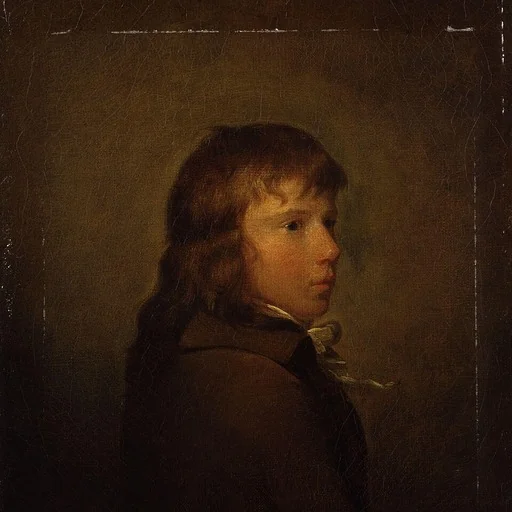
George Morland (26 June 1763 – 29 October 1804) was an English painter. His early work was influenced by Francis Wheatley, but after the 1790s he came into his own style. His best compositions focus on rustic scenes:…

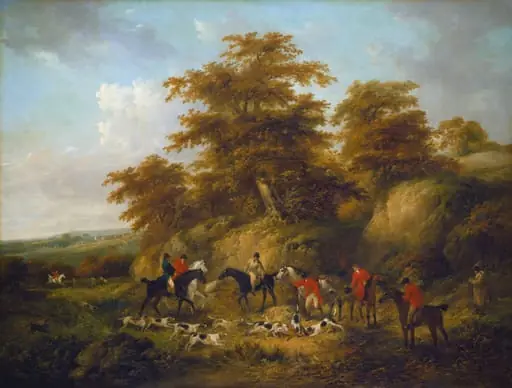
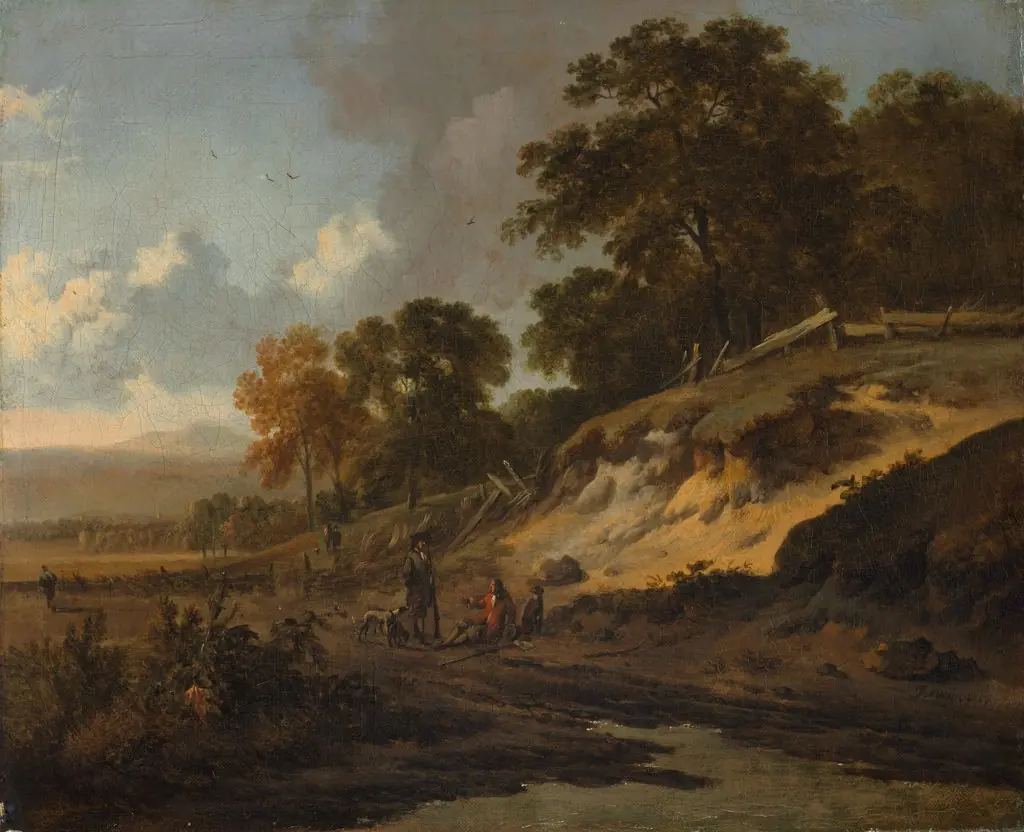 Landscape with Hunters
 Landscape with Hunters
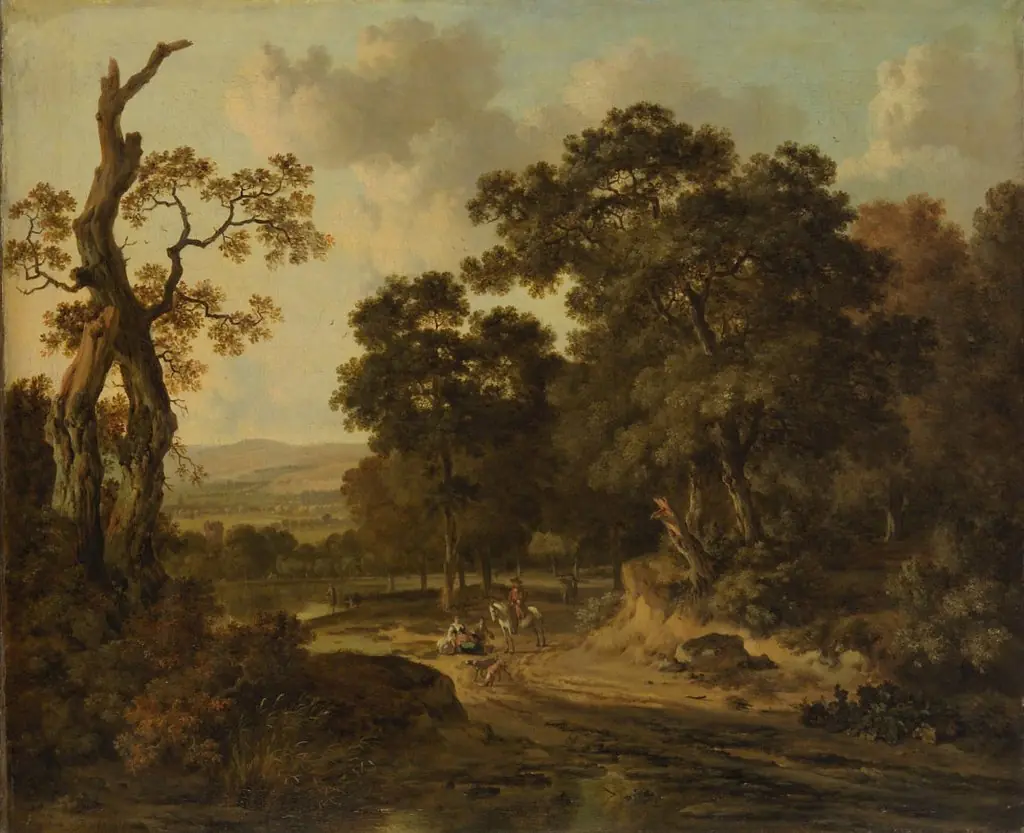 Waldeingang
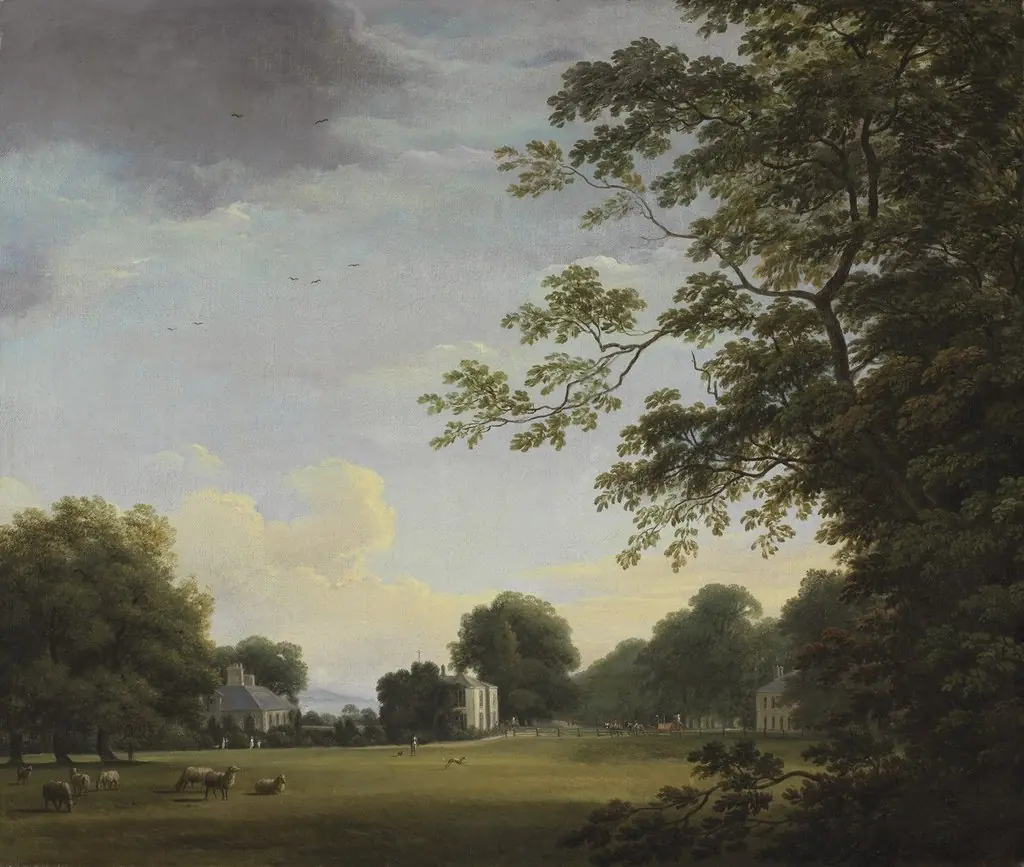 View in Mount Merrion Park
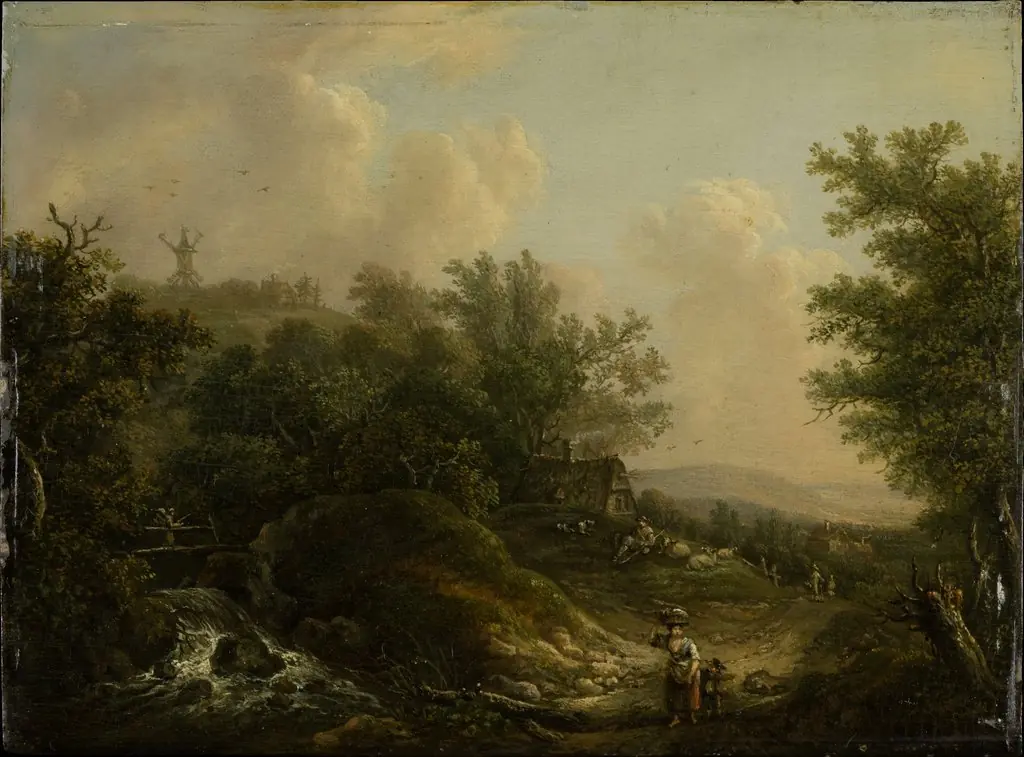 Landscape with a Brook and Hikers
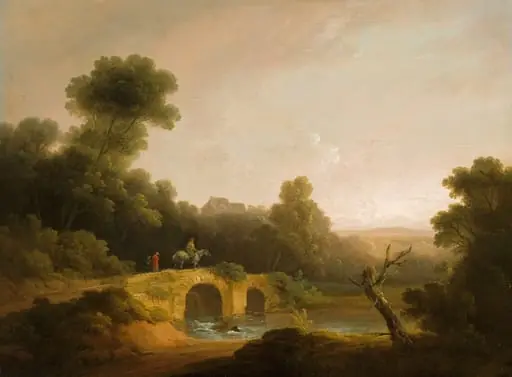 Landscape with Figures Crossing a Bridge
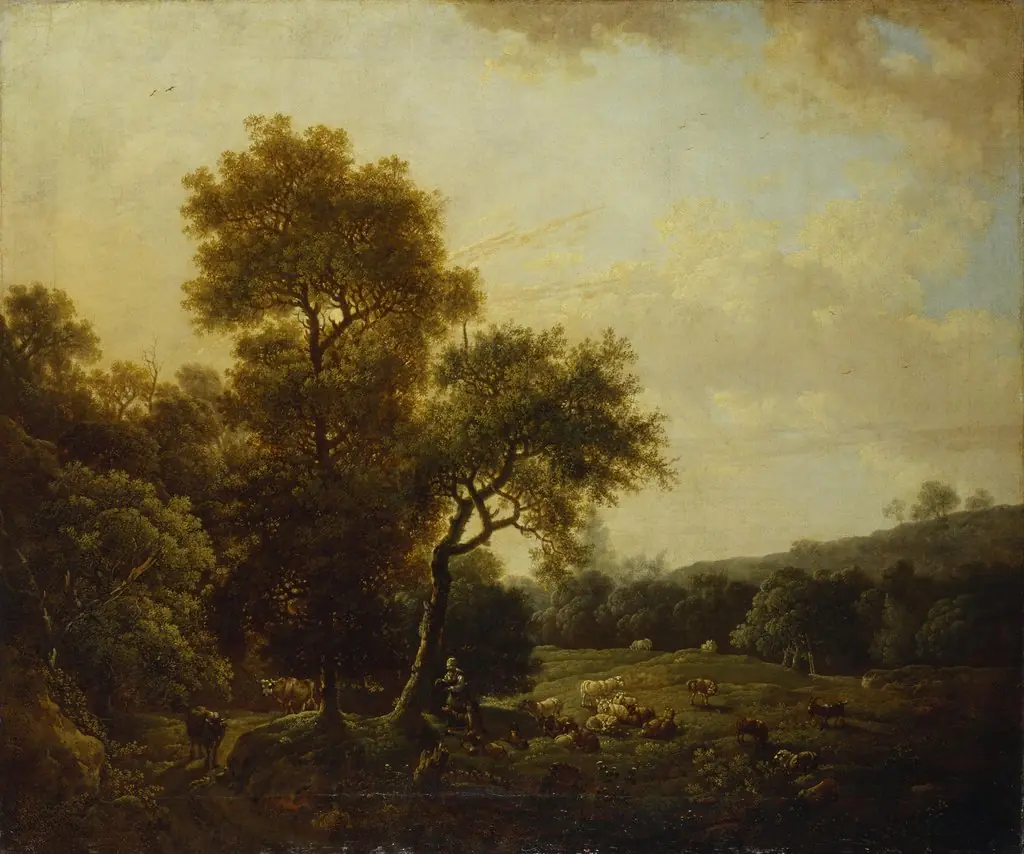 Landscape
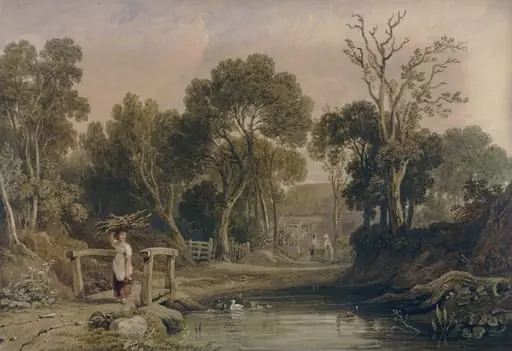 Landscape with a pond and country folk outside a cottage
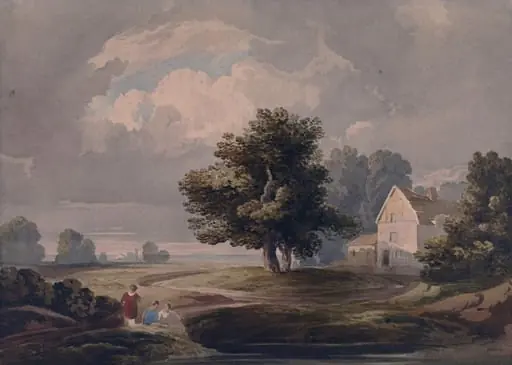 Landscape with cottage
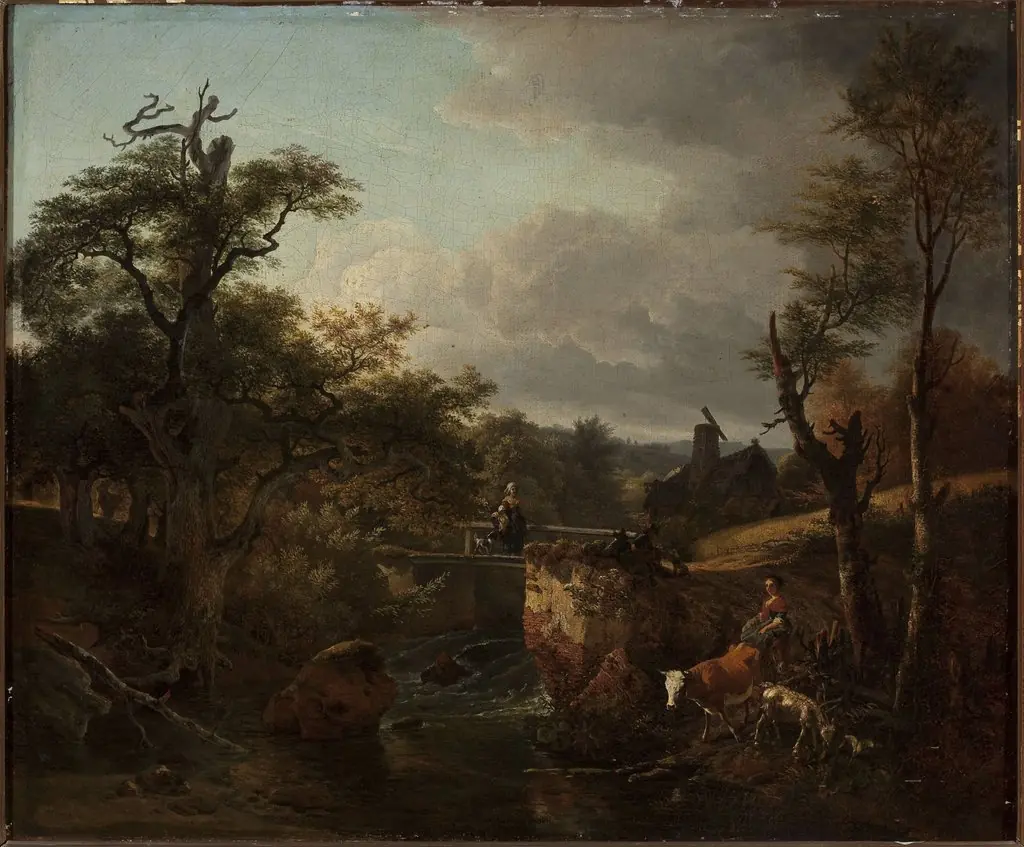 Landscape with a waterfall
 Landscape with Fisherman and Washerwoman