Artwork
Untitled
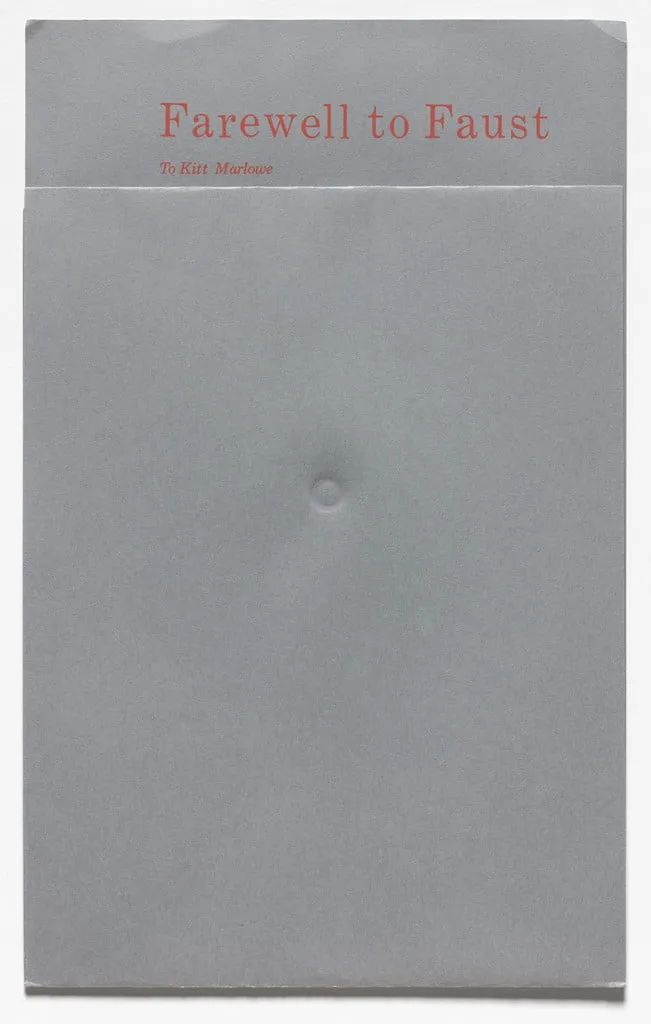
Untitled is an ink print by George Reavey. It dates from 1968 and is held in the collection of the Museum of Modern Art.
About this work
Overview
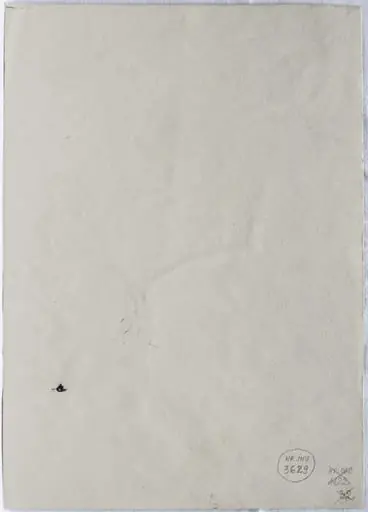
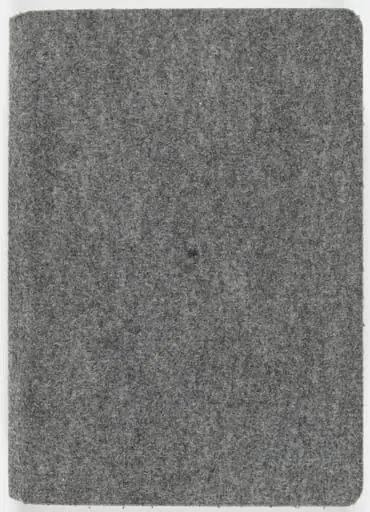
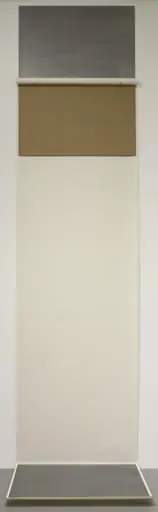
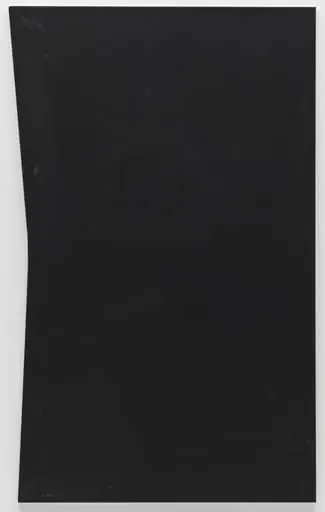
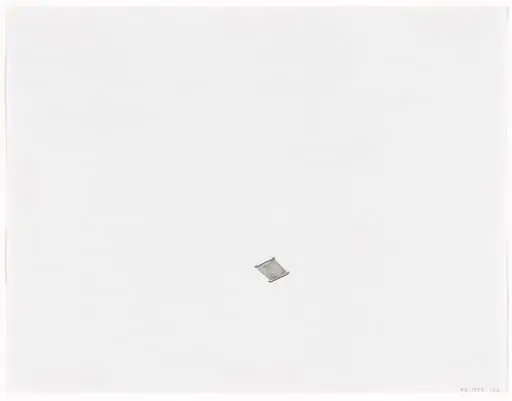
Untitled is a 1968 screenprint by George Reavey, part of The Museum of Modern Art’s collection. The work consists of a single sheet of gray paper, folded horizontally at its center. A small circular shape appears at the center, and two lines of red text are printed at the top: 'Farewell to Faust' and 'To Kitt Marlowe.' The composition is minimal, emphasizing materiality over imagery.
Subject & Meaning
The text references Faust, a figure associated with intellectual ambition and existential compromise, and Kitt Marlowe, likely a personal or literary allusion.
The text references Faust, a figure associated with intellectual ambition and existential compromise, and Kitt Marlowe, likely a personal or literary allusion. The phrase 'Farewell to Faust' suggests a rejection or resignation, while the dedication implies a private or intimate context. The absence of figurative elements directs attention to language and gesture, framing the work as a conceptual artifact rather than a narrative image.
Technique & Style
The piece employs screenprinting, a method allowing flat, even ink application. The gray paper and red text create a restrained chromatic contrast. The fold line is integral to the form, not merely a crease but a compositional element. The simplicity of the design—no illustration, no embellishment—reflects a deliberate reduction, aligning with conceptual tendencies in late 1960s printmaking.
History & Provenance
Created in 1968, the work entered The Museum of Modern Art’s collection shortly after its production. Its origins are tied to Reavey’s engagement with artist books and ephemeral formats during a period when printmaking was expanding beyond traditional imagery. No public exhibition history is widely documented, and its significance remains tied to its material presence and textual ambiguity.
Context
In the late 1960s, many artists turned to printmaking to explore language, process, and the dematerialization of art. Reavey’s work aligns with this trend, echoing contemporaries who used text and mundane materials to challenge notions of artistic value. The fold and the dedication suggest a personal, perhaps epistolary, dimension, situating the piece between art and private correspondence.
Legacy
Untitled exemplifies how printmaking could serve conceptual ends without relying on visual complexity. Its quiet austerity has influenced later artists working with text, paper, and institutional critique. Though not widely reproduced, it remains a quiet reference point in discussions of postwar American print practice, valued for its restraint and enigmatic tone.
Artist & collection
Artist
George Reavey was an Irish-Russian surrealist poet, literary agent, publisher, and translator.