Artwork
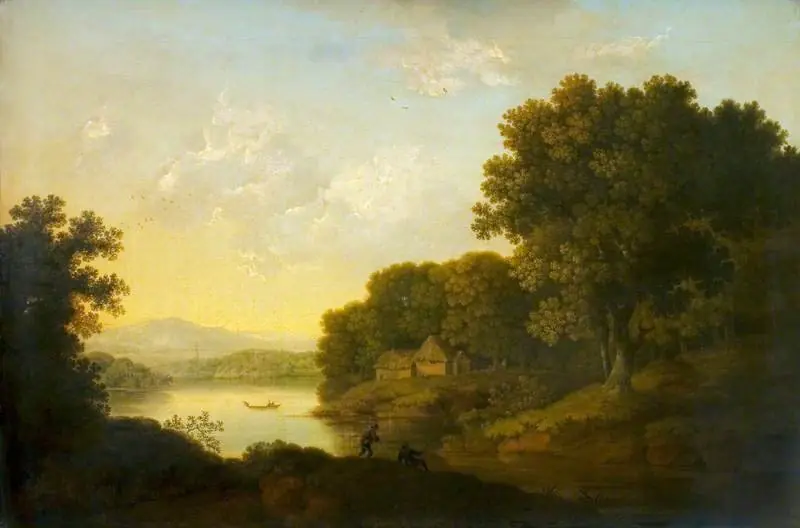
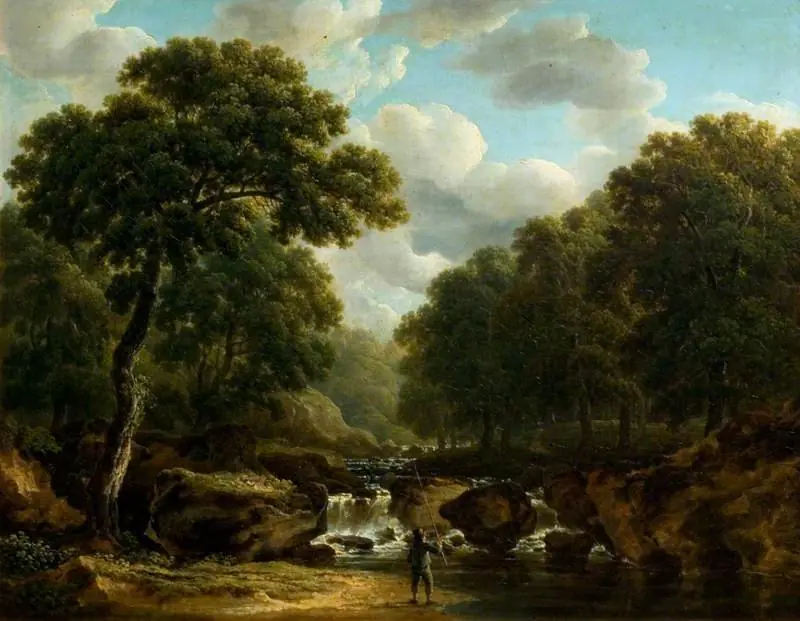
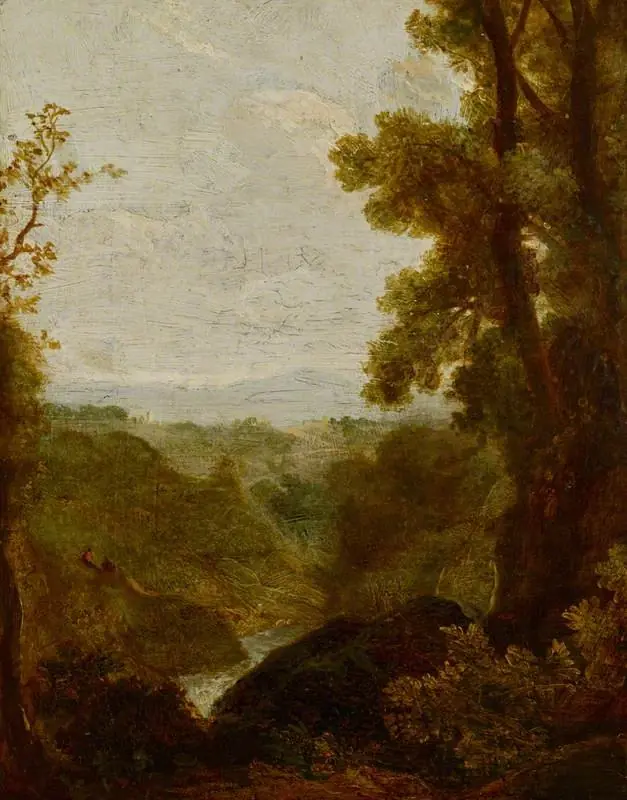
Landscape with a Waterfall and Anglers
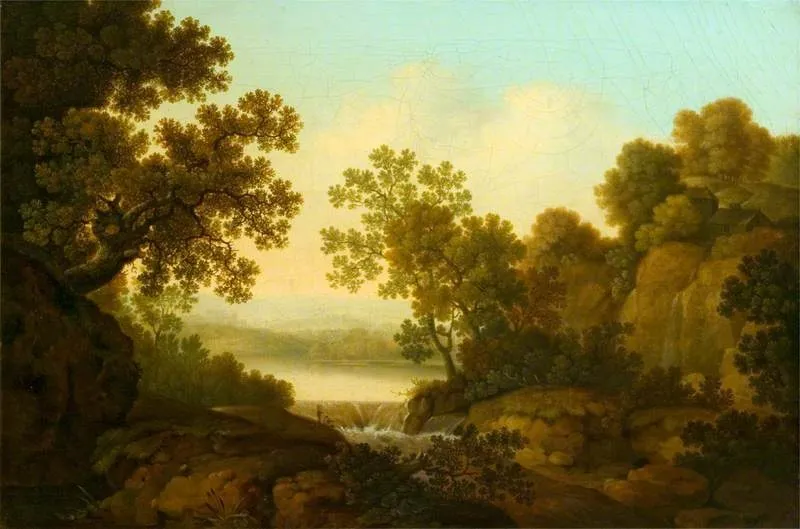
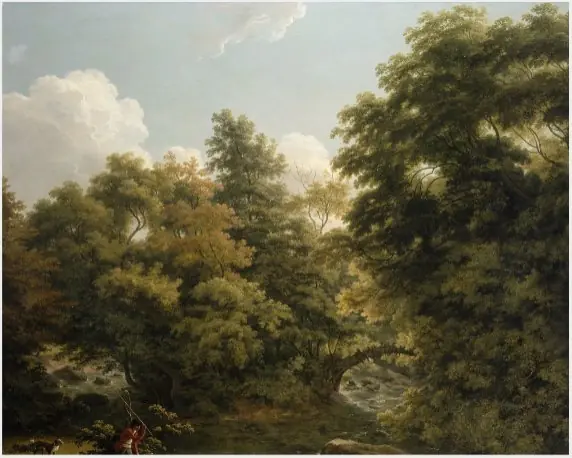
Landscape with a Waterfall and Anglers is an oil painting by George Smith. It is held in the collection of the Victoria and Albert Museum.
About this work
Overview
This oil painting by George Smith presents a quiet rural scene centered on a cascading waterfall and two figures fishing along its bank. Executed in the 18th century, it belongs to the British tradition of landscape painting that emphasizes natural harmony. The work is part of the Victoria and Albert Museum’s collection, where it is preserved as an example of period landscape aesthetics.
Subject & Meaning
The scene conveys an idealized stillness, reflecting contemporary values of nature as a refuge from urban life and industrial change.
The painting features two anglers in still contemplation beside a flowing stream, their presence subtly integrated into the environment rather than dominating it. The waterfall, mist rising from its fall, and dense foliage suggest a world untouched by human disruption. The scene conveys an idealized stillness, reflecting contemporary values of nature as a refuge from urban life and industrial change.
Technique & Style
Smith employs layered glazes to achieve subtle transitions in tone, particularly in the mist around the waterfall and the soft sky. The foliage is rendered with textured brushwork, creating depth without sharp definition. Light is diffused evenly, avoiding dramatic contrasts, which reinforces the calm mood. The composition directs the eye from foreground figures to the distant horizon through receding planes of green and blue.
History & Provenance
The painting was completed in the late 1700s and entered the Victoria and Albert Museum’s collection in the 19th century, likely through a donation or acquisition from a private collector. Its attribution to George Smith, a lesser-known landscape painter of the period, reflects the museum’s interest in documenting regional artistic practices beyond the most celebrated names.
Context
During Smith’s time, landscape painting in Britain was gaining prominence as a genre tied to Enlightenment ideals of observation and natural beauty. This work aligns with the taste for tranquil, picturesque scenes favored by the gentry, who sought visual representations of order and serenity in nature amid growing industrialization and social change.
Legacy
Though not widely exhibited or studied today, the painting remains a representative example of provincial British landscape art from the late 18th century. It contributes to the understanding of how everyday natural scenes were rendered with quiet precision, offering insight into the visual culture of a time when landscape was both observed and idealized.
Artist & collection
Artist
A painter and maker of still-life objects in the 19th century, George Smith left small oil scenes of anglers at waterfalls, teapots, and fruit stalls.