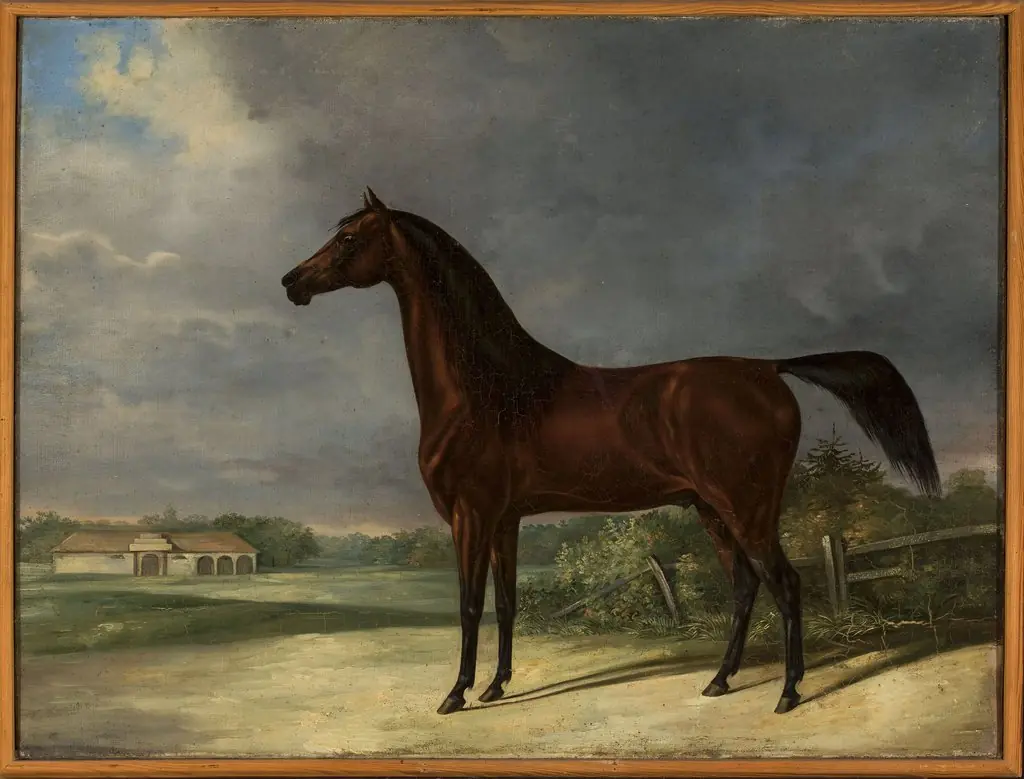
Artwork
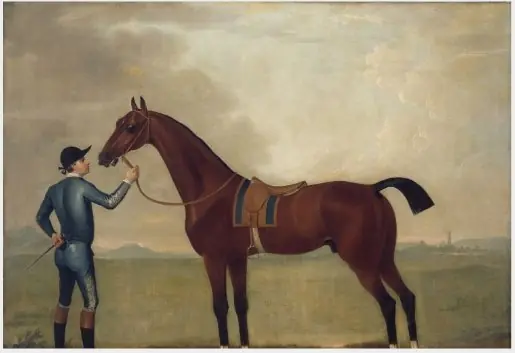
Gimcrack, with John Pratt up, on Newmarket Heath
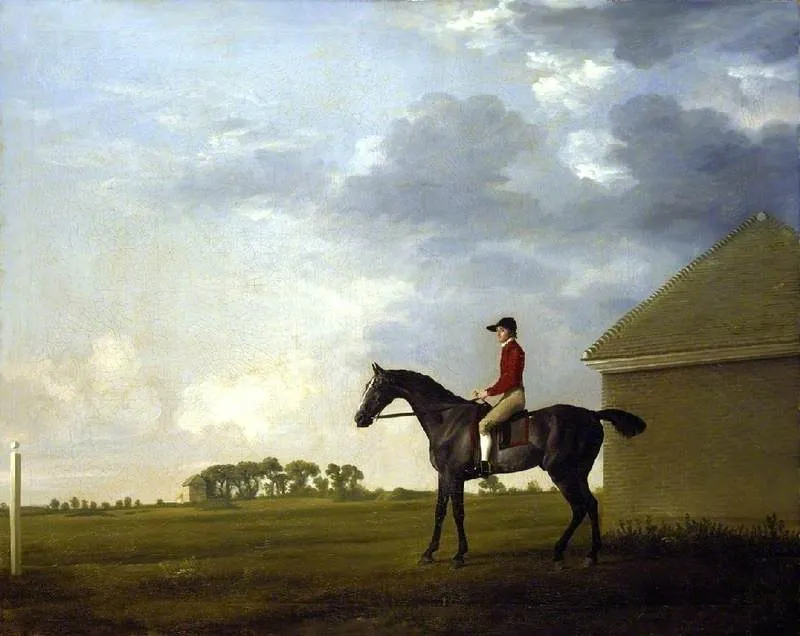
Gimcrack, with John Pratt up, on Newmarket Heath is an oil painting by the Rococo painting artist George Stubbs. It dates from 1765 and is held in the collection of the Fitzwilliam Museum.
About this work
Overview
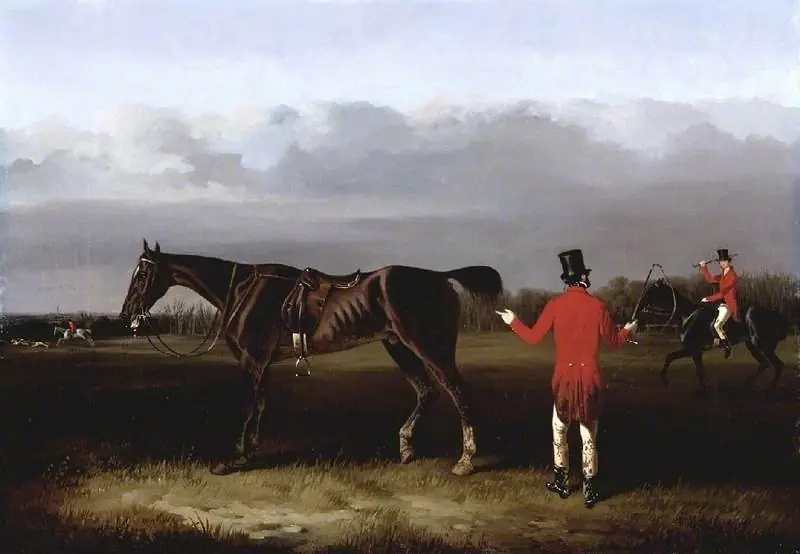
George Stubbs created the oil painting *Gimcrack, with John Pratt up, on Newmarket Heath* in 1765. The work shows the dark brown racehorse Gimcrack with his rider, John Pratt, positioned on the open expanse of Newmarket Heath under a cloudy sky. The composition balances the animal’s alert posture with a modest landscape that includes distant trees and a faint structure.
Subject & Meaning
The painting captures the relationship between horse and rider, emphasizing the animal’s stature within the English racing culture of the period.
The central focus is the celebrated 18th‑century thoroughbred Gimcrack, rendered with a sense of vitality as he gazes leftward, ears pricked. John Pratt, dressed in a red coat and black hat, holds the reins in his left hand, suggesting a moment of pause rather than a race. The painting captures the relationship between horse and rider, emphasizing the animal’s stature within the English racing culture of the period.
Technique & Style
Stubbs employed a realistic approach, using oil to achieve fine detail in the horse’s musculature and the texture of its coat. Subtle chiaroscuro models the forms against a muted sky, while the limited palette of earth tones and the restrained background reflect a restrained Rococo sensibility, favoring elegance over exuberant ornamentation.
History & Provenance
Since its completion, the painting has remained in public collections, eventually entering the holdings of the Fitzwilliam Museum in Cambridge. The museum acquired the work as part of its broader effort to represent British equine art, and it now forms a key example of Stubbs’s early output within the institution’s galleries.
Artist & collection
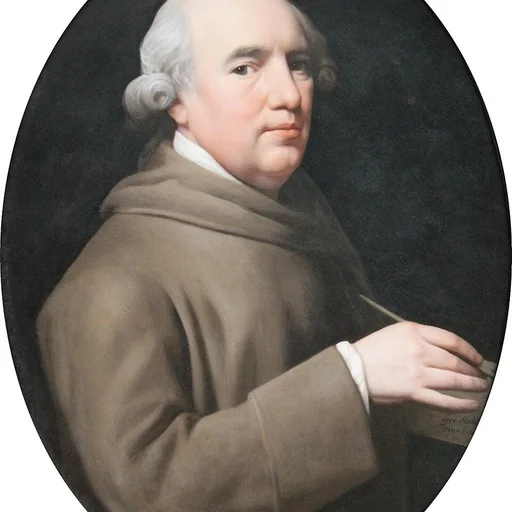
Artist
George Stubbs (25 August 1724 – 10 July 1806) was an English painter, best known for his paintings of horses.

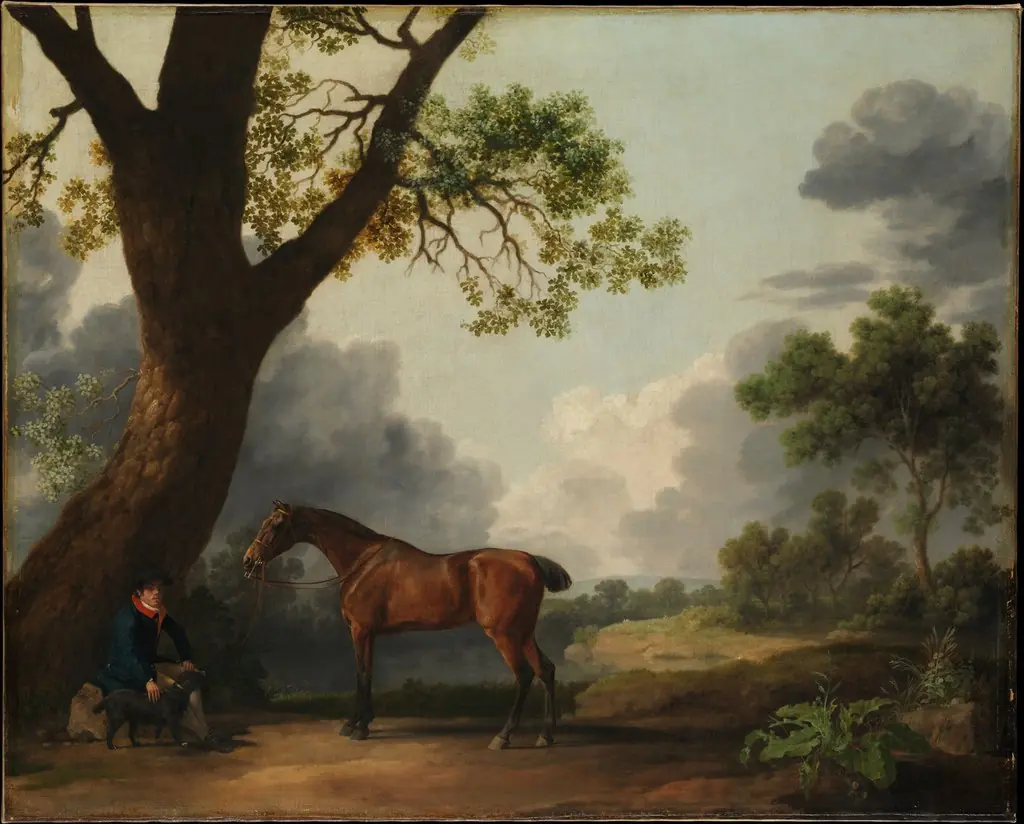 The Third Duke of Dorset's Hunter with a Groom and a Dog
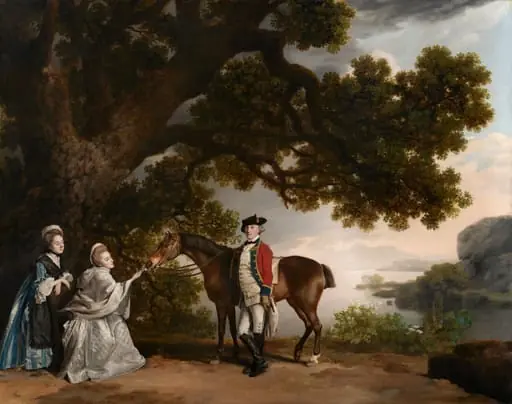 Captain Samuel Sharpe Pocklington with His Wife, Pleasance, and possibly His Sister, Frances
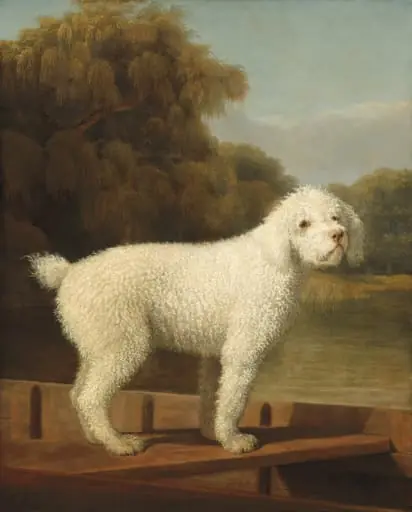 White Poodle in a Punt
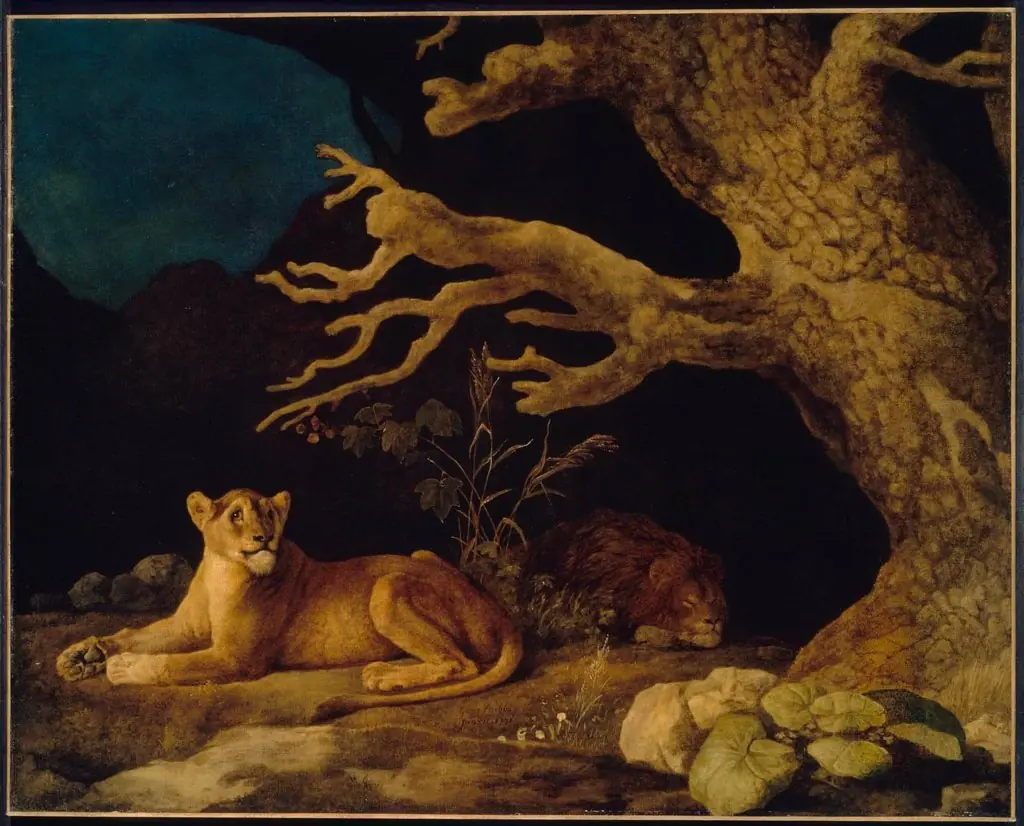 Lion and Lioness
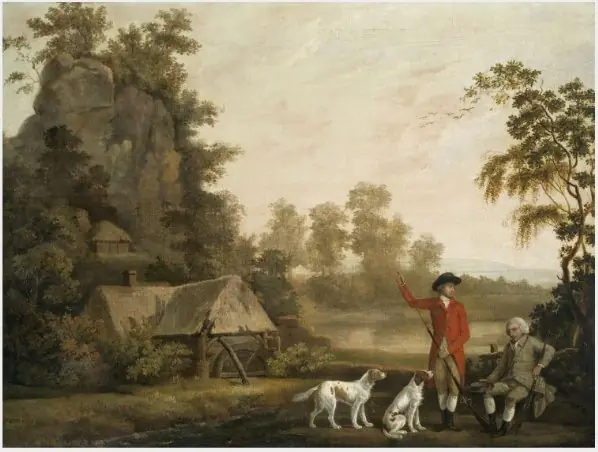 Sportsmen at Rest
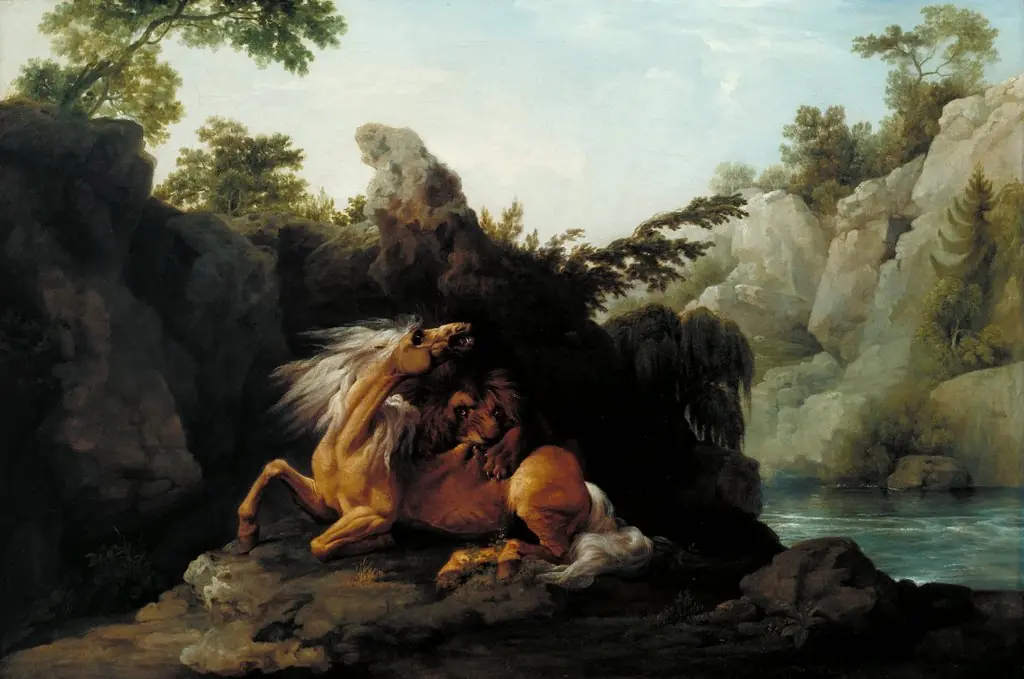 Horse Devoured by a Lion
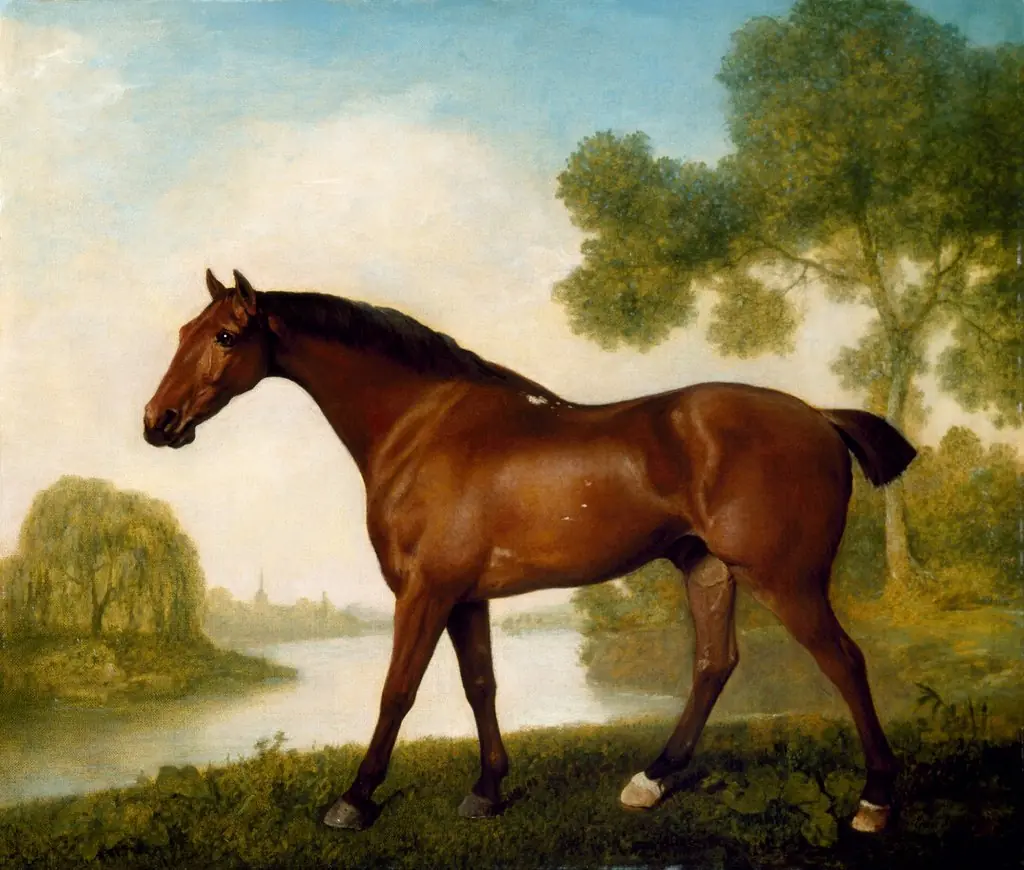 Truss, A Hunter
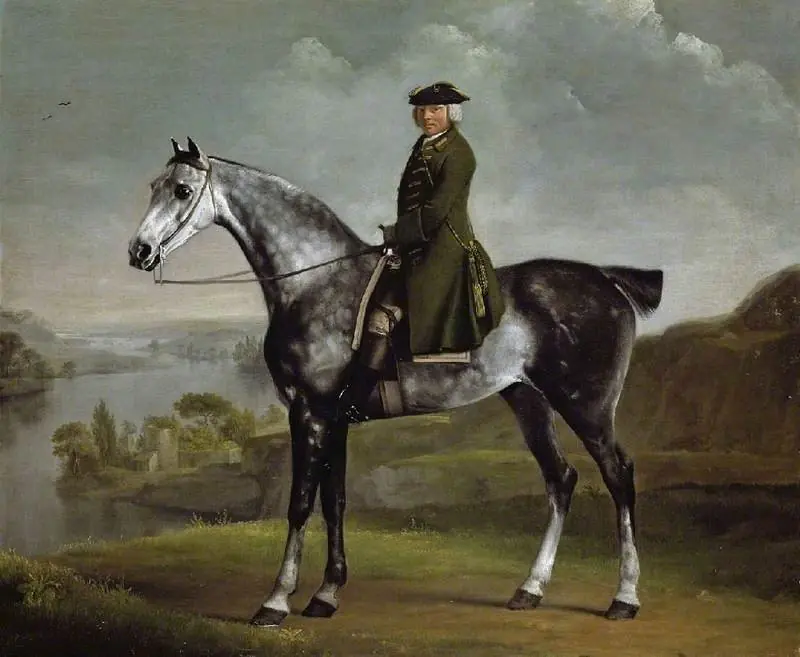 Joseph Smyth Esq, Lieutenant of Whittlebury Forest, Northamptonshire, on a dapple grey horse