Artwork
Landscape
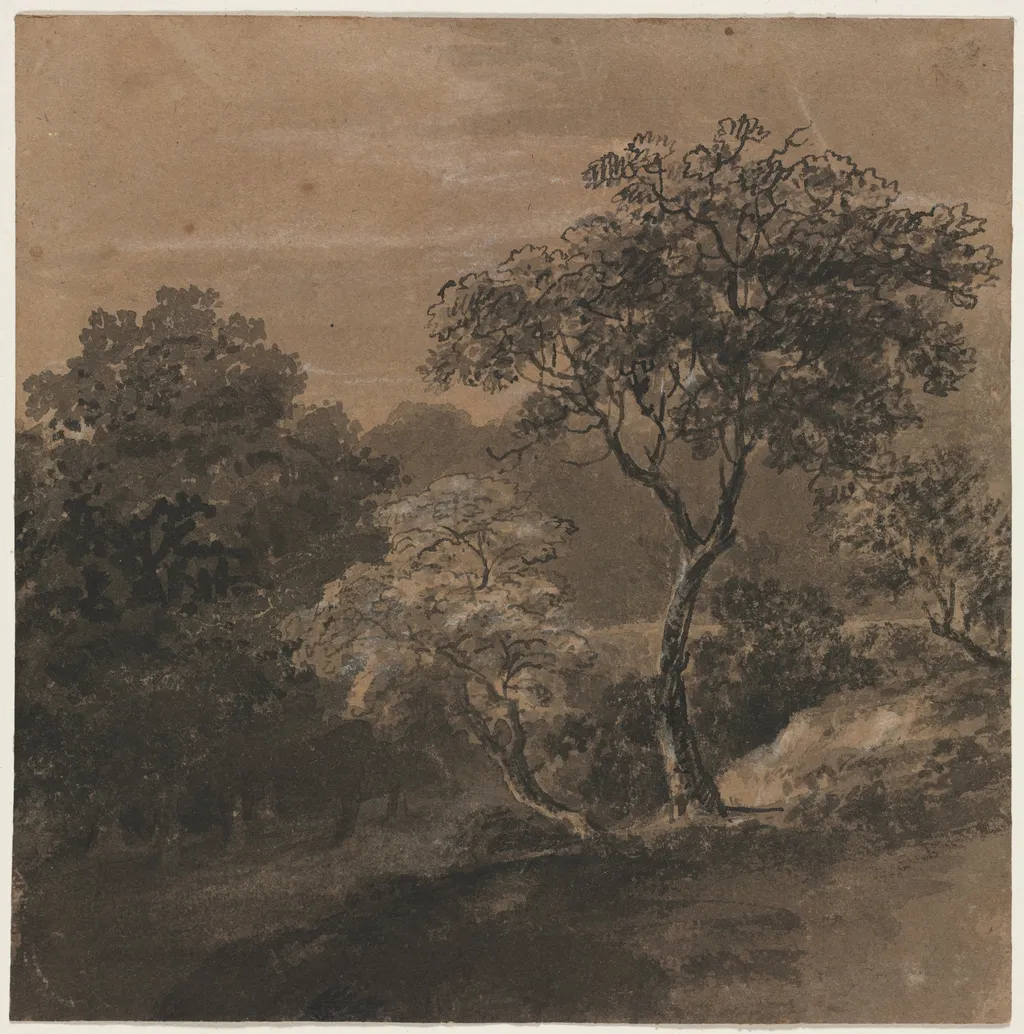
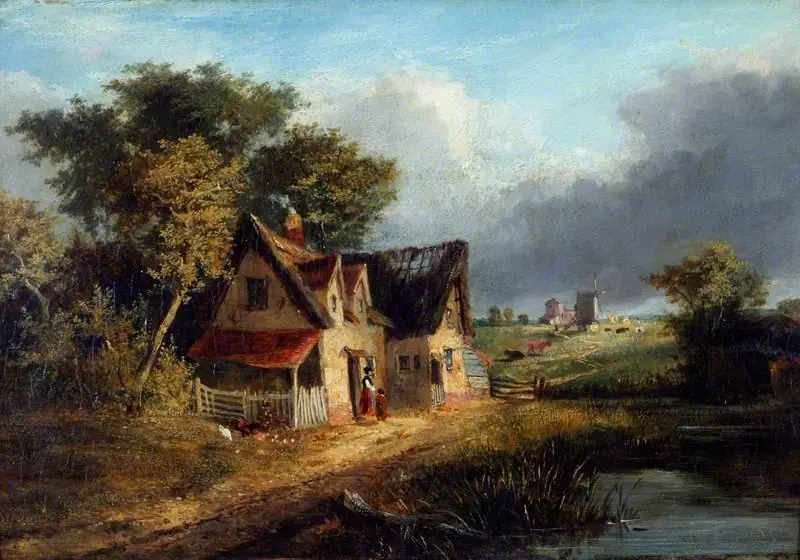
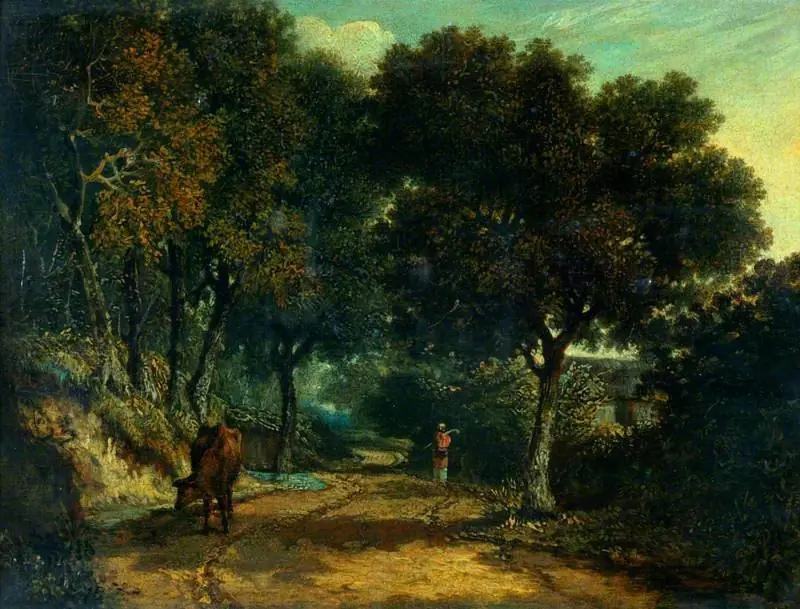
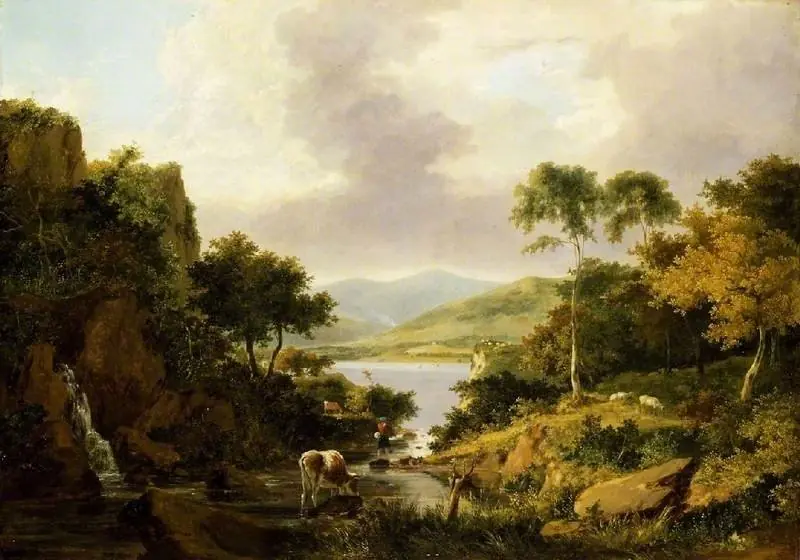
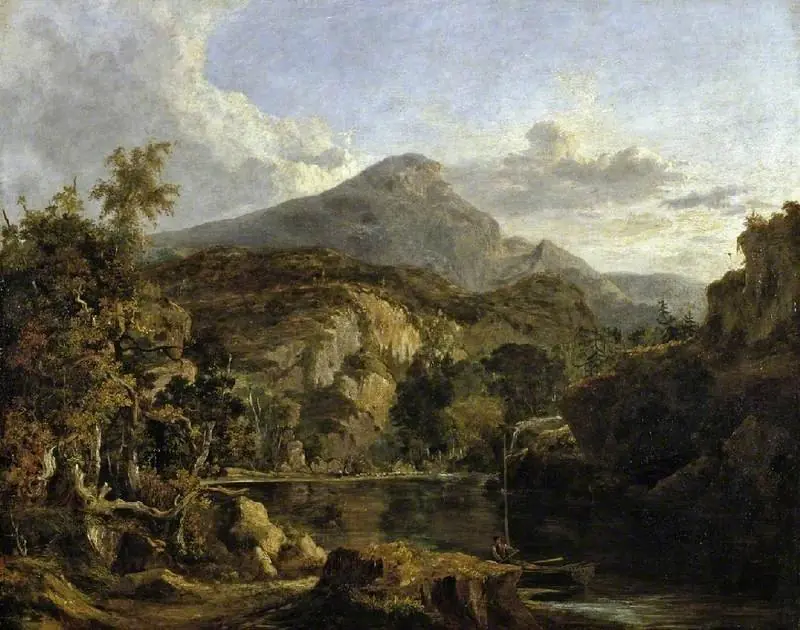
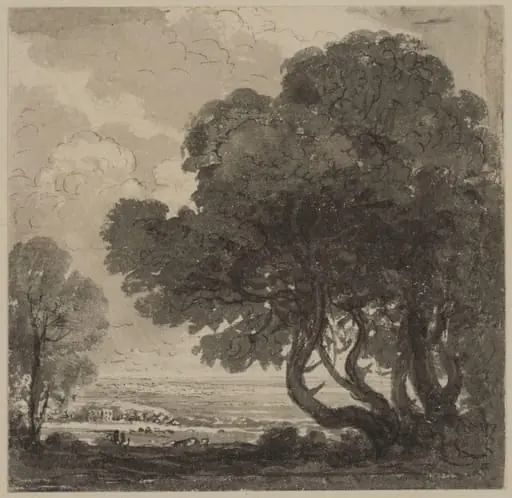
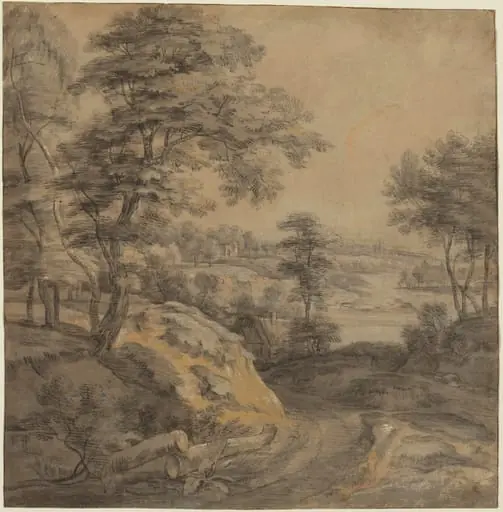
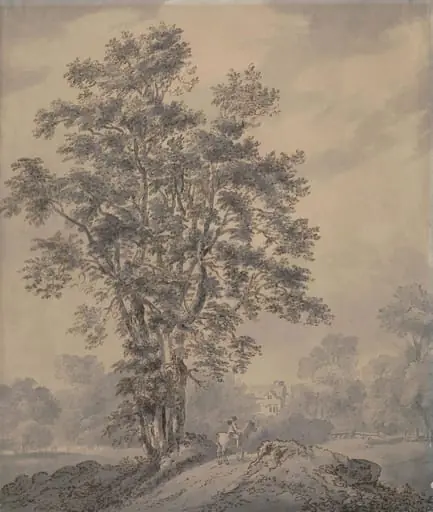
Landscape is a drawing by the Romanticist artist George Vincent. It dates from 1824 and is held in the collection of the Cleveland Museum of Art.
About this work
Overview
The drawing is part of the collection at The Cleveland Museum of Art, where it stands as an example of early 19th-century British landscape sketching.
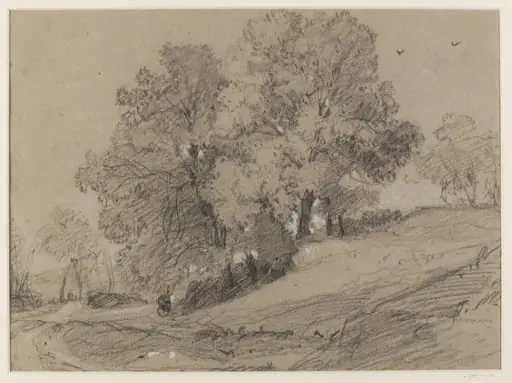
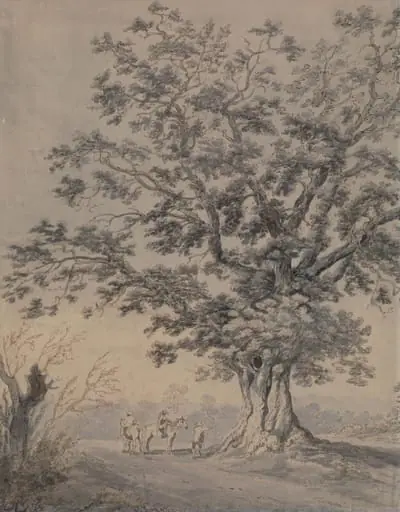
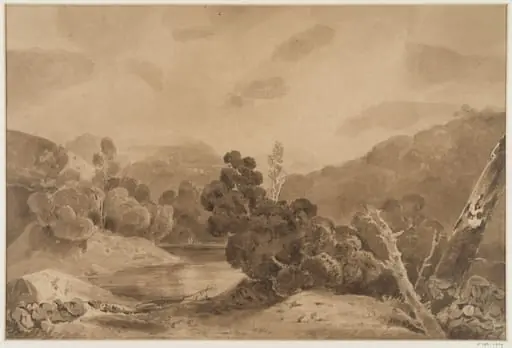
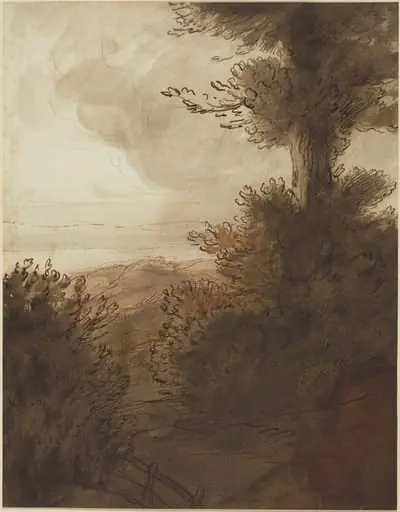
Created around 1824, this ink and wash drawing by George Vincent depicts a somber, untamed natural scene. Executed in muted browns and blacks, the work captures a moment of atmospheric tension rather than a polished vista. Its rough texture and loose handling suggest it was made outdoors, likely as a study. The drawing is part of the collection at The Cleveland Museum of Art, where it stands as an example of early 19th-century British landscape sketching.
Subject & Meaning
The scene presents a wild, unregulated landscape—twisted trees claw at the sky, and the ground is uneven, suggesting erosion or neglect. There is no human presence, no cultivated order. The fading light at the top implies dusk or an overcast sky, deepening the sense of isolation. The composition conveys nature as a force beyond control, evoking a quiet reverence for its raw, unrefined state.
Technique & Style
Vincent employed rapid, expressive brushwork and diluted ink to build tonal depth, allowing the paper’s texture to show through in places. Dark areas are layered with smudged washes, creating a gritty, almost charcoal-like surface. Light is suggested not by detail but by absence—pale washes at the top imply sky, contrasting with the dense, shadowed foreground. The technique prioritizes mood over precision, aligning with Romantic-era sensibilities.
History & Provenance
The drawing was likely made during Vincent’s travels in eastern England, a region known for its rugged coastlines and storm-lit skies. It entered The Cleveland Museum of Art’s collection in the 20th century, acquired as part of a broader effort to document British Romantic landscape practices. Its condition suggests it was preserved as a working study rather than a finished piece, reflecting its function in the artist’s creative process.
Context
Vincent worked alongside other artists of the Norwich School, who rejected idealized landscapes in favor of observed, local scenes. This drawing reflects a shift toward emotional authenticity in British art, influenced by Romanticism’s emphasis on nature’s sublime power. Unlike contemporaries who painted grand vistas, Vincent focused on intimate, weather-worn corners of the countryside, capturing nature’s quiet unease.
Legacy
Though Vincent is less widely known than his peers, this drawing exemplifies the quiet innovation of provincial British draftsmen. Its emphasis on atmosphere over detail influenced later generations of landscape artists who sought to convey emotion through tonal variation. The work remains a testament to the value of sketching as a means of direct engagement with the natural world, beyond formal exhibition standards.
Own this work as a print
Artist & collection
Artist
George Vincent painted quiet, detailed landscapes in oil, often showing places in Scotland and England in the early 1800s.