Artwork
Victor-Guy, admiral-baron Duperré
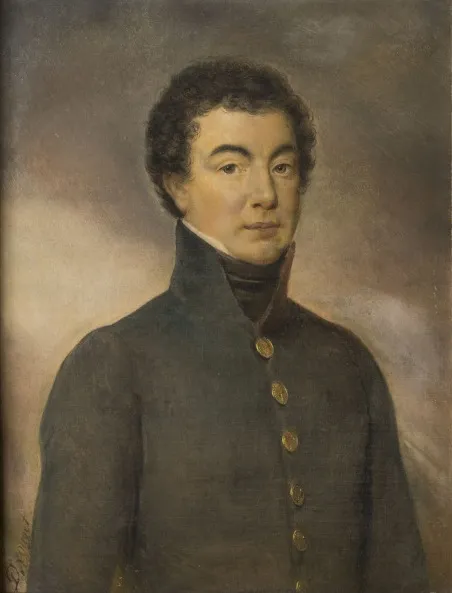
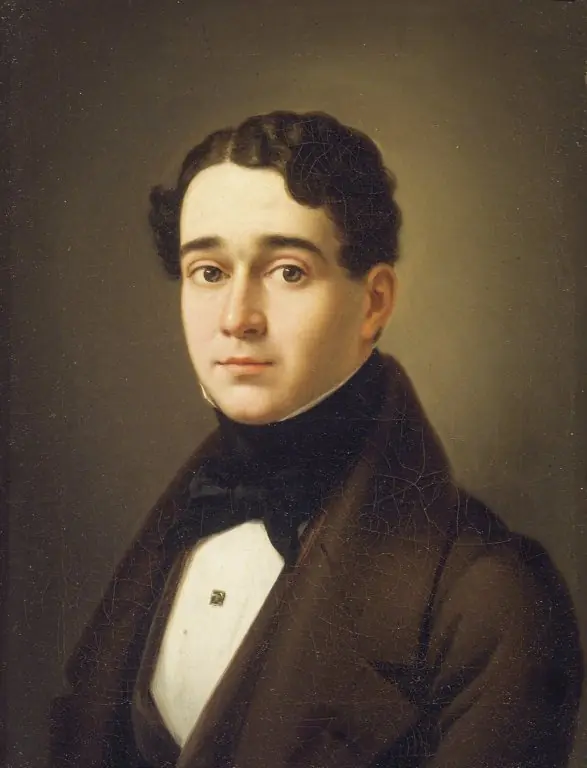
Victor-Guy, admiral-baron Duperré is an oil painting by Georges Rouget. It dates from 1835 and is held in the collection of the Palace of Versailles.
About this work
Overview
The lighting is directed to illuminate the admiral's pale complexion and serious expression, emphasizing his short dark hair and the texture of his uniform.
Painted in 1835 by Georges Rouget, this oil portrait depicts Victor-Guy, admiral-baron Duperré, a distinguished French naval officer. The composition presents the sitter in a half-length format, turned slightly to the viewer's left against a neutral, dark gray background that isolates his figure. Duperré is dressed in a formal dark coat adorned with gold buttons, indicative of his high-ranking military status. Rouget employs a controlled academic style, characteristic of the Restoration and July Monarchy periods, to render the subject with psychological gravity. The lighting is directed to illuminate the admiral's pale complexion and serious expression, emphasizing his short dark hair and the texture of his uniform. As a student and assistant to Jacques-Louis David, Rouget continued the Neoclassical tradition of portraiture, prioritizing clarity, dignity, and precise detail over romantic flourish. This work serves as a formal record of Duperré's public persona, capturing the authority expected of a senior naval commander during the reign of Louis-Philippe. The painting reflects the era's preference for sober, realistic depictions of state figures, avoiding allegorical embellishment in favor of direct representation.
Subject & Meaning
The painting captures Duperré in full dress, his expression solemn and his posture upright, reflecting the authority and composure expected of a naval commander. The absence of overt symbols beyond his uniform suggests a personal rather than propagandistic portrayal, inviting contemplation of his individual character.
Technique & Style
Rouget employs a subdued chiaroscuro, allowing a soft, gray backdrop to recede while the illuminated coat and facial features advance toward the viewer. The delicate handling of light on the gold‑trimmed coat creates a tactile sense of texture, and the blurred background reinforces the three‑dimensional presence of the figure.
History & Provenance
Completed in 1835, the portrait entered the royal collection and is now displayed at the Palace of Versailles. Its presence among other state portraits underscores Duperré’s prominence in the naval and political spheres of early‑19th‑century France.
Context
The work belongs to a period when portraiture served to document the nation’s military elite, aligning personal achievement with the broader narrative of French resurgence after the Napoleonic era. Rouget’s approach reflects contemporary academic conventions while subtly highlighting the sitter’s individual stature.
Artist & collection

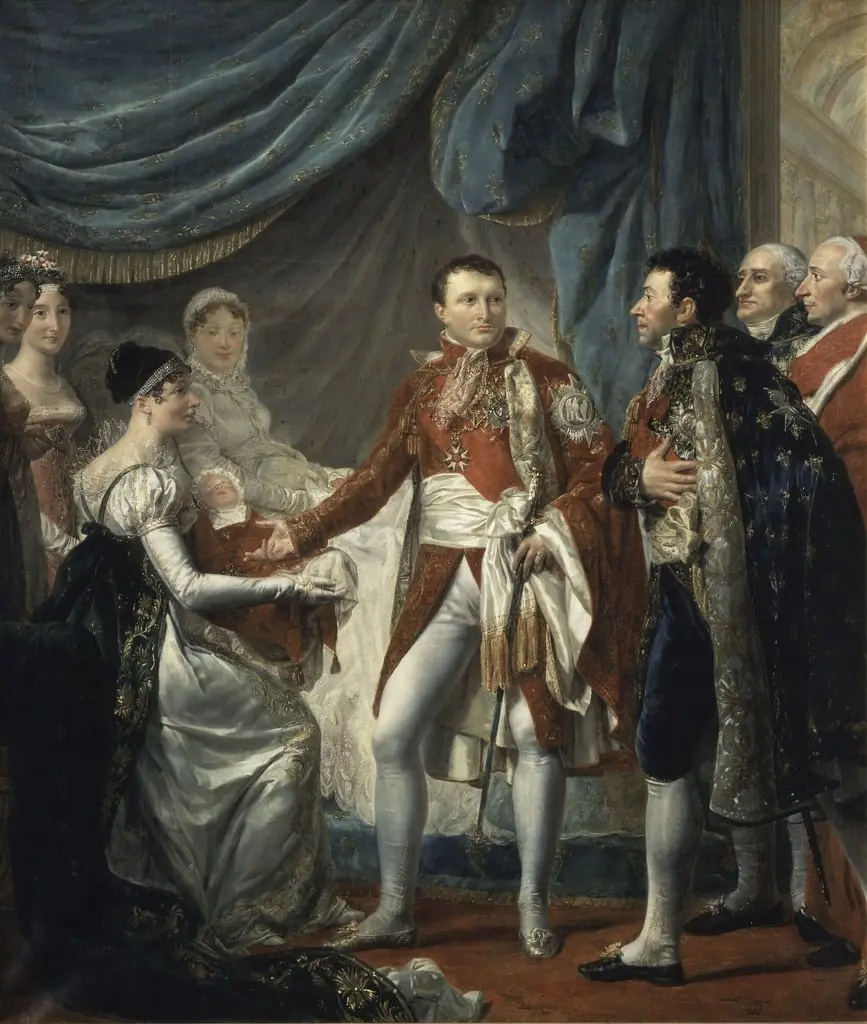 Napoleon I presents the King of Rome to the dignitaries of the Empire, March 20, 1811
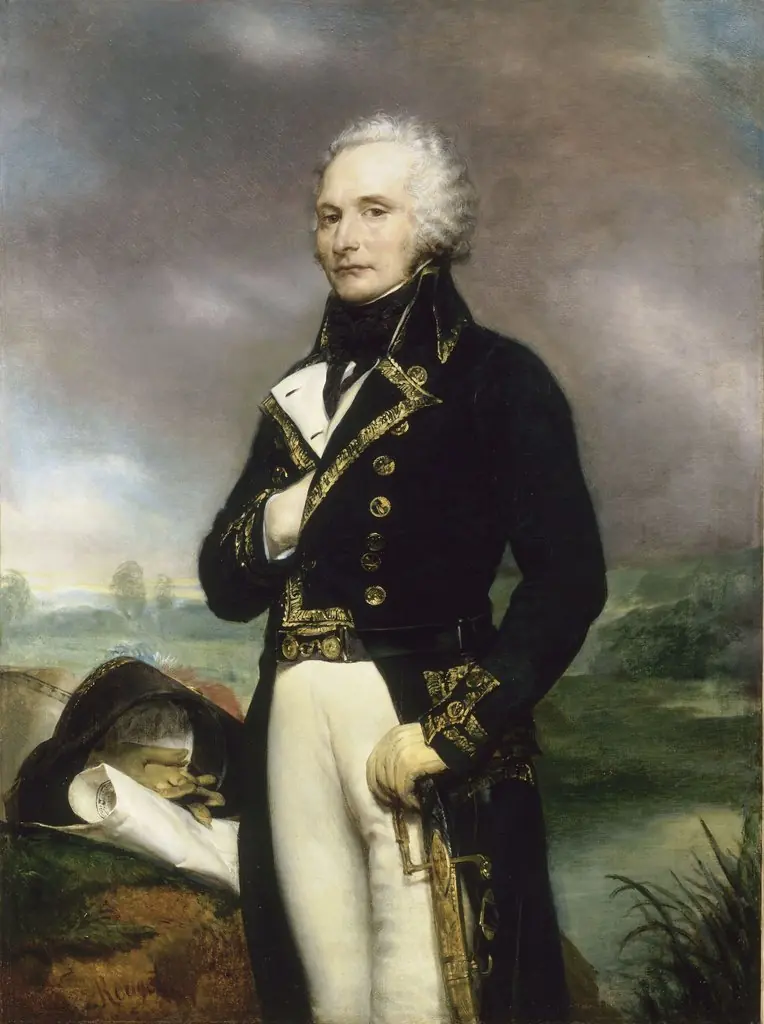 Alexandre-François Marie, viscount of Beauharnais, general-in-chief of the army of the Rhine
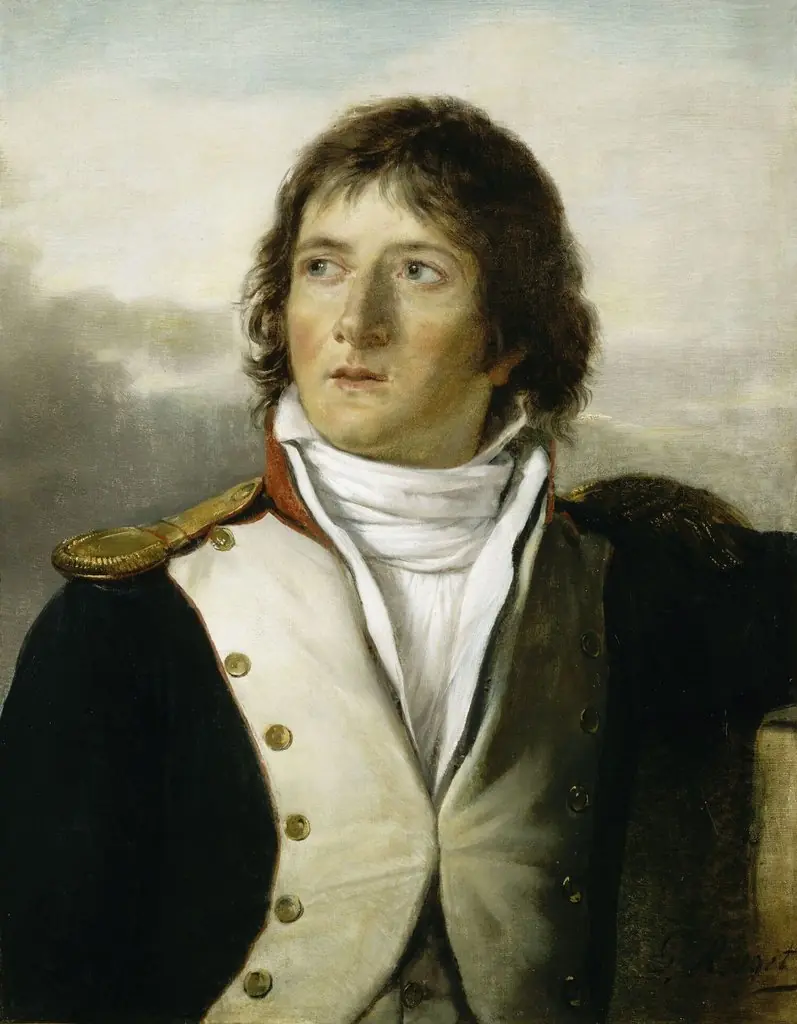 Laurent Gouvion Saint-Cyr, later Marshal and Marquis of Empire
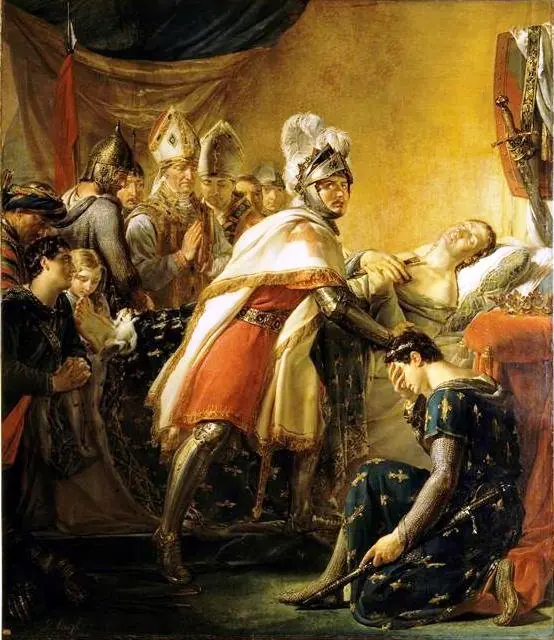 Mort de Saint Louis devant Tunis, 25 août 1270
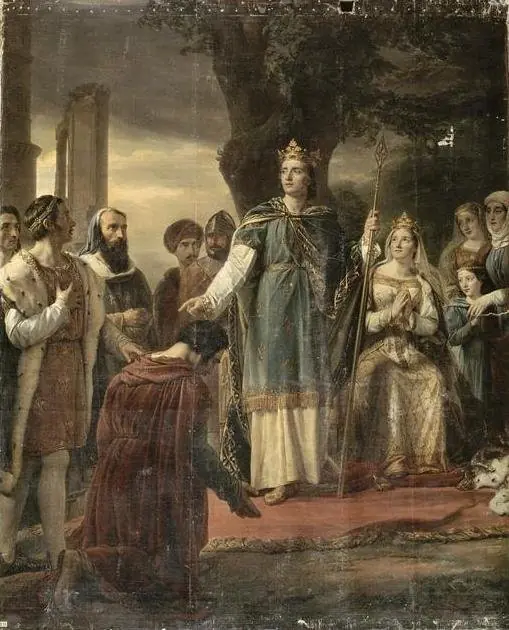 Saint Louis rendant la justice sous le chêne de Vincennes, 1260
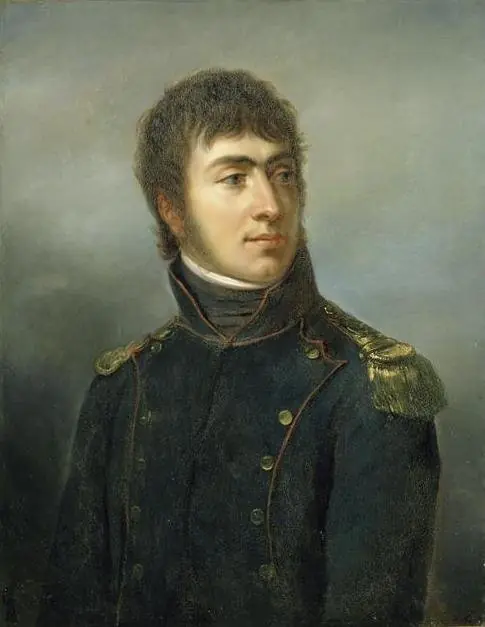 Auguste Frédéric Louis Viesse de Marmont, lieutenant d'état-major d'artillerie en 1792 (1774-1852)
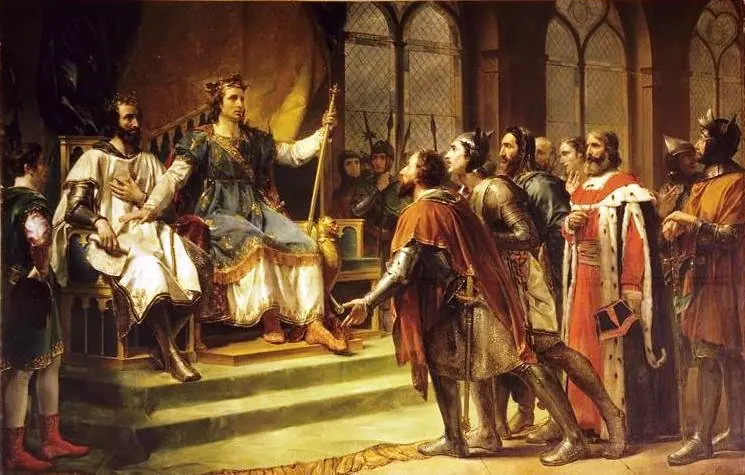 Mise of Amiens, 1264
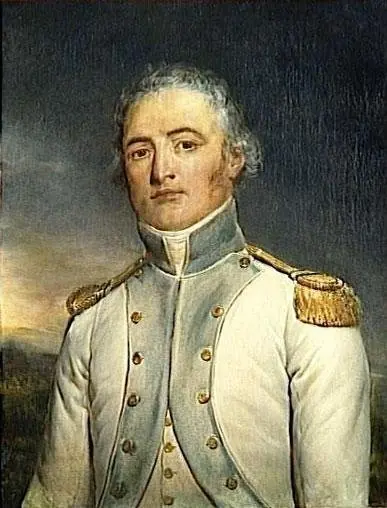 Bertrand Clauzel (1772-1842)
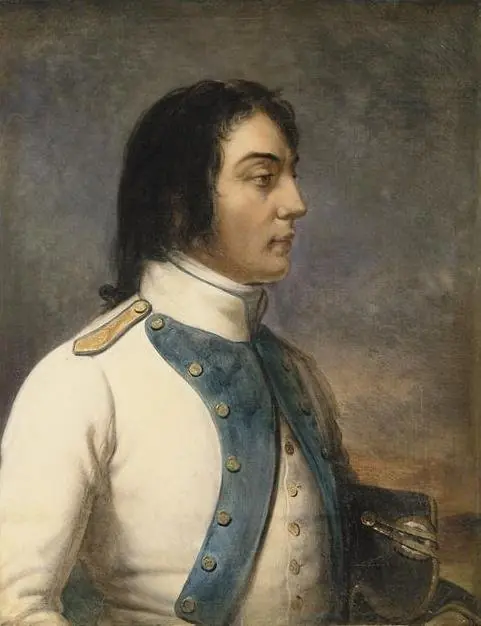 Louis-Charles-Antoine Des Aix de Veygoux, dit Desaix, capitaine au 46e régiment d'infanterie de ligne en 1792
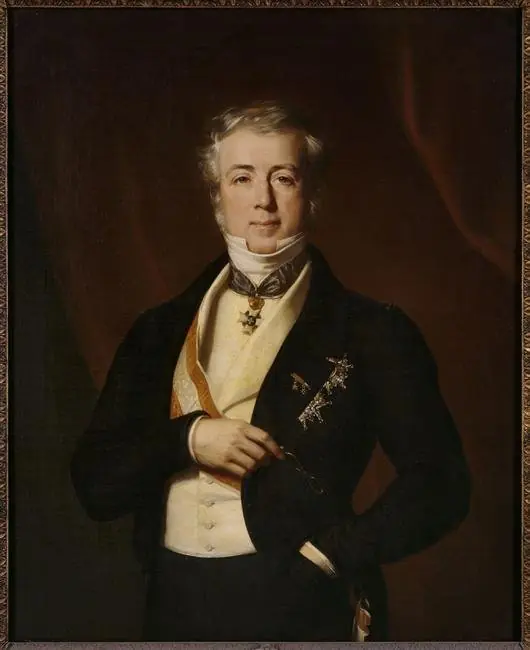 Alexandre Aguado, marquis de Las Marismas (1784-1842)
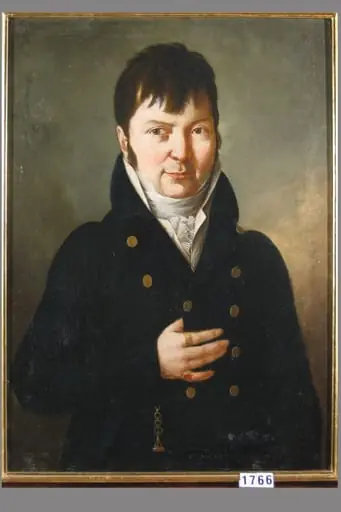 Portret de bărbat
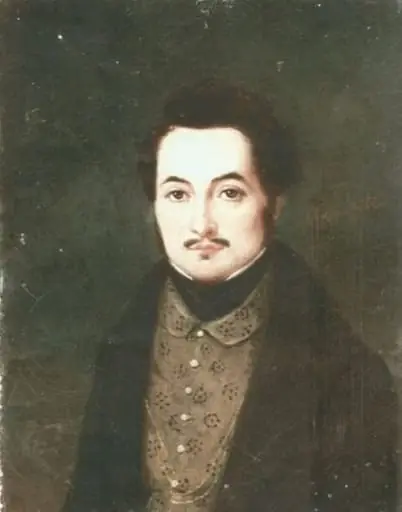 Portretul unui tânăr
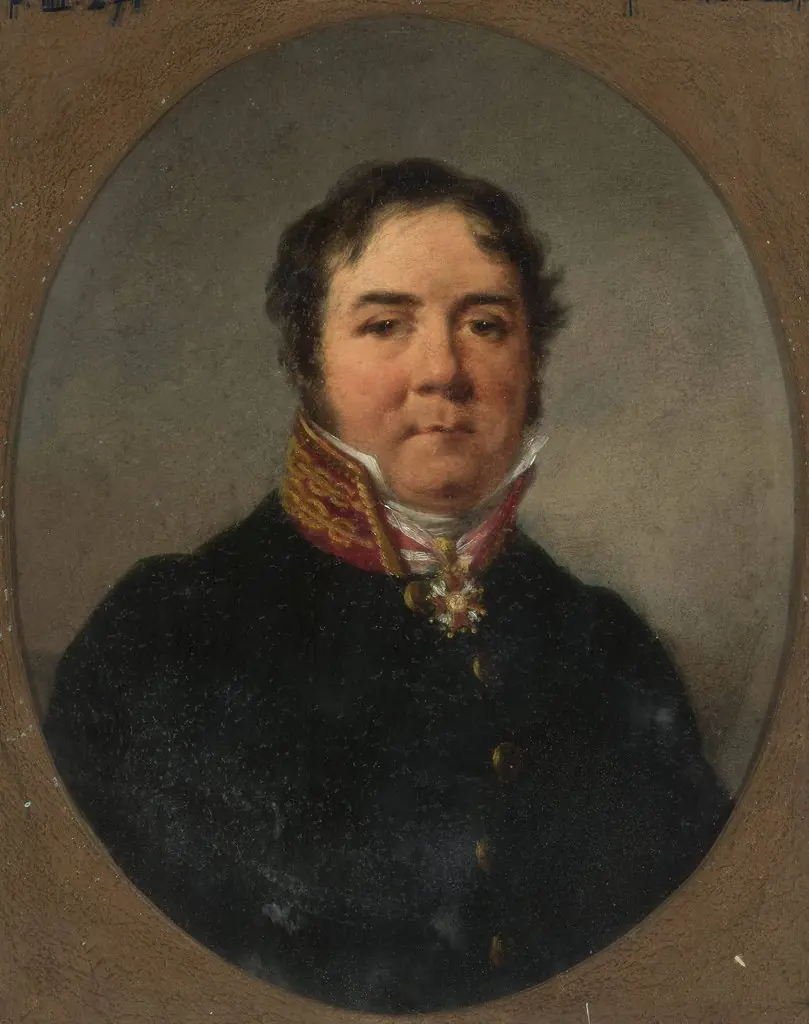 Portrait of Antoni Erazm Makarowicz
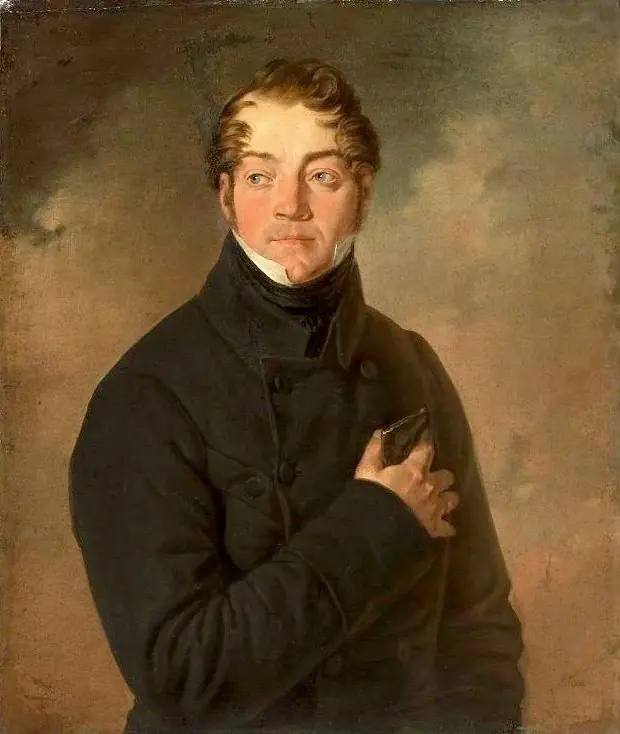 Portrait of Jeremi Korybut Woroniecki
 "Portrait of an Unknown Man from the Ogariov Family" (Platon Bogdanovich Ogariov?)
 Portrait of Novosiltsev
 Portrait of a dignitary
 Portrait of Henri Gratien, Comte Bertrand
 Portrait of Don Ignacio Cecilio Algara Gómez de la Casa