Artwork
Vertumnus and Pomona
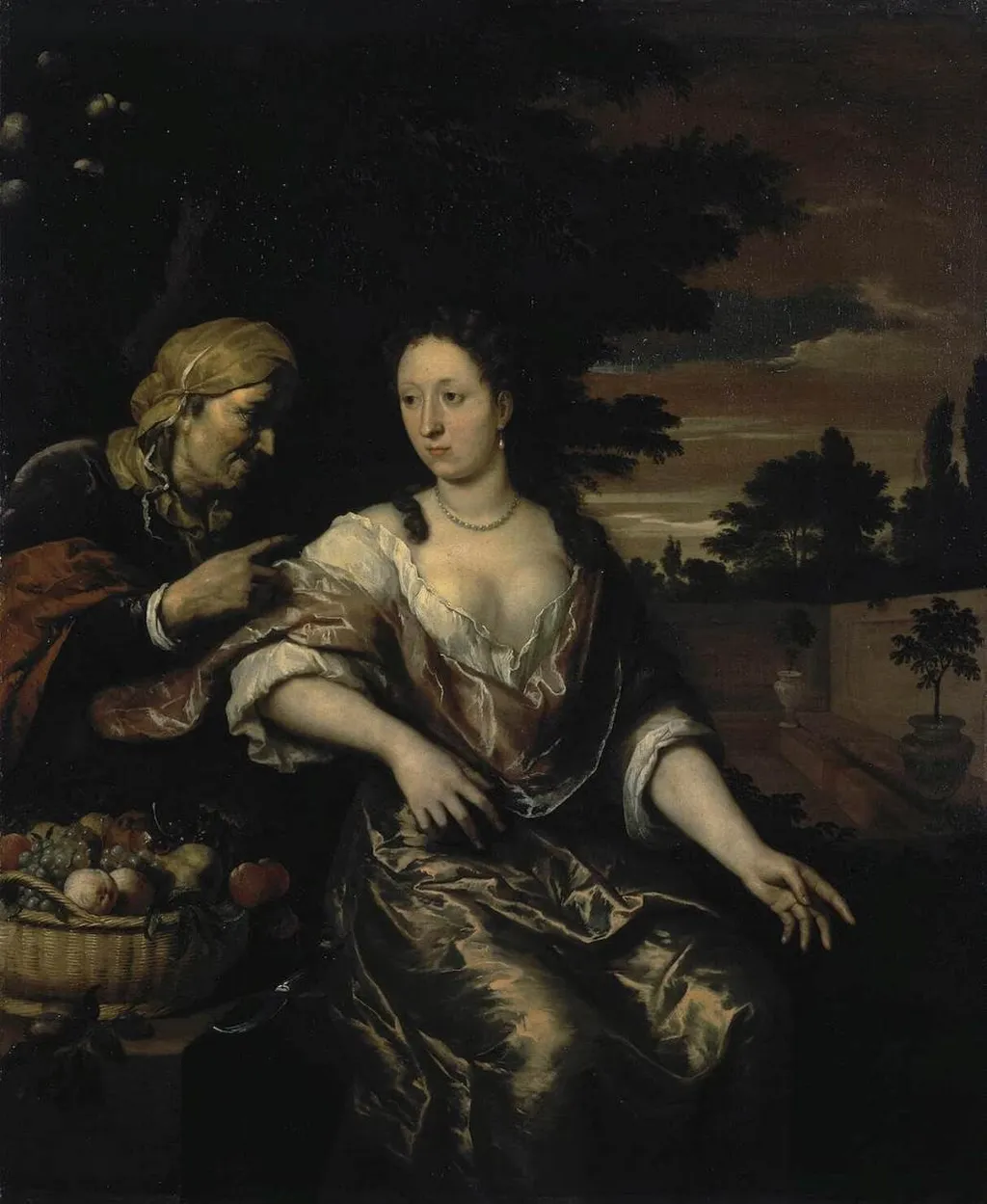
Vertumnus and Pomona is an oil painting by the Rococo painting artist Gerard Hoet. It dates from 1705 and is held in the collection of the Hermitage Museum.
About this work
Overview
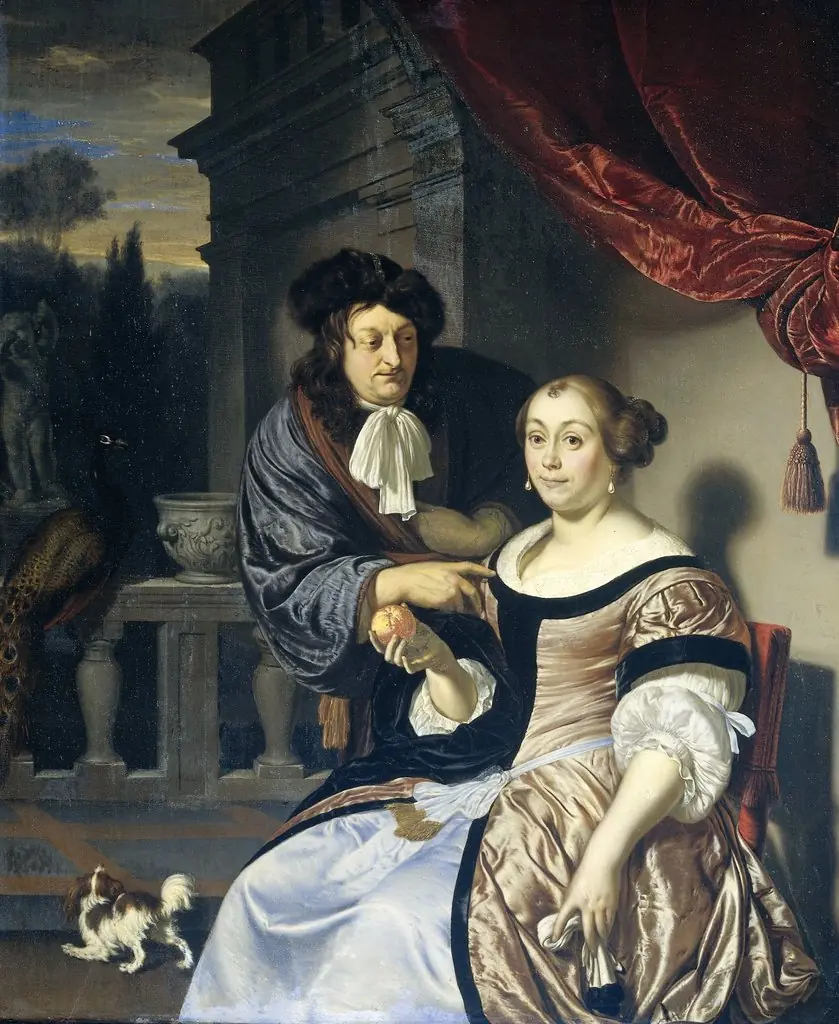
Vertumnus and Pomona is a 1705 oil painting by Dutch artist Gerard Hoet, housed at the State Hermitage Museum. The work depicts a scene from Roman mythology featuring the titular characters.
Subject & Meaning
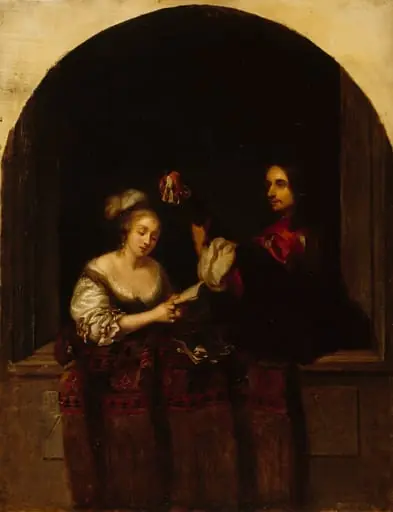
The painting illustrates a moment from Ovid's Metamorphoses, where Vertumnus, disguised as an old man (here, in a cloak and head covering), attempts to woo Pomona. Pomona, seated and dressed in a flowing, intricately detailed gown, looks to her right, seemingly unaware of Vertumnus pointing at her from behind, his basket of colorful fruit a symbol of his divine abundance and courtship offering.
Technique & Style
Hoet employs chiaroscuro to create depth, with pronounced light and shadow accentuating the textures of Pomona's gown, Vertumnus's cloak, and the varied, colorful fruit. The attention to detail in fabrics and the subtle sheen on the cloak reflect Hoet's meticulous rendering of materiality.
History & Provenance
Created in 1705, the painting is part of the collection at the State Hermitage Museum, though specific details of its acquisition or earlier ownership are not provided in the available information.
Context
Painted during the Dutch Golden Age's later period, Vertumnus and Pomona reflects the ongoing European fascination with classical mythology as subject matter. Hoet's work, while less renowned than some contemporaries, contributes to the era's rich output of mythological themes in art.
Legacy
While not among the most celebrated works of the Dutch Golden Age, Vertumnus and Pomona remains a notable example of 18th-century Dutch engagement with classical themes, appreciated for its technical skill and thematic interpretation.
Artist & collection


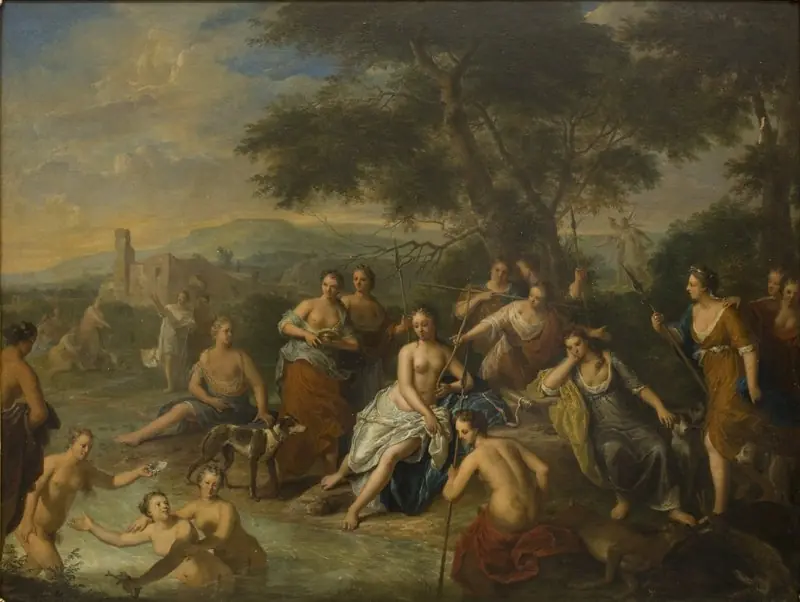 Diana and her Nymphs
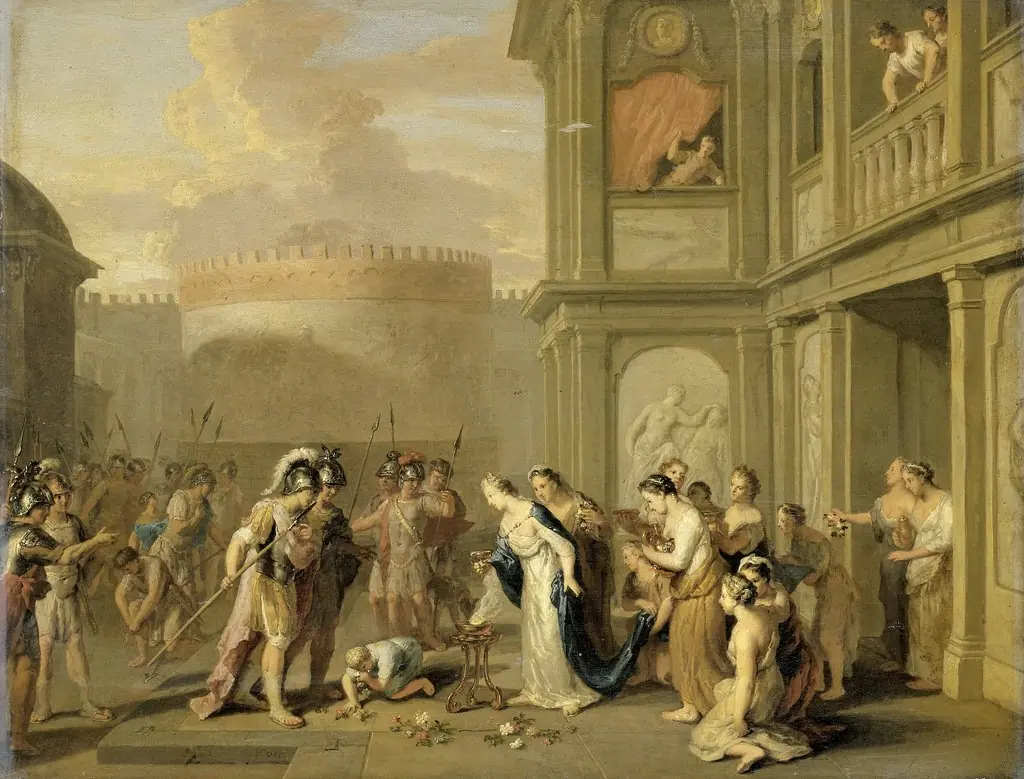 Queen Cleophis Offers Alexander the Great Wine after Conquering Massaga
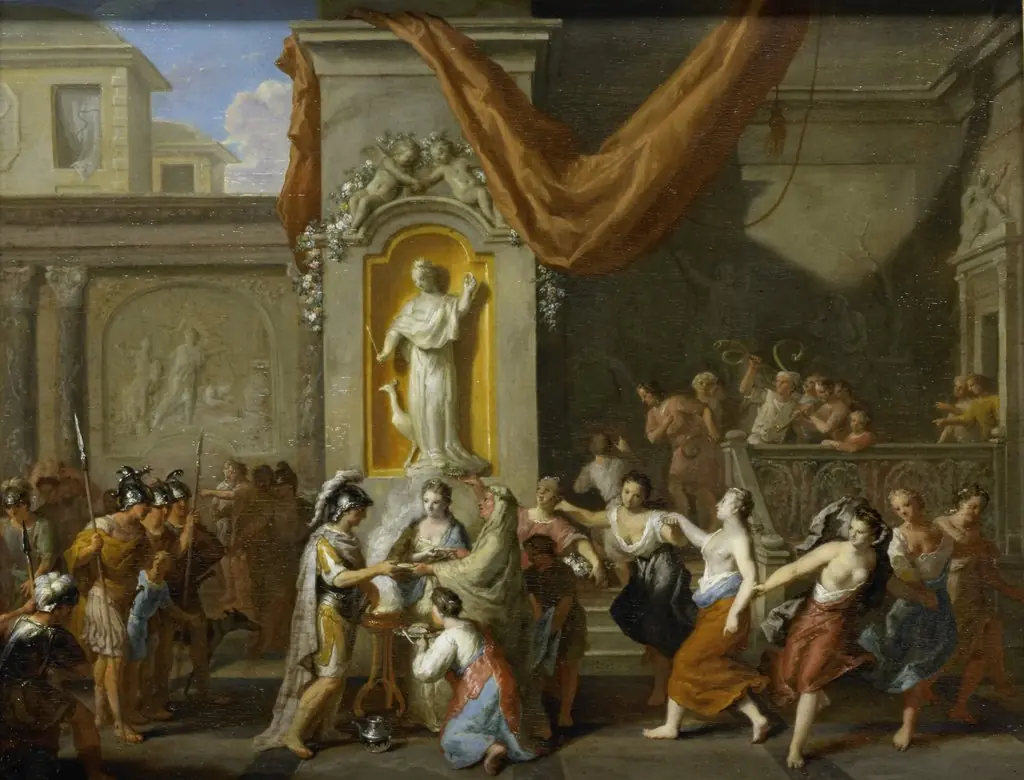 Marriage of Alexander the Great, King of Macedonia, with Roxana of Bacteriane
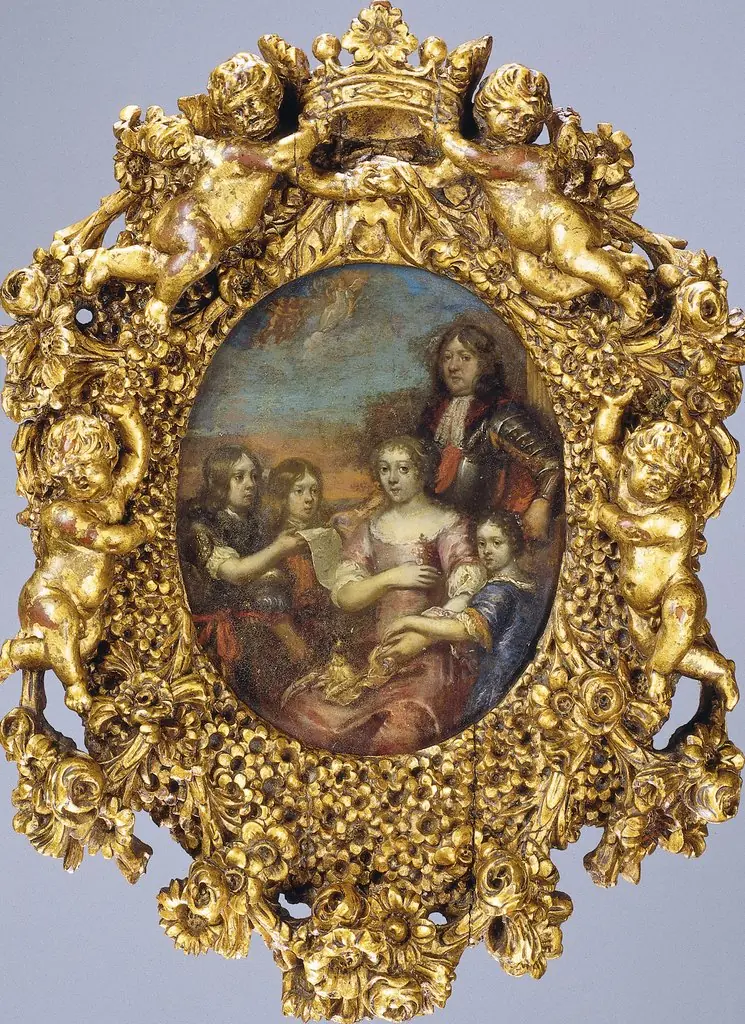 Family Portrait of Willem Hadriaan of Nassau, Lord of Odijk, with his Wife and Children
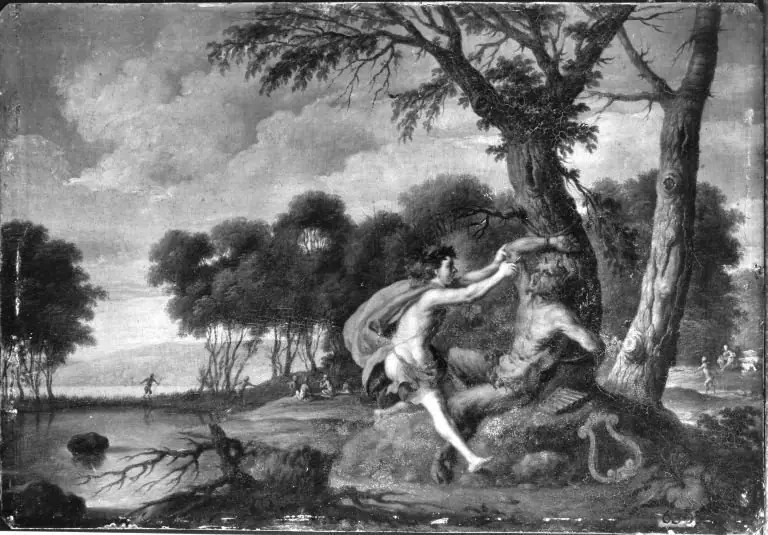 Schindung des Marsyas (?)
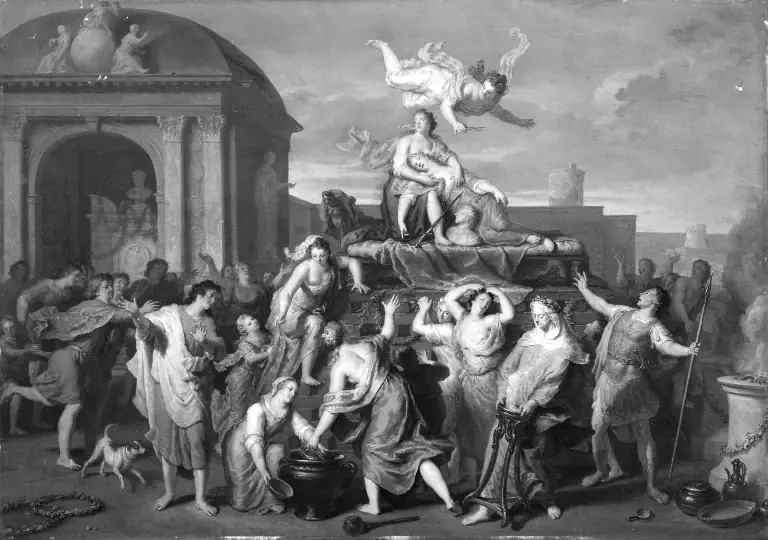 Death of Dido
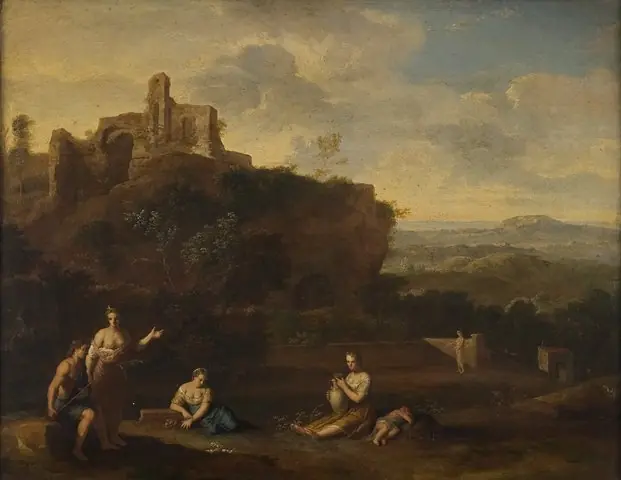 Idyllic Landscape with Fortress
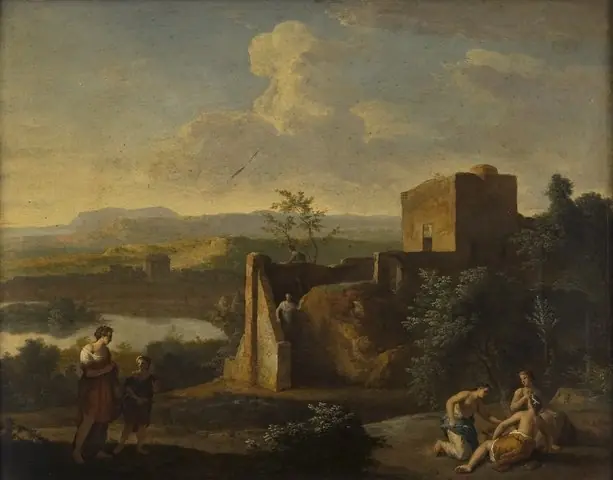 Idyllic Landscape with Watch-tower