Artwork
Death of Dido
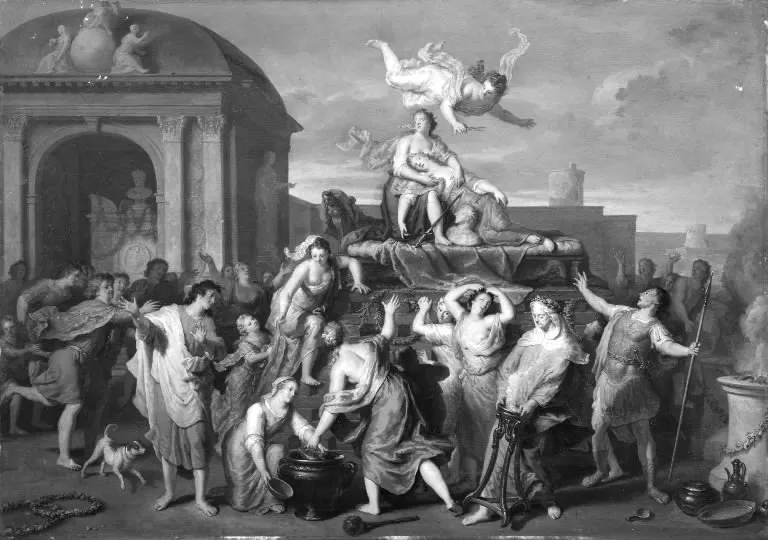
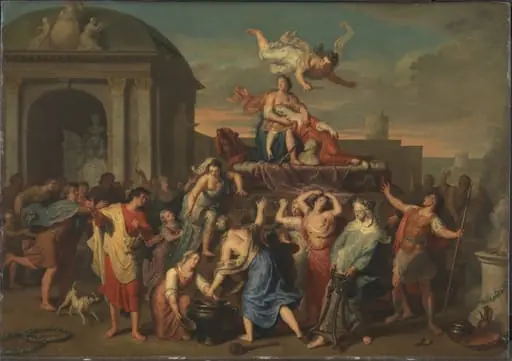
Death of Dido is an oil painting by the Dutch Golden Age artist Gerard Hoet. It dates from 1700 and is held in the collection of the Statens Museum for Kunst.
About this work
Overview
Gerard Hoet’s oil on canvas, executed around 1700, portrays a pivotal moment from the legend of Dido. The composition centers on a massive sarcophagus surrounded by a tumultuous crowd, while a winged presence hovers above the seated woman. The work is part of the collection of Denmark’s Statens Museum for Kunst.
Subject & Meaning
The figure perched atop the stone is identified as Dido, the tragic queen of Carthage, whose suicide marks the climax of her mythic narrative. The upward gaze and the ethereal winged figure suggest divine or emotional intervention, emphasizing the sorrow and drama surrounding her final act.
Technique & Style
Hoet employs a Baroque sensibility, using strong chiaroscuro to heighten the contrast between the illuminated sarcophagus and the darker surrounding figures. The rendering of drapery and the dynamic arrangement of bodies convey movement, while the architectural backdrop with columns and statues adds depth and a sense of classical grandeur.
History & Provenance
Created at the turn of the 18th century, the painting entered the Statens Museum for Kunst’s holdings, where it remains on display. Its acquisition reflects the museum’s focus on European narrative painting and the preservation of Dutch Baroque works.
Context
The depiction aligns with a broader 17th‑century interest in classical and mythological subjects, particularly the tragic heroines of antiquity. Hoet’s treatment of Dido echoes contemporary literary retellings, while the inclusion of a winged figure recalls allegorical conventions used to signify fate or divine will.
Artist & collection


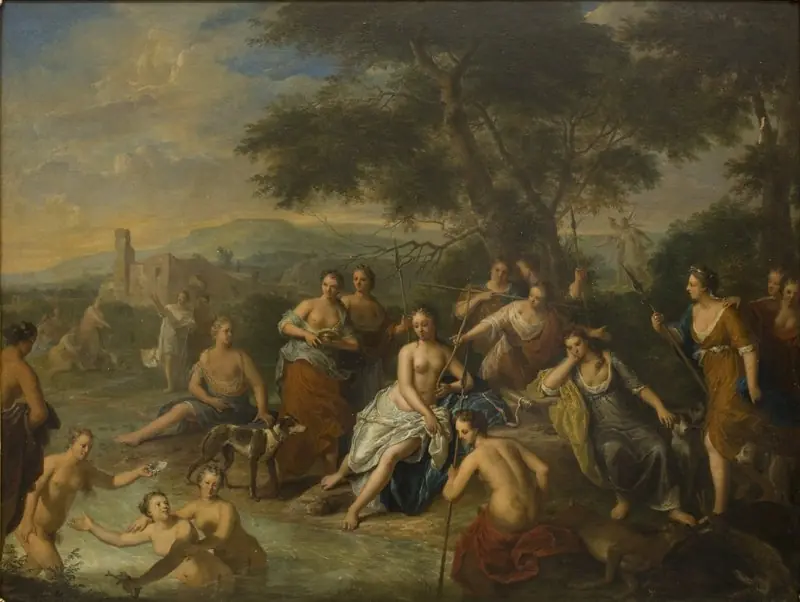 Diana and her Nymphs
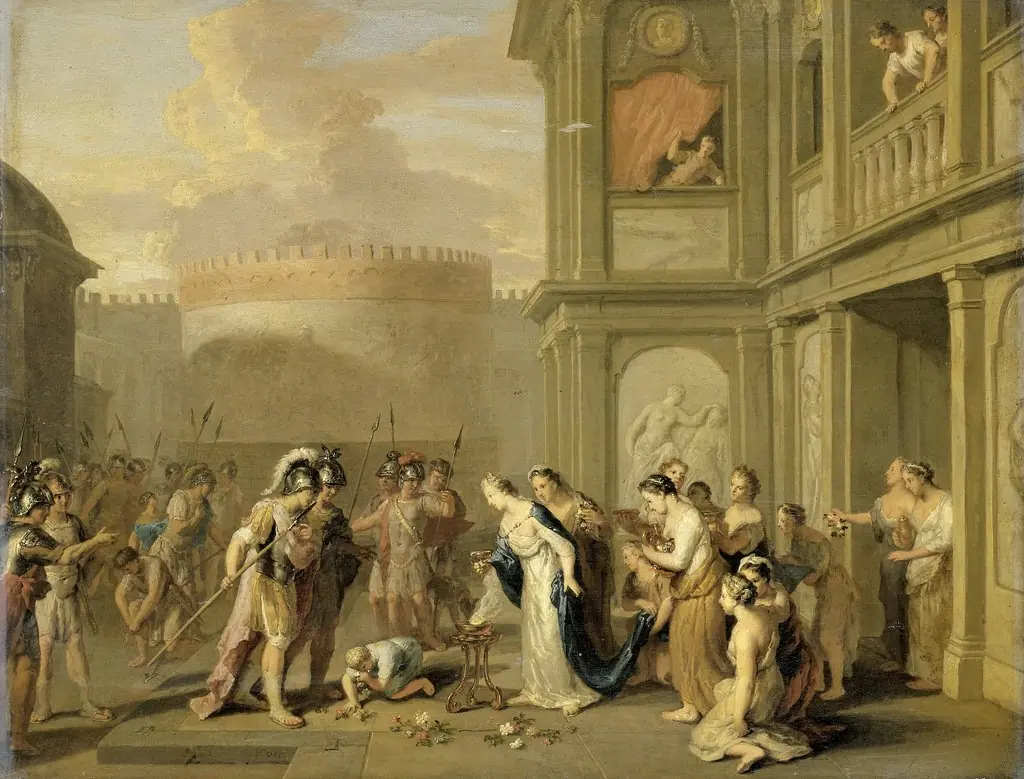 Queen Cleophis Offers Alexander the Great Wine after Conquering Massaga
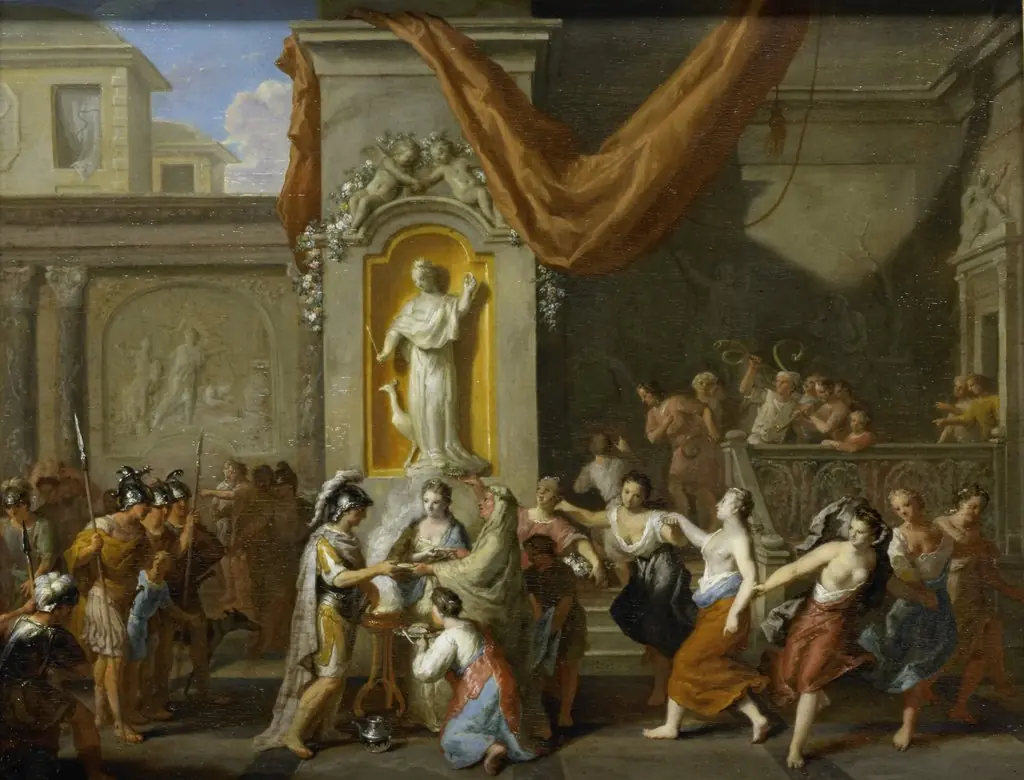 Marriage of Alexander the Great, King of Macedonia, with Roxana of Bacteriane
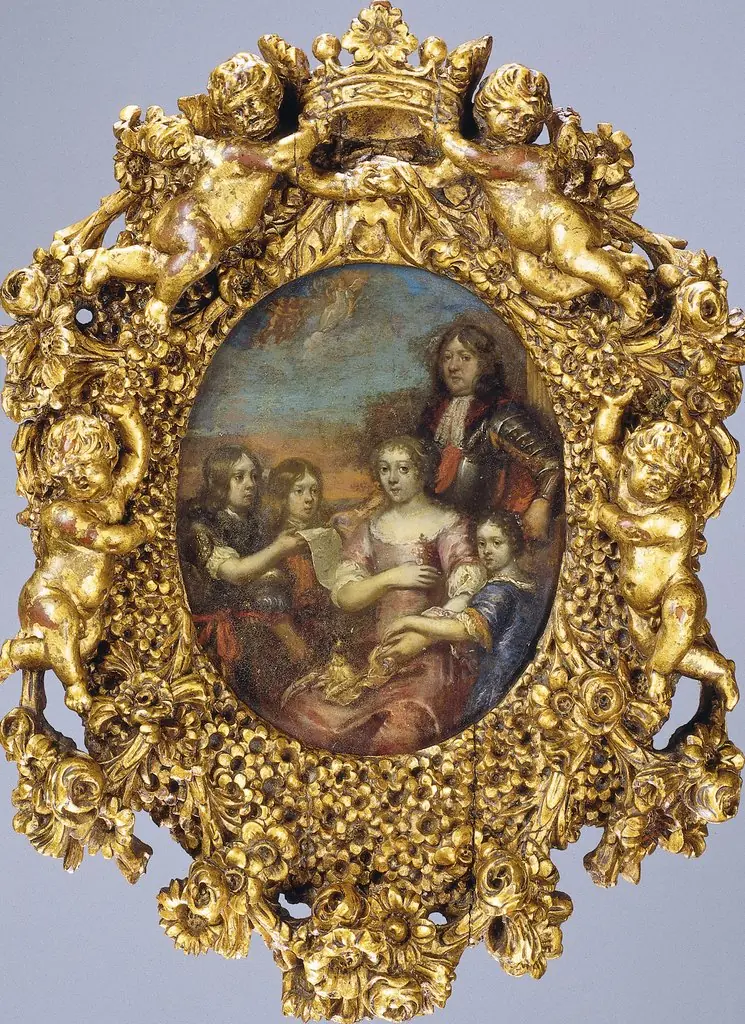 Family Portrait of Willem Hadriaan of Nassau, Lord of Odijk, with his Wife and Children
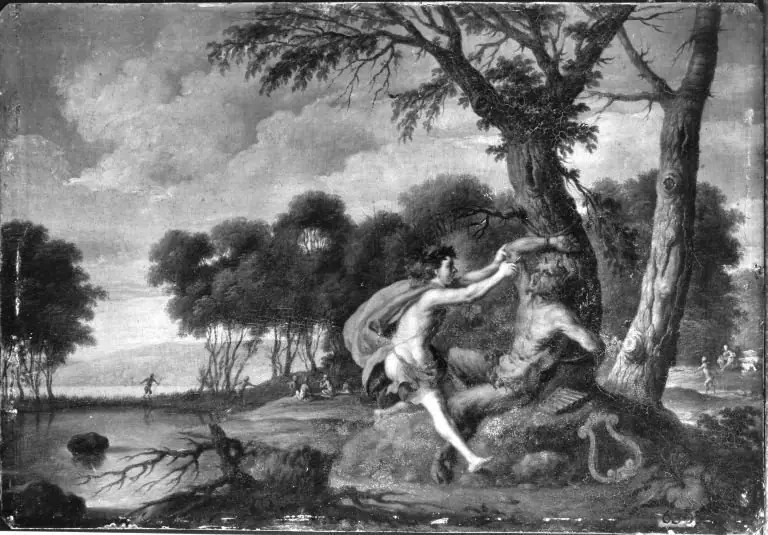 Schindung des Marsyas (?)
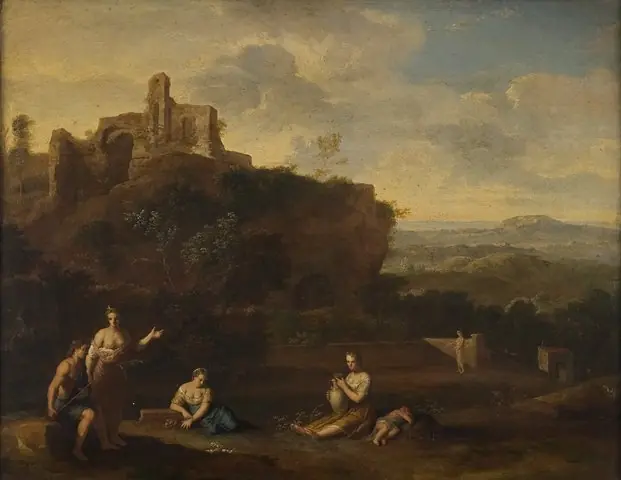 Idyllic Landscape with Fortress
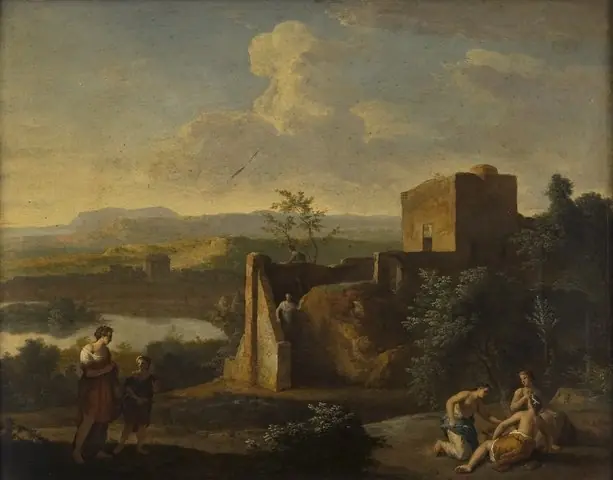 Idyllic Landscape with Watch-tower
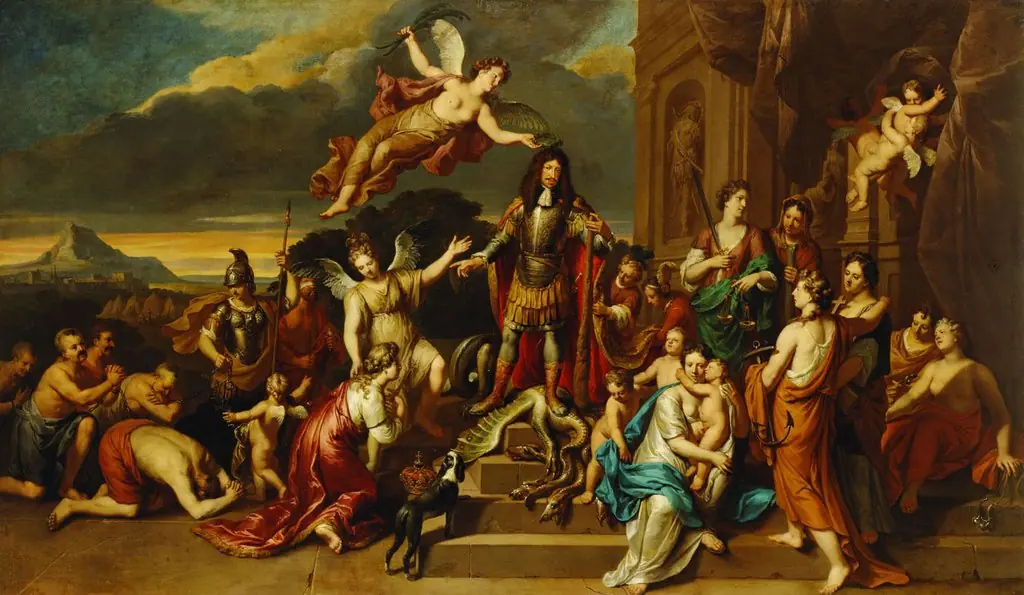 Allegorie auf Kaiser Leopold I. (1640-1705)
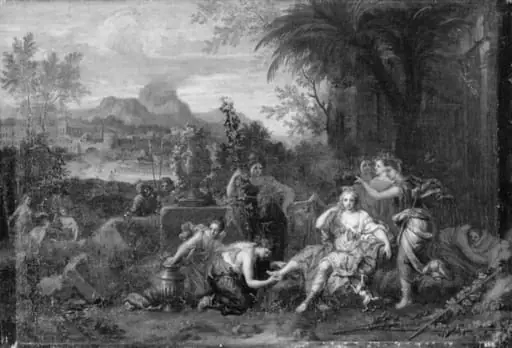 Landscape with Messalina's Wedding
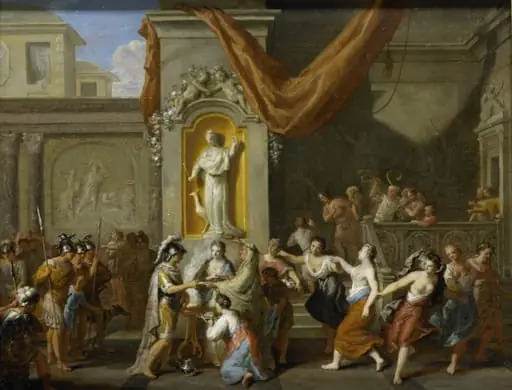 The Marriage of Alexander the Great and Roxane of Bactria
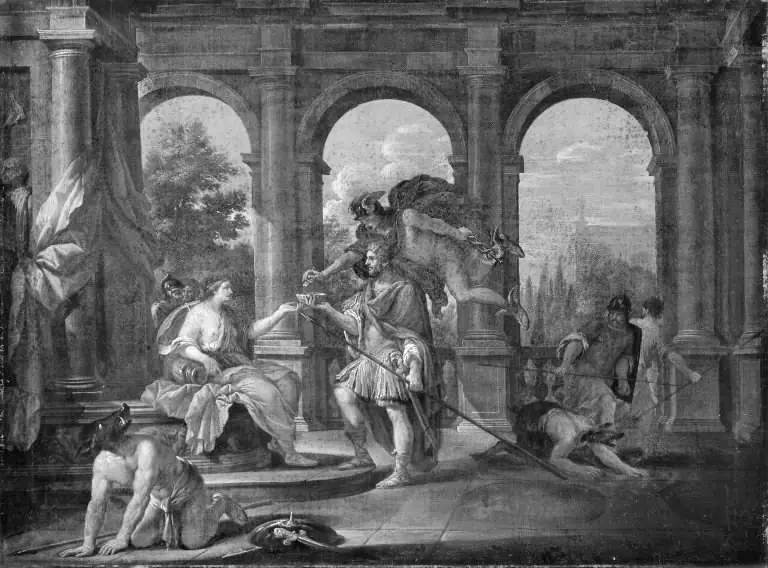 Circe and Ulysses
 Nymphs Surprised by Satyrs
 Landscape with Messalina's Wedding
 Enthaltsamkeit des Scipio
 An Allegory
 Christ before Pilate
 Christ before Pilate
 David med Goliats sværd på skulderen. Andre med hans hoved på en stage
 Death of Dido