Artwork
Mary receives her last communion from John the Evangelist
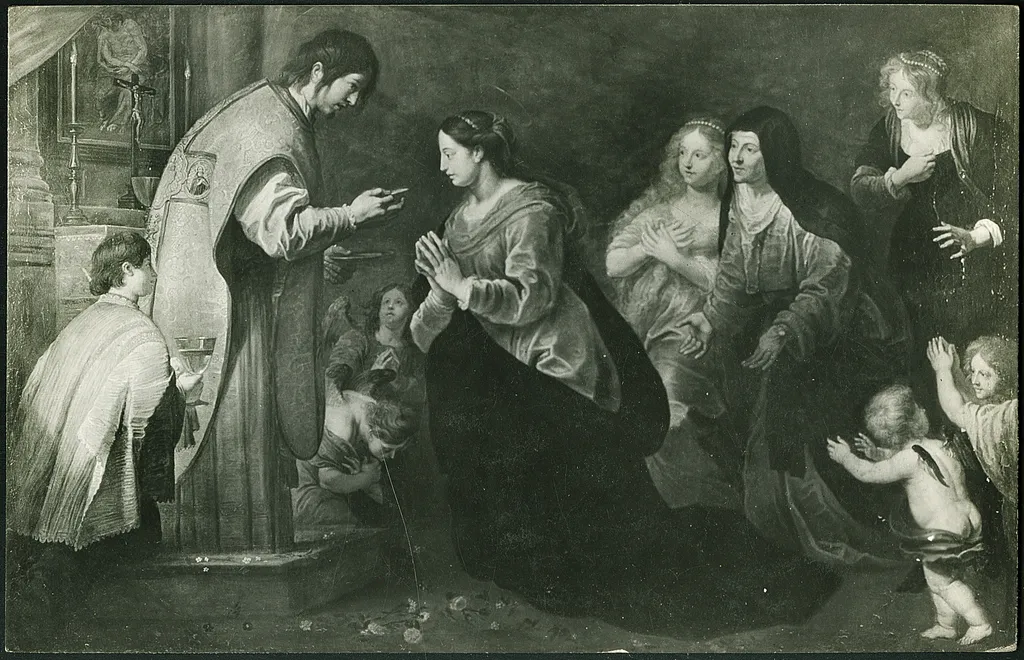
Mary receives her last communion from John the Evangelist is an oil painting by the Flemish Baroque painting artist Gerard Seghers. It dates from 1630 and is held in the collection of the Kunsthistorisches Museum.
About this work
Overview
Painted in 1630 by the Flemish artist Gerard Seghers, this oil on canvas depicts a quiet moment of spiritual transition. Seghers, who spent time in Italy and absorbed the dramatic lighting of Caravaggio’s followers, turned increasingly to religious themes later in his career. The work is part of the Flemish Baroque tradition and is now held in the Kunsthistorisches Museum in Vienna.
Subject & Meaning
John, as the sole apostle present at Mary’s death, is shown administering the Eucharist.
The scene illustrates the Virgin Mary receiving her final communion from Saint John the Evangelist, a moment drawn from apocryphal tradition rather than scripture. John, as the sole apostle present at Mary’s death, is shown administering the Eucharist. The intimate gathering around her—family, witnesses, and attendants—emphasizes the solemnity of her passing and the sacredness of the sacrament in her final hours.
Technique & Style
Seghers employs chiaroscuro to concentrate attention on the central figures, using sharp contrasts between light and deep shadow to model forms and guide the viewer’s eye. The figures are rendered with restrained gestures and naturalistic drapery, avoiding theatricality. The subdued palette and soft transitions between tones enhance the quiet reverence of the moment, reflecting a mature phase in his stylistic development.
History & Provenance
Created during Seghers’s later years in Antwerp, the painting entered the Habsburg collection before being transferred to the Kunsthistorisches Museum. Its presence in Vienna suggests it was acquired as part of imperial patronage or diplomatic exchange. No significant alterations or reworkings are recorded, and its condition remains consistent with its 17th-century origins.
Context
In early 17th-century Flanders, religious imagery was central to Counter-Reformation devotion. Scenes of the Virgin’s death, though not biblical, were popular in devotional art for their emotional resonance. Seghers’s approach aligns with regional trends favoring intimate, humanized sacred moments over grand spectacle, reflecting both theological priorities and evolving artistic sensibilities.
Legacy
While not widely reproduced, the painting exemplifies Seghers’s transition from Caravaggesque drama to contemplative religious narrative. It stands as a quiet testament to the Flemish Baroque’s capacity for understated spirituality. Its preservation in a major European collection ensures its continued study as an example of devotional painting in the post-Tridentine era.
Artist & collection
Artist
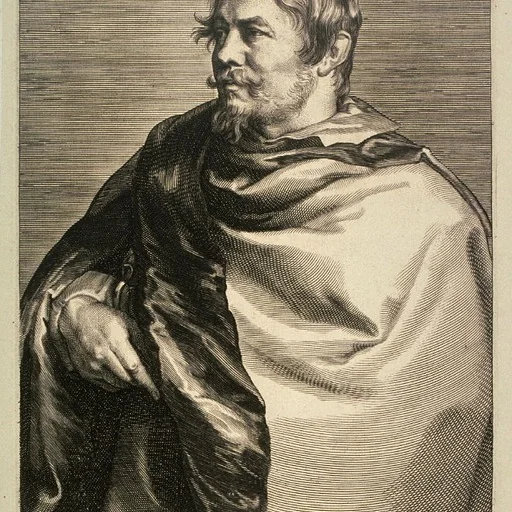
Gerard Seghers (c. 17 March 1591 – 18 March 1651) was a Flemish painter, art collector, and art dealer. After a period of study and residence in Italy, he returned to Flanders where he became one of the leading…

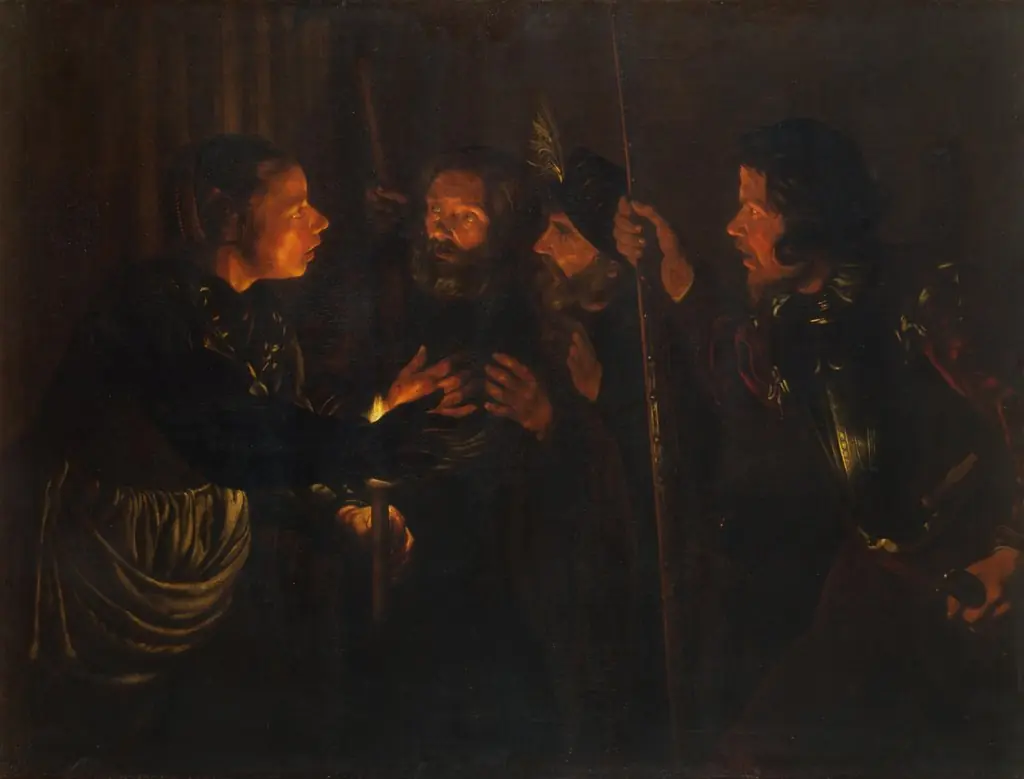
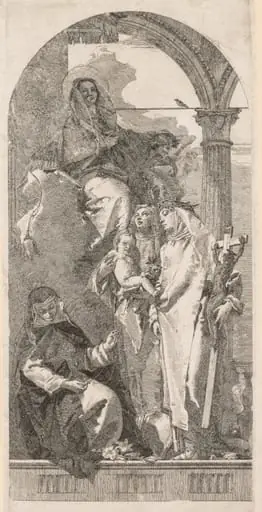 Madonna with Saints Agnes, Catherine and Rosa
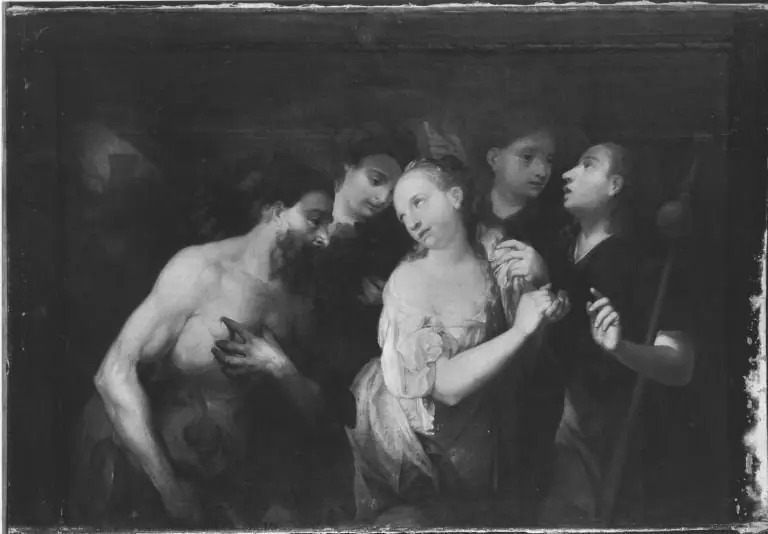 Lot und seine Töchter (Kopie nach)
 Vermählung der hl. Katharina (Kopie nach)
 Stigmatisation der hl. Theresa
 Virgin with child and saints Maria Magdalen, Cecilia, Dorothea, Catharina and Augustine
 Madonna with Child, Angels and Saints
 Milagro de San Francisco de Paula
 St Cajetan offered to the Virgin by his mother
 Anbetung der Könige (Kopie nach)
 Hl. Cajetan
 Vision des hl. Antonius von Padua
 San Cayetano ante la Sagrada Familia