Artwork
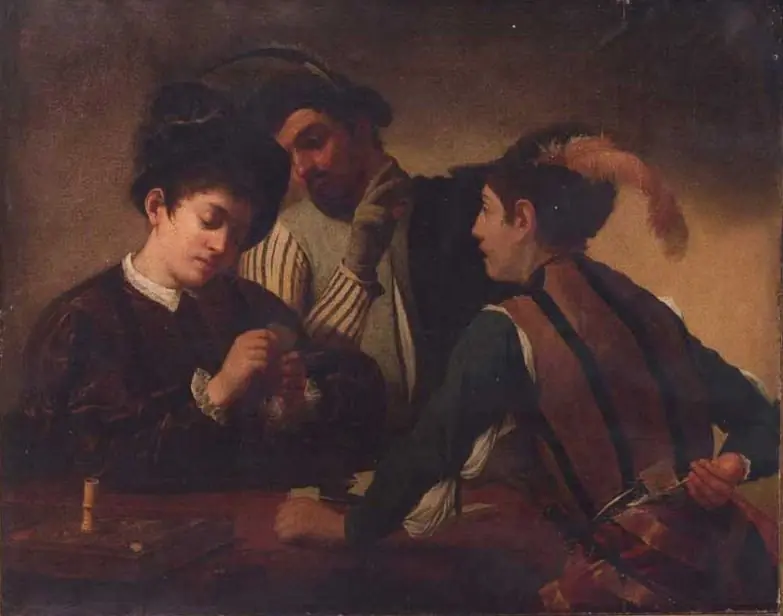
The Cardsharps
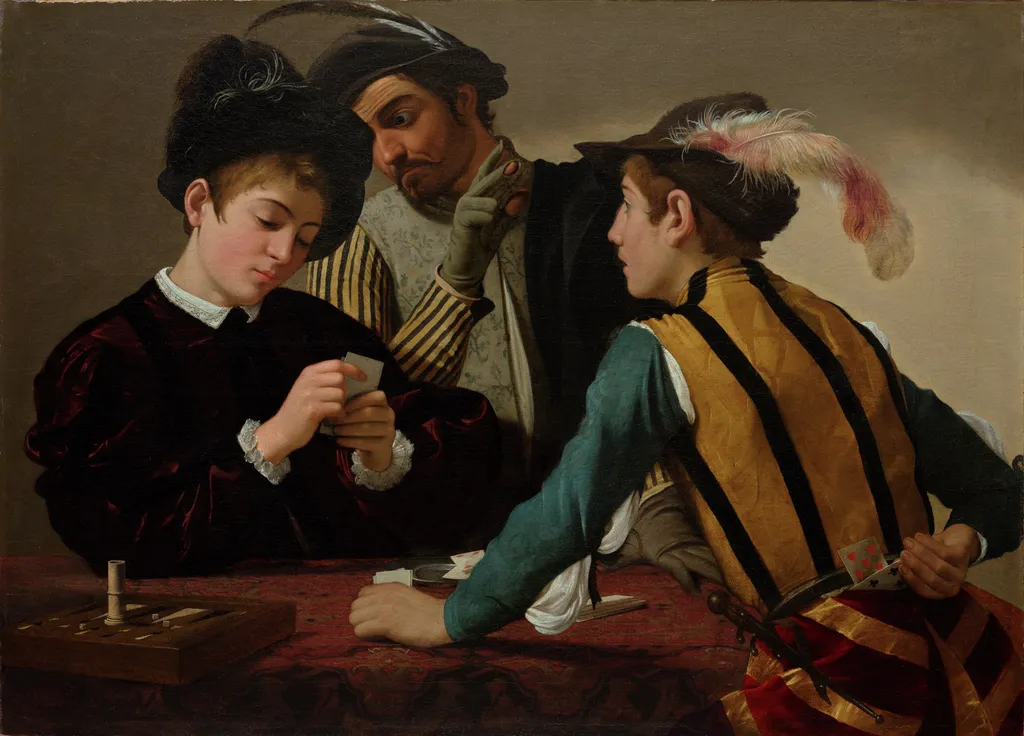
The Cardsharps is an oil painting by the Baroque artist Caravaggio. It dates from 1596 and is held in the collection of the Kimbell Art Museum.
About this work
The Cardsharps is a painting by Caravaggio.
It's an oil paint work from around 1590.
The painting is now held at the Kimbell Art Museum, which acquired it in 1987.
There might be other versions, but this one is widely accepted as the original.
Caravaggio may have made more than one version of this scene.
You can learn more about the artist's style by looking up Caravaggio.
Overview
While other versions of the subject may exist, this composition is widely regarded as the original and most fully realized.
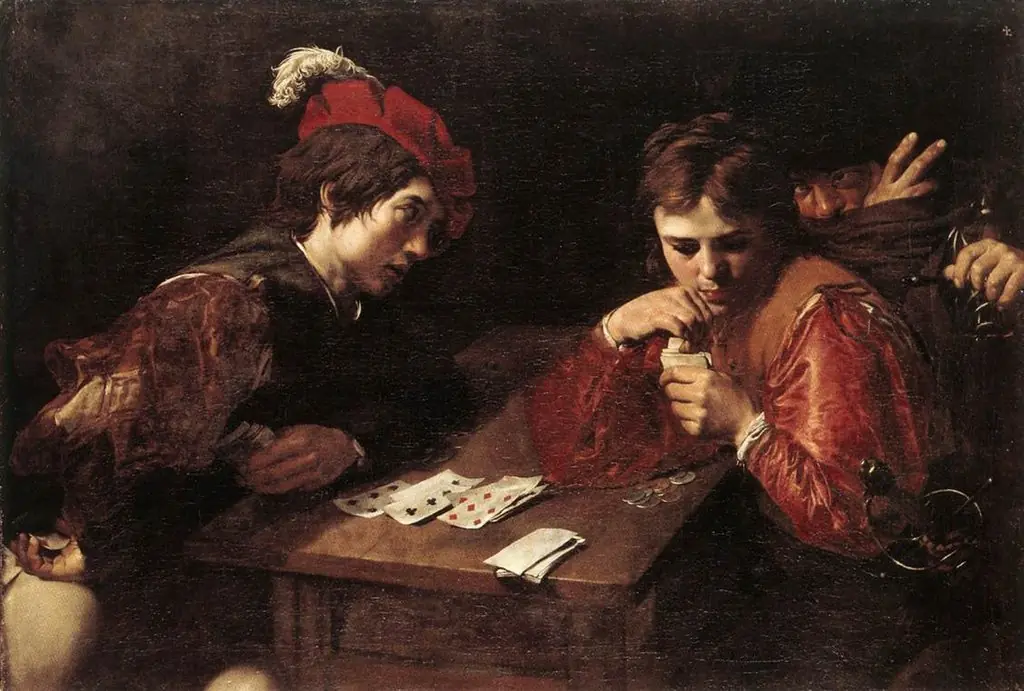
Painted circa 1594, The Cardsharps is an oil-on-canvas work by the Italian artist Caravaggio. It depicts a moment of deception among three figures engaged in a card game. The painting is currently held by the Kimbell Art Museum in Fort Worth, having been acquired there in 1987. While other versions of the subject may exist, this composition is widely regarded as the original and most fully realized.
Subject & Meaning
The scene portrays a young, naive player being cheated by two accomplices: one signals the hand of the victim, while the other hides extra cards in his sleeve. The tension lies in the quiet collusion, not overt violence. Caravaggio captures the psychological undercurrents of trust and betrayal, transforming a common street scene into a study of human cunning and vulnerability.
Technique & Style
Caravaggio employs stark contrasts of light and shadow to isolate the figures and heighten the drama. His brushwork is precise yet immediate, rendering textures like fabric, skin, and card edges with tangible realism. The composition is tightly cropped, drawing the viewer into the intimate space of the game. This approach reflects his departure from idealized Mannerist conventions toward direct observation.
History & Provenance
The painting remained in private collections for centuries before entering the Kimbell Art Museum’s holdings in 1987. Its attribution to Caravaggio was confirmed through technical analysis and stylistic comparison with his early works. Prior to this, it had been misattributed to lesser-known artists. The museum’s acquisition solidified its status as a key example of Caravaggio’s formative period in Rome.
Context
Created during Caravaggio’s early years in Rome, the painting reflects the city’s vibrant underworld culture, where card games and street scams were common. It aligns with his interest in portraying ordinary people with psychological depth, a radical shift from the religious and mythological subjects dominating contemporary art. This work helped establish his reputation among patrons seeking realism over idealism.
Legacy
The Cardsharps influenced generations of artists drawn to Caravaggio’s dramatic realism and emotional immediacy. Its depiction of moral ambiguity and everyday crime became a template for genre painting in the Baroque era. Though not widely known to the public, it remains a critical reference in studies of Caravaggio’s development and the evolution of naturalism in Western art.
Own this work as a print
Artist & collection
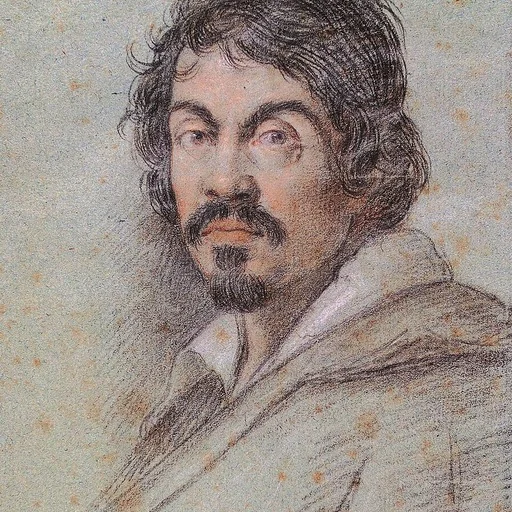
Artist
Michelangelo Merisi da Caravaggio (also Michele Angelo Merigi or Amerighi da Caravaggio; 29 September 1571 – 18 July 1610), known mononymously as Caravaggio, was an Italian painter active in Rome for most of his artistic life.