Artwork
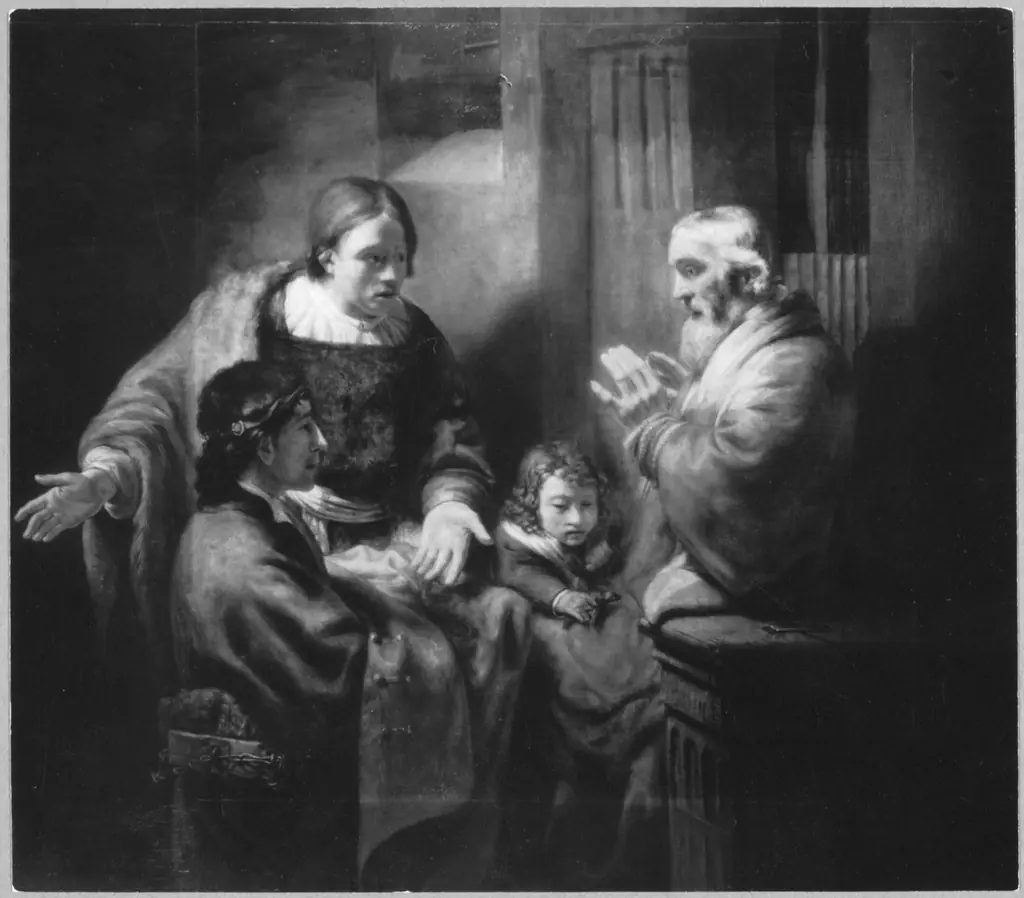
The Infant Samuel brought by Hanna to Eli
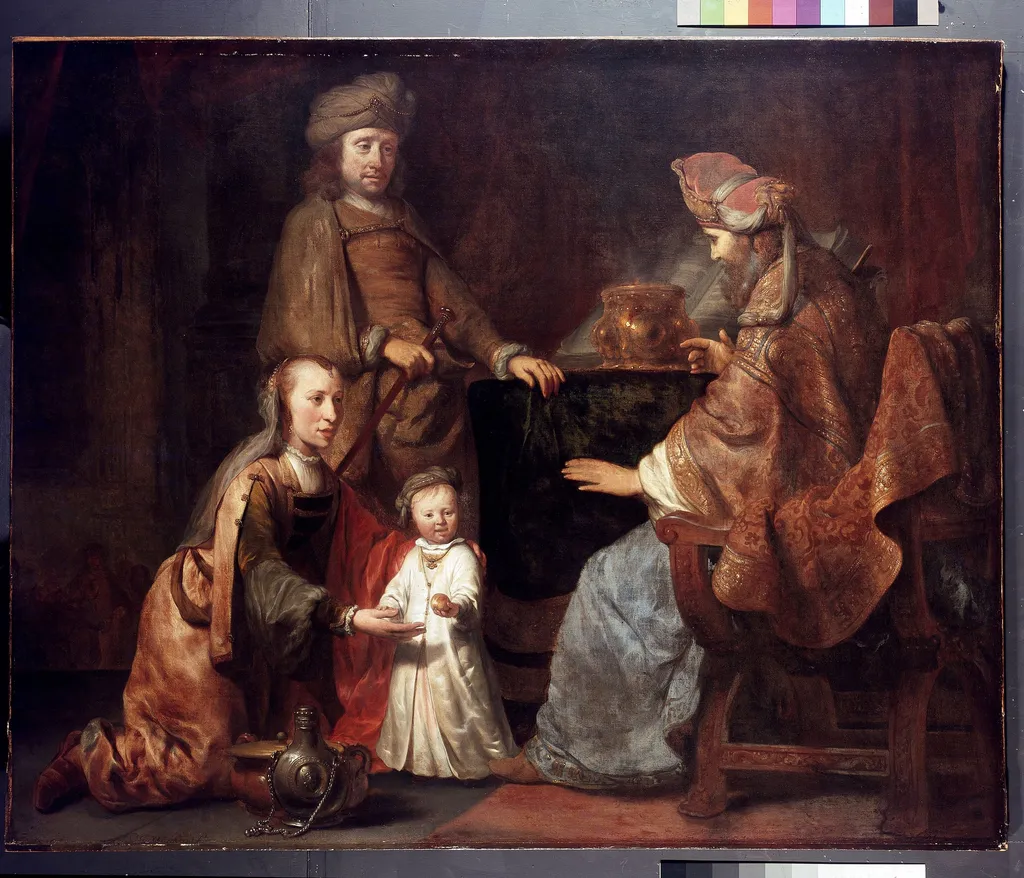
The Infant Samuel brought by Hanna to Eli is an oil painting by the Dutch Golden Age artist Gerbrand van den Eeckhout. It dates from 1660 and is held in the collection of the Ashmolean Museum.
About this work
Overview
Gerbrand van den Eeckhout, a pupil of Rembrandt active during the Dutch Golden Age, completed an oil painting in 1660 that portrays the biblical episode in which Hannah brings her infant son Samuel before the priest Eli. The work is part of the Ashmolean Museum’s collection and exemplifies the artist’s focus on religious subjects.
Subject & Meaning
The composition illustrates the moment described in the First Book of Samuel, when Hannah, having prayed for a child, presents the newborn Samuel to Eli as a dedication to God. Hannah is shown kneeling, gently holding the child’s hand, while Eli receives the boy with a calm, attentive gaze, emphasizing themes of devotion and covenant.
Technique & Style
Van den Eeckhout employs a pronounced chiaroscuro, using deep shadows against a limited light source to model the figures and suggest three‑dimensional space. The interior is rendered with a high ceiling, a heavy curtain, and modest objects—a book, a candle—creating a restrained yet atmospheric setting typical of mid‑17th‑century Dutch religious painting.
History & Provenance
Created in 1660, the painting later entered the collection of the Ashmolean Museum, where it remains on display. Van den Eeckhout, known also for his etchings and his role as an art adviser and collector, produced this work during a period when he was establishing his reputation independent of his master, Rembrandt.
Artist & collection
Artist
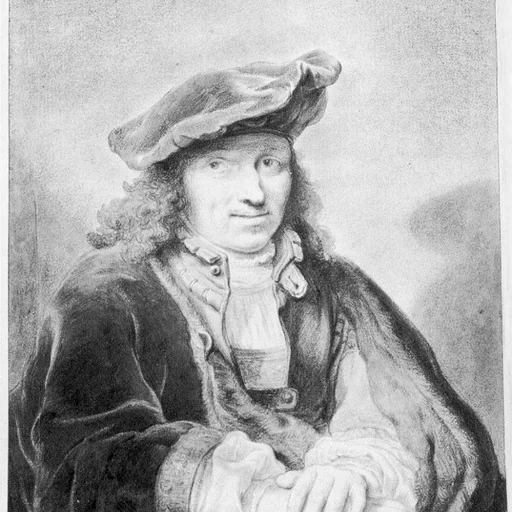
Gerbrand van den Eeckhout (19 August 1621 – 29 September 1674) was a Dutch Golden Age painter and a favourite student of Rembrandt. He was also an etcher, an amateur poet, a collector and an adviser on art.

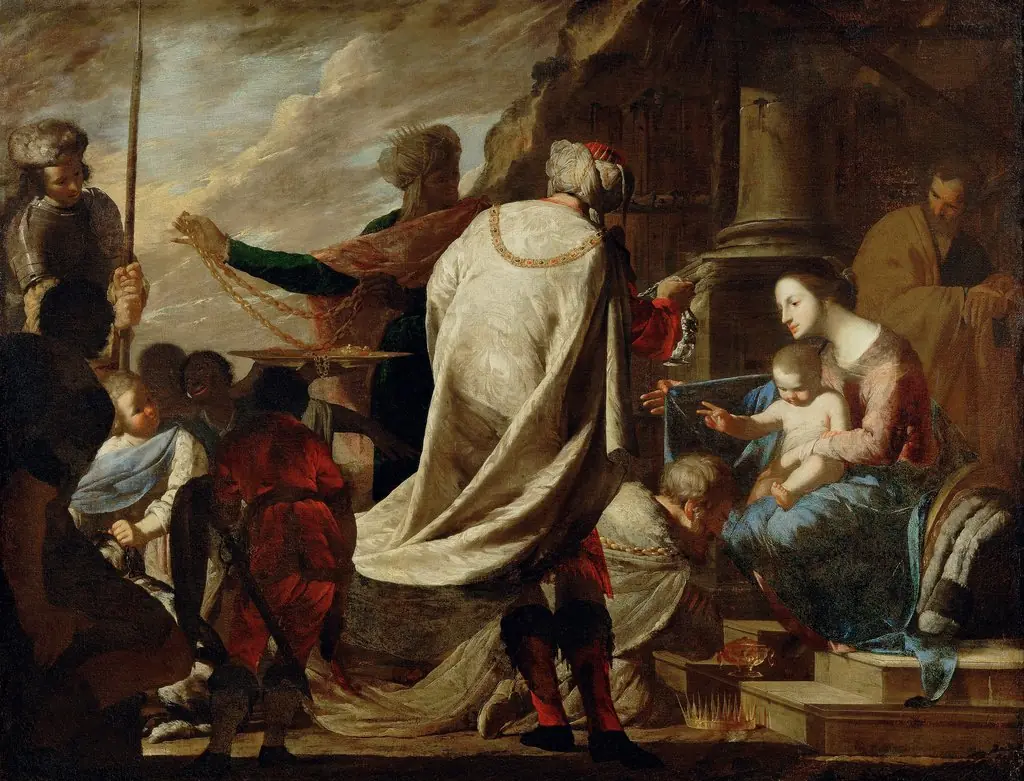 Adoration of the Magi
 Anbetung der Könige
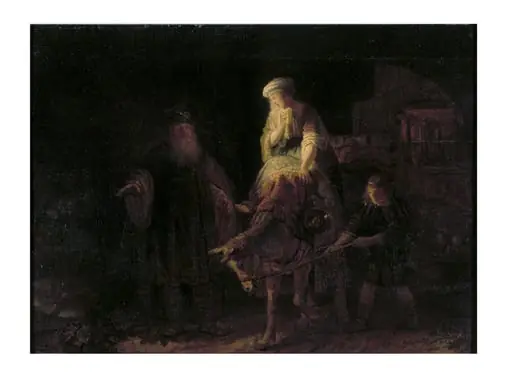 Abraham dismissing Hagar and Ishmael
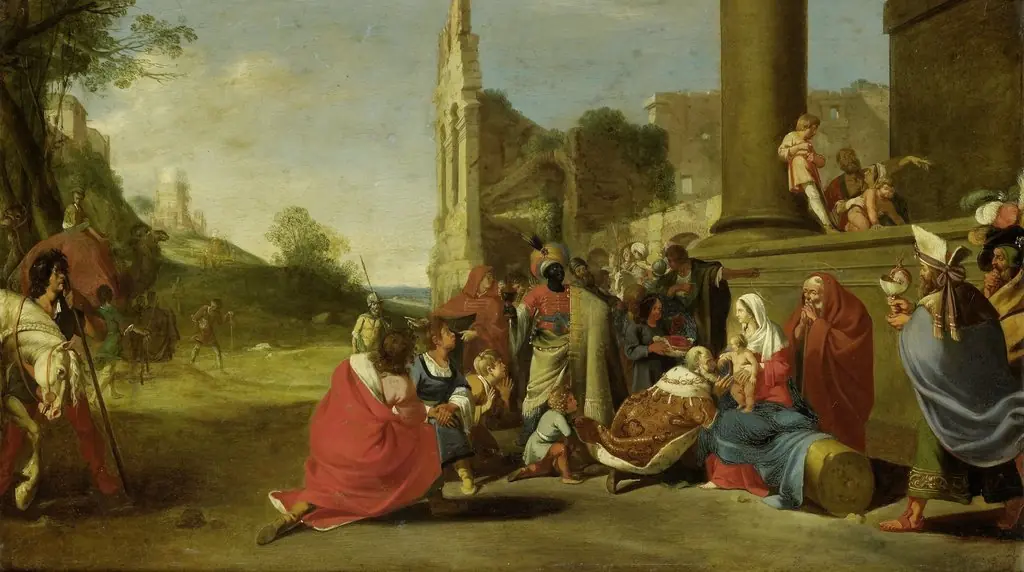 The adoration of the magi
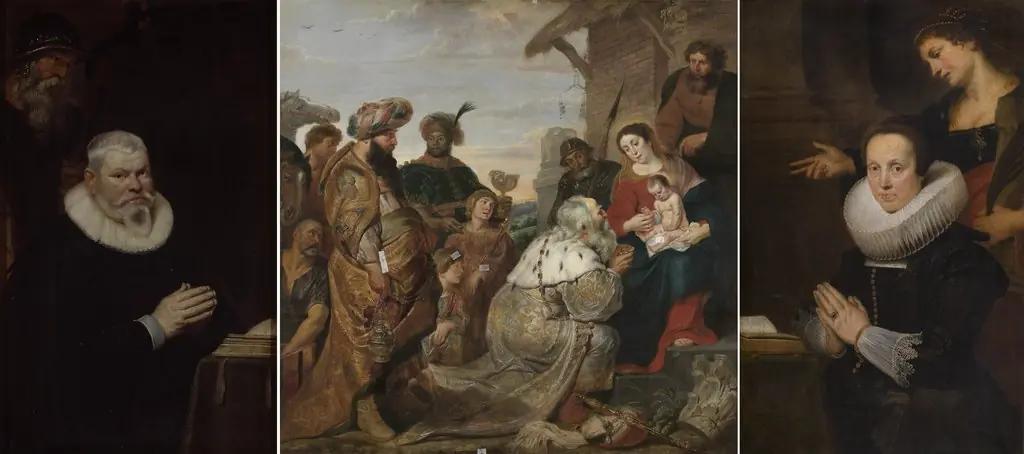 Epitaph of Willem van Meerbeeck and His Wife Barbara Kegeleers
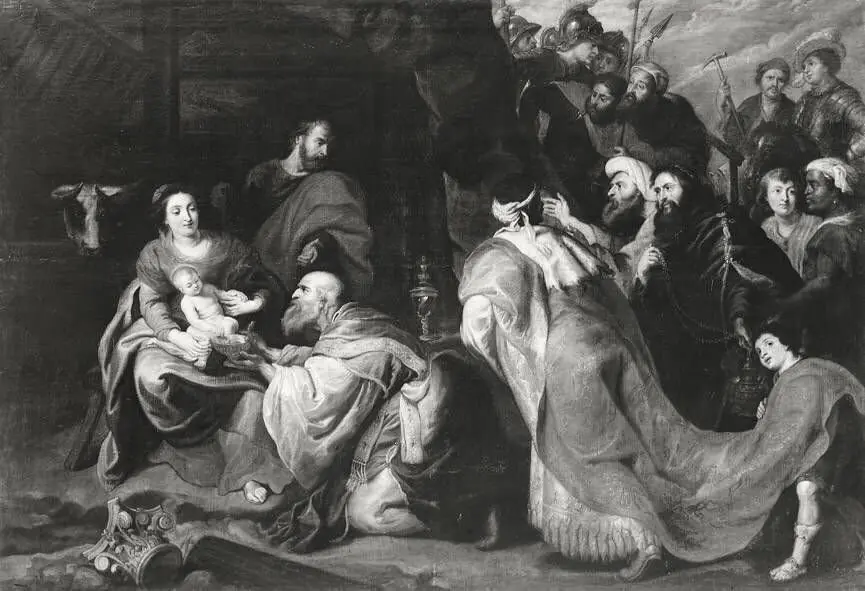 Anbetung der Könige (Kopie nach)
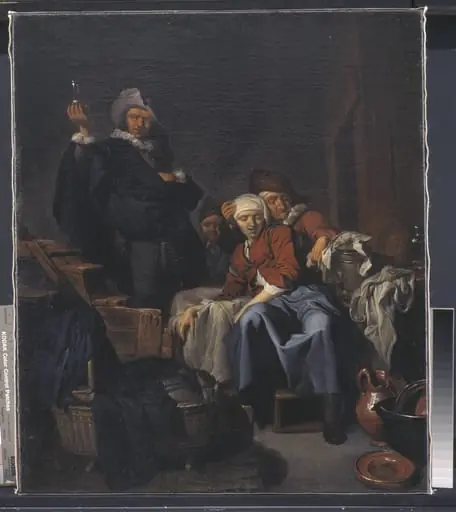 A Sick Peasant Woman
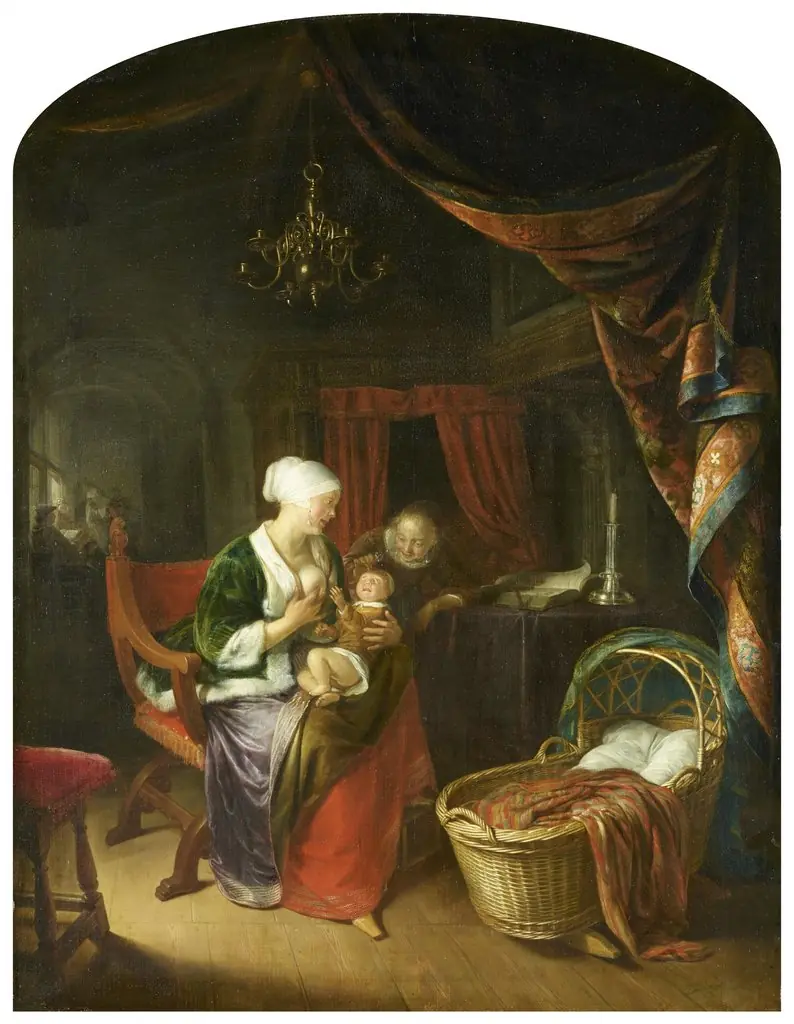 The Young Mother
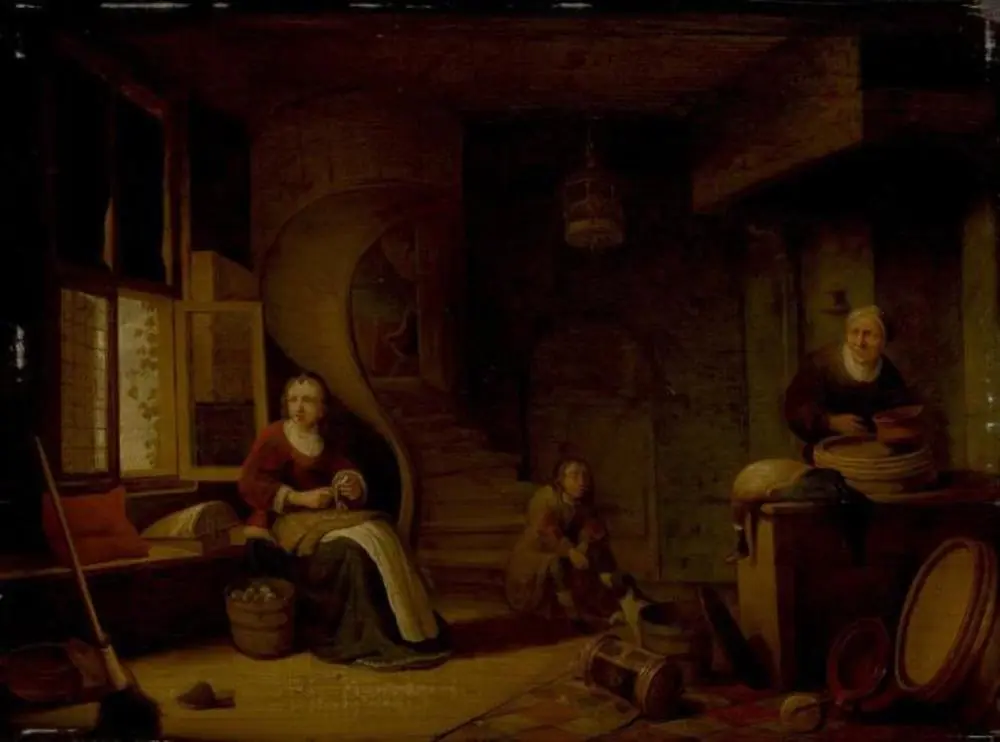 Genre Scene in a Kitchen
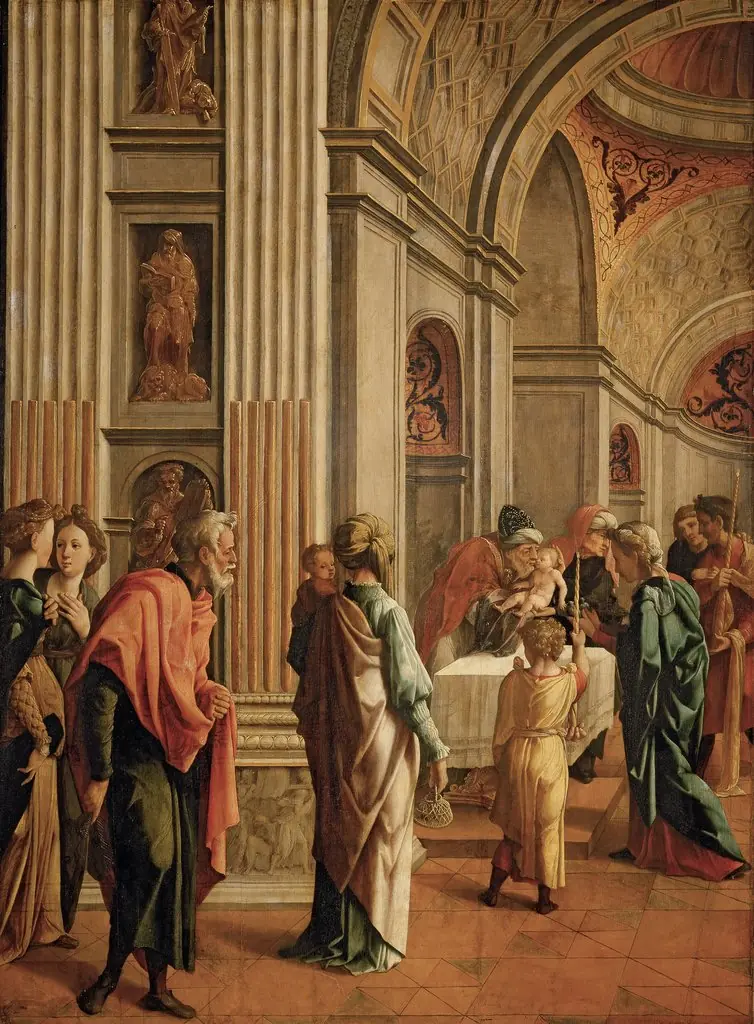 Presentation of Jesus in the Temple
 Joseph's Bloody Coat
 Hannah Giving Her Son Samuel to the Priest