Artwork
Sir Francis Bacon
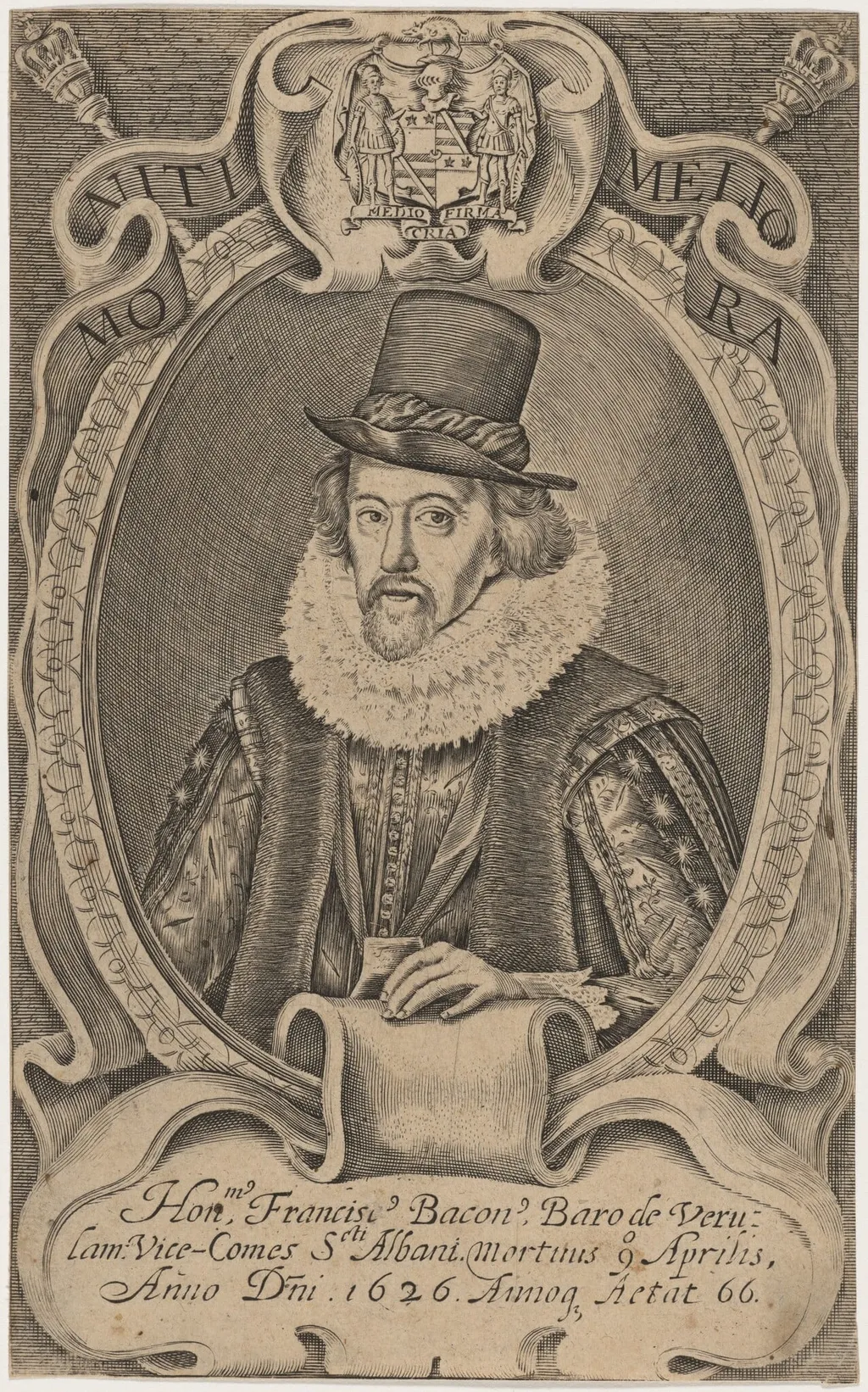
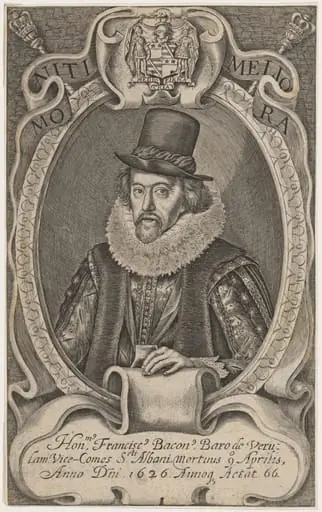
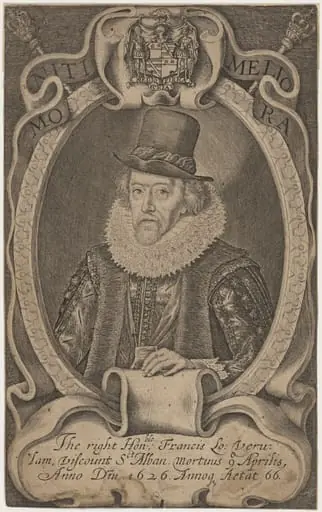
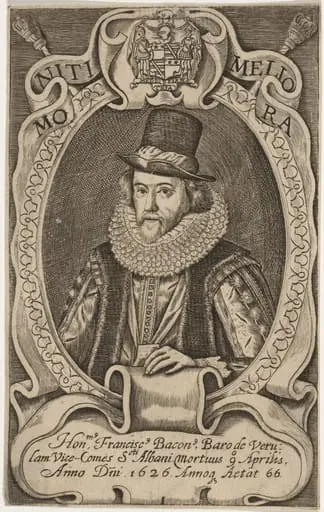
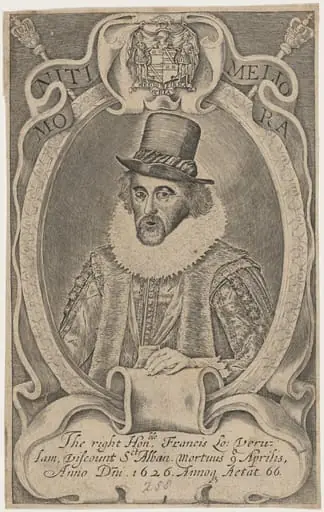
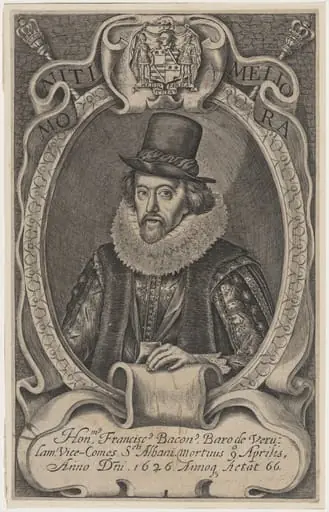
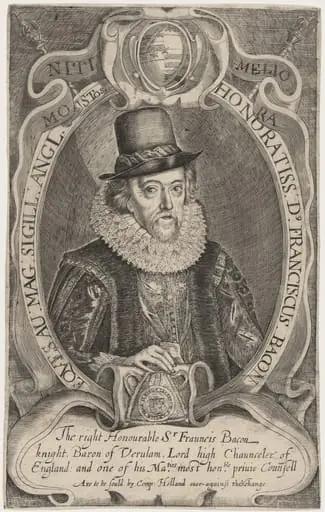
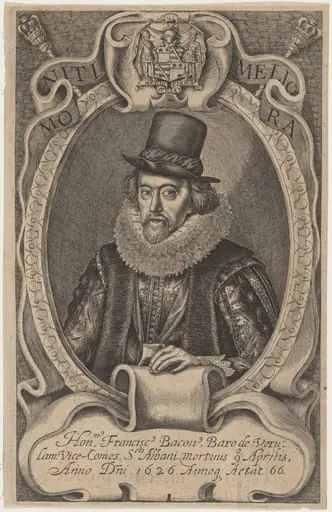
Sir Francis Bacon is an ink print by the Renaissance artist Simon van de Passe. It dates from 1621 and is held in the collection of the National Gallery of Art.
About this work
Overview
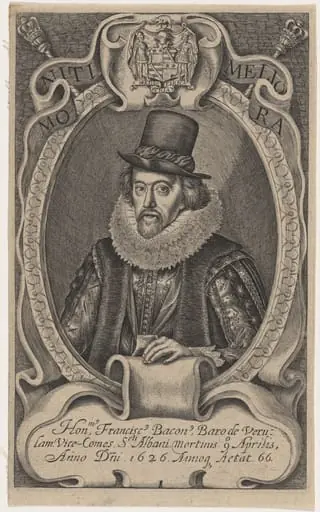
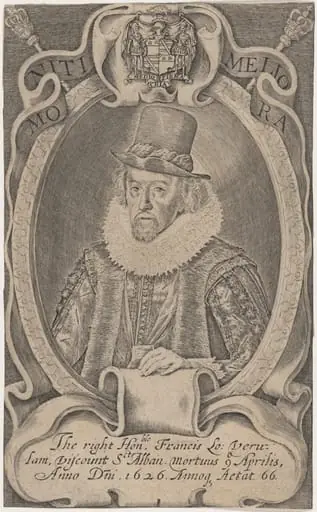
An engraving from 1621 by Simon van de Passe depicts Sir Francis Bacon, the English philosopher and statesman. Rendered in fine linear detail, the portrait presents Bacon in formal attire against a dark, unadorned background. The medium emphasizes precision, with delicate hatching and crosshatching defining texture and form, characteristic of early 17th-century printmaking traditions.
Subject & Meaning
Bacon is portrayed as a man of intellect and authority, dressed in a dark robe with elaborate sleeve embroidery and a high ruffled collar. He holds a sheet of paper in his right hand, suggesting scholarly activity or official correspondence. His direct gaze and composed expression convey seriousness and gravitas, aligning with his public role as a thinker and advisor to the crown.
Technique & Style
The fabric of Bacon’s robe is rendered with meticulous crosshatching, while the ruffles and paper are defined by delicate, controlled strokes.
Van de Passe employed fine-line engraving to capture subtle variations in light and texture. The fabric of Bacon’s robe is rendered with meticulous crosshatching, while the ruffles and paper are defined by delicate, controlled strokes. The dark background isolates the figure, enhancing three-dimensionality without decorative distraction, reflecting the restrained elegance of Northern European portrait prints of the period.
History & Provenance
Created in 1621, the engraving was likely produced to circulate Bacon’s likeness among European intellectuals and patrons. Van de Passe, a Dutch artist known for portrait prints, often worked from life or existing drawings. This image may have served as a standard representation of Bacon during his lifetime or shortly after, contributing to his posthumous iconography.
Context
In early 17th-century England, engraved portraits of prominent figures were used to disseminate status and influence. Bacon, a key figure in the development of empirical philosophy, was a natural subject for such imagery. Van de Passe’s work reflects the transnational exchange of artistic practices between the Netherlands and England, where print culture played a vital role in shaping public perception of leaders and thinkers.
Legacy
The engraving remains one of the most recognizable visual records of Bacon, frequently reproduced in later biographies and scholarly works. Its clarity and formal tone established a visual template for subsequent depictions of the philosopher. Though not the only portrait of Bacon, it endures as a primary reference for his appearance and the aesthetic norms of intellectual portraiture in the Jacobean era.
Artist & collection