Artwork
Équitation boutiquière
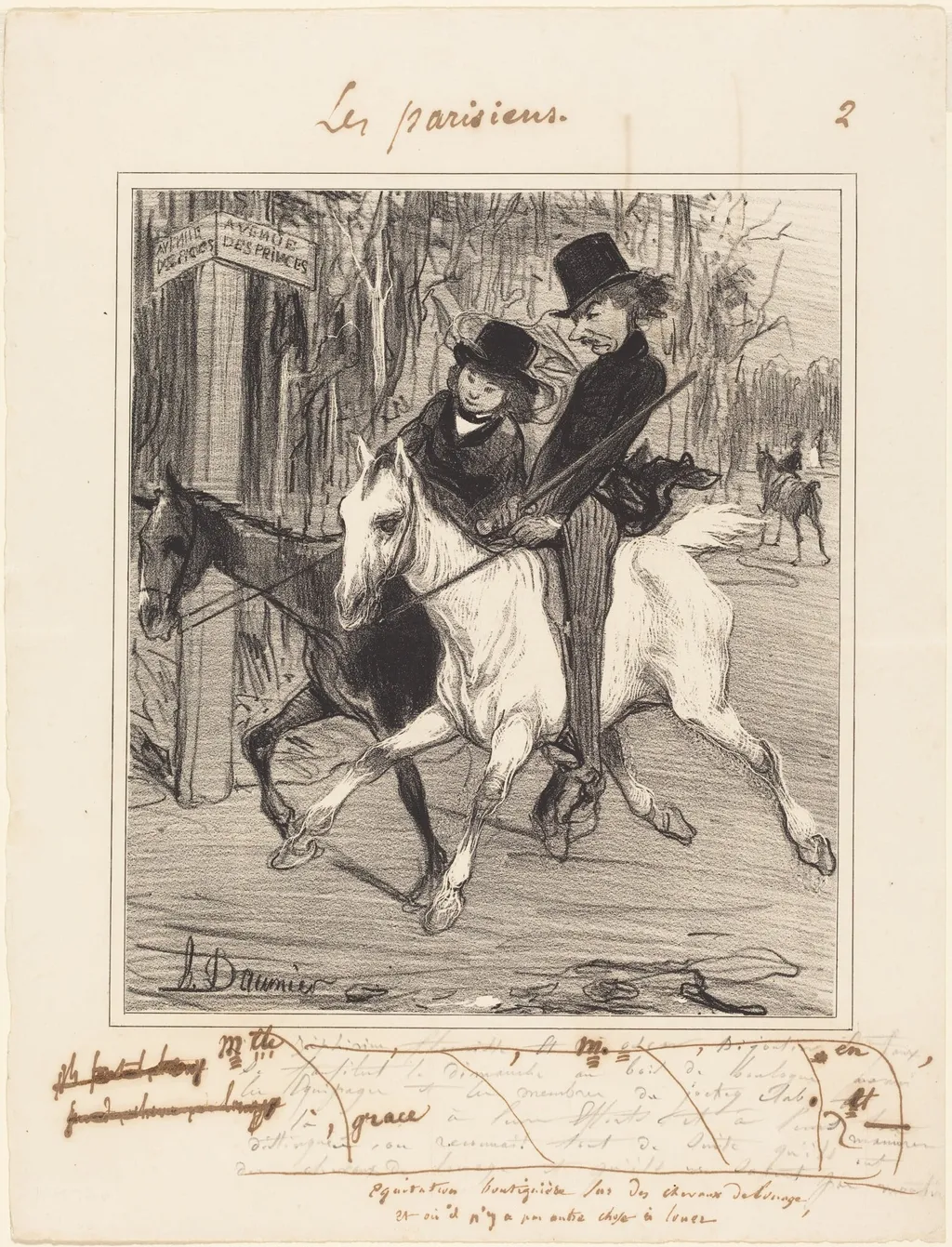
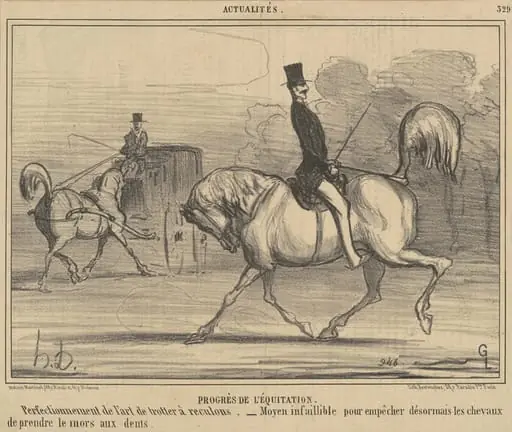
Équitation boutiquière is an ink print by the Romanticist artist Honoré Daumier. It dates from 1839 and is held in the collection of the National Gallery of Art.
About this work
Overview
Daumier’s focus on urban and bourgeois behavior reflects his commitment to exposing societal pretensions through visual wit, without overt political rhetoric.
Created in 1839, *Équitation boutiquière* is a lithograph by Honoré Daumier, part of his prolific output of social satire for Parisian periodicals. The work captures a moment of absurdity in everyday life, using the medium of print to reach a broad audience. Daumier’s focus on urban and bourgeois behavior reflects his commitment to exposing societal pretensions through visual wit, without overt political rhetoric.
Subject & Meaning
The print portrays a man and woman riding a single horse, the man behind the woman, both dressed in formal attire typical of the middle class. Their awkward posture and forced elegance suggest a performance of status rather than genuine leisure. The scene mocks the pretensions of the bourgeoisie, who mimic aristocratic pastimes without understanding their substance, revealing Daumier’s skepticism toward social climbing.
Technique & Style
Daumier employed lithography to achieve fluid lines and expressive contrasts, emphasizing movement through dynamic poses and loose, energetic strokes. The horse’s extended limbs and the riders’ tilted bodies convey motion, while the background elements—trees and a distant sign—are rendered with minimal detail, focusing attention on the central figures. The texture of the lithographic stone enhances the immediacy and spontaneity of the image.
History & Provenance
The print was published in *La Caricature*, a radical journal known for its political satire during the July Monarchy. Daumier contributed regularly to such publications, often risking legal consequences for his critiques. *Équitation boutiquière* was likely distributed widely among Parisian readers, reinforcing his reputation as a keen observer of social behavior during a period of intense political and cultural change.
Context
In the late 1830s, France’s middle class was expanding rapidly, adopting symbols of aristocratic life as markers of status. Daumier’s work responded to this phenomenon, capturing the tension between aspiration and reality. His images circulated alongside political debates, offering a visual counterpoint to the official narratives promoted by the state and the press.
Legacy
Daumier’s satirical prints, including this one, influenced later generations of cartoonists and social commentators. His ability to distill complex social dynamics into a single, vivid image set a precedent for visual journalism. Though not widely celebrated in his lifetime, his work gained recognition in the 20th century as a foundational contribution to modern graphic satire.
Artist & collection

Artist
Honoré-Victorin Daumier was a French painter, sculptor, and printmaker, whose many works offer commentary on the social and political life in France, from the Revolution of 1830 to the fall of the Second French Empire in 1870.









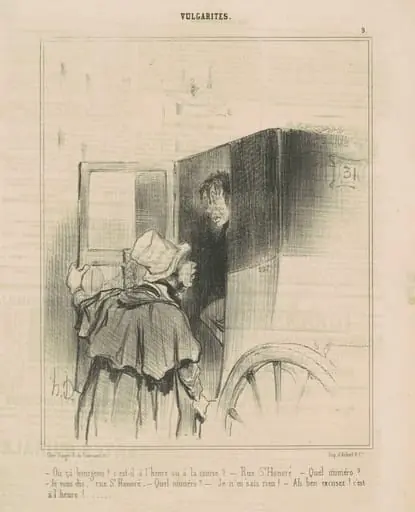 Ou ça bourgeois? C'est-il a l'heure ou ...
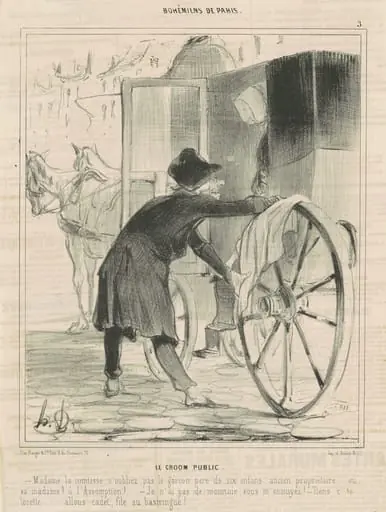 Le groom public
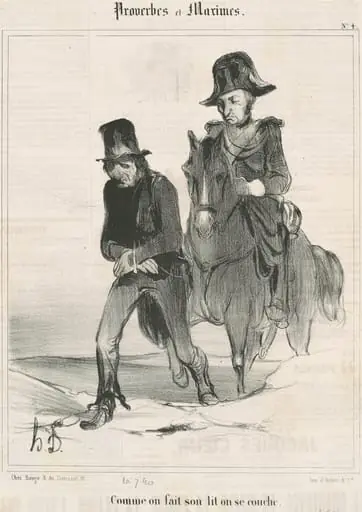 Comme on fait son lit on se couche
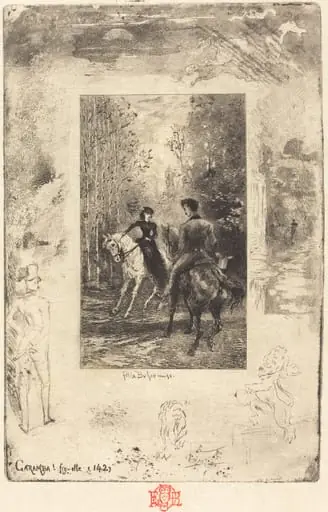 Caramba! Fit-elle (Caramba! She Exclaimed)
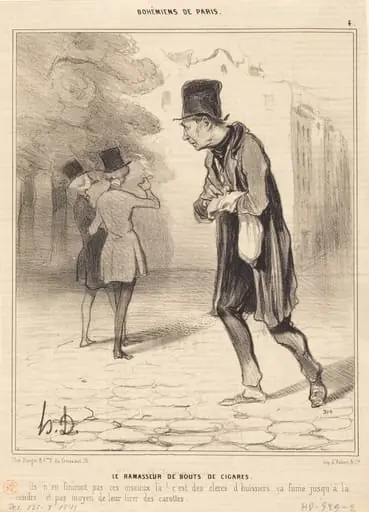 Le Ramasseur de bouts de cigares
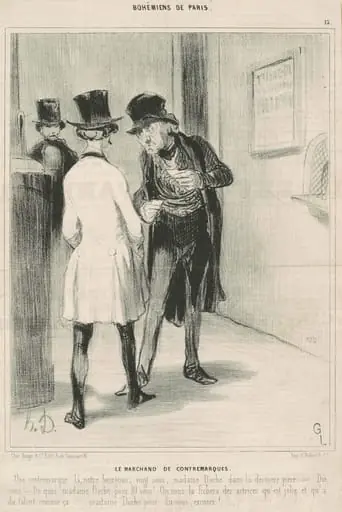 Le marchand de contremarques
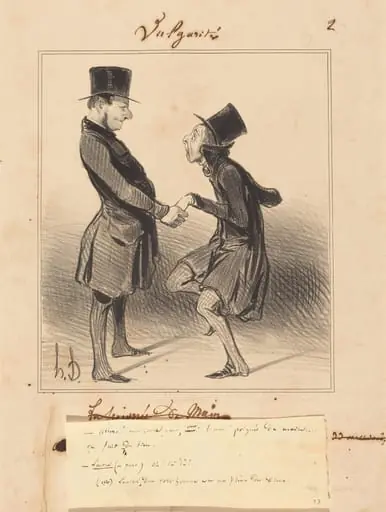 Allons! mon jeune ami, une bonne poignée...
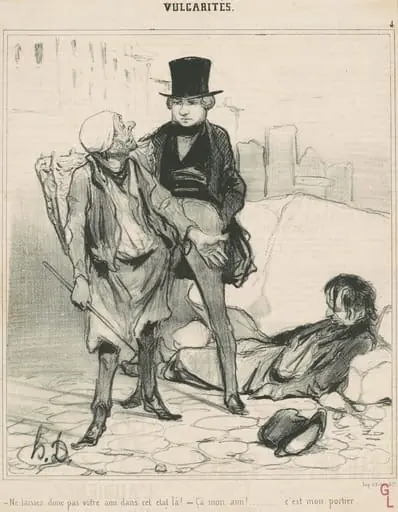 Ne laissez donc pas votre ami dans cet état la!
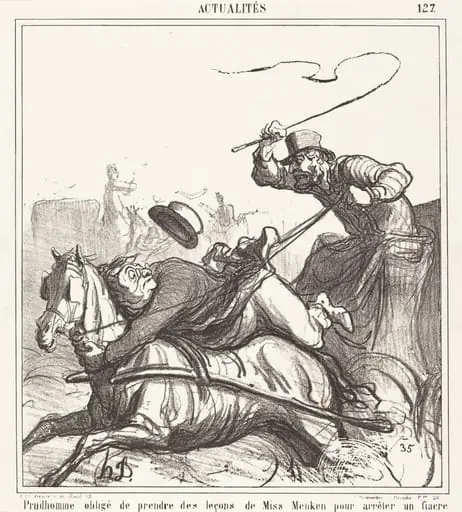 Prudhomme obligé de prendre des leçons...
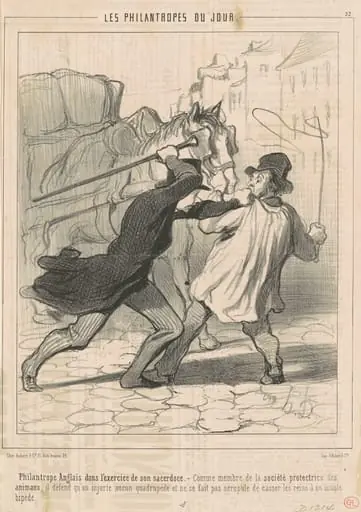 Philantrope anglais dans l'exercice ...
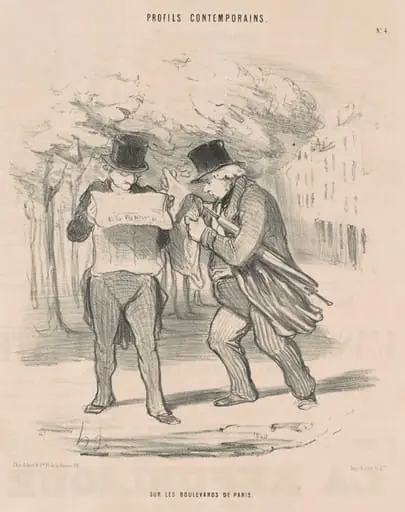 Sur les boulevards de Paris
 Progrès de l'équitation