Artwork
Le Giaour (The Infidel)
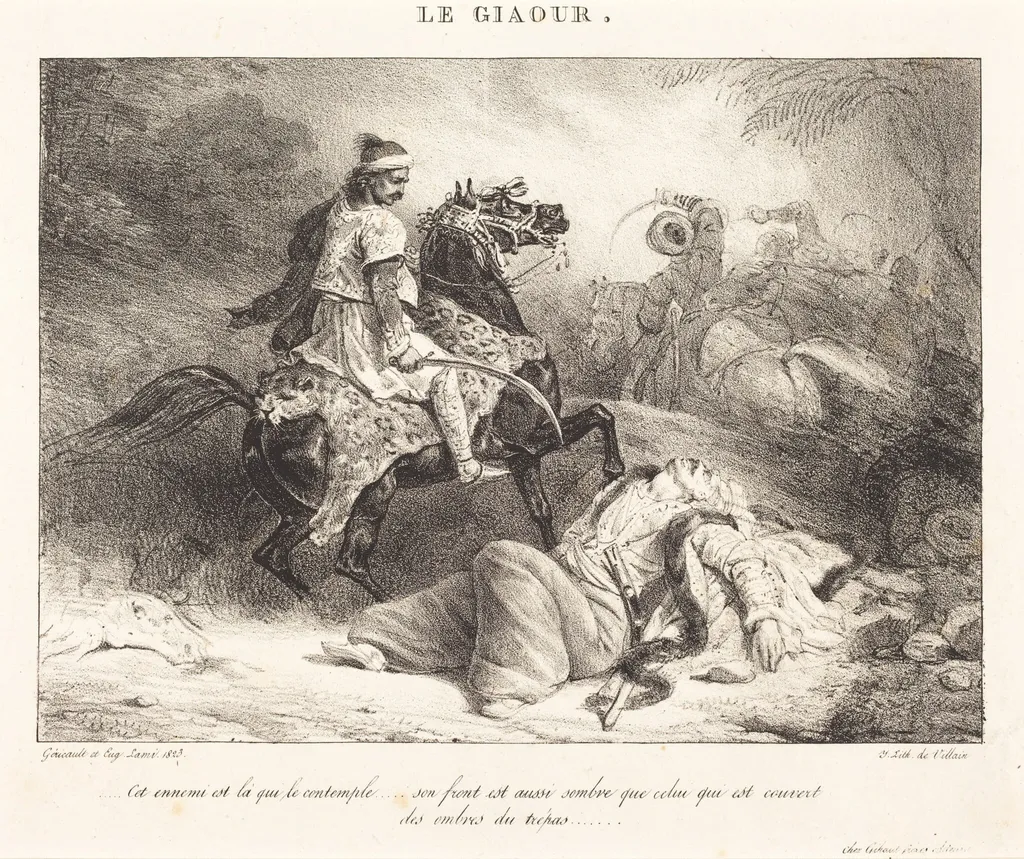
Le Giaour (The Infidel) is an ink print by the Romanticist artist Théodore Géricault. It dates from 1823 and is held in the collection of the National Gallery of Art.
About this work
Overview
Théodore Géricault’s 1823 lithograph *Le Giaour (The Infidel)* presents a solitary rider turning his head to look backward. Executed on wove paper, the image captures a lone figure in period costume, mounted on a horse, set against an ambiguous landscape. The work exemplifies Géricault’s interest in dramatic, narrative subjects during the early Romantic period.
Subject & Meaning
The central figure is identified as a "giaour," a term used for a non‑believer or outsider to the dominant faith. By portraying this infidel on horseback, Géricault taps into contemporary fascination with exotic, literary characters who embody conflict between cultures and belief systems, evoking a sense of tension and alienation.
Technique & Style
Created through lithography, the print relies on a stone‑based process that allows Géricault to render bold outlines and nuanced shading. The wove paper surface contributes a smooth, uniform ground, enhancing the contrast between the rider’s dark silhouette and the lighter background, while preserving the emotive intensity characteristic of Romantic visual language.
Context
Produced at a time when Géricault was exploring subjects drawn from poetry, folklore, and the exotic, the lithograph reflects the early 19th‑century European preoccupation with the ‘Other.’ Its focus on a religious outsider aligns with Romantic themes of individualism, emotional excess, and the sublime qualities of distant cultures.
Artist & collection
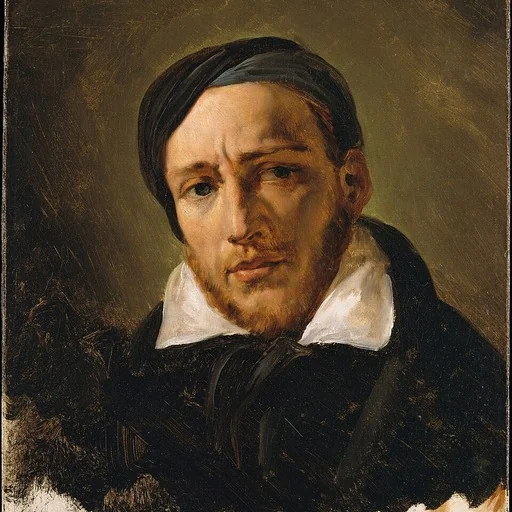
Artist
Jean-Louis André Théodore Géricault (French: ; 26 September 1791 – 26 January 1824) was a French painter and lithographer.