Artwork
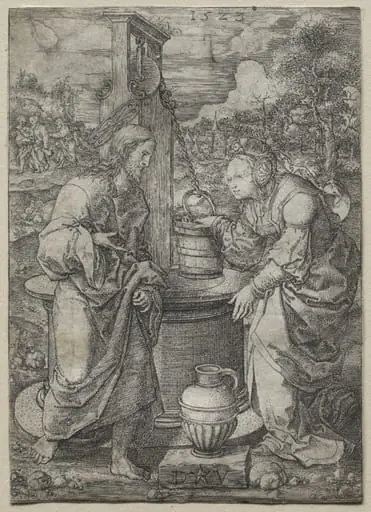
Christ and the Woman of Samaria [verso]
![Christ and the Woman of Samaria [verso], by German 16th Century, ink](https://artifactworldgallery.com/img/german-16th-century--christ-and-the-woman-of-samaria-verso--b92a651572d4a24c-w1024.webp)
Christ and the Woman of Samaria [verso] is an ink drawing by the Baroque artist German 16th Century. It is held in the collection of the National Gallery of Art.
About this work
Overview
This drawing, executed in pen and ink with graywash and white highlights on prepared gray paper, depicts the biblical encounter between Jesus and the Samaritan woman at the well. The composition centers on their quiet dialogue, framed by a sparse landscape in the background. The medium and tonal range suggest a study or preparatory work, emphasizing line and shadow over color.
Subject & Meaning
The scene illustrates John 4:7–26, where Jesus, traveling through Samaria, asks a woman for water, breaking social and religious barriers. Her seated posture and his standing form suggest a moment of revelation. The inclusion of distant figures and architecture implies a broader community witnessing the exchange, underscoring the theme of inclusion beyond Jewish tradition.
Technique & Style
The artist employs fine pen lines for definition, layered with soft graywash to model form and suggest atmosphere. Cross-hatching adds texture to clothing and ground, while white heightening lifts key areas—faces, edges of garments—against the toned paper. The restrained palette and controlled brushwork reflect a focus on clarity and emotional nuance over theatricality.
History & Provenance
The drawing is attributed to a follower of the Baroque tradition, likely from the 17th century, though the exact artist and early ownership remain undocumented. Its verso inscription suggests it was part of a larger album or sketchbook, possibly used for study or devotional reference. The paper’s preparation indicates deliberate artistic intent rather than casual sketching.
Context
Created during a period when religious narratives were frequently rendered in private devotional drawings, this work aligns with Northern European traditions that valued intimate biblical scenes. Unlike grand altarpieces, such studies emphasized personal reflection, using minimal means to convey spiritual tension and human connection in sacred moments.
Legacy
As a modest but finely executed study, the drawing exemplifies how Baroque artists translated theological themes into quiet, human-scale compositions. It survives as evidence of the period’s emphasis on observational drawing and the use of tone to evoke mood, influencing later generations in the practice of religious illustration and preparatory work.
Artist & collection

Artist
A German artist from the late 1500s drew lively scenes of knights clashing in parades and mock battles.

![Abraham Entertaining the Angels [verso], by German 16th Century](https://artifactworldgallery.com/img/german-16th-century--abraham-entertaining-the-angels-verso--69d1b25f4eba0a53-w320.webp)
 Christ and the Woman of Samaria
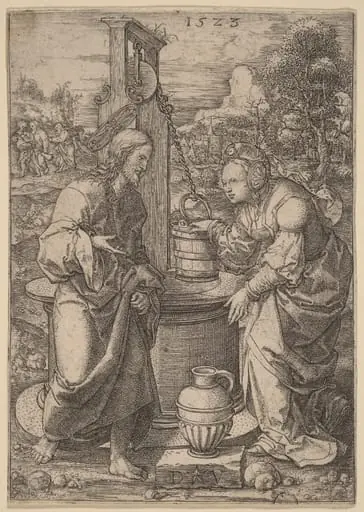 Christ and the Woman of Samaria
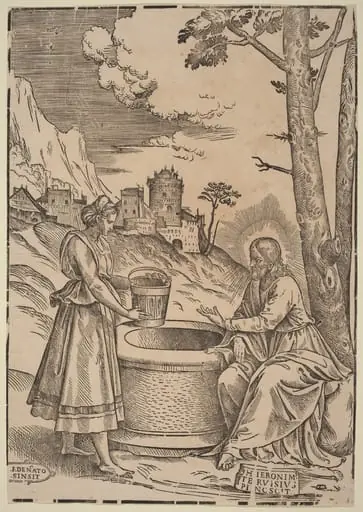 Christ and the Woman of Samaria
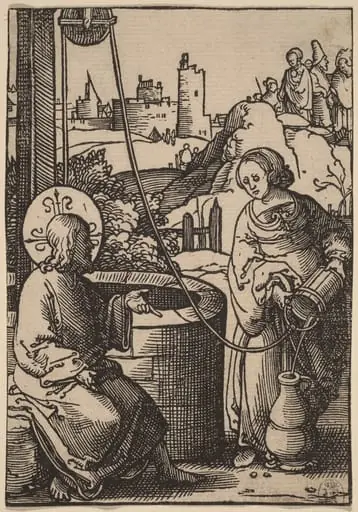 Christ and the Woman of Samaria
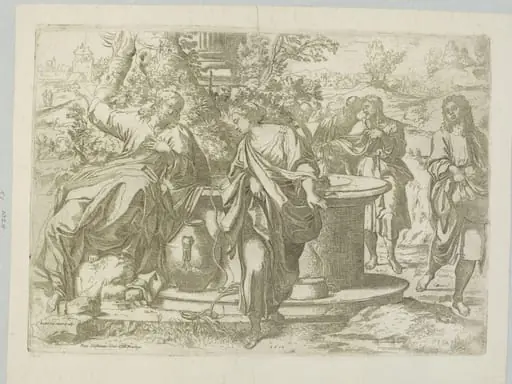 Christ and the Woman of Samaria
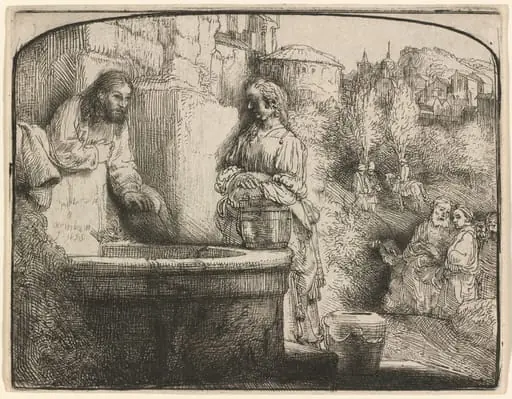 Christ and the Woman of Samaria: an Arched Print
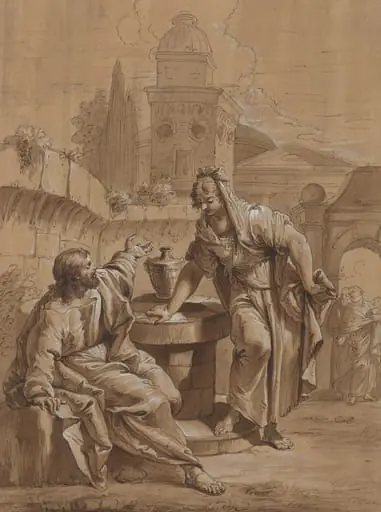 Christ and the Woman of Samaria
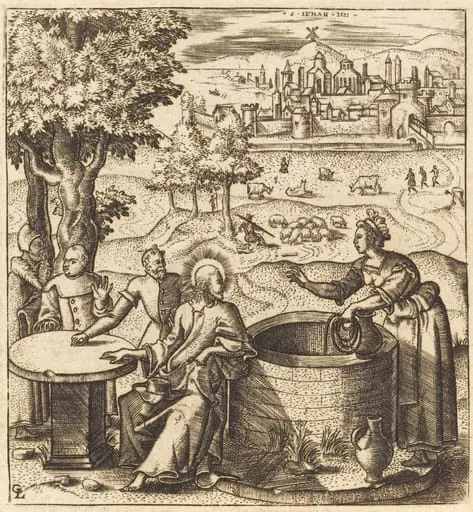 Christ and the Woman of Samaria
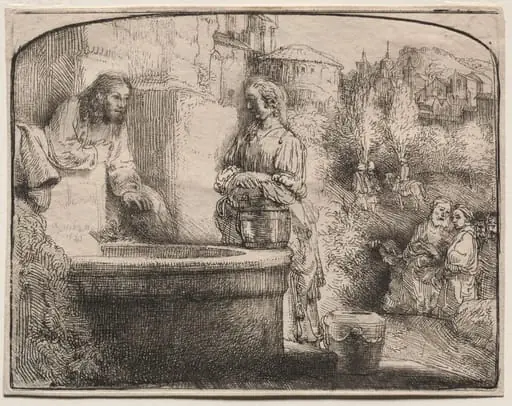 Christ and the Woman of Samaria: An Arched Print