Artwork
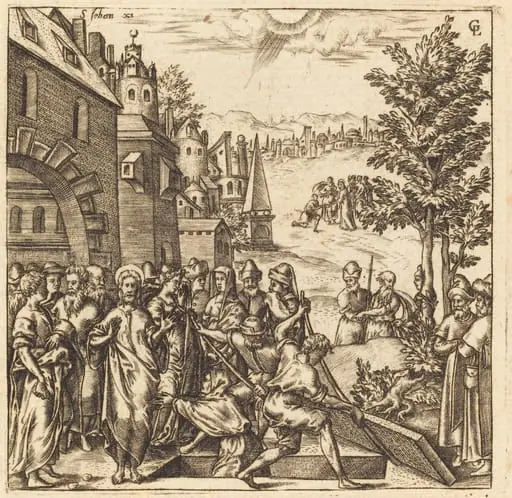
Christ and the Woman of Samaria
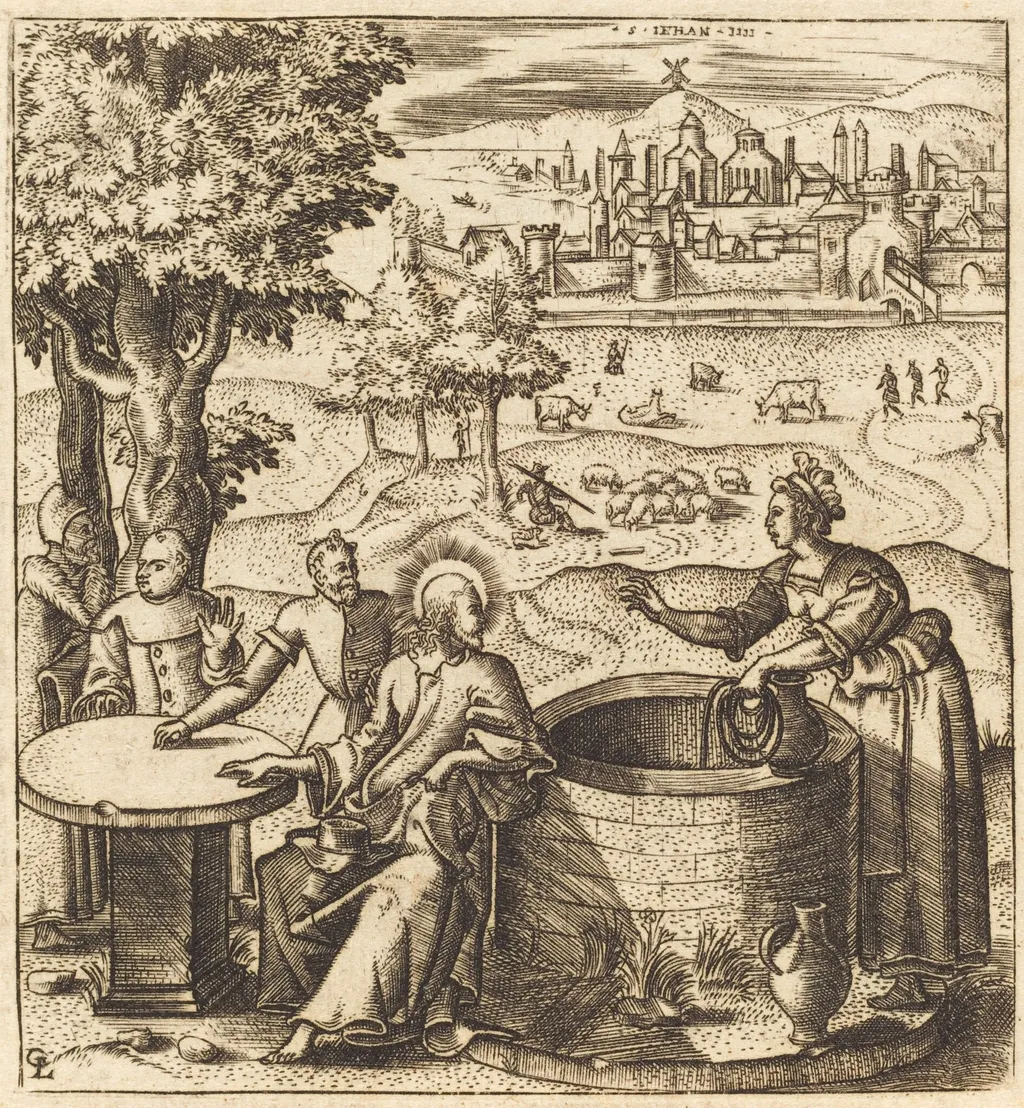
Christ and the Woman of Samaria is an ink print by the Renaissance artist Léonard Gaultier. It dates from 1578 and is held in the collection of the National Gallery of Art.
About this work
Overview
Christ and the Woman of Samaria is an engraving created by Léonard Gaultier around 1578. It is a representative work of Gaultier's style and technique, showcasing his skill as a printmaker.
Subject & Meaning
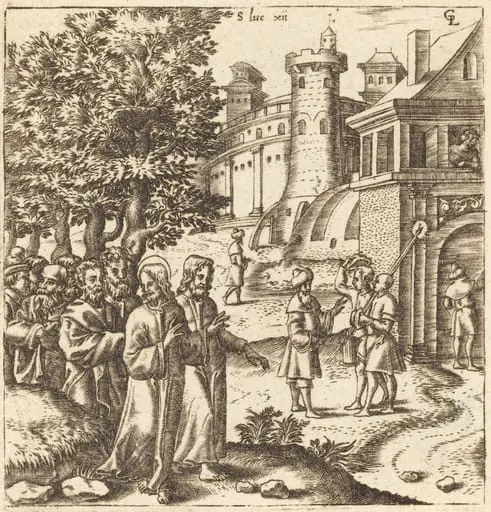
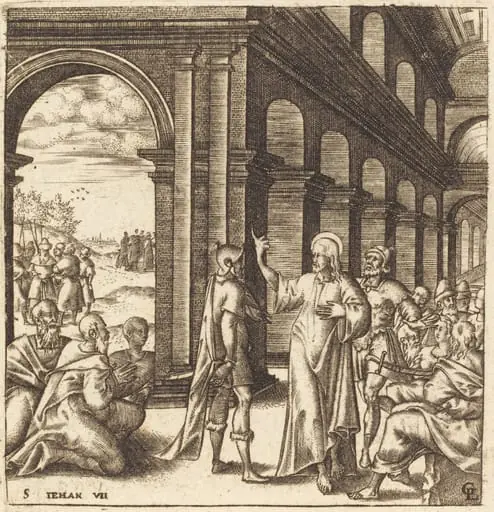
The engraving depicts a scene by a well, where a kneeling figure pours water into a container, surrounded by onlookers. The scene is likely a representation of the biblical story of Christ and the Samaritan woman, conveying a moment of interaction or teaching.
Technique & Style
Gaultier's engraving is characterized by meticulous linework, executed entirely with a graver, creating a sense of depth and three-dimensionality through fine lines and shading. The style is formal and stiff, reflecting the influence of contemporaries such as the Wierix and Crispyn van de Passe families.
Context
This engraving is part of a broader tradition of Northern European religious printmaking in the late 16th century, a period when artists like Gaultier produced numerous prints, often after their own designs, including portraits and religious subjects.
Artist & collection
Artist
Léonard Gaultier, or, as he sometimes signed himself, Galter, a French engraver, was born at Mainz about 1561, and died in Paris in 1641.