Artwork
Christ Stilling the Storm
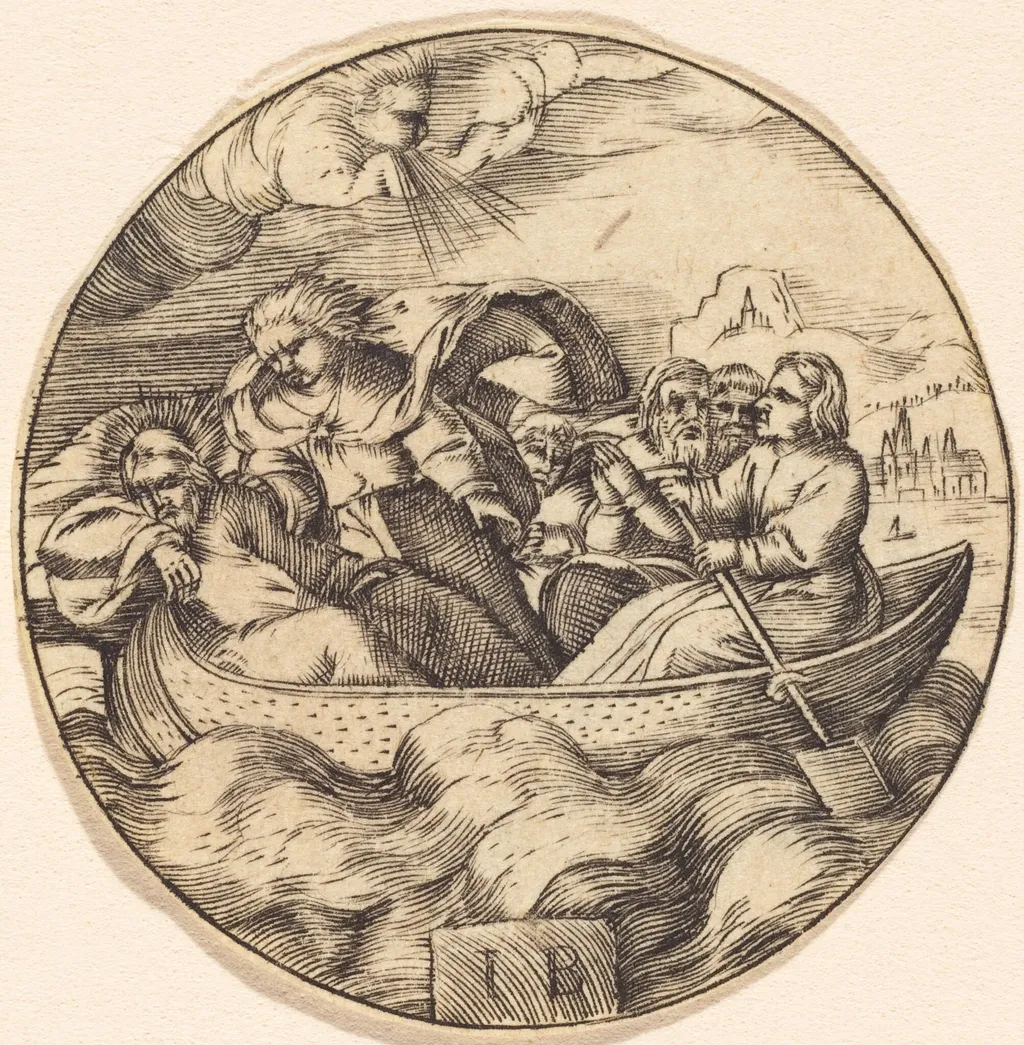
Christ Stilling the Storm is an ink print by the Renaissance artist German 16th Century. It dates from 1550 and is held in the collection of the National Gallery of Art.
About this work
Overview
Christ Stilling the Storm is an engraved print that depicts a small vessel caught in turbulent waters. Central to the composition is a standing figure with outstretched arms, while other occupants cling to one another and the boat’s structure. A distant cityscape appears on the horizon, and the surrounding sea is rendered with vigorous line work that conveys the motion of the storm.
Subject & Meaning
The image presents a narrative moment in which a central figure appears to intervene in a tempest, suggesting a theme of divine or heroic control over nature. The surrounding passengers’ gestures of fear and reliance underscore the tension between human vulnerability and the possibility of salvation.
Technique & Style
Executed in engraving, the work relies on densely incised lines to model light, shadow, and texture. Fine hatching defines the folds of clothing and the frothy surface of the water, while broader strokes suggest the mass of the boat and the distant skyline. The contrast between dark, crowded areas and lighter spaces creates a dramatic visual rhythm typical of the medium.
Context
Engravings of biblical or mythological scenes were common in the print market of early modern Europe, serving both devotional and instructional purposes. This piece aligns with that tradition, using a familiar scriptural episode to convey moral or spiritual messages through a highly detailed, reproducible format.
Artist & collection

Artist
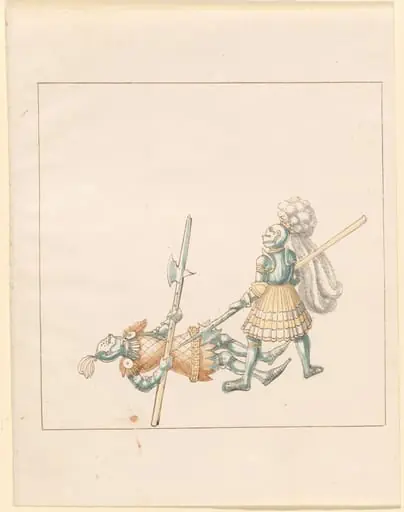
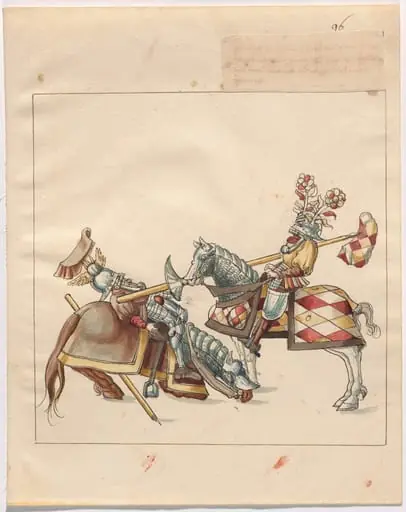
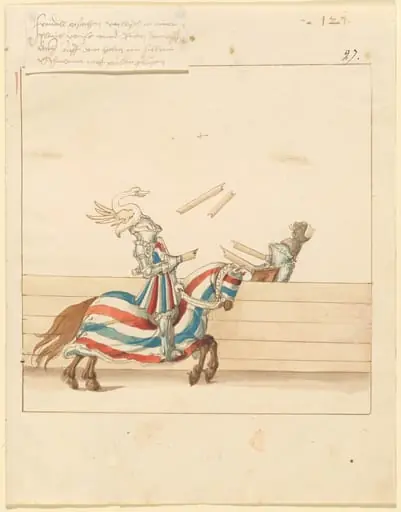
A German artist from the late 1500s drew lively scenes of knights clashing in parades and mock battles.

![Abraham Entertaining the Angels [verso], by German 16th Century](https://artifactworldgallery.com/img/german-16th-century--abraham-entertaining-the-angels-verso--69d1b25f4eba0a53-w320.webp)
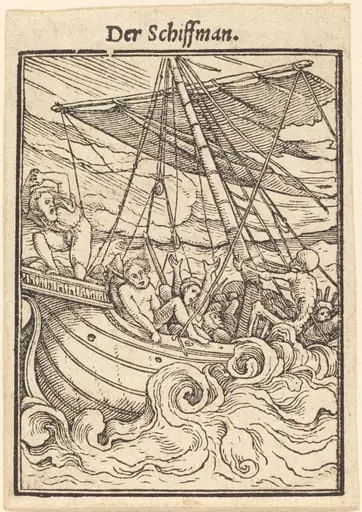 Der Schiffman (The Sailor)
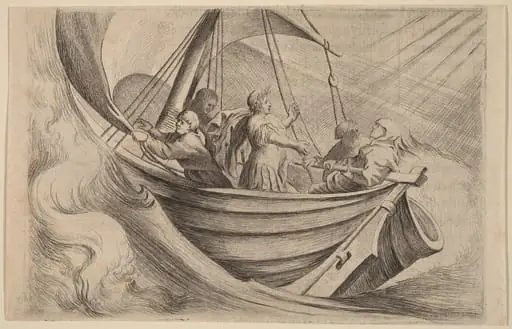 Caesar Crossing Stormy Seas
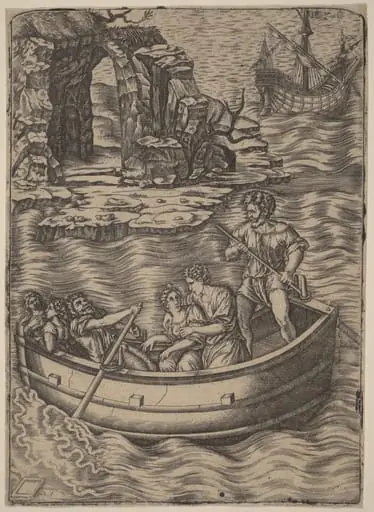 The Barc
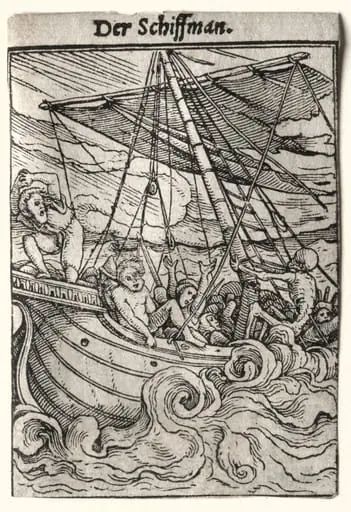 Dance of Death: The Sailor
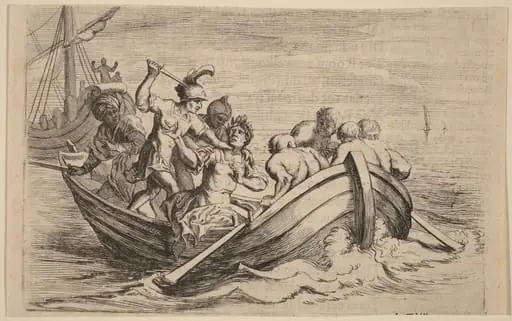 The Stabbing of Pompey
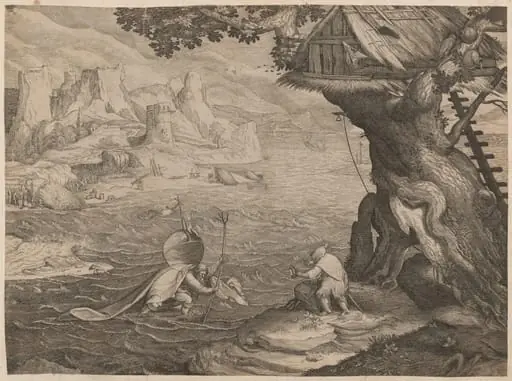 Saint Christopher with the Christ Child
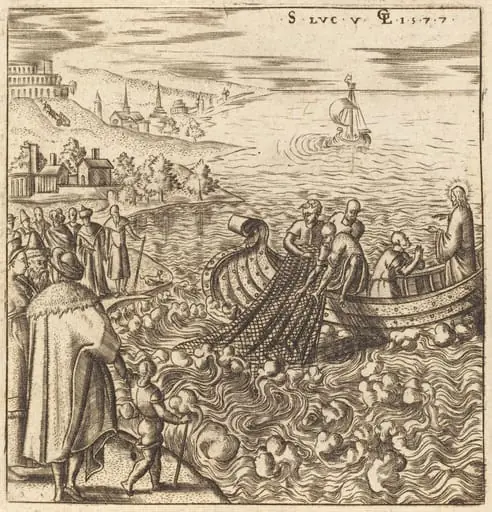 The Miraculous Draught of Fishes
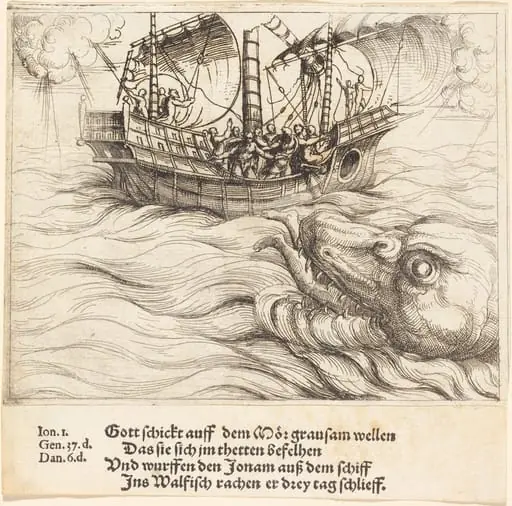 Jonah in the Whale
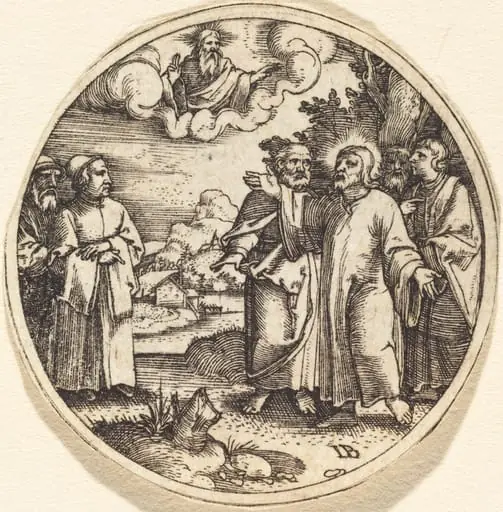 Christ with Three of His Apostles
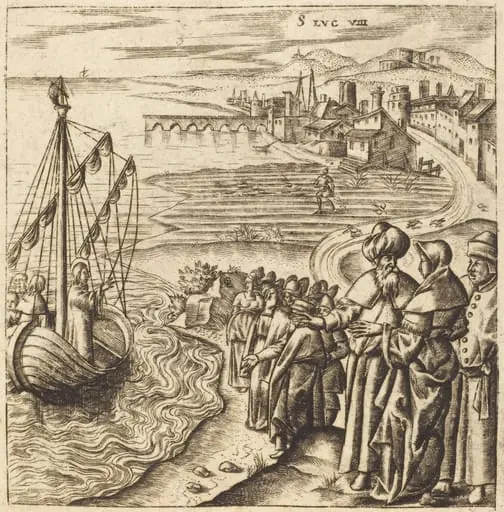 Christ on the Lake
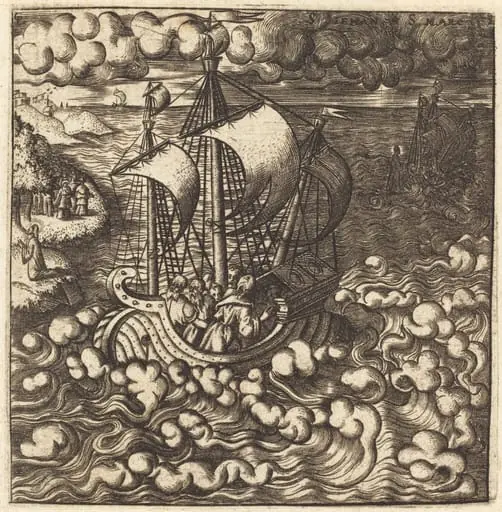 Christ Praying while His Disciples are in a Boat on a Windy Sea
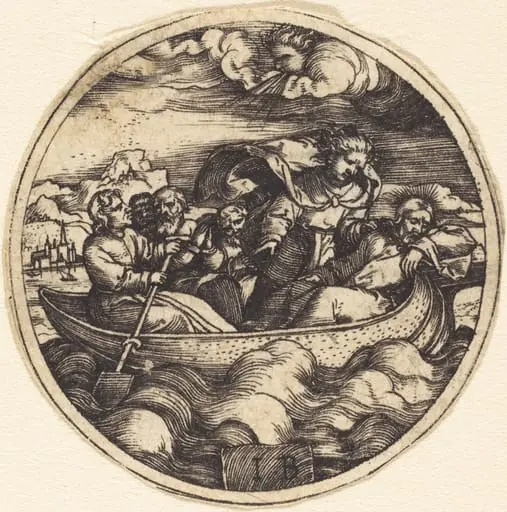 Christ Stilling the Storm