Artwork
Christ on the Lake
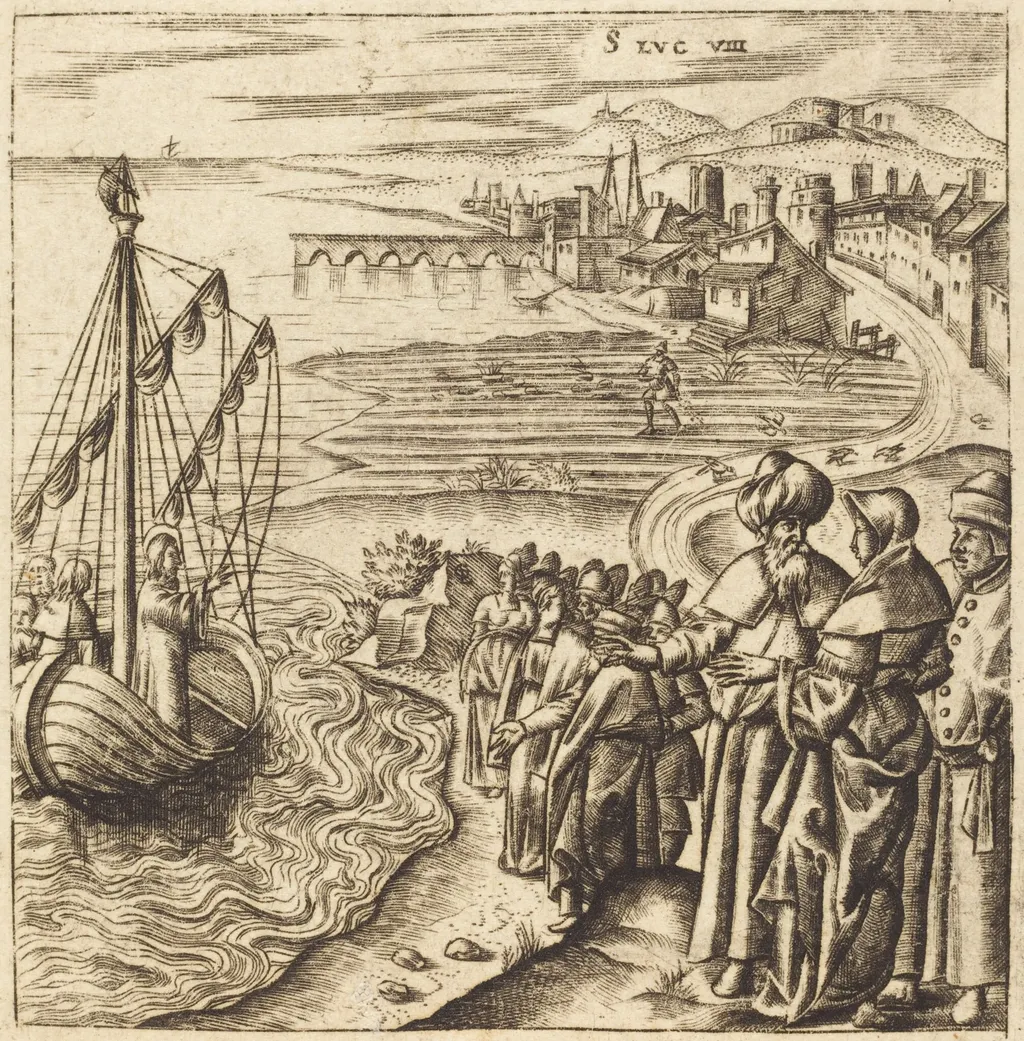
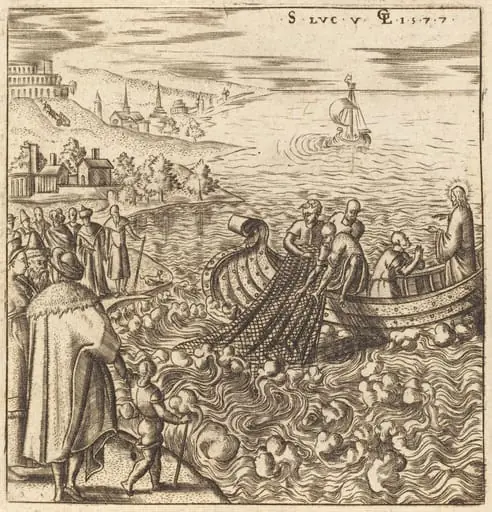
Christ on the Lake is an ink print by the Renaissance artist Léonard Gaultier. It dates from 1578 and is held in the collection of the National Gallery of Art.
About this work
Overview
Christ on the Lake is an engraving produced circa 1578 by Léonard Gaultier, a French printmaker active in the late sixteenth and early seventeenth centuries. Executed entirely with the graver, the image presents a biblical scene of Jesus standing upon water, surrounded by a boat, figures, and a distant landscape of buildings and hills.
Subject & Meaning
The composition depicts the miracle of Christ walking on water, a theme drawn from the New Testament. The central figure, robed and raising his right arm, dominates the scene, while the surrounding boat and gathered onlookers suggest a narrative moment of revelation and faith.
Technique & Style
Gaultier employs fine cross‑hatching and meticulous line work to render texture, light, and depth. The engraving displays a formal, precise quality reminiscent of the Wierix brothers and Crispyn van de Passe, with a slightly rigid handling of figures that emphasizes clarity over naturalism.
History & Provenance
Born in Mainz around 1561, Gaultier worked primarily in Paris until his death in 1641. He designed many of his own prints, ranging from portraiture to religious subjects, and Christ on the Lake belongs to this self‑designed series of devotional images.
Context
The work reflects the broader Renaissance interest in biblical illustration and the technical possibilities of printmaking. Engravings such as this allowed religious narratives to circulate widely, reaching audiences beyond the confines of painted altarpieces.
Artist & collection
Artist
Léonard Gaultier, or, as he sometimes signed himself, Galter, a French engraver, was born at Mainz about 1561, and died in Paris in 1641.



 The Miraculous Draught of Fishes
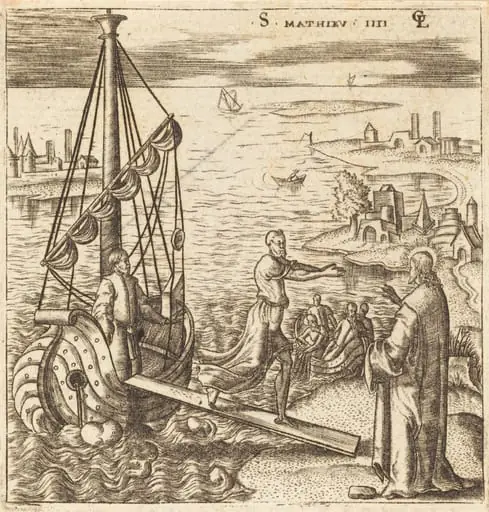 Follow Me and I will Make You Fishers of Men
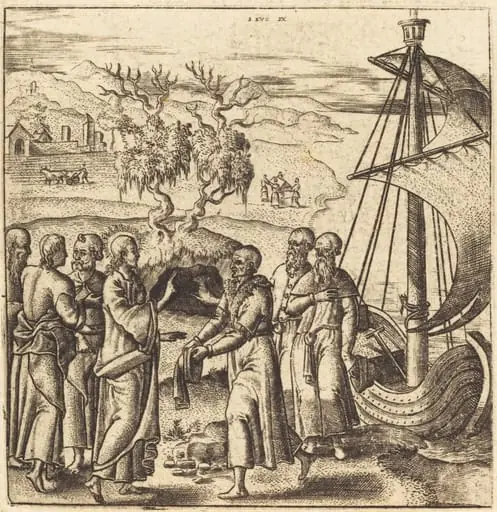 Christ the Teacher
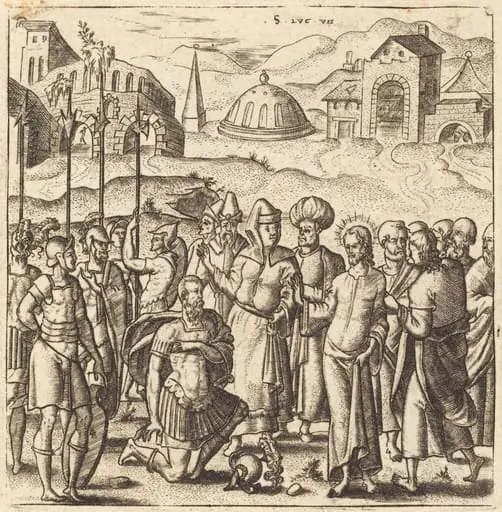 Christ and the Centurion
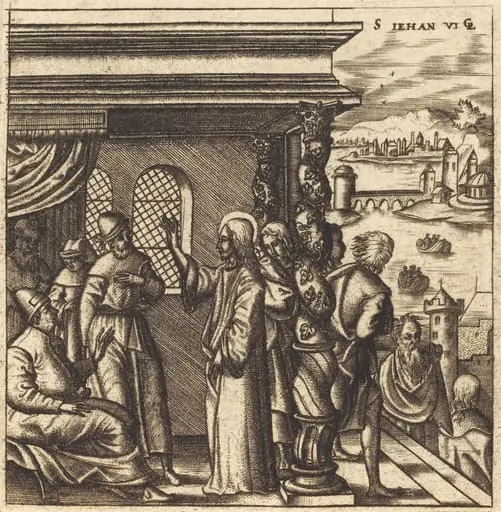 Christ Teaching in the Synagogue
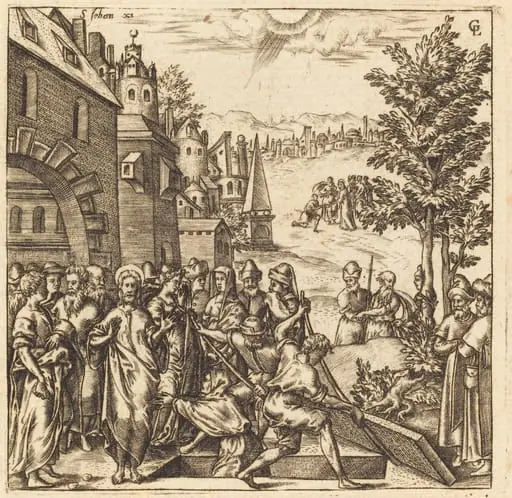 The Raising of Lazarus
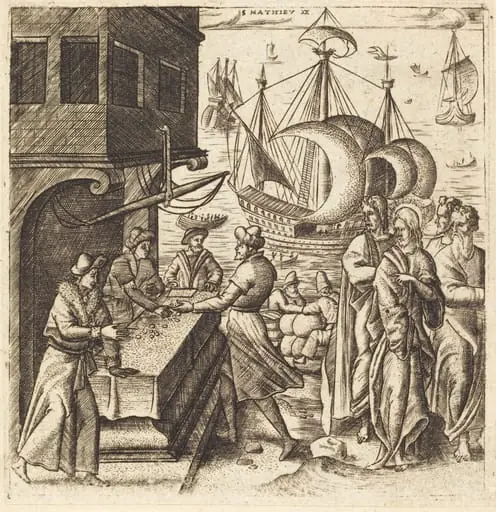 The Calling of Matthew
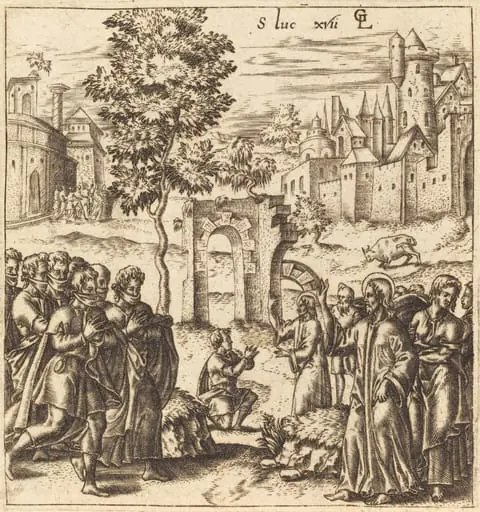 The Ten Lepers are Cleansed
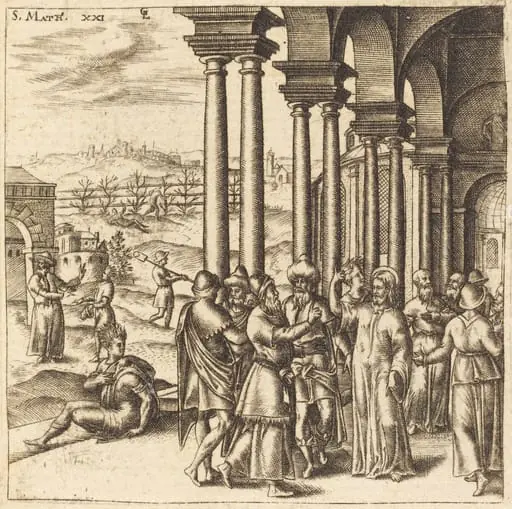 Christ in the Temple
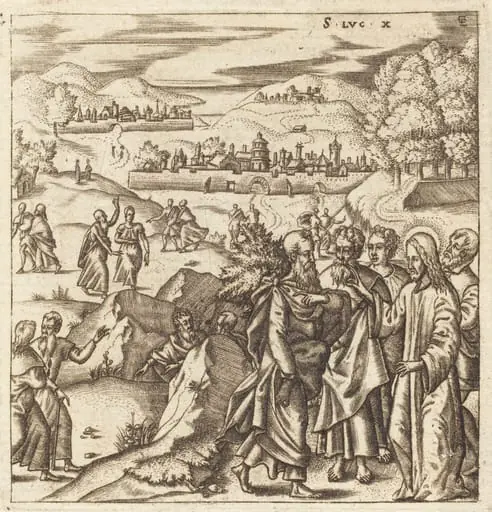 The Mission of the Seventy
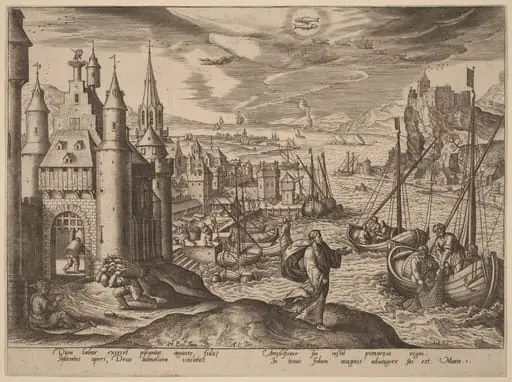 Jesus Calling the Apostles Among the Fishermen