Artwork
The Barc
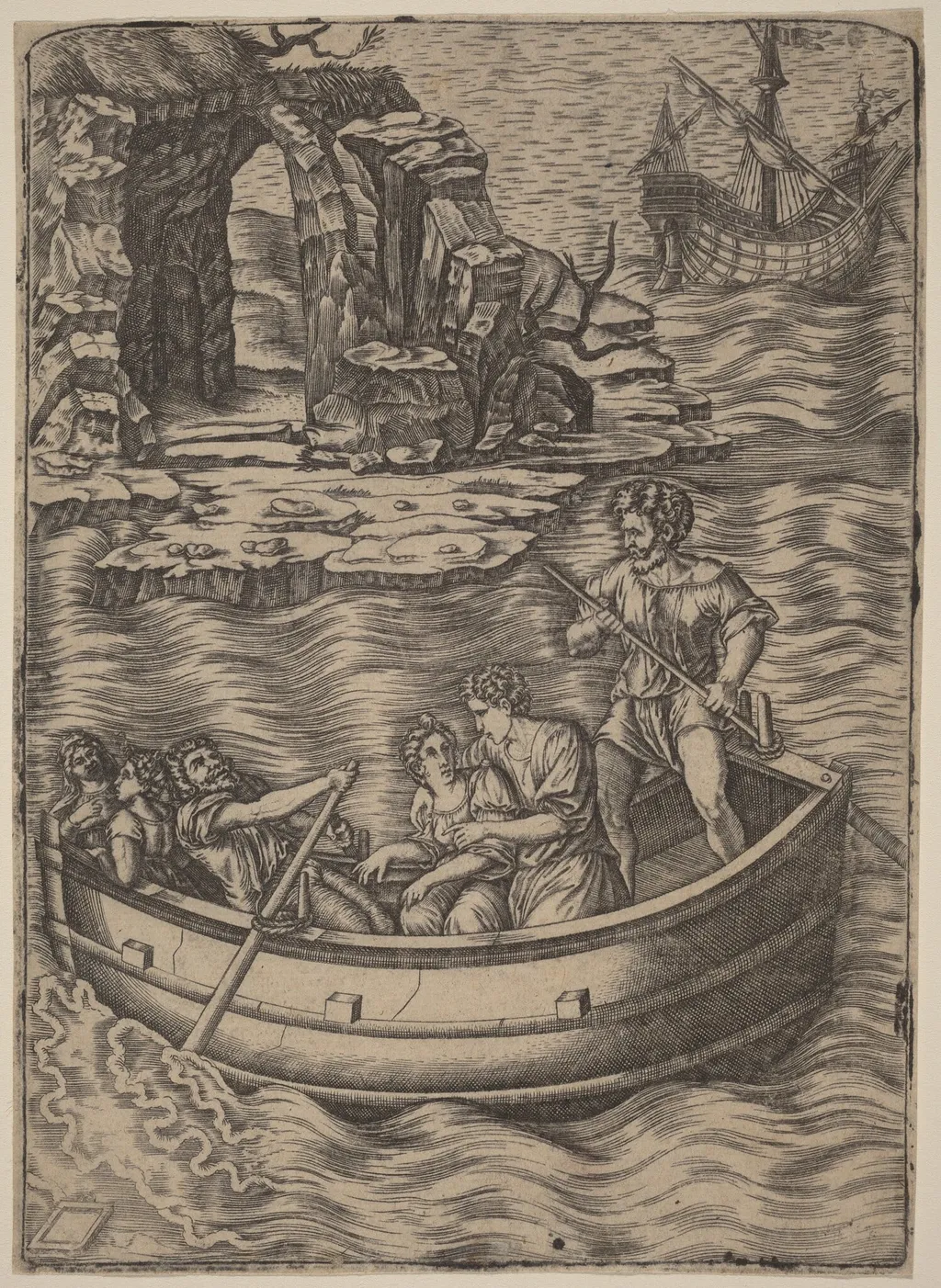
The Barc is an ink print by the Renaissance artist Agostino dei Musi. It dates from 1522 and is held in the collection of the National Gallery of Art.
About this work
Overview
The Barc is an engraving on laid paper created by Agostino dei Musi, known as Agostino Veneziano, in 1522. A prominent Italian engraver of the Renaissance, Veneziano was active in the early 16th century and made significant contributions to the period's graphic arts through his prints.
Subject & Meaning
The engraving depicts a dramatic maritime scene: a small, fragile boat navigates rough waters. A man grasps an oar at the stern, while two children, one clutching an object, huddle in the bow. A rocky island and a shipwrecked mast are visible in the background. The tense postures and fearful expressions of the figures convey a sense of peril.
Technique & Style
The Barc showcases Veneziano's mastery of the intaglio process. Fine lines meticulously render the choppy sea, the figures' anxious poses, and the textures of the boat and island. The precise technique achieves a high level of detail, characteristic of Veneziano's work.
History & Provenance
Created in 1522, The Barc is a product of Veneziano's activity as a leading engraver during the Italian Renaissance. While specific provenance details are not provided, the work is consistent with the broader output of Veneziano, who was known for his prolific production of prints.
Context
As part of the Renaissance's graphic arts, The Barc reflects the period's interest in detailed, emotionally charged scenes. Veneziano's use of engraving, a technique involving carving into metal plates, was central to the dissemination of images during this time.
Artist & collection
Artist
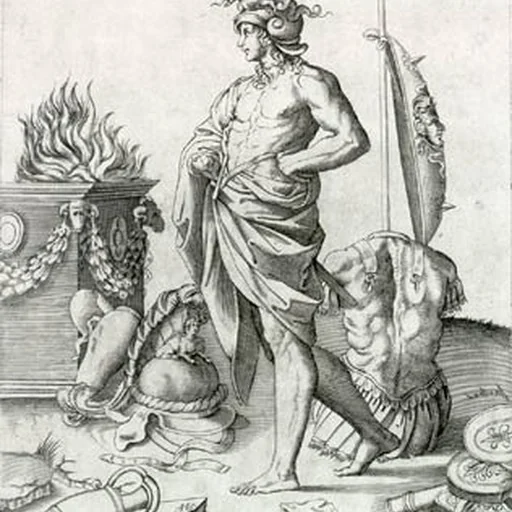
Agostino Veneziano ("Venetian Agostino"), whose real name was Agostino de' Musi (c. 1490 – c. 1540), was an important and prolific Italian engraver of the Renaissance.

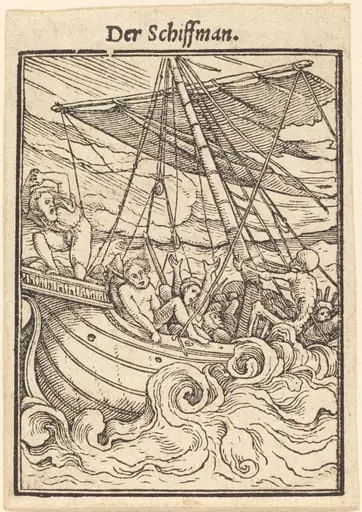 Der Schiffman (The Sailor)
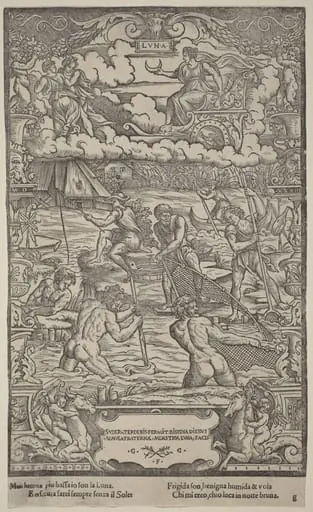 Moon
Moon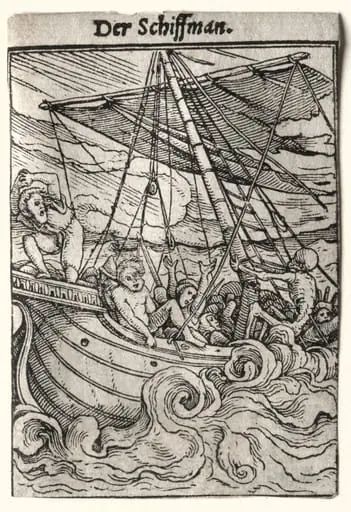 Dance of Death: The Sailor
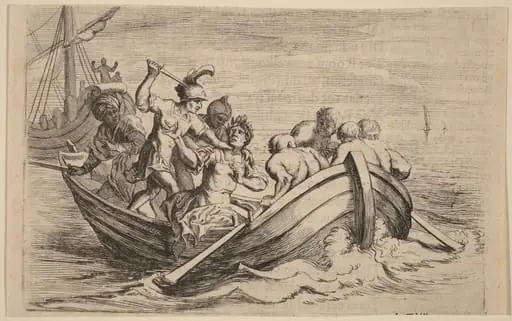 The Stabbing of Pompey
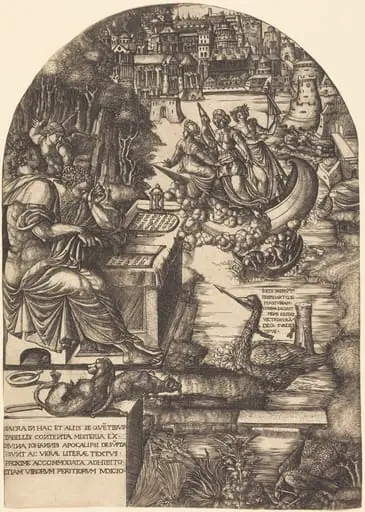 Jean Duvet as Saint John the Evangelist
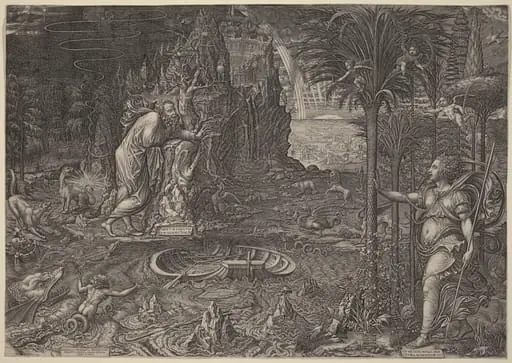 Allegory of Life
 The Judgment of Paris
 Christ Stilling the Storm
 Christ Praying while His Disciples are in a Boat on a Windy Sea
 The Judgment of Paris
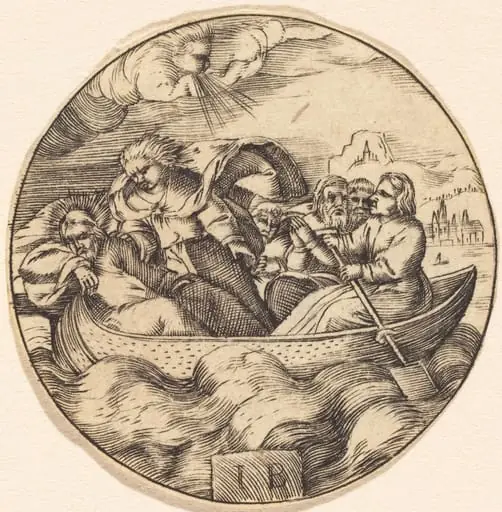 Christ Stilling the Storm
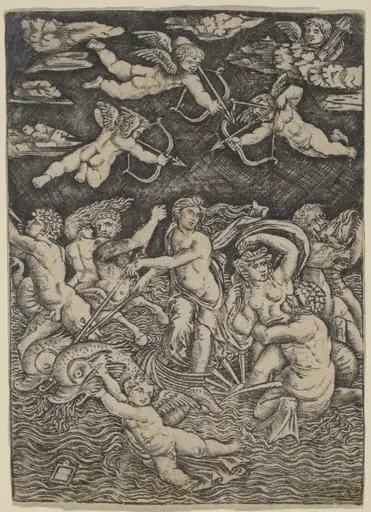 The Triumph of Galatea