Artwork
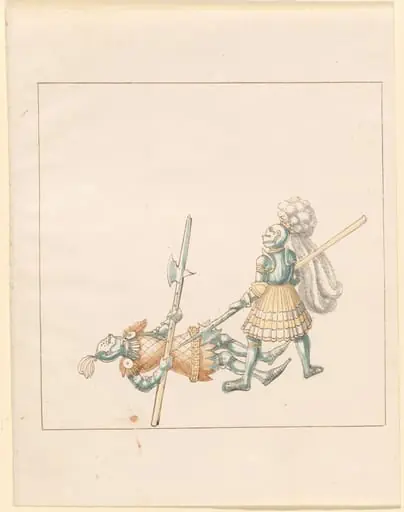
Foot Combat with Pikes
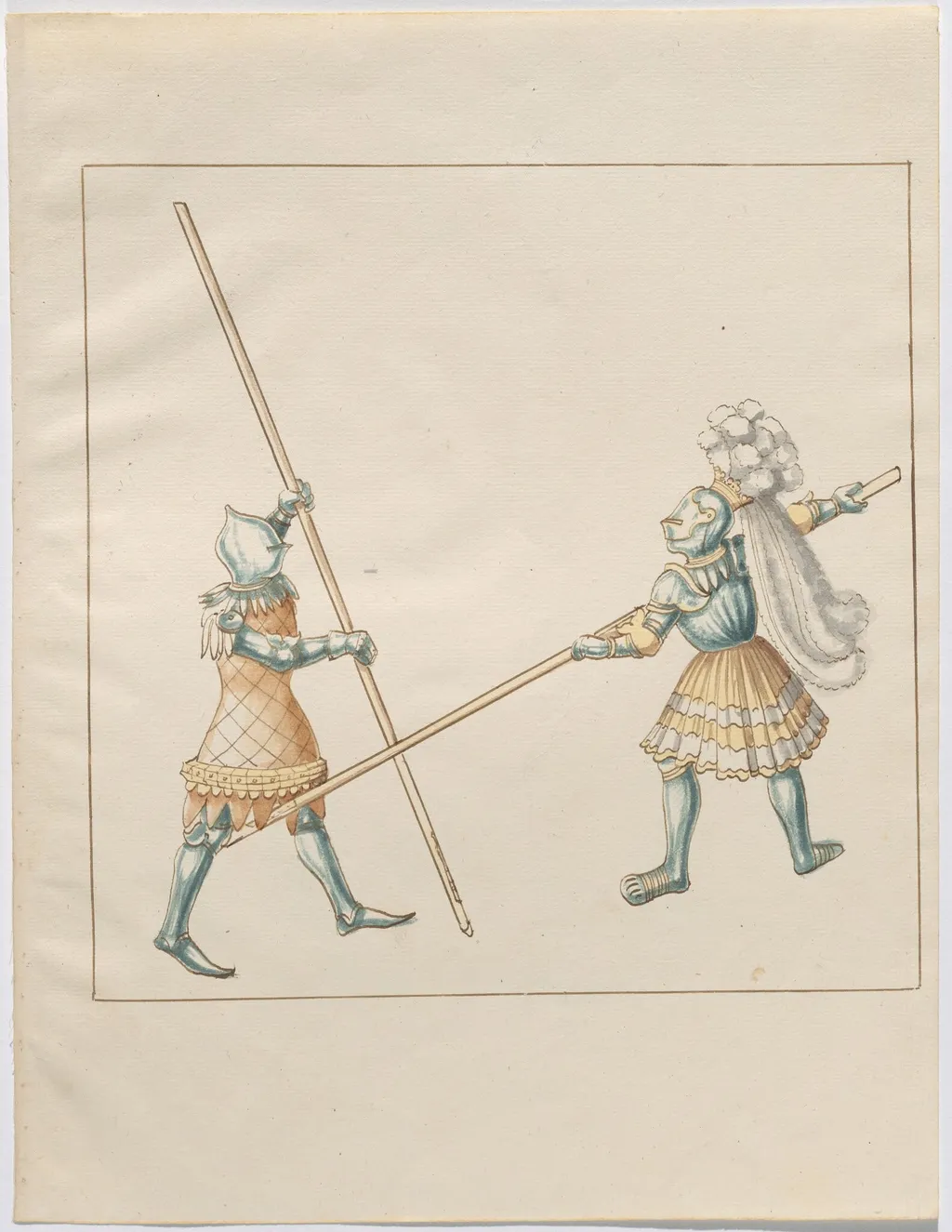
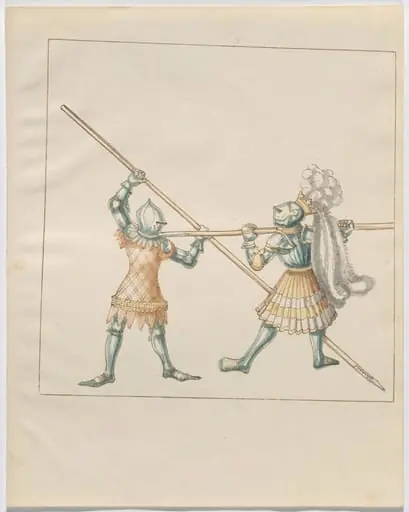
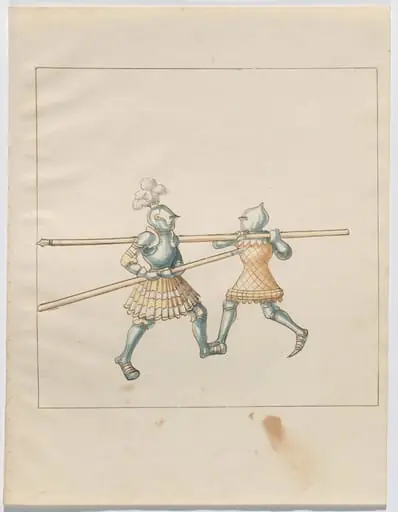
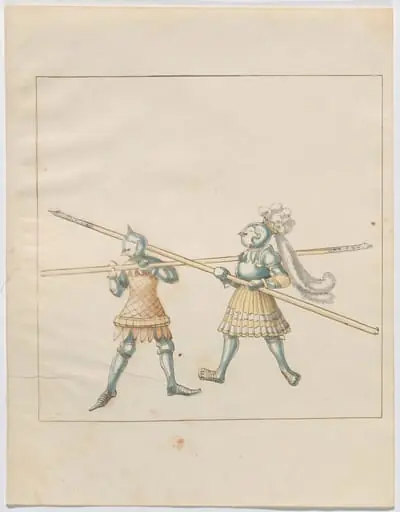
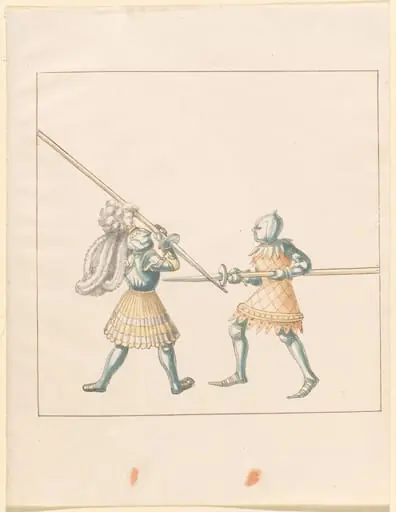
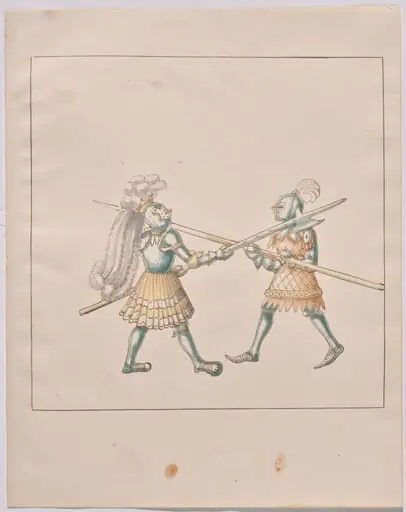
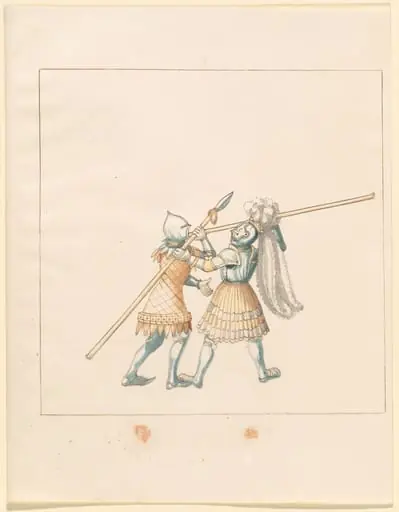
Foot Combat with Pikes is an ink drawing by the Renaissance artist German 16th Century. It dates from 1514 and is held in the collection of the National Gallery of Art. This small ink and watercolor drawing, created around 1515, captures a close-quarters battle among infantry armed with pikes.
About this work
Overview
This small ink and watercolor drawing, created around 1515, captures a close-quarters battle among infantry armed with pikes. Executed on laid paper, it measures 33.8 by 26.3 centimeters. The work is attributed to a German artist of the early 16th century and reflects a period when military training and battlefield tactics were being systematically recorded in visual form.
Subject & Meaning
The scene portrays a chaotic melee of armored soldiers locked in combat, their pikes thrusting and parrying in tight formation. Rather than glorifying victory, the drawing emphasizes the physical intensity and disorder of infantry engagement. It likely served as a study of movement and armor in action, possibly for training or documentation rather than ceremonial display.
Technique & Style
The artist used fine pen lines to define the contours of armor and weapons, layered with subtle watercolor washes to suggest depth and shadow. Details such as rivets, plating, and the angles of pikes are rendered with precision, indicating close observation of real equipment. The composition is tightly packed, enhancing the sense of confined, brutal combat.
History & Provenance
The drawing entered the collection of the National Gallery of Art in Washington, D.C., where it is held as part of a broader group of Renaissance military studies. Its origin traces to a German artistic milieu familiar with the practical realities of warfare during the early Reformation era. No earlier provenance is documented, but its style aligns with workshop practices of the time.
Context
In early 16th-century Germany, the pike square was a dominant infantry formation, and artists often documented military gear and tactics as warfare evolved. This drawing reflects a shift from idealized battle scenes to more observational, technical renderings. It may have been used by armorers, soldiers, or military theorists to understand the mechanics of close combat.
Legacy
The drawing contributes to a corpus of Renaissance military sketches that bridge art and documentation. While not widely known outside specialist circles, it remains a valuable record of how soldiers were equipped and how battles were visually understood before the rise of printed manuals. Its survival offers insight into the practical concerns of early modern warfare.
Artist & collection

Artist
A German artist from the late 1500s drew lively scenes of knights clashing in parades and mock battles.

![Abraham Entertaining the Angels [verso], by German 16th Century](https://artifactworldgallery.com/img/german-16th-century--abraham-entertaining-the-angels-verso--69d1b25f4eba0a53-w320.webp)