Artwork
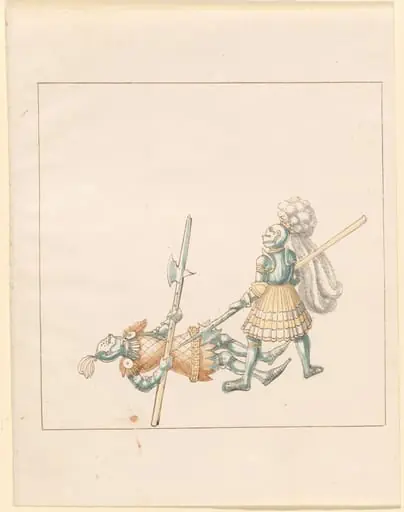
Foot Combat with Pikes
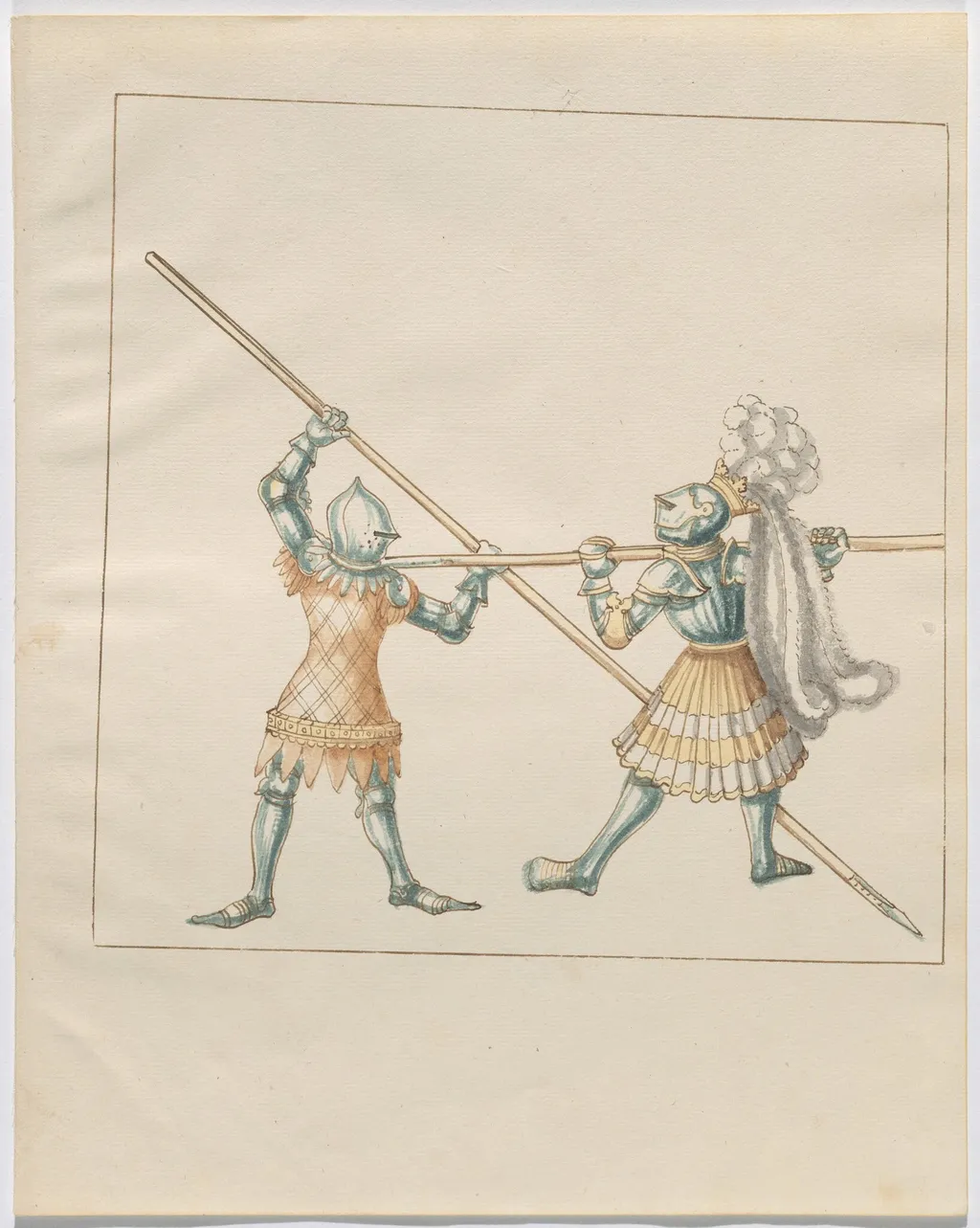
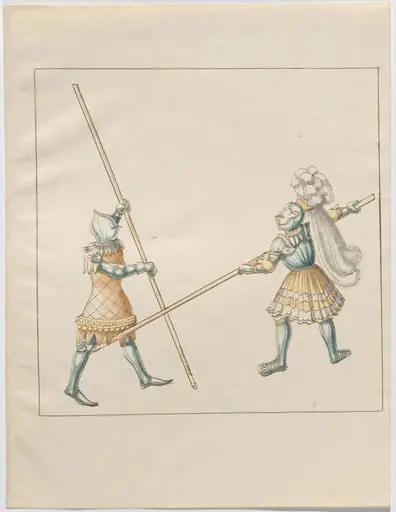
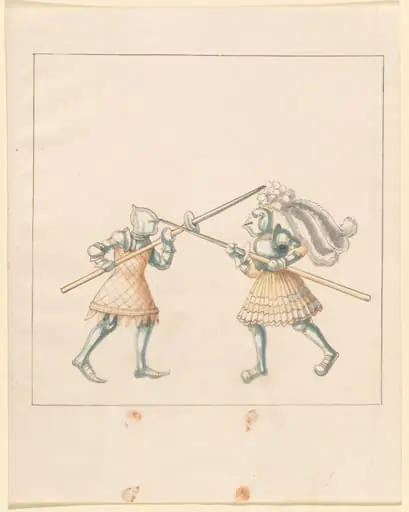
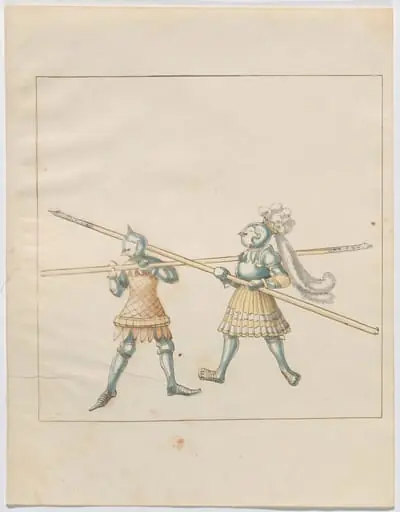
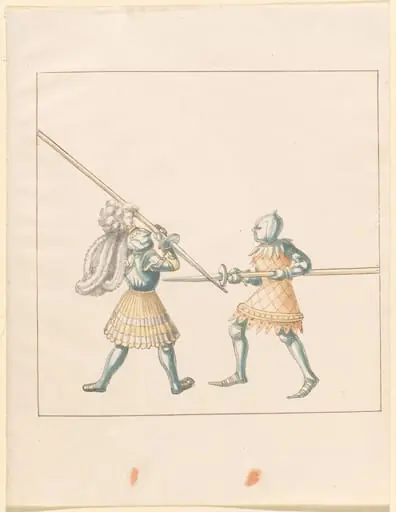
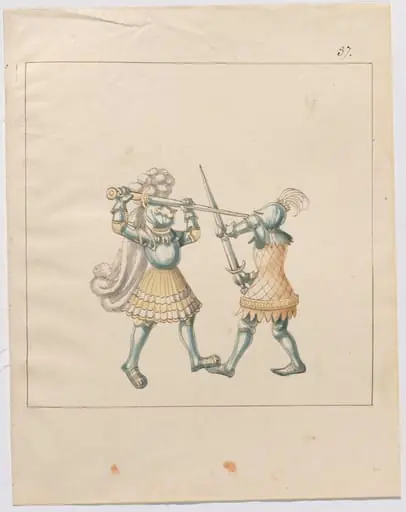
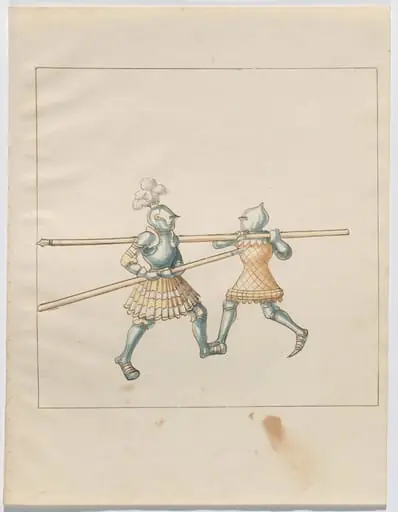
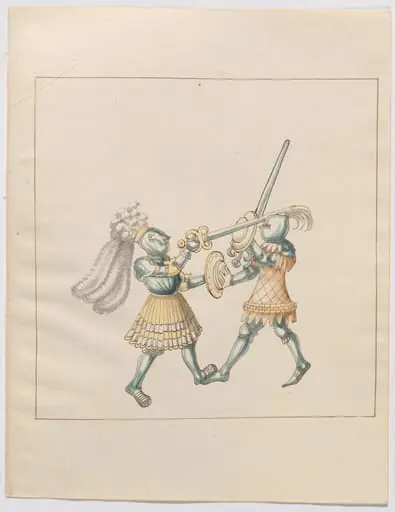
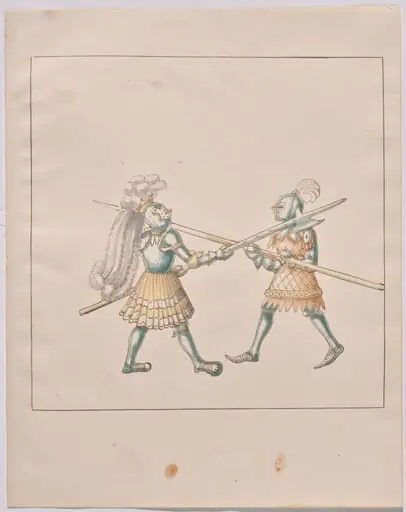
Foot Combat with Pikes is an ink drawing by the Renaissance artist German 16th Century. It dates from 1514 and is held in the collection of the National Gallery of Art.
About this work
Overview
The medium’s intimacy and the paper’s texture contribute to a sense of immediacy, distinguishing it from grander historical battle scenes.
A German drawing from circa 1515 captures two soldiers engaged in close combat with pikes, rendered in pen and black ink with subtle watercolor washes on laid paper. Measuring 33.8 by 26.3 cm, the work is a detailed study of infantry combat, emphasizing realism over idealization. The medium’s intimacy and the paper’s texture contribute to a sense of immediacy, distinguishing it from grander historical battle scenes.
Subject & Meaning
The scene portrays two common foot soldiers, not nobles or knights, locked in a tense, unglamorous struggle. One thrusts with a pike while the other raises a shield defensively. Their expressions convey anxiety rather than heroism, and their armor, though ornate, appears more ceremonial than practical. The focus on ordinary men in conflict suggests a shift toward documenting contemporary military life rather than mythologizing warfare.
Technique & Style
The artist employed sharp pen lines to define forms and movement, contrasting with delicate, translucent watercolor glazes that model light and shadow. The paper’s natural texture remains visible beneath the washes, enhancing the tactile quality of the scene. This interplay of precision and softness creates depth without embellishment, reflecting a keen observational approach rooted in direct study rather than convention.
History & Provenance
Created in early 16th-century Germany, the drawing reflects the period’s evolving military practices and artistic interest in realistic depiction. Though its early ownership is undocumented, its style aligns with regional draftsmen who recorded contemporary soldiering. It survives as a rare visual record of infantry tactics and equipment during a time of transition from medieval to early modern warfare.
Context
In the early 1500s, pike formations were central to European infantry, replacing mounted knights as the dominant force on the battlefield. This drawing captures soldiers dressed in the fashion of the time—elaborate but functional—rather than in anachronistic medieval garb. It reflects a growing artistic trend to depict real soldiers and their gear, responding to the rise of professional armies and the decline of chivalric ideals.
Legacy
The drawing stands as a quiet testament to the shift in military and artistic priorities during the Renaissance. Its unheroic portrayal of combat and attention to authentic detail influenced later studies of soldiers and warfare. Though not widely known, it remains a significant example of how artists began to document the realities of war, moving beyond symbolism toward observation.
Artist & collection

Artist
A German artist from the late 1500s drew lively scenes of knights clashing in parades and mock battles.

![Abraham Entertaining the Angels [verso], by German 16th Century](https://artifactworldgallery.com/img/german-16th-century--abraham-entertaining-the-angels-verso--69d1b25f4eba0a53-w320.webp)