Artwork
Martin Luther, Half-Length to the Left with a Book in his Hands
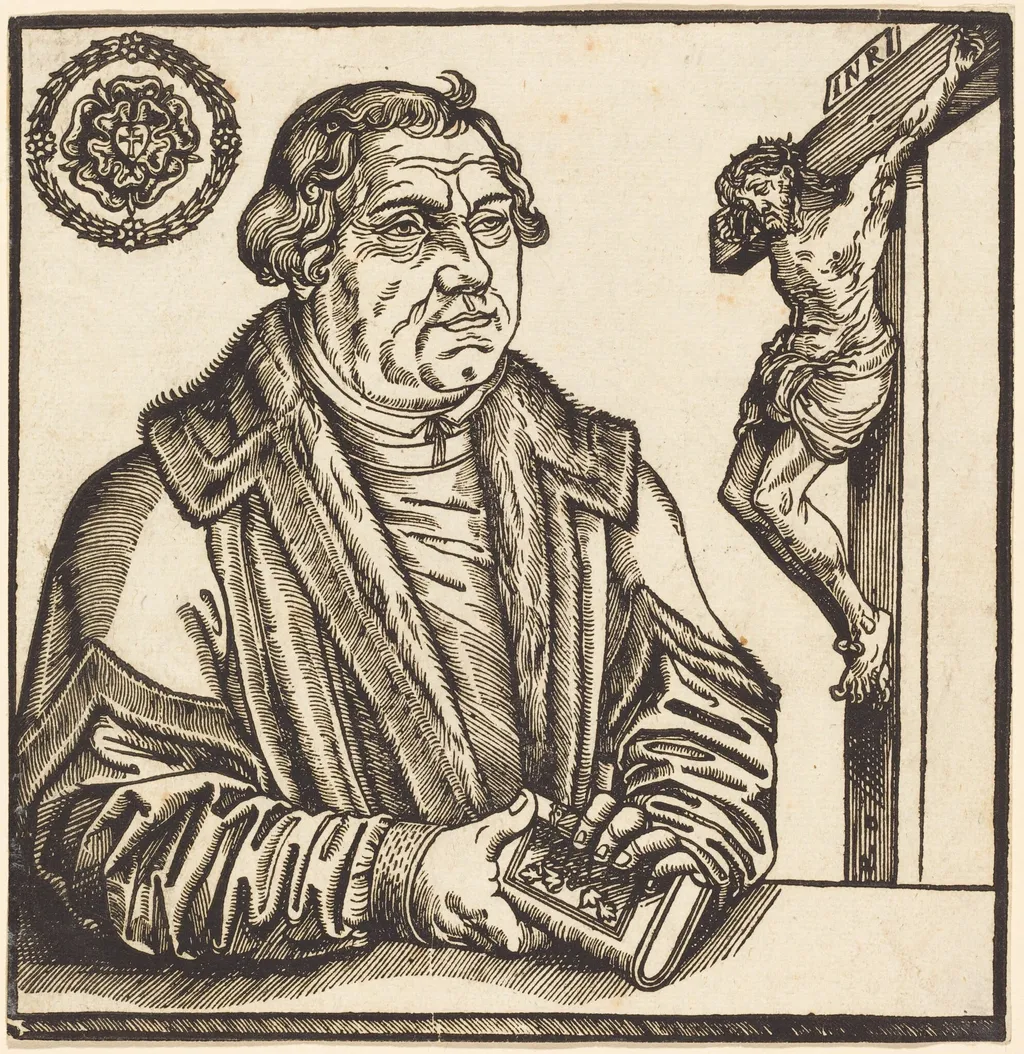
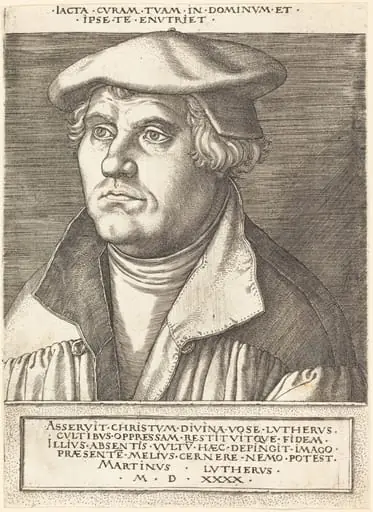
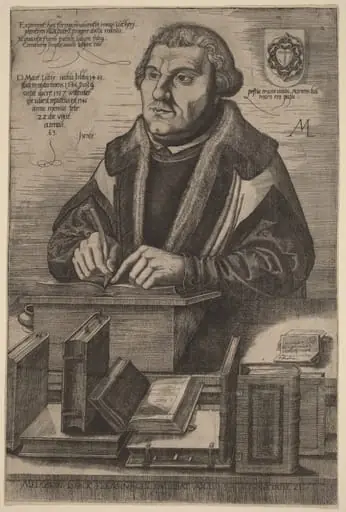
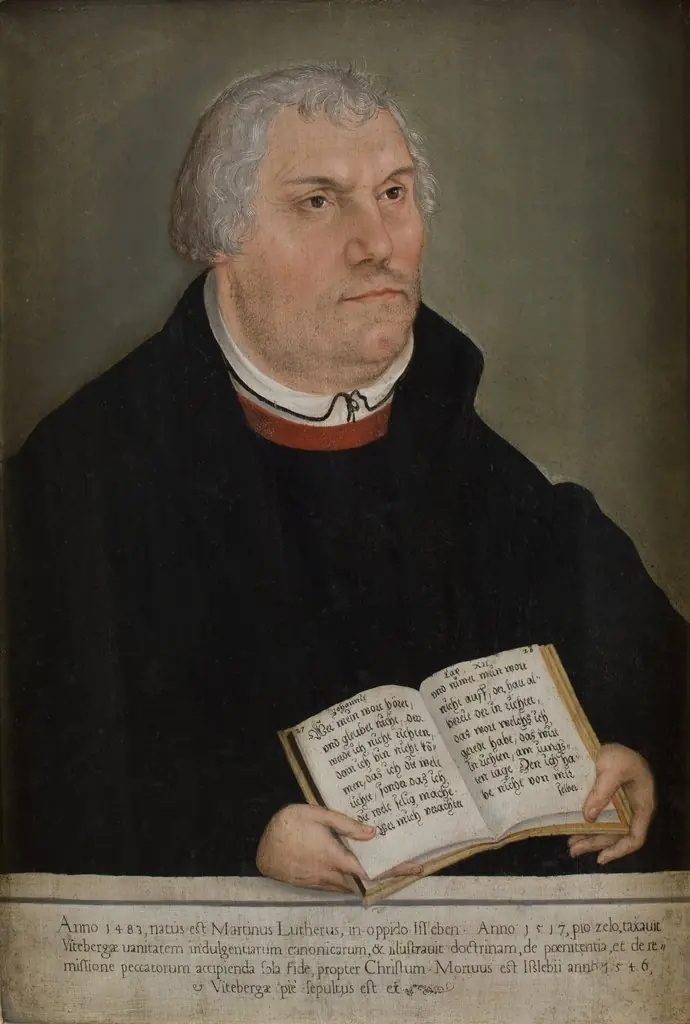
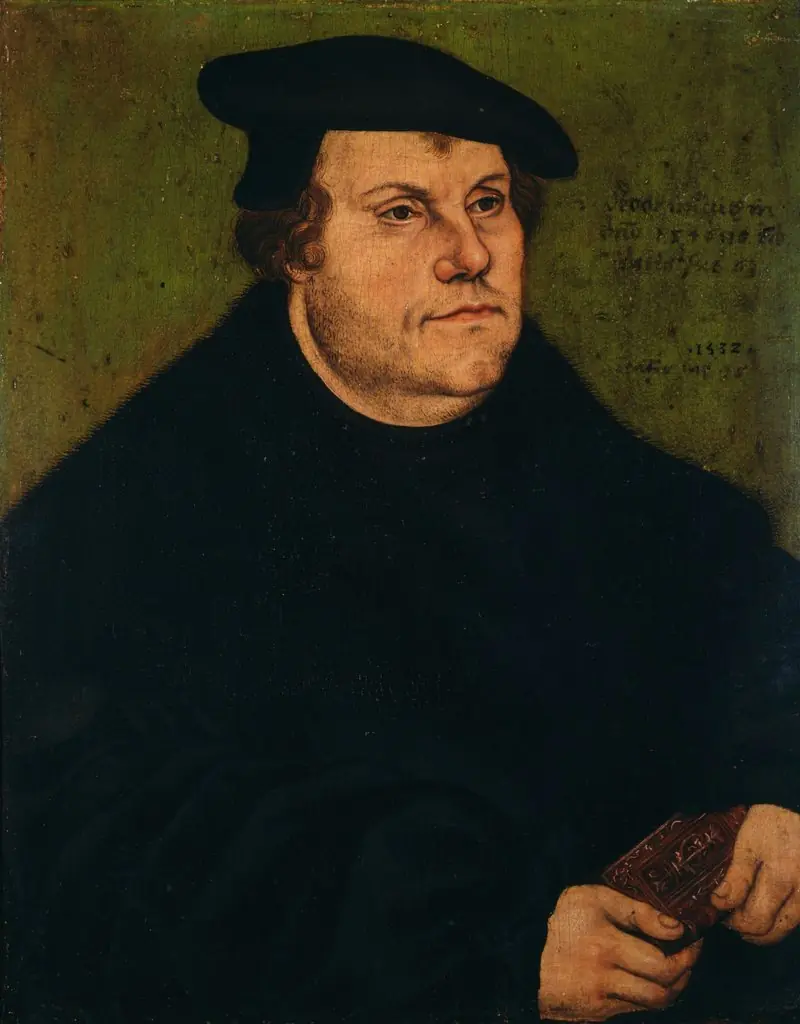
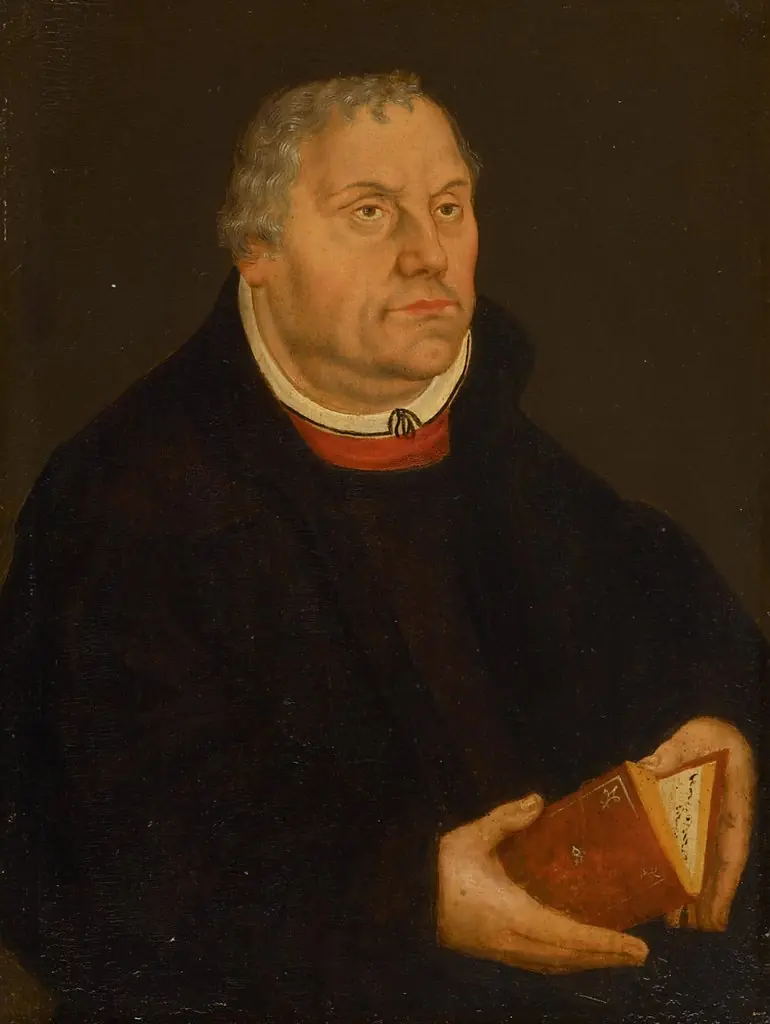
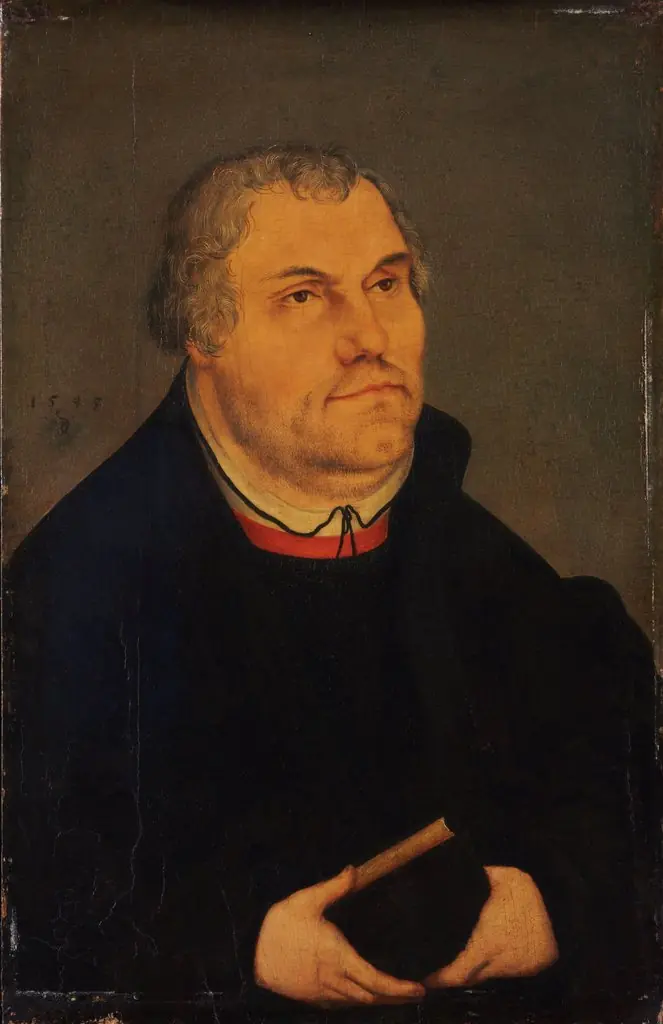
Martin Luther, Half-Length to the Left with a Book in his Hands is an ink print by the Renaissance artist German 16th Century. It dates from 1550 and is held in the collection of the National Gallery of Art. This woodcut portrait depicts Martin Luther seated, turned slightly to the left, holding a book with both hands.
About this work
Overview
Rendered in the traditional relief printing method, the image conveys a quiet intensity through stark contrasts of black and white.
This woodcut portrait depicts Martin Luther seated, turned slightly to the left, holding a book with both hands. Rendered in the traditional relief printing method, the image conveys a quiet intensity through stark contrasts of black and white. A circular emblem bearing a cross appears in the upper left, while a small crucifixion scene is visible to his right, reinforcing the religious context of the figure.
Subject & Meaning
Martin Luther is portrayed not as a public orator but as a scholar in quiet reflection. The book he holds likely represents Scripture or his own writings, central to his theological mission. The crucifixion scene beside him connects his reformist work directly to Christ’s sacrifice, suggesting his role as a mediator of divine truth rather than a political figure.
Technique & Style
Executed as a woodcut, the image relies on incised lines and blocked areas to define form and texture. The artist uses dense hatching to render the fur collar and the folds of Luther’s robe, creating a tactile sense of weight and volume. The limited tonal range enhances the somber mood, typical of Northern Renaissance printmaking where clarity and symbolic precision were prioritized.
History & Provenance
The print likely dates to the early 16th century, during or shortly after Luther’s rise to prominence. Woodcuts of Luther were widely circulated to support the Reformation, often produced in Wittenberg or other centers of Protestant printing. While the specific artist remains unattributed, the image aligns with the output of workshops producing reformist imagery for public distribution.
Context
In the decades following Luther’s 95 Theses, visual representations of him became tools of religious and political messaging. This portrait reflects the Protestant emphasis on personal engagement with Scripture, contrasting with Catholic devotional imagery. The inclusion of the crucifixion underscores the theological foundation of his reforms, positioning him as a faithful interpreter rather than a revolutionary.
Legacy
This woodcut contributed to the standardization of Luther’s visual identity across Europe. Its sober, introspective tone influenced later portraits of reformers and scholars, shifting the depiction of religious figures from idealized saints to contemplative individuals grounded in textual study. The image remains a key example of how print technology enabled the spread of new religious ideas through accessible imagery.
Artist & collection

Artist
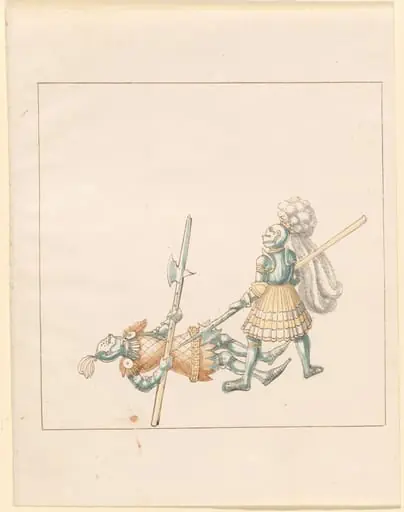
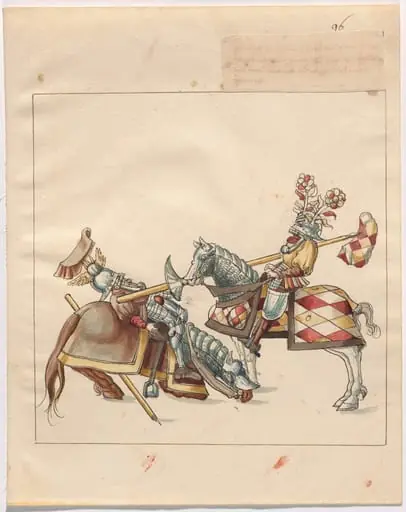
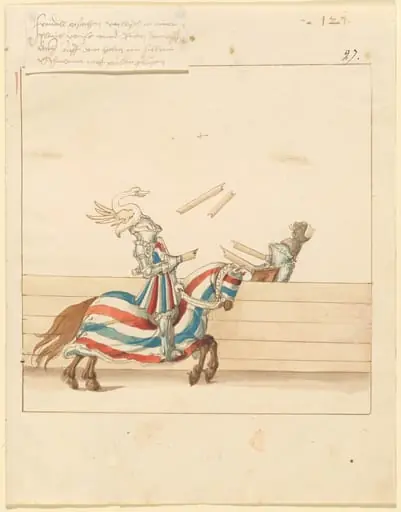
A German artist from the late 1500s drew lively scenes of knights clashing in parades and mock battles.

![Abraham Entertaining the Angels [verso], by German 16th Century](https://artifactworldgallery.com/img/german-16th-century--abraham-entertaining-the-angels-verso--69d1b25f4eba0a53-w320.webp)