Artwork
Cavalry Charging
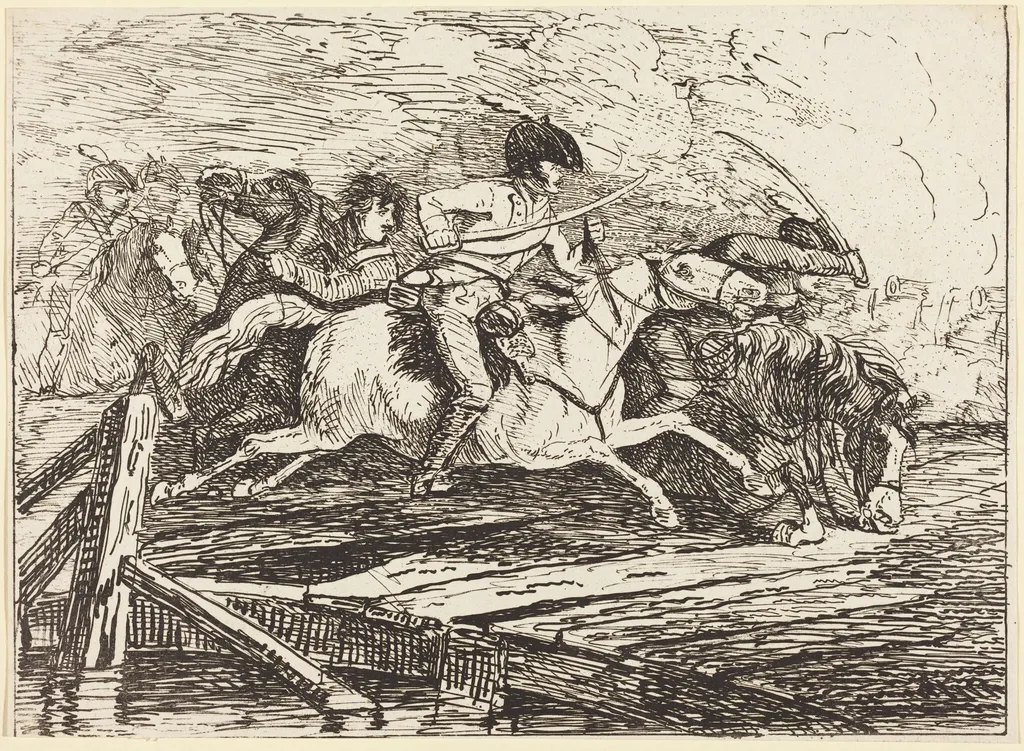
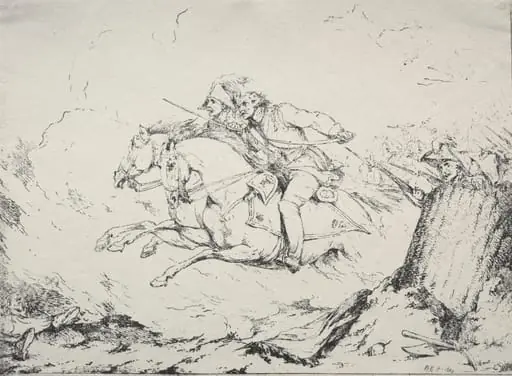
Cavalry Charging is an ink print by the Romanticist artist Conrad Gessner. It dates from 1801 and is held in the collection of the National Gallery of Art.
About this work
Overview
Cavalry Charging is a pen-and-tusche lithograph created by Conrad Gessner in 1801, depicting a dynamic and chaotic military scene.
Subject & Meaning
The print captures the intense moment of a cavalry charge, conveying energy and turmoil through densely packed horses and riders in various states of motion, including rearing, galloping, and falling.
Technique & Style
Gessner employed pen-and-tusche lithography to achieve a textured, dynamic effect, set against a subtly rendered, blurred landscape background that emphasizes the foreground's action.
History & Provenance
Created in 1801, specific details regarding the work's historical context, ownership history, or exhibition record are not provided in the available information.
Context
The work reflects the artistic and military interests of its time, potentially influenced by late 18th-century European warfare and the development of lithography as an emerging print technique.
Legacy
The impact or legacy of 'Cavalry Charging' in the broader art historical context or Conrad Gessner's oeuvre is not specified in the given details.
Own this work as a print
Artist & collection


 Cavalry Battle
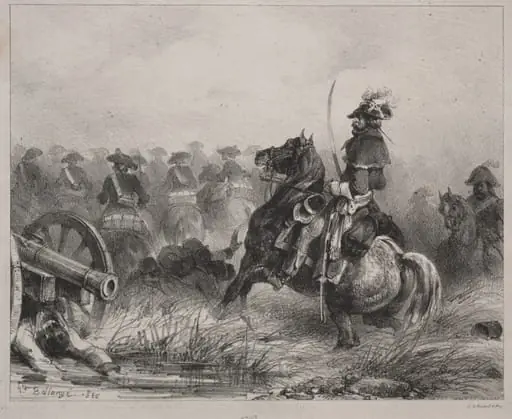 Cavalry Scene
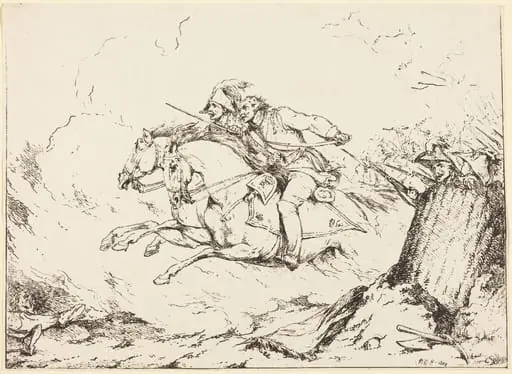 Charge
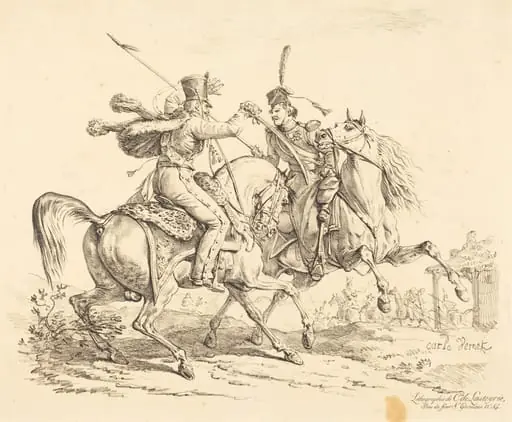 Hussard Striking a Cosack
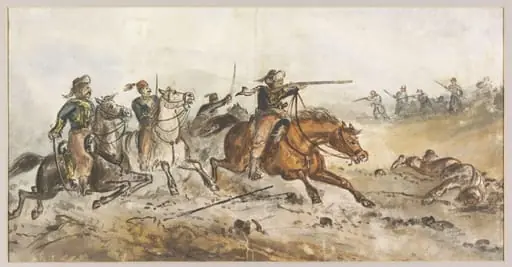 Turkish irregular cavalry charging Russian infantry
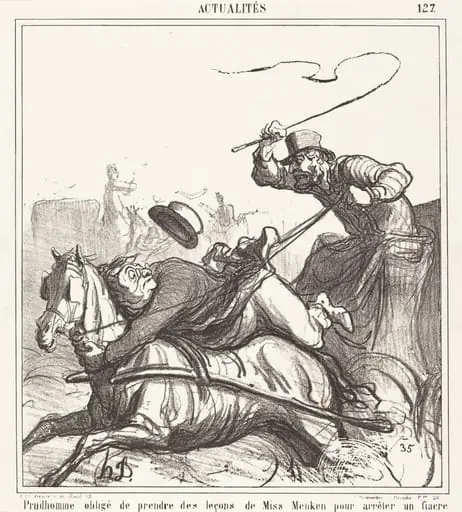 Prudhomme obligé de prendre des leçons...
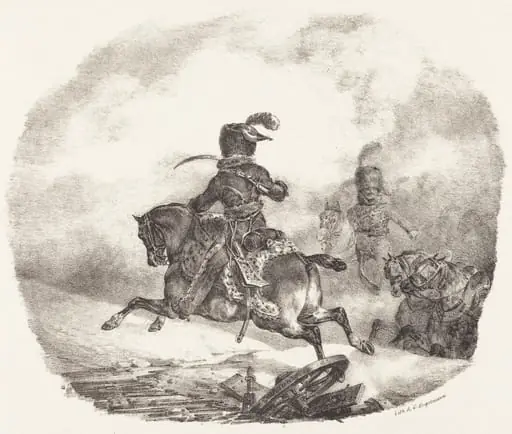 Light Artillery Officer of the Imperial Guard (Officier d'artillerie legerie de la garde imperiale)
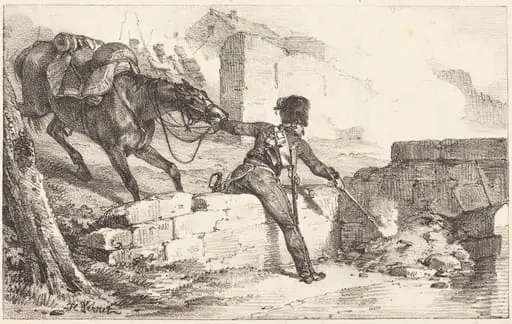 Artilleryman Lighting a Mine
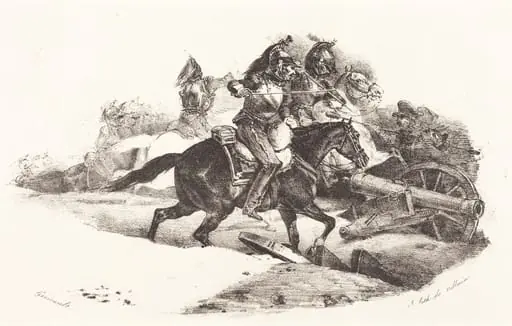 Cuirassiers Charging
 Specimens of Polyautography: Cavalry Charge
 Harvest at San Juan, New Mexico
 Cavalry Skirmish