Artwork
Leda and the Swan
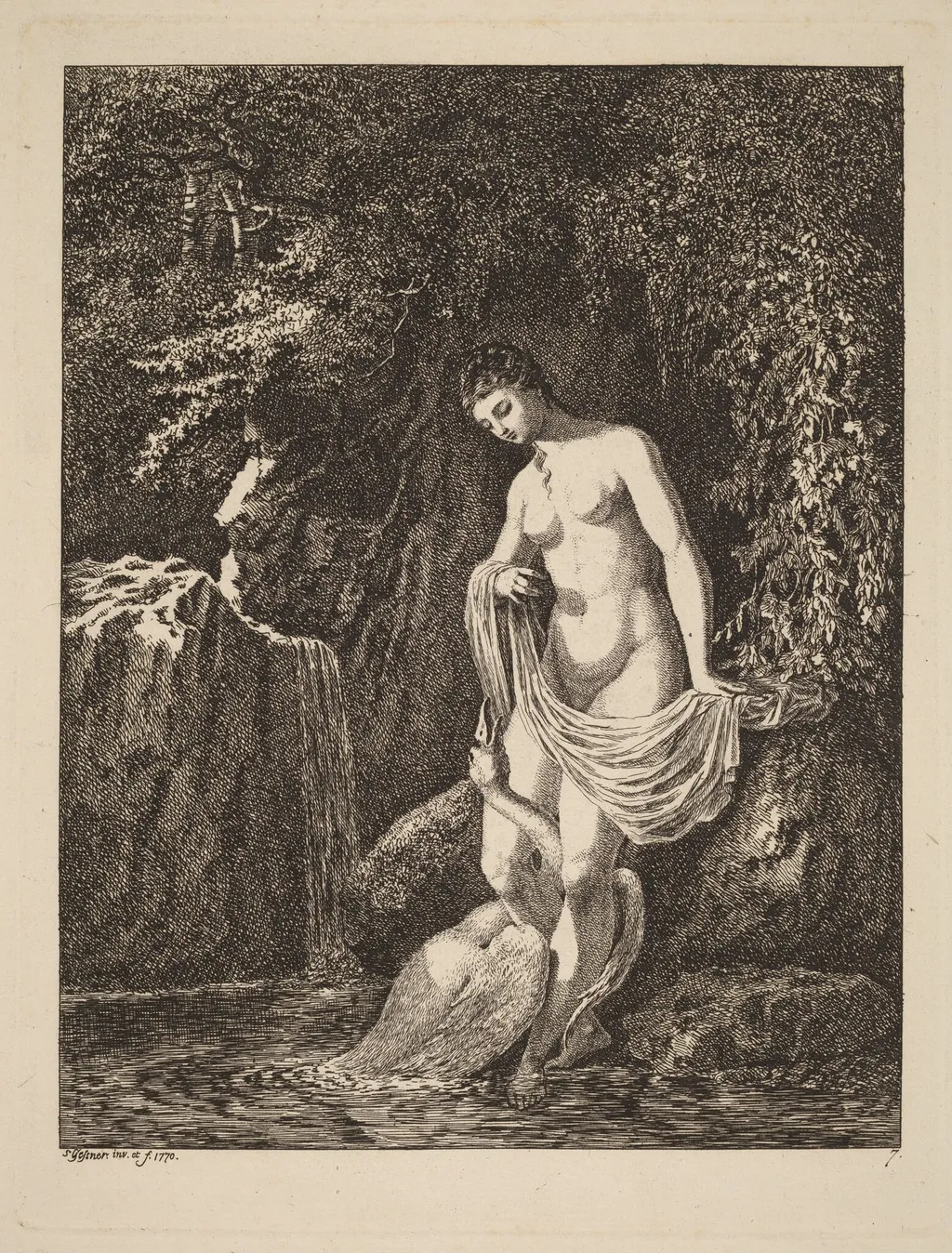
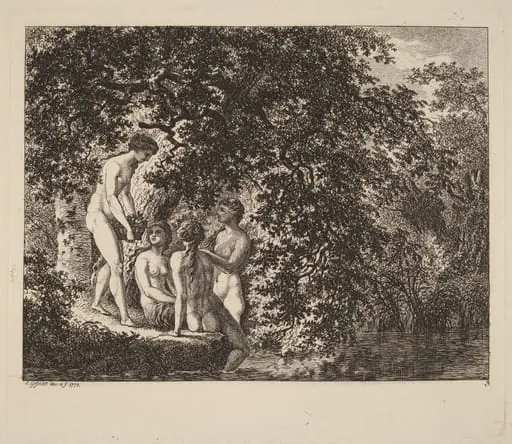
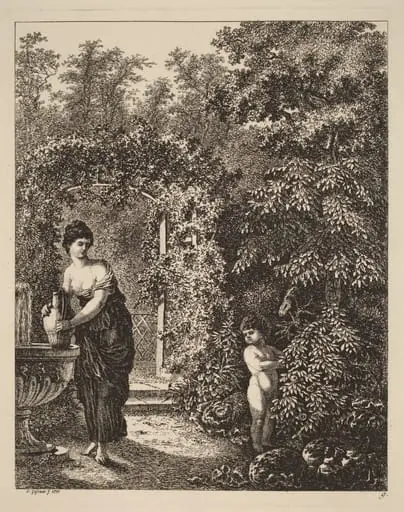
Leda and the Swan is an ink print by the Romanticist artist Salomon Gessner. It dates from 1770 and is held in the collection of the National Gallery of Art.
About this work
Overview
Created in 1770, this etching by Salomon Gessner depicts the mythological encounter between Leda and a swan. Rendered on laid paper, the work belongs to the printmaking tradition of the late 18th century. Its delicate lines and muted tonal gradations reflect a sensitivity to naturalism and emotional nuance, distinguishing it from more dramatic Baroque interpretations of the same subject.
Subject & Meaning
The scene illustrates the moment from Greek myth in which Zeus, in the form of a swan, approaches Leda. Gessner avoids overt violence or eroticism, instead presenting a quiet, contemplative interaction. Leda’s calm demeanor and the swan’s stillness suggest a moment of tender communion, aligning with Enlightenment-era ideals of harmony between human and nature, even within mythic narratives.
Technique & Style
The technique reflects a preference for lyrical expression over theatricality, characteristic of early Romantic sensibilities.
Gessner employed fine, fluid etching lines to model form with subtle shading, avoiding harsh contrasts. The soft rendering of foliage and drapery enhances the sense of intimacy and naturalism. The composition centers the figures against a sparse, atmospheric background, emphasizing their quiet presence. The technique reflects a preference for lyrical expression over theatricality, characteristic of early Romantic sensibilities.
History & Provenance
The print was produced during Gessner’s later years, when he increasingly turned to graphic arts after achieving fame as a poet and painter. It circulated among collectors in German-speaking regions and was likely part of broader interest in mythological subjects reinterpreted through a gentle, pastoral lens. No definitive early ownership records survive, but its survival in multiple institutional collections suggests modest but sustained appreciation.
Context
In the 1770s, European artists were reimagining classical myths through lenses of emotion and nature, moving away from rigid Neoclassical formalism. Gessner’s version aligns with this shift, resonating with literary trends that idealized tranquility and inner feeling. His work intersected with the emerging Romantic sensibility, even before the movement fully crystallized in the early 19th century.
Legacy
Though not widely known today, Gessner’s etching contributed to a quieter strand of mythological representation that prioritized mood over spectacle. It influenced later artists seeking to humanize ancient narratives through restraint and natural setting. The work remains a quiet example of how printmaking could convey poetic depth without grandeur.
Own this work as a print
Artist & collection


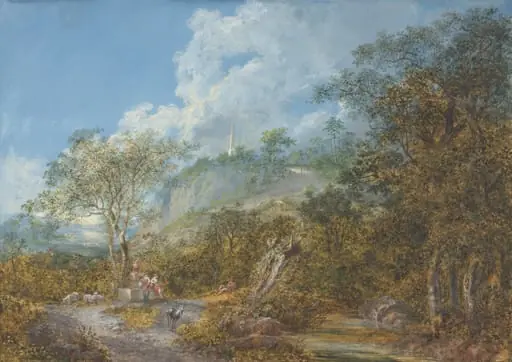 Arcadian Landscape with an Obelisk
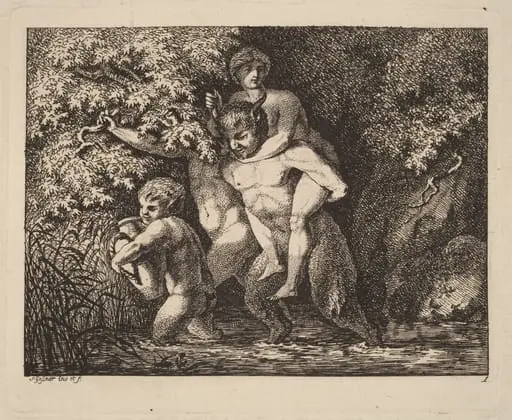 Satyr Carrying a Nymph on His Back
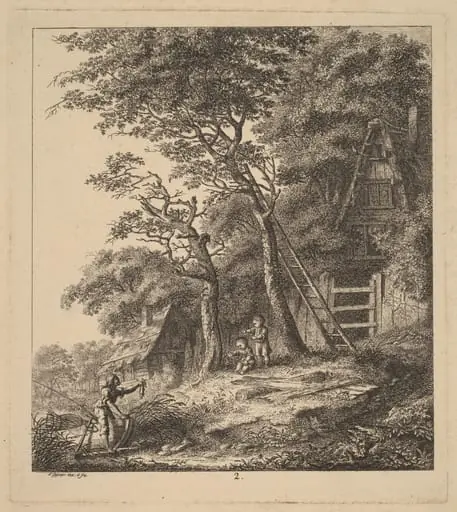 A Fisherman and Two Children in a Landscape with Thatched Cottages
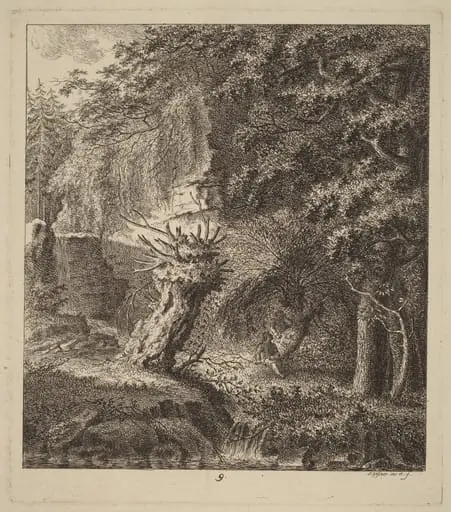 Wooded Landscape with a Pollarded Tree
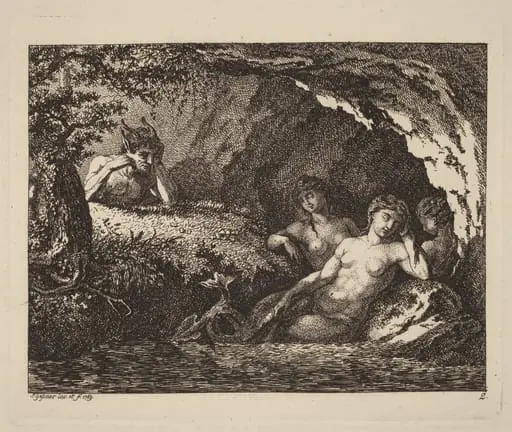 Three Sleeping Sprites with a Satyr
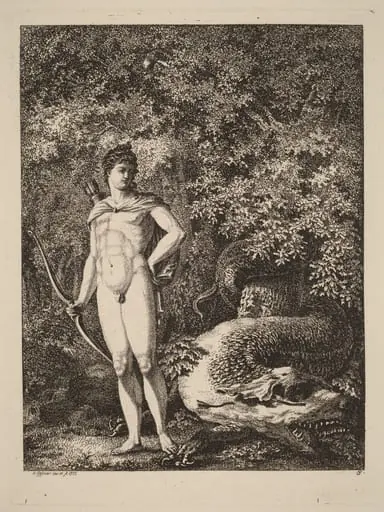 Apollo with a Bow and Dragon
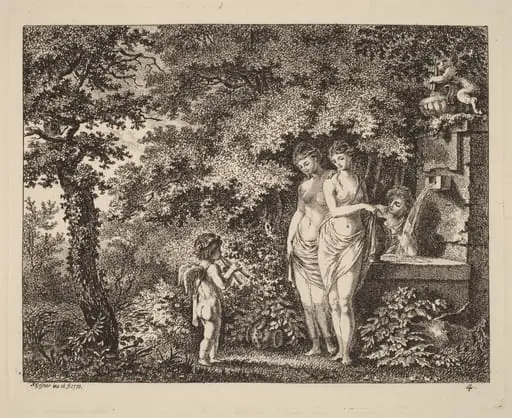 Eros with Three Girls at a Fountain
 Putto Visiting a Girl at a Fountain