Artwork
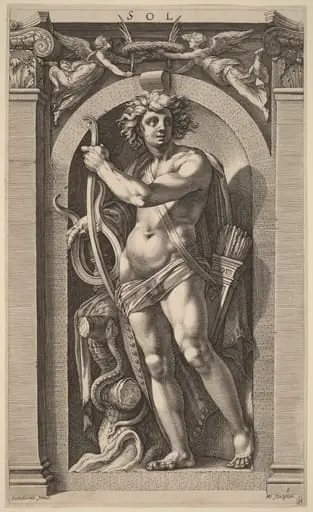
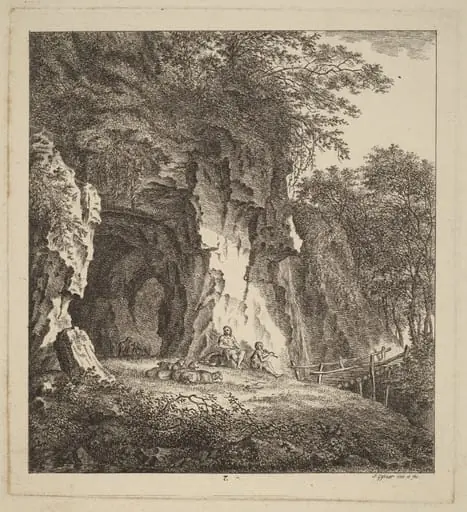
Apollo with a Bow and Dragon
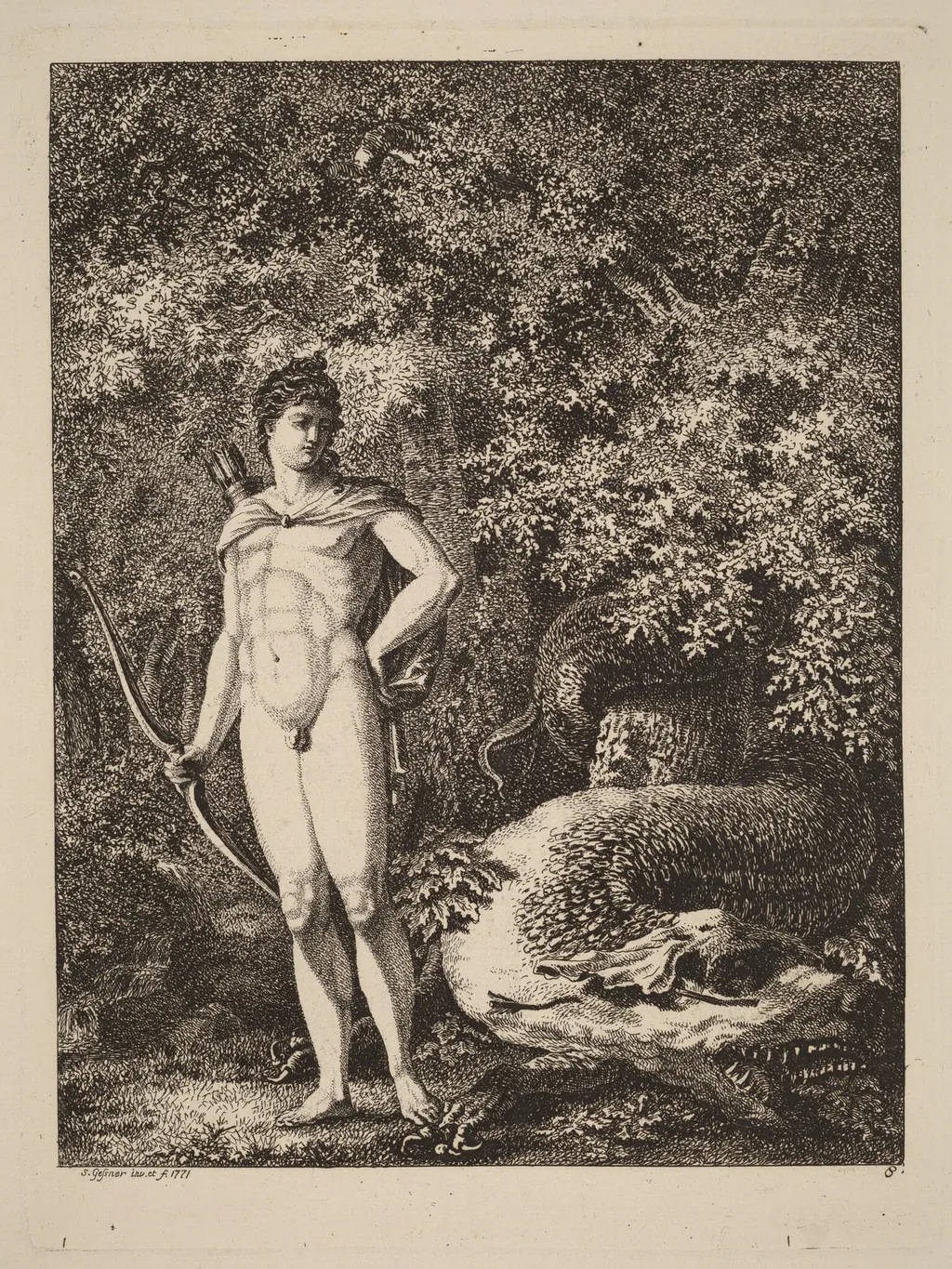
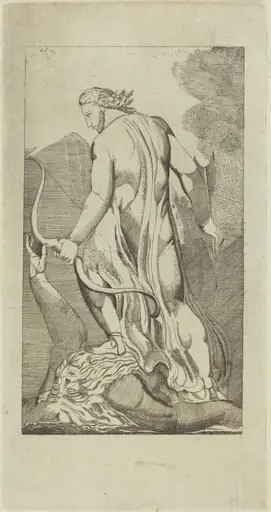
Apollo with a Bow and Dragon is an ink print by the Romanticist artist Salomon Gessner. It dates from 1771 and is held in the collection of the National Gallery of Art.
About this work
Overview
The composition centers on the figure of Apollo, framed by dense vegetation, suggesting a natural setting charged with symbolic weight.
Created in 1771 by Salomon Gessner, this etching on laid paper depicts the Greek god Apollo in a moment of quiet readiness. Rendered in fine linear detail, the image captures a mythological scene with restrained drama. The composition centers on the figure of Apollo, framed by dense vegetation, suggesting a natural setting charged with symbolic weight. As a print, it reflects Gessner’s engagement with classical themes through the medium of graphic art.
Subject & Meaning
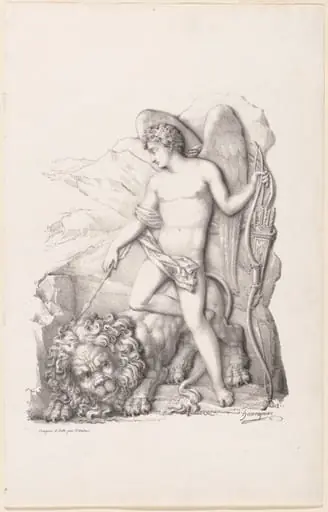
The figure represents Apollo, god of light and prophecy, depicted after slaying the serpent Python, a mythic act symbolizing the triumph of order over chaos. The dragon, coiled and subdued at his feet, signifies the defeated adversary. Apollo’s composed stance and forward gaze convey not triumphalism, but serene authority. The absence of violence in the scene shifts focus to the god’s enduring presence and inner stillness, aligning with Enlightenment ideals of rational control.
Technique & Style
Gessner employed fine etching lines to model form and texture, using delicate hatching to suggest the folds of Apollo’s garment and the scaly hide of the dragon. The background foliage is rendered with dense, overlapping strokes, creating depth without clutter. The use of laid paper enhances the tactile quality of the print, while the tonal contrasts remain subtle, avoiding theatricality. The style leans toward neoclassical clarity, with Romantic overtones in its atmospheric setting.
History & Provenance
The print was produced during Gessner’s later years, when he increasingly turned to graphic arts after achieving fame as a poet. It was likely made for a private audience, circulating among collectors interested in literary and mythological subjects. No major public collection records its early ownership, but its survival in multiple impressions suggests modest but sustained interest in Gessner’s visual work beyond his literary reputation.
Context
In late 18th-century Europe, classical mythology remained a vital source for artistic expression, particularly among intellectuals who valued moral and aesthetic ideals from antiquity. Gessner’s etching reflects this trend, blending Enlightenment rationality with emerging Romantic sensibilities toward nature and myth. Unlike overtly emotional depictions of the period, his work favors restraint, aligning with Swiss cultural values of moderation and intellectual refinement.
Legacy
Though less known today than his poetry, Gessner’s etchings contributed to the broader revival of mythological themes in graphic art. This piece exemplifies how literary figures extended their influence into visual culture. Its quiet intensity influenced later artists seeking to convey myth without melodrama, and it remains a quiet testament to the intersection of poetry, printmaking, and classical revival in the late 1700s.
Artist & collection


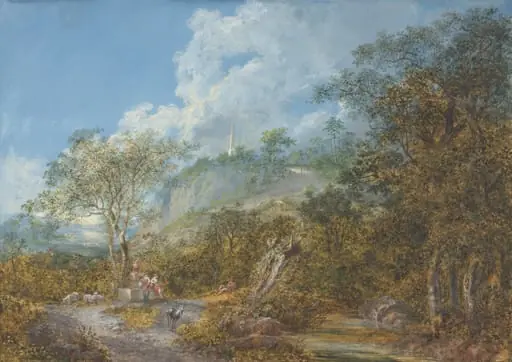 Arcadian Landscape with an Obelisk
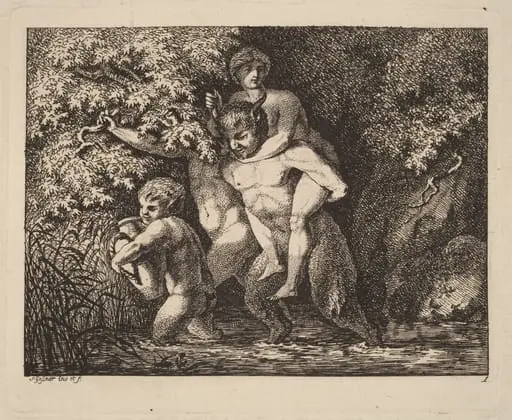 Satyr Carrying a Nymph on His Back
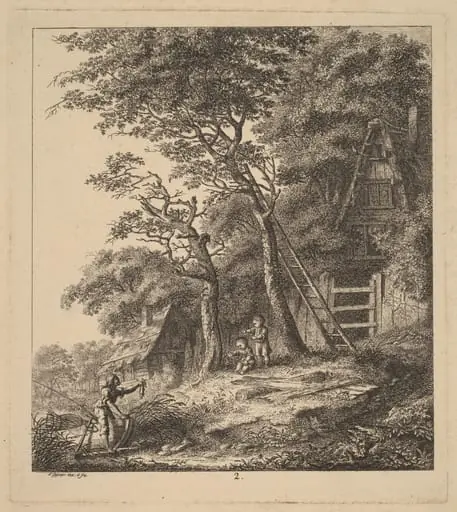 A Fisherman and Two Children in a Landscape with Thatched Cottages
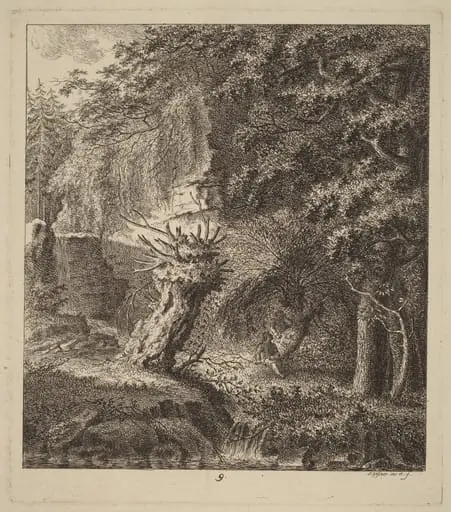 Wooded Landscape with a Pollarded Tree
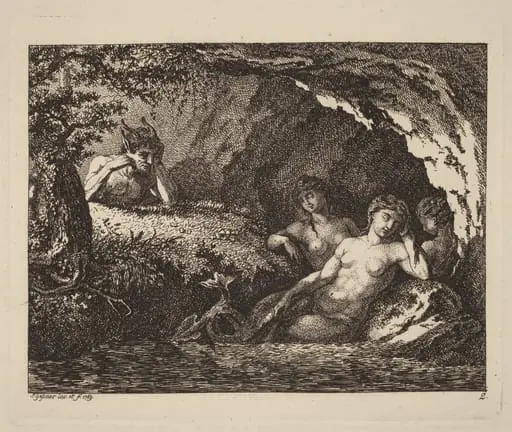 Three Sleeping Sprites with a Satyr
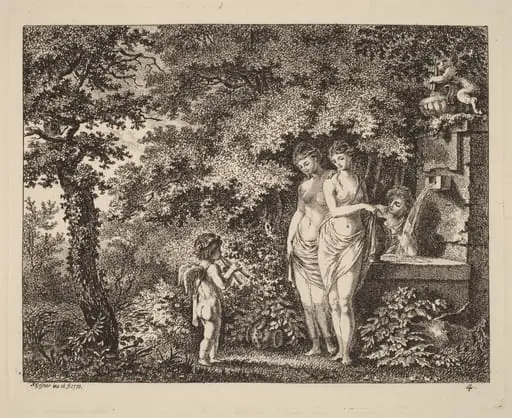 Eros with Three Girls at a Fountain
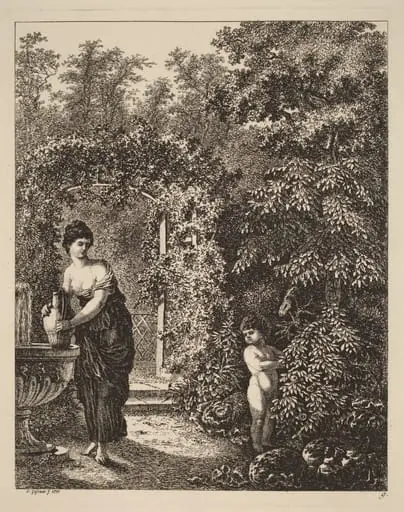 Putto Visiting a Girl at a Fountain
 Two Shepherds in a Rocky Landscape