Artwork
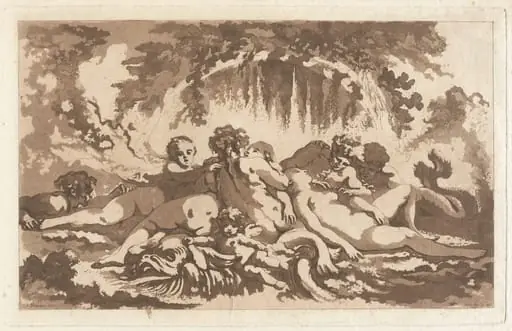
Three Sleeping Sprites with a Satyr
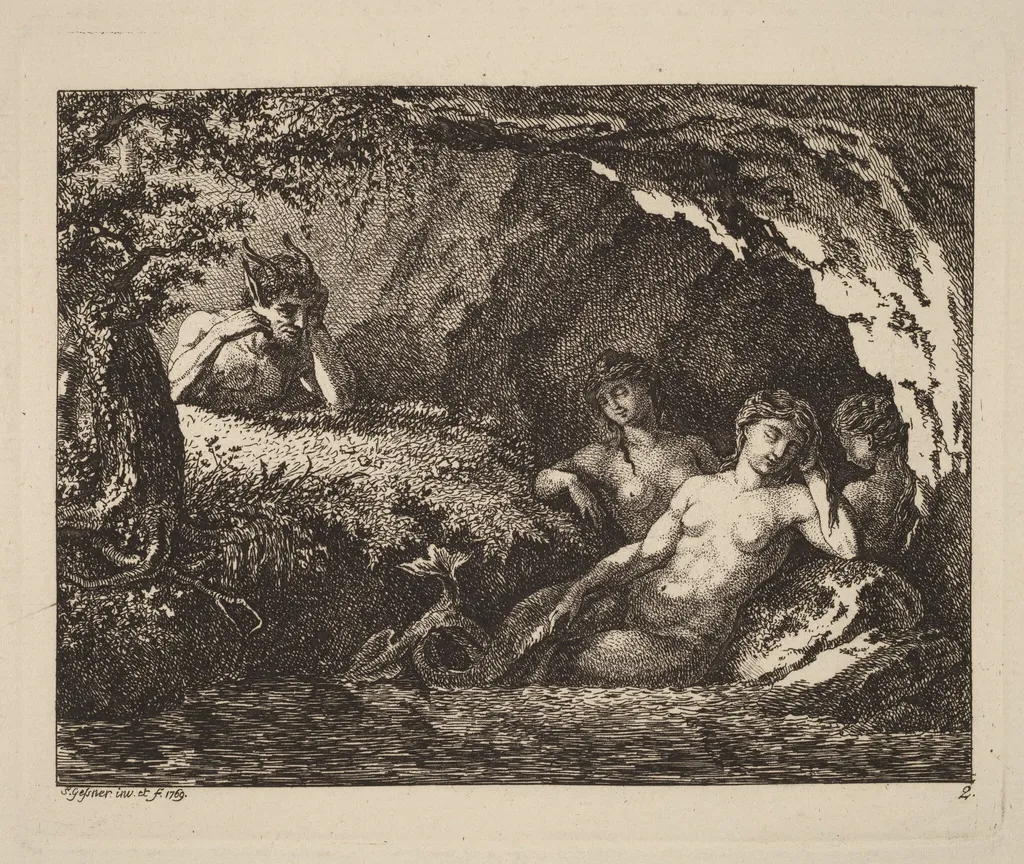
Three Sleeping Sprites with a Satyr is an ink print by the Romanticist artist Salomon Gessner. It dates from 1769 and is held in the collection of the National Gallery of Art.
About this work
Overview
Created in 1769, this etching by Salomon Gessner depicts a quiet, nocturnal forest scene featuring four mythological figures.
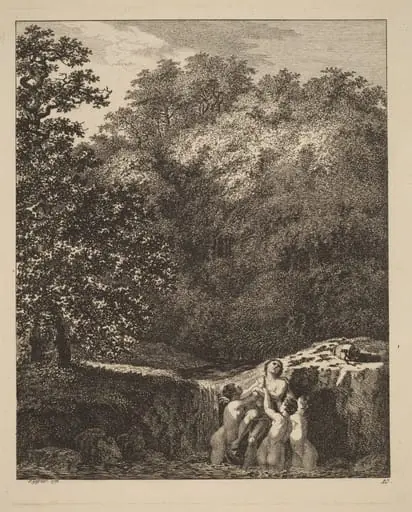
Created in 1769, this etching by Salomon Gessner depicts a quiet, nocturnal forest scene featuring four mythological figures. Three small, winged sprites lie curled in sleep atop a mound of fallen leaves, while a larger, horned satyr leans over them, his posture suggesting watchfulness rather than threat. The composition is enclosed by dense, swirling tree trunks and undergrowth, with a still pool of water at the lower edge, rendered in delicate, horizontal lines.
Subject & Meaning
The figures draw from classical mythology: the sprites likely represent nature spirits, and the satyr, a half-human, half-goat creature of woodland lore, observes them in stillness. Their entwined forms suggest intimacy or vulnerability, while the satyr’s presence evokes a sense of protective stillness rather than mischief. The scene conveys a moment of suspended calm, blending innocence with the untamed energy of the wild.
Technique & Style
Gessner employed etching, a printmaking method involving acid-bitten lines on a metal plate. Fine, incised strokes define the figures’ forms and the tangled foliage, while the background’s dense, swirling lines create depth and texture. The contrast between the dark, inked lines and the untouched paper enhances the dreamlike atmosphere. The water’s surface is suggested by minimal, light horizontal marks, emphasizing quietude through restraint.
History & Provenance
The print was produced in 1769 during Gessner’s period of active printmaking, when he sought to translate his pastoral themes into graphic form. It was likely part of a series of small-scale works circulated among collectors and intellectuals in German-speaking Europe. No definitive early ownership records survive, but the work’s survival in multiple institutional collections suggests it was preserved early as an example of his graphic art.
Context
Gessner’s etching emerged amid the European fascination with pastoral idealism and mythological subjects, influenced by Enlightenment-era nostalgia for nature’s harmony. His work responded to literary trends, particularly the poetic visions of Rousseau and Ossian, which celebrated tranquil, elemental landscapes. Unlike dramatic Baroque scenes, this image favors quietude, reflecting a shift toward intimate, contemplative imagery in late 18th-century art.
Legacy
Though not widely known today, Gessner’s etchings contributed to the development of the poetic print in German-speaking regions. His delicate handling of mythological subjects influenced later artists interested in combining naturalism with allegory. This piece remains a quiet example of how printmaking could convey emotional nuance and mythic atmosphere without grandeur or spectacle.
Own this work as a print
Artist & collection


 Arcadian Landscape with an Obelisk
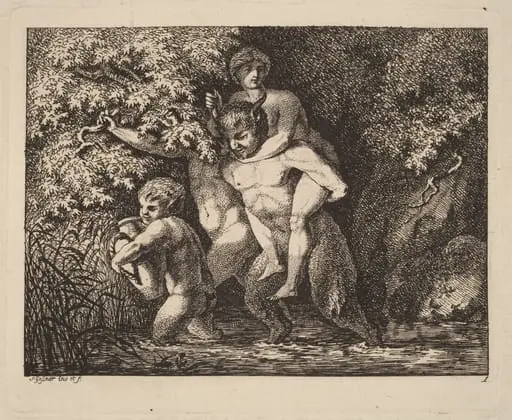 Satyr Carrying a Nymph on His Back
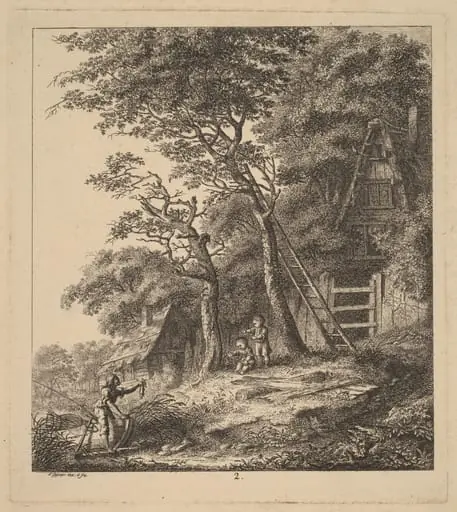 A Fisherman and Two Children in a Landscape with Thatched Cottages
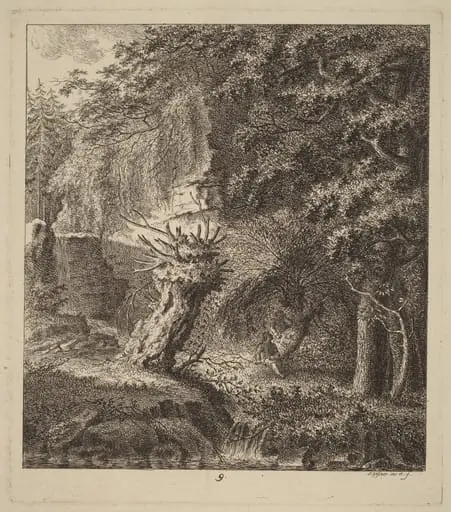 Wooded Landscape with a Pollarded Tree
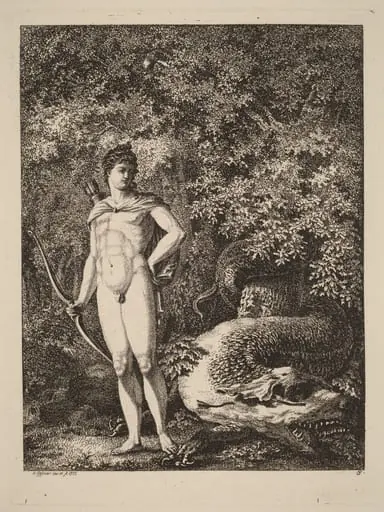 Apollo with a Bow and Dragon
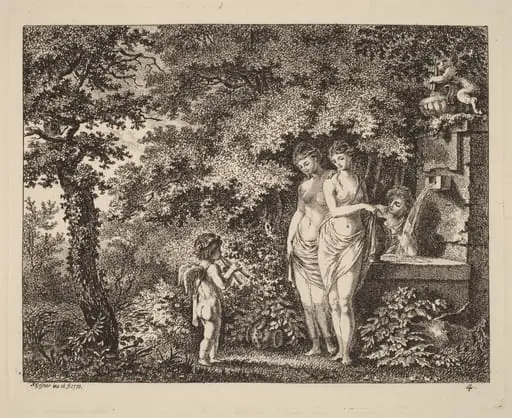 Eros with Three Girls at a Fountain
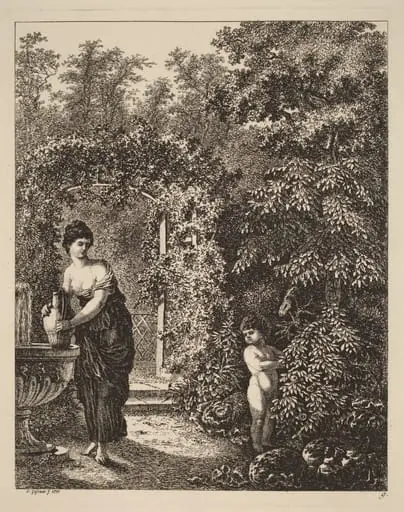 Putto Visiting a Girl at a Fountain
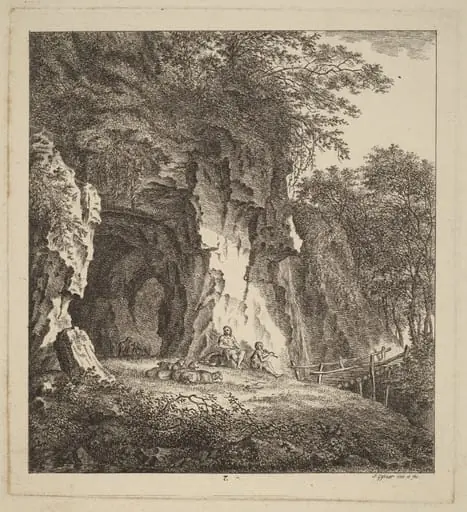 Two Shepherds in a Rocky Landscape