Artwork
Bacchanal
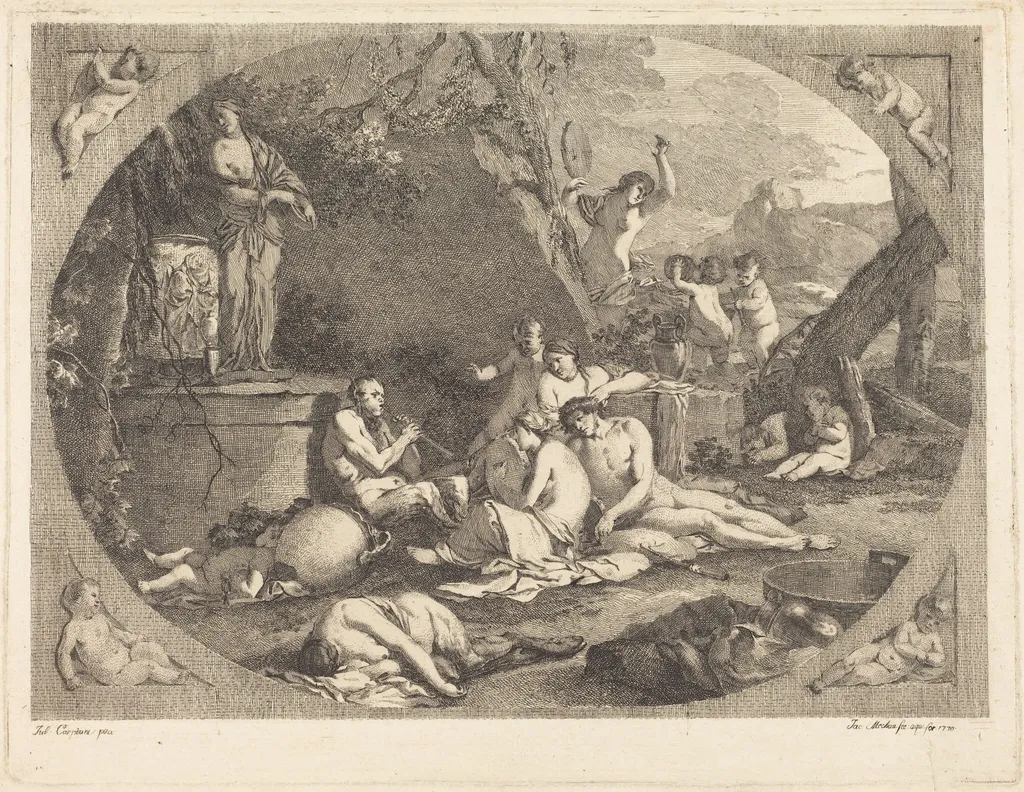
Bacchanal is an ink print by the Romanticist artist Jacob Wilhelm Mechau. It dates from 1770 and is held in the collection of the National Gallery of Art.
About this work
Overview
Jacob Wilhelm Mechau’s 1770 etching titled Bacchanal presents a lively tableau set within a craggy woodland. The composition gathers a diverse group of figures—some reclining amid foliage, others dancing or playing music—around a towering statue and scattered rocks. Rendered in dark, irregular lines, the image conveys a sense of spontaneous revelry within a natural setting.
Subject & Meaning
The juxtaposition of human figures with the imposing statue underscores the interplay between cultural ritual and the surrounding landscape.
The work depicts a bacchanalian gathering, a theme drawn from classical mythology that celebrates the rites of Dionysus. Mechau arranges participants in various states of leisure and activity, suggesting both communal festivity and the untamed energy associated with wine‑driven celebrations. The juxtaposition of human figures with the imposing statue underscores the interplay between cultural ritual and the surrounding landscape.
Technique & Style
Executed as an etching on laid paper, the image was created by incising the design directly into a metal plate with acid, allowing Mechau to produce fine, textured lines that retain a sketch‑like vigor. The dark, scratchy strokes emphasize contrast and movement, while the medium’s capacity for multiple impressions facilitated the dissemination of this composition among contemporary audiences.
History & Provenance
Bacchanal was produced in 1770, during a period when Mechau was active in the German Enlightenment’s artistic circles. The print’s reproducibility meant it could circulate among collectors and academies, contributing to the artist’s reputation as a skilled draftsman. Specific ownership records are limited, but the work remains documented in several 18th‑century print collections.
Artist & collection


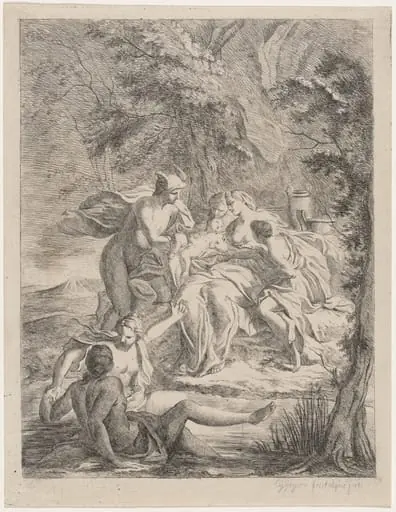 Hermes Bringing the Infant Dionysus to the Nymphs
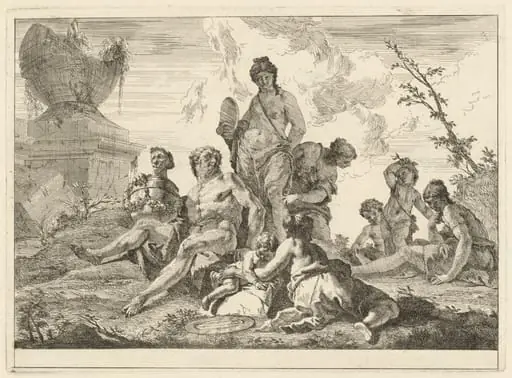 Venus and Vulcan with Three Nymphs and Three Cupids
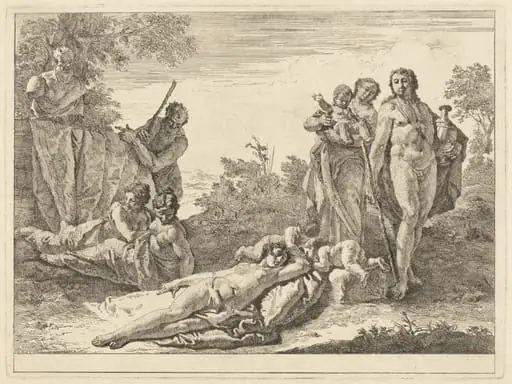 Nine Figures around a Herm of Pan
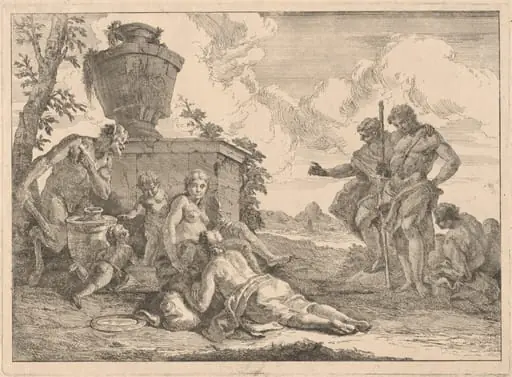 A Satyr with a Staff and Seven Other Figures
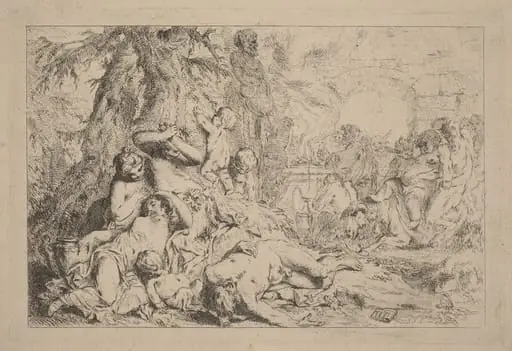 The March of Silenus
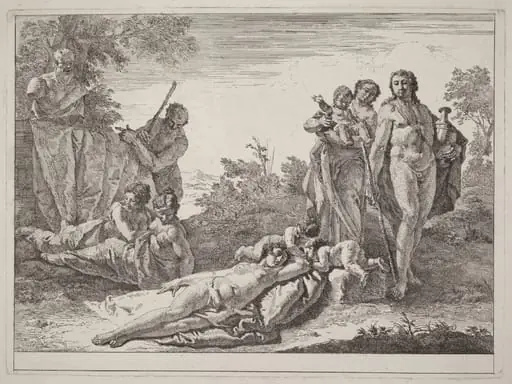 Apollo and Nymphs in a Landscape with a Bust of Pan
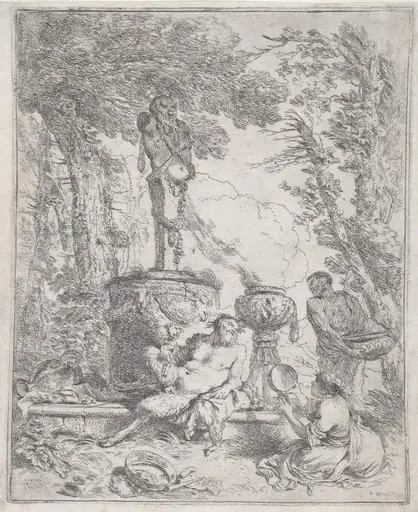 Pan Reclining before a Herm
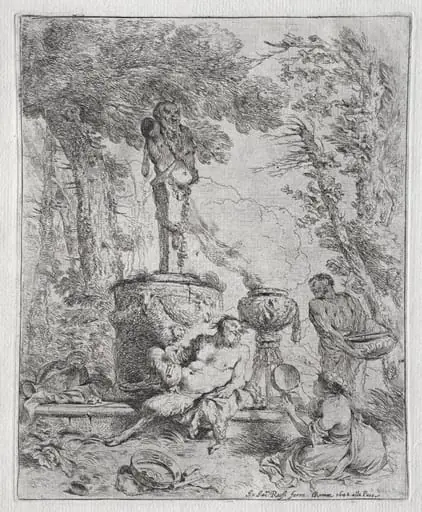 Fete of Pan
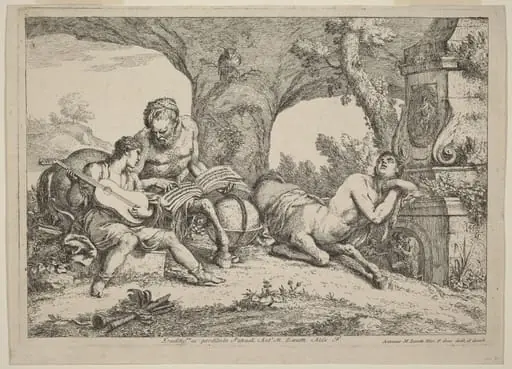 Chiron Teaching Music to Achilles
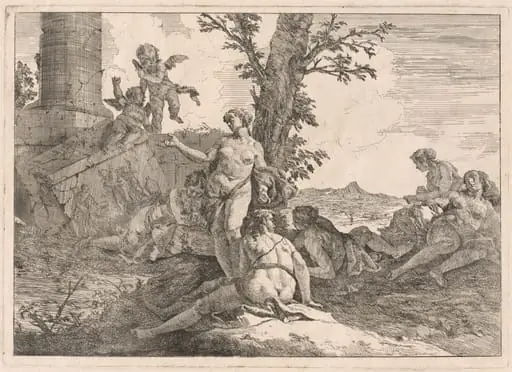 Six Nymphs and Two Cupids in a Landscape