Artwork
Arhanghelul Mihail
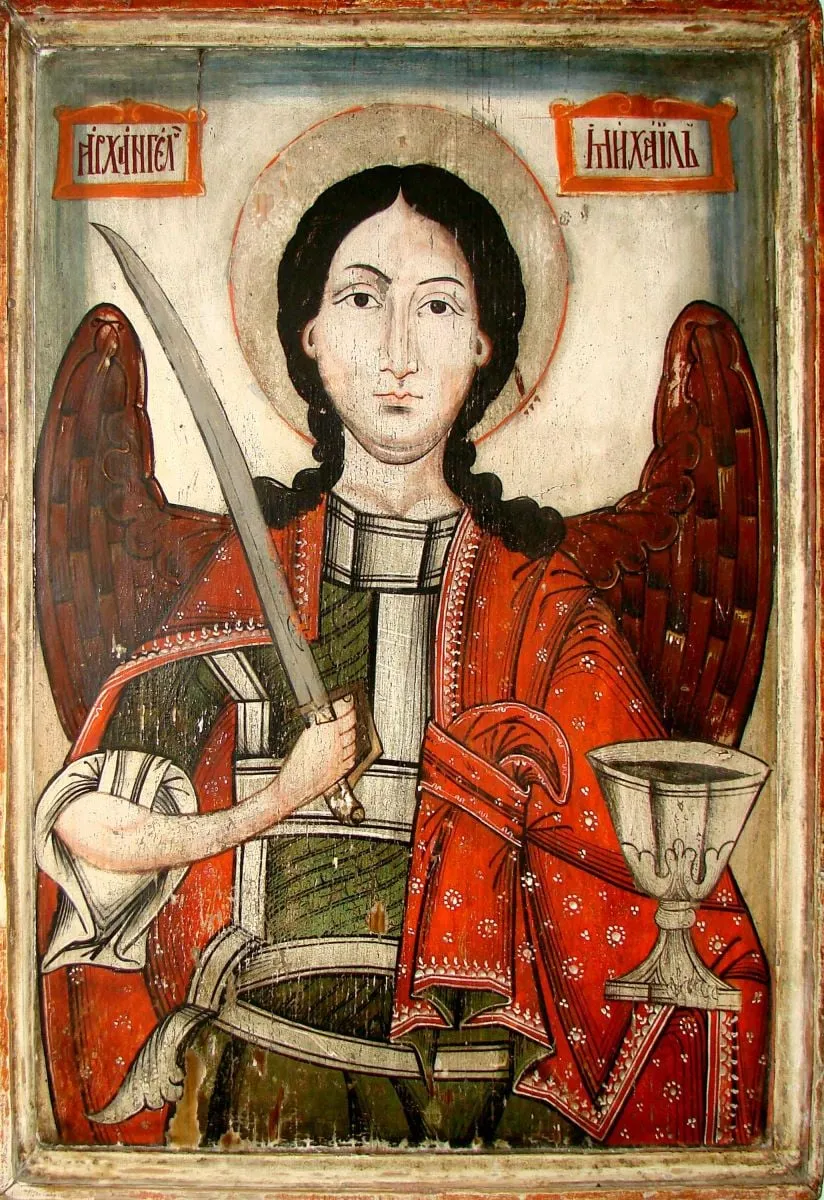
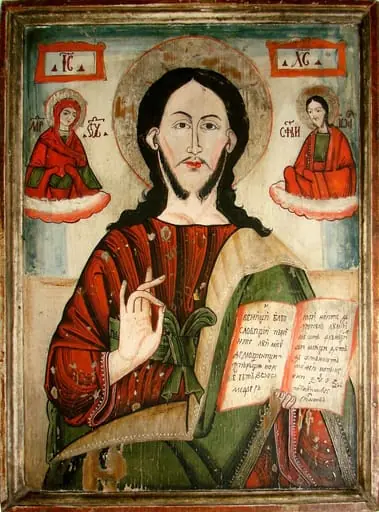
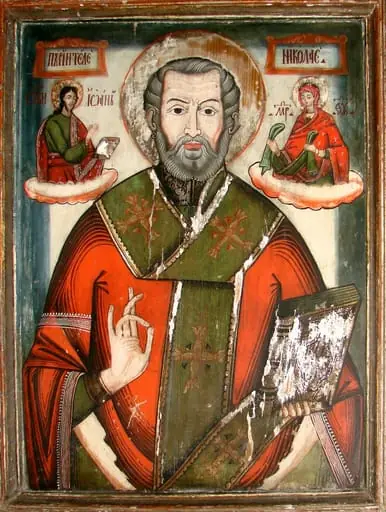
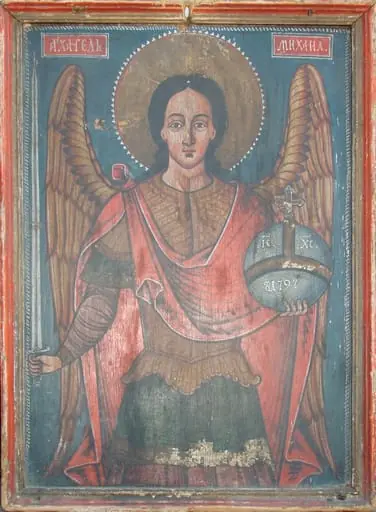
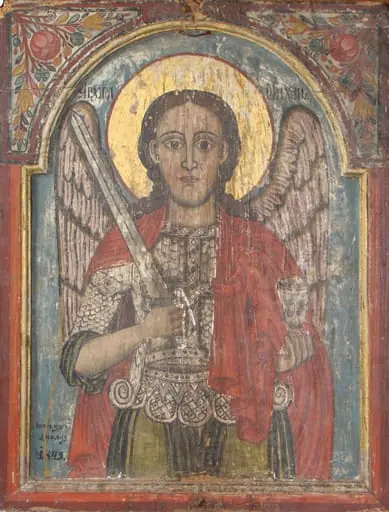
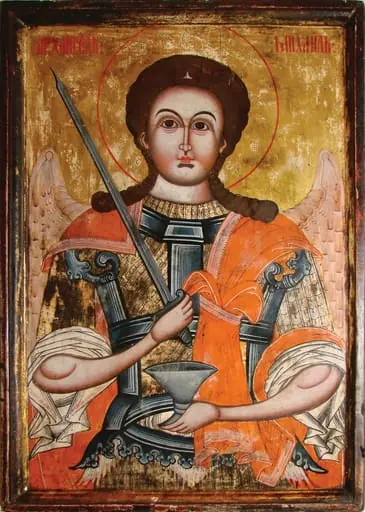
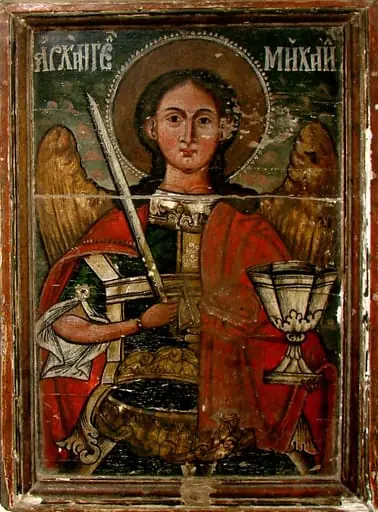
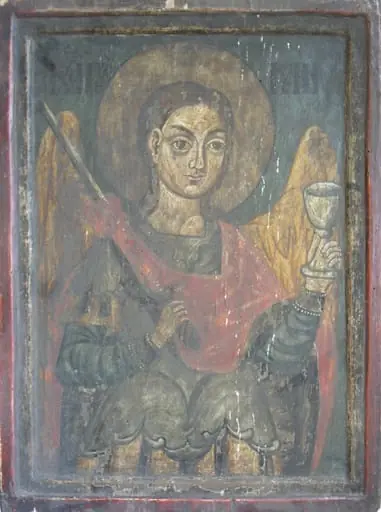
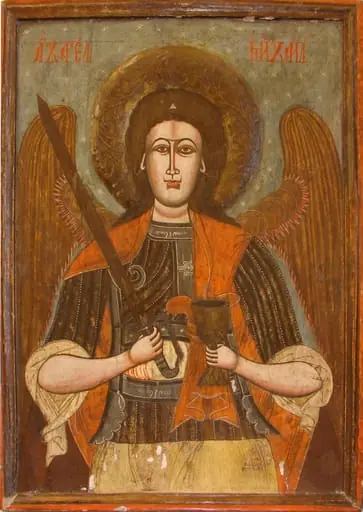
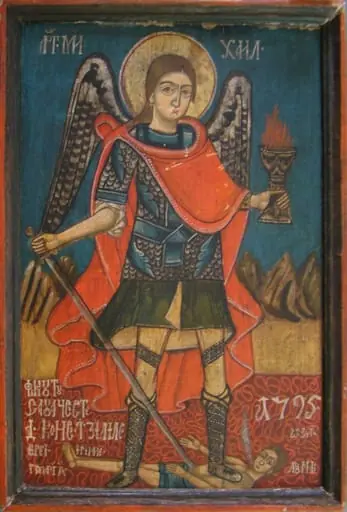
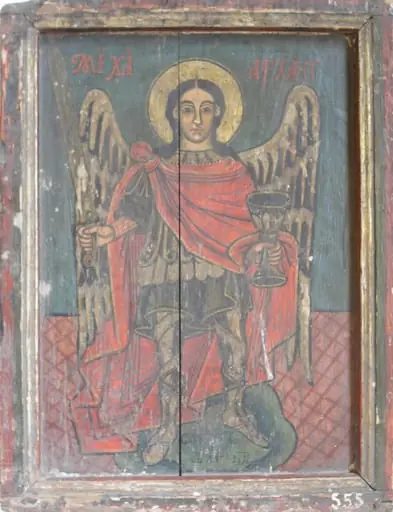
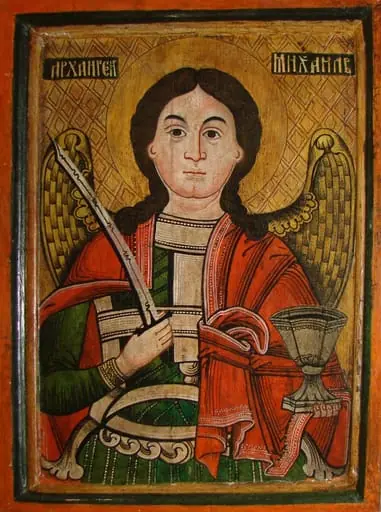
Arhanghelul Mihail is a drawing by Popa Nicolae. It is held in the collection of the Alba Iulia Orthodox Archdiocese. This religious panel depicts a celestial figure in richly colored robes of red and green, standing with solemn composure.
About this work
Overview
Two winged forms flank the figure, their names inscribed in gold above them, suggesting divine attendants or symbolic entities within a theological framework.
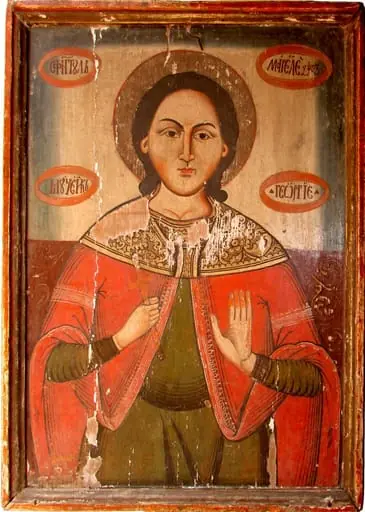
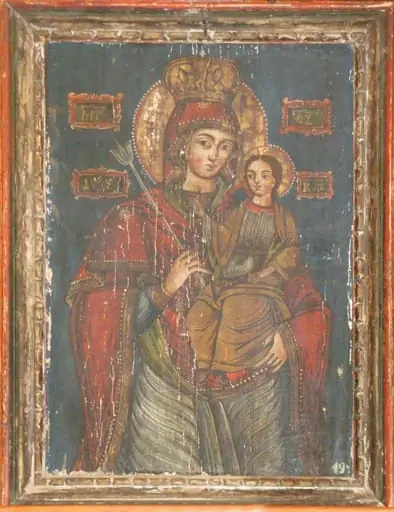
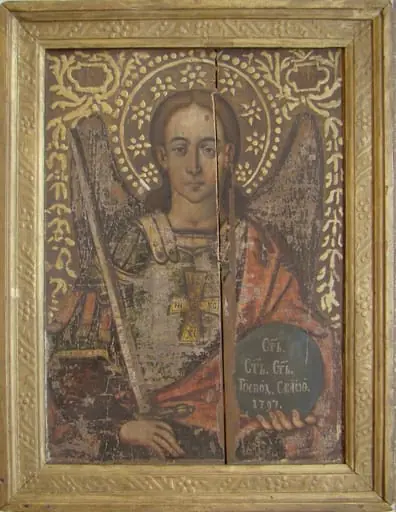
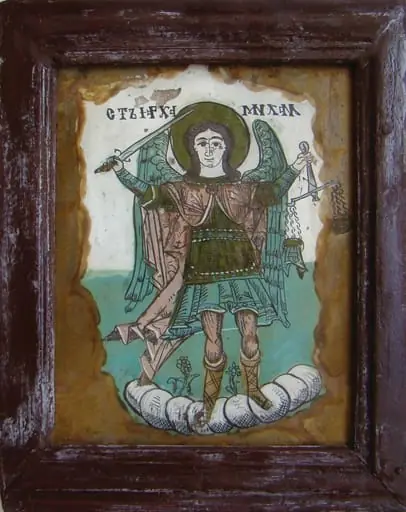
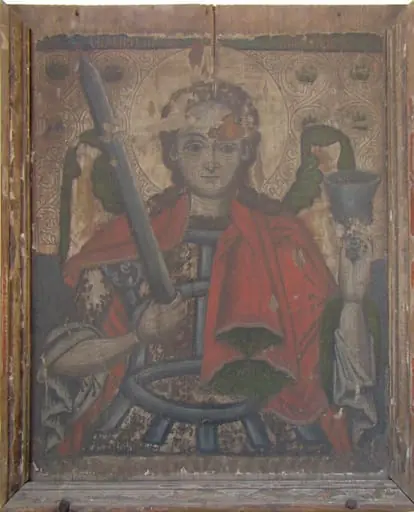
This religious panel depicts a celestial figure in richly colored robes of red and green, standing with solemn composure. The figure holds a sword in one hand and a cup resting on a stand in the other. A golden halo encircles the head, signaling sacred status. Two winged forms flank the figure, their names inscribed in gold above them, suggesting divine attendants or symbolic entities within a theological framework.
Subject & Meaning
The figure is likely the Archangel Michael, traditionally associated with divine justice and spiritual warfare. The sword implies authority over evil, while the cup may reference sacrifice or the Eucharist, common in Christian iconography. The winged beings, named in gold, likely represent heavenly witnesses or celestial forces aligned with the archangel’s role. Together, the elements convey a vision of divine order and protection.
Technique & Style
The painting employs bold, saturated hues—crimson and emerald—to emphasize the figure’s otherworldly presence. Gold leaf outlines the halo and inscriptions, enhancing luminosity against darker backgrounds. The wings are rendered with stylized precision, their forms distinct yet harmonious. Facial expression remains serene, avoiding dramatic tension, consistent with Byzantine and early Orthodox traditions that prioritize spiritual stillness over emotional expression.
History & Provenance
The work originates from a region with strong Eastern Christian artistic traditions, likely produced in a monastic workshop during the late medieval period. Its preservation suggests it was venerated in a church or private chapel. Similar iconography appears in manuscripts and wall paintings from the Balkans and Anatolia, indicating shared devotional practices across Orthodox communities of the time.
Context
In Orthodox liturgical art, Archangel Michael was frequently depicted as a protector of the faithful and a judge at the Last Judgment. The inclusion of named winged beings reflects a belief in a structured heavenly hierarchy. Such panels were often placed near altars or iconostases, serving as focal points for prayer and meditation, reinforcing doctrinal themes of divine authority and spiritual struggle.
Legacy
This image contributes to a broader visual language of angelic intercession in Eastern Christianity. Its compositional clarity and symbolic economy influenced later iconography in Orthodox regions. Though not widely known outside ecclesiastical circles, it remains a representative example of how theological concepts were rendered visually for contemplative use in religious life.
Artist & collection
Artist
Romanian printmaker and painter Nicolae Popa filled small canvases and sheets with quiet, precise scenes.